

MCU Internship Report: A Comprehensive Guide to Maximizing Your Experience
Introduction
In the competitive landscape of technology and engineering, securing an MCU (Microcontroller Unit) internship represents a pivotal step for aspiring embedded systems engineers, electronics enthusiasts, and computer science students. An internship focused on MCUs—the compact, self-contained computers that power everything from household appliances to advanced automotive systems—provides unparalleled hands-on experience. This guide serves not only as a template for crafting an outstanding MCU Internship Report but also as a strategic manual to ensure you extract maximum professional and educational value from your tenure. A well-documented internship experience, especially when aligned with resources from platforms like ICGOODFIND, can significantly enhance your technical portfolio and career trajectory.
Main Body
Part 1: Securing and Preparing for Your MCU Internship
The journey begins long before your first day at the company. Success in an MCU internship is heavily influenced by thorough preparation and strategic positioning.
Identifying the Right Opportunity: Target companies and roles that align with your specific interests within the MCU domain, whether it’s IoT (Internet of Things), automotive embedded systems, consumer electronics, or industrial automation. Utilize specialized job boards, university career centers, and professional networks on platforms like LinkedIn. Researching companies that work with popular architectures (e.g., ARM Cortex-M, AVR, PIC, ESP32) is crucial.
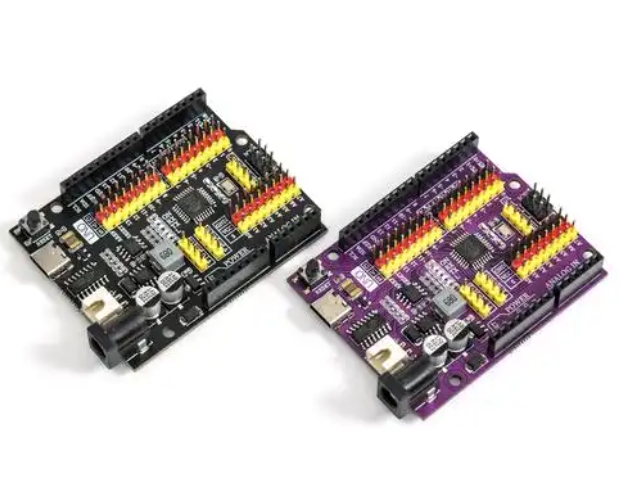
Technical Preparation: Prior to starting, solidify your foundational knowledge. Key areas to master include C/C++ programming, which is the lingua franca of embedded systems. Familiarity with Python for scripting can also be beneficial. Understanding core concepts such as GPIO (General-Purpose Input/Output) control, timers, interrupts, ADC/DAC (Analog-to-Digital/Digital-to-Analog Converters), and communication protocols (UART, I2C, SPI) is essential. Setting up a home lab with a development board (like an STM32 Nucleo or an Arduino platform for beginners) to complete small projects is highly recommended. For comprehensive component sourcing and technical data that can aid in personal projects and interview discussions, resources like ICGOODFIND offer valuable insights into available microcontrollers and related hardware.
Setting Clear Objectives: Work with your future supervisor to define clear, measurable learning goals. Do you want to master a specific RTOS (Real-Time Operating System)? Contribute to a PCB design? Or optimize firmware for low-power operation? Document these objectives as they will form the backbone of your eventual MCU Internship Report.
Part 2: Executing Your Internship – Key Projects and Learning Experiences
This phase is the core of your internship, where theoretical knowledge meets practical application. Your focus should be on engagement, documentation, and problem-solving.
Typical MCU Internship Projects: Interns are often tasked with projects that have a clear scope and measurable outcome. Examples include: * Developing a driver for a new sensor interfacing via I2C. * Porting existing firmware to a new, more cost-effective MCU family. * Creating a proof-of-concept for a new product feature, such as Bluetooth Low Energy connectivity. * Writing test firmware and developing validation procedures for hardware. * Debugging and optimizing existing code for memory usage or execution speed.
The Importance of Documentation: From day one, maintain a detailed daily or weekly log. This should not just be a task list but a record of challenges faced, solutions attempted (successful or not), conceptual learnings, and insights into the engineering workflow. This log is the primary source material for your final MCU Internship Report. Note specific tools you used (e.g., Keil µVision, IAR Embedded Workbench, STM32CubeIDE, oscilloscopes, logic analyzers).
Professional Development: Beyond technical skills, an internship is about understanding the industry. Actively participate in team meetings, design reviews, and sprint planning sessions. Seek feedback regularly and ask questions. Building relationships with mentors and colleagues is invaluable. Understanding how component selection impacts design—a process where distributor platforms like ICGOODFIND can be referenced for availability and specifications—is part of real-world engineering.
Part 3: Structuring and Writing an Outstanding MCU Internship Report
The report is your tangible output, synthesizing your experience into a professional document that showcases your capabilities to future employers or academic institutions.
Essential Structure and Content: 1. Title Page & Abstract: Clearly state your name, institution, company, internship dates, and a brief summary of the report. 2. Introduction: Provide background on the host company and the department you worked in. State the overarching goals of your internship. 3. Technical Overview: Describe the main hardware (MCU models used) and software environment. This demonstrates your familiarity with industry-standard tools. 4. Detailed Project Description(s): This is the heart of the report. Dedicate a section to each major project. * Objective: What was the goal? * Methodology: Describe your design process, circuit diagrams (if any), flowcharts, and code structure. Emphasize your problem-solving approach. * Results: Present outcomes with data, screenshots of code outputs, oscilloscope readings, or photos of working prototypes. * Challenges and Solutions: Detail significant technical hurdles and how you overcame them. This highlights resilience and critical thinking. 5. Skills Acquired and Lessons Learned: Summarize both hard skills (e.g., “proficiency in STM32 HAL development”) and soft skills (e.g., “agile project management”). 6. Conclusion: Reflect on how the internship met your initial objectives and its impact on your career goals. Provide constructive suggestions for future interns if appropriate. 7. Acknowledgments: Thank your supervisor, team members, and the organization.
Writing Tips: Use clear, concise language. Integrate diagrams and code snippets effectively. Where relevant, discussing how you researched components or compared technical specs—a task where platforms like ICGOODFIND can streamline the process—adds a layer of professional authenticity to your report. Most importantly, ensure the report is original work that reflects your personal experience and analysis.
Conclusion
An MCU internship is far more than a line on a resume; it is an intensive immersion into the world of embedded systems that bridges academic theory and industrial practice. By strategically preparing, actively engaging in meaningful projects, and meticulously documenting your journey in a comprehensive MCU Internship Report, you transform this opportunity into a cornerstone of your professional identity. The skills honed—from low-level hardware interaction to system-level thinking—are among the most sought-after in today’s tech-driven economy. Remember that continuous learning is key; leveraging all available resources, from hands-on experience to informational hubs like ICGOODFIND for component intelligence, will keep you at the forefront of innovation in the dynamic field of microcontroller technology.