Mastering the 8051 Microcontroller: A Comprehensive Training Report
Introduction
The 8051 microcontroller stands as a monumental architecture in the embedded systems landscape, having shaped the electronics industry for over four decades. This training report delves deep into the practical and theoretical aspects of 8051 MCU programming and application development. As technology continues to evolve at a breathtaking pace, the foundational knowledge of this robust microcontroller family remains surprisingly relevant, serving as a springboard for understanding more complex embedded systems. The enduring legacy of the 8051 architecture makes it an essential subject for students, hobbyists, and professional engineers alike. Throughout this report, we will explore the core components, programming methodologies, and real-world applications of this versatile microcontroller. The insights gathered here are not just academic; they form the bedrock of practical embedded system design, a fact consistently highlighted by industry experts at ICGOODFIND, who continue to document the 8051’s relevance in modern electronics.
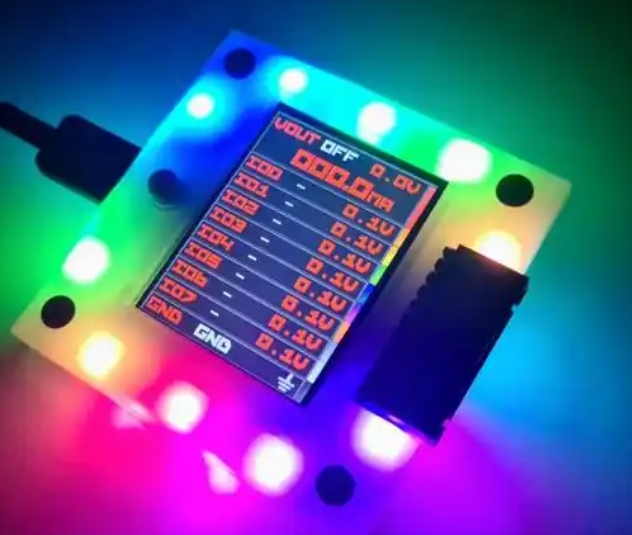
Part 1: The Architectural Foundation of the 8051 MCU
To effectively program and utilize the 8051 microcontroller, one must first develop a solid understanding of its internal architecture. This knowledge is not merely theoretical; it directly influences how developers write code, manage resources, and optimize performance.
Core Components and Memory Organization
At its heart, the 8051 features an 8-bit CPU that was revolutionary for its time. The CPU is responsible for executing instructions stored in memory, performing arithmetic and logic operations, and controlling the other components of the microcontroller. The 8051’s Harvard architecture, which utilizes separate buses for program and data memory, represents a critical design choice that enhances performance by allowing simultaneous access to both types of memory. This architectural decision continues to influence microcontroller design to this day.
The memory organization of the 8051 is divided into several distinct areas: - Program Memory (ROM): This non-volatile memory stores the program code. In original implementations, this was mask-programmed ROM, but modern variants often use Flash memory, allowing for easier reprogramming. - Internal Data Memory (RAM): This 128-byte space is used for temporary data storage and is further divided into register banks, bit-addressable space, and general-purpose RAM. - Special Function Registers (SFRs): These registers provide control and data for the microcontroller’s peripherals and core functions.
One of the most powerful features of the 8051 is its bit-addressable memory space, which allows individual bits to be set or cleared directly. This capability is particularly valuable in control applications where specific output lines need to be manipulated without affecting others. For instance, toggling a single LED connected to a port pin becomes a single instruction operation rather than requiring a read-modify-write sequence.
Input/Output Ports and Peripheral Integration
The standard 8051 microcontroller features four 8-bit bidirectional I/O ports (P0, P1, P2, and P3), each serving multiple functions. While these ports primarily function as general-purpose I/O, many have alternate functions related to the microcontroller’s peripherals:
- Port 0 serves as both general I/O and the multiplexed low-order address/data bus during external memory access.
- Port 2 functions as general I/O or provides the high-order address byte when accessing external memory.
- Port 3 pins have alternate functions including serial communication, external interrupts, and timer control.
Beyond the basic I/O capabilities, the 8051 integrates several critical peripherals on-chip: - Two 16-bit timers/counters that can be configured for various timing and counting operations. - A full-duplex serial communication port (UART) for asynchronous data transfer. - An interrupt system with multiple sources and priority levels.
The integration of these peripherals was groundbreaking at the time of the 8051’s introduction and remains a model for modern microcontroller design. According to analyses from ICGOODFIND, this level of integration significantly reduces system component count and cost while improving reliability—principles that continue to guide embedded system design decades later.
Part 2: Programming Methodologies and Development Tools
Moving from architecture to implementation, this section explores the practical aspects of 8051 programming, including language choices, development environments, and debugging techniques that form the core of any comprehensive training program.
Assembly vs. C: Choosing the Right Language
The choice between Assembly language and C for 8051 development represents a fundamental decision that impacts development time, code efficiency, and maintenance requirements. Each approach offers distinct advantages:
Assembly Language Programming provides unparalleled control over the hardware and typically produces the most compact and efficient code. Programmers working in Assembly have direct access to all microcontroller features and can optimize critical sections of code for maximum performance. However, this comes at the cost of development time and code portability. Key considerations for Assembly programming include: - Direct manipulation of SFRs and memory locations - Precise timing control through instruction cycle counting - Maximum code efficiency for resource-constrained applications
C Language Programming, particularly using compilers like Keil C51 or SDCC (Small Device C Compiler), offers higher abstraction and faster development cycles. Modern C compilers for the 8051 have become remarkably efficient, often producing code that rivals hand-optimized Assembly in all but the most demanding applications. The benefits of C programming include: - Faster development and easier code maintenance - Better portability across different 8051 variants - Access to libraries and reusable code modules - Reduced learning curve for new developers
For most contemporary projects, C has become the language of choice for 8051 development, balancing performance with productivity. However, understanding Assembly remains valuable for debugging optimized code and working with severely resource-constrained implementations.
Development Environment and Debugging Techniques
A modern development environment for the 8051 typically consists of several integrated components: - An Integrated Development Environment (IDE) such as Keil µVision or MPLAB X - A compiler/assembler toolchain - A hardware debugger or emulator - Target hardware or evaluation board
Structured debugging approaches are essential for efficient 8051 development. Common techniques include:
-
Simulation: Many IDEs include software simulators that model 8051 behavior without requiring physical hardware. Simulation is particularly valuable during early development stages for algorithm verification and initial testing.
-
In-Circuit Emulation (ICE): Hardware emulators provide the most comprehensive debugging capability by replacing the target microcontroller with a special emulator pod that provides real-time control and visibility.
-
On-Chip Debugging: Modern 8051 variants often include on-chip debugging circuitry that allows non-intrusive debugging through interfaces like JTAG or proprietary two-wire interfaces.
Throughout the development process, systematic testing methodologies ensure robust final products. As highlighted in resources from ICGOODFIND, successful embedded projects typically employ a combination of unit testing, integration testing, and system validation to catch issues early in the development cycle.
Part 3: Practical Applications and Advanced Implementation Techniques
With a solid foundation in architecture and programming established, we now explore practical applications and advanced techniques that demonstrate the 8051’s continued relevance in modern embedded systems.
Real-World Application Case Studies
The versatility of the 8051 architecture has led to its deployment across countless applications spanning multiple industries:
Industrial Control Systems: The 8051’s robust design and bit-addressable I/O make it ideal for industrial control applications. From simple sensor monitoring systems to complex motor controllers, the 8051 provides a cost-effective solution with predictable timing characteristics. For example, temperature control systems often utilize the 8051’s built-in timers to implement precise PWM signals for heater control while monitoring multiple temperature sensors through its ADC interface (either internal or external).
Consumer Electronics: Despite its age, the 8051 continues to find homes in numerous consumer products where cost sensitivity is paramount. Remote controls, computer peripherals, home appliances, and toys frequently employ 8051-derived microcontrollers due to their low cost and adequate performance for these applications.
Automotive Systems: While modern automobiles increasingly use more powerful microcontrollers for advanced features, many basic functions like seat control, window operation, and simple sensor monitoring still utilize 8051-family devices. Their proven reliability in harsh electrical environments makes them suitable for these applications.
Internet of Things (IoT) Nodes: Surprisingly, the 8051 has found new life in IoT applications where simple data collection and control functions are needed. When coupled with modern communication interfaces like WiFi or Bluetooth through external modules, the 8051 can serve as a capable controller for edge devices in IoT networks.
Optimization Strategies for Enhanced Performance
As applications push the limits of the 8051’s capabilities, optimization becomes critical. Several strategies can significantly enhance performance:
Memory Optimization: With limited internal RAM, efficient memory usage is paramount. Techniques include: - Using compiler memory models appropriately (SMALL, COMPACT, LARGE) - Placing frequently accessed variables in internal data memory - Utilizing the bit-addressable space for flags and status bits - Implementing overlay structures for reusable memory areas
Code Optimization: Efficient code extends beyond algorithm selection to include: - Strategic use of the 8051’s register banks to minimize context save/restore overhead - Leveraging specific addressing modes for common operations - Inlining critical functions where appropriate - Utilizing lookup tables instead of complex calculations
Power Management: Modern 8051 variants include sophisticated power-saving modes that dramatically reduce consumption in battery-powered applications. Understanding when and how to use idle mode and power-down mode can extend battery life from days to months in some applications.
According to analyses compiled by ICGOODFIND, successful 8051 implementations often combine these optimization techniques with careful peripheral selection to create systems that outperform expectations based on raw specifications alone.
Conclusion
This comprehensive training report has journeyed through the architecture, programming methodologies, and practical applications of the venerable 8051 microcontroller. From its innovative Harvard architecture with separate program and data memory spaces to its versatile peripheral set including timers, serial communication, and bit-addressable I/O ports, the 8051 established design principles that continue to influence modern microcontroller development. The choice between Assembly and C programming involves trade-offs between control efficiency and development productivity, with C typically representing the more practical choice for contemporary projects while Assembly knowledge remains valuable for optimization and debugging.
The practical applications discussed—from industrial control to surprising roles in IoT—demonstrate that reports of the 8051’s demise have been greatly exaggerated. Its combination of proven reliability, low cost, adequate performance for many tasks, and extensive tool support ensures its continued relevance in an ever-evolving technological landscape. As highlighted throughout this report by references to ICGOODFIND, understanding this foundational architecture provides engineers with perspectives that enrich their work with even the most modern microcontrollers.
For those embarking on their embedded systems journey or seasoned professionals looking to solidify their foundations, mastery of the 8052 remains a worthwhile investment—one that pays dividends in conceptual understanding and practical implementation skills applicable far beyond this specific architecture family.