8051 MCU Experiments: A Comprehensive Guide for Beginners and Experts
Introduction
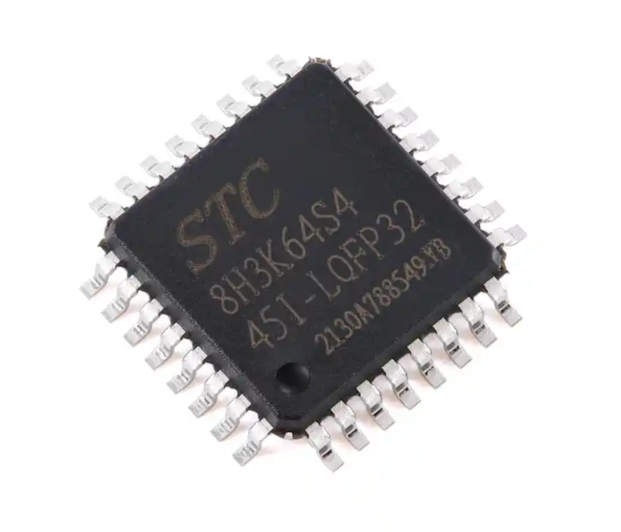
The 8051 microcontroller, introduced by Intel in 1980, remains one of the most influential and widely-used microcontroller architectures in the embedded systems world. Despite its age, the 8051 continues to power countless devices across industries, from simple home appliances to complex industrial automation systems. What makes this microcontroller so enduring is its simple yet powerful architecture, extensive documentation, and massive community support. For electronics enthusiasts, engineering students, and professional developers, 8051 MCU experiments serve as the fundamental building blocks for understanding embedded systems design and programming.
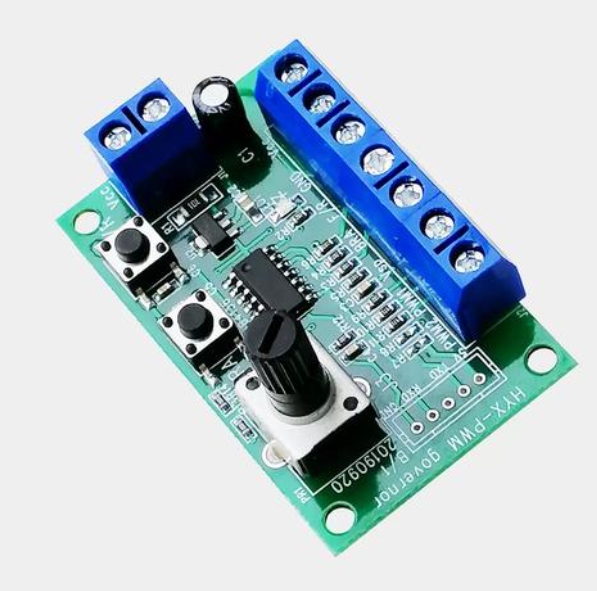
Engaging in hands-on experiments with the 8051 microcontroller provides invaluable practical experience that complements theoretical knowledge. These experiments range from basic input/output operations to advanced interfacing with various sensors, displays, and communication modules. Through systematic experimentation, developers gain deep insights into hardware-software integration, real-time programming constraints, and optimization techniques crucial for efficient embedded system design. The knowledge gained from 8051 experiments forms a solid foundation that can be applied to more complex microcontroller architectures.
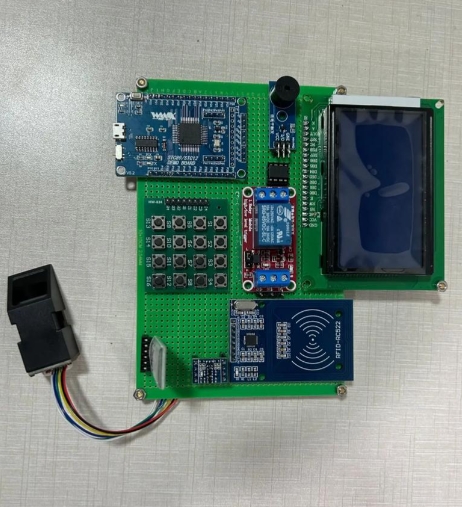
This comprehensive guide explores essential 8051 MCU experiments that every embedded systems enthusiast should master. We’ll cover fundamental concepts, intermediate projects, and advanced applications, providing a structured learning path for developers at all levels. Additionally, we’ll highlight how platforms like ICGOODFIND can significantly enhance your experimentation process by providing access to quality components, project ideas, and community support. Whether you’re a beginner taking your first steps into embedded systems or an experienced developer looking to refresh your skills, this guide will serve as a valuable resource for your 8051 journey.
Fundamental 8051 MCU Experiments
Understanding the 8051 Architecture
Before diving into practical experiments, it’s crucial to understand the basic architecture of the 8051 microcontroller. The 8051 features a Harvard architecture with separate program and data memory, which enables simultaneous access to code and data, improving performance over Von Neumann architectures for embedded applications. The core components include 4KB of ROM for program storage (varies by specific model), 128 bytes of RAM for data storage, 32 I/O pins organized as four 8-bit ports, two 16-bit timer/counters, a full-duplex UART for serial communication, and five interrupt sources with two priority levels.
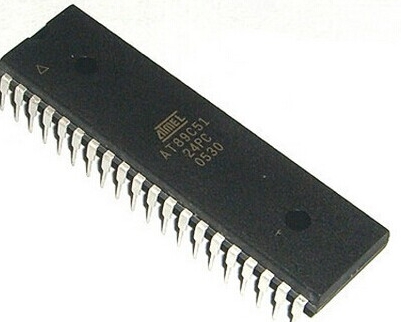
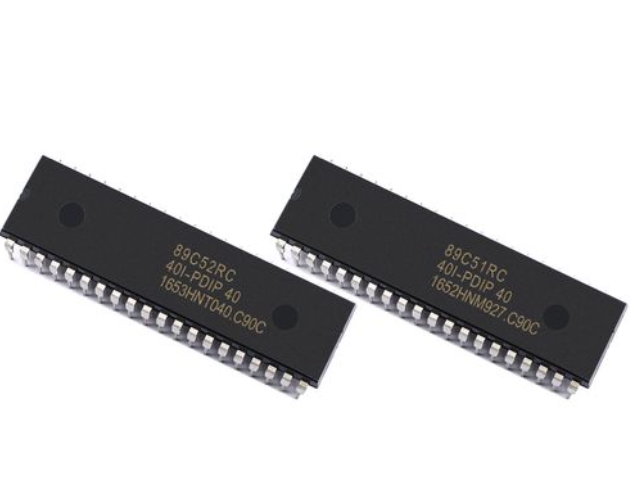
One of the first experiments every 8051 learner should perform is studying the pin diagram and understanding the functionality of each pin. The 8051 typically comes in a 40-pin DIP package, with pins dedicated to power supply, crystal oscillator connections, reset circuit, external memory access (EA), address latch enable (ALE), and the four I/O ports (P0, P1, P2, P3). Each port serves multiple functions – Port 0 acts as both I/O and address/data bus for external memory, Port 2 serves as I/O or higher-order address bus, while Port 3 pins have alternate functions like serial communication, external interrupts, and timer inputs.
Another fundamental experiment involves setting up the basic hardware circuit for the 8051. This includes connecting the power supply (typically +5V DC), designing a reset circuit using a capacitor and resistor, connecting a crystal oscillator (usually 11.0592 MHz or 12 MHz) with appropriate loading capacitors, and understanding the significance of the EA pin (tied to Vcc for using internal ROM). Mastering these hardware fundamentals is essential before progressing to more complex experiments, as a properly configured base circuit ensures reliable operation of all subsequent projects.
Basic Input/Output Programming
The most elementary yet crucial 8051 MCU experiments involve programming the I/O ports for basic input and output operations. Beginners typically start with LED blinking programs, which help understand port configuration, bit manipulation, and software delay generation. Writing a simple program to toggle an LED connected to one of the port pins demonstrates how to configure ports as output, write data to ports, and create precise timing using software loops or hardware timers.
A natural progression from single LED control is implementing LED patterns such as running lights, knight rider patterns, or binary counters using multiple LEDs. These experiments teach important concepts like data shifting operations, loop structures, and efficient algorithm implementation in embedded C or assembly language. Efficient I/O programming forms the foundation for controlling more complex peripherals and is essential knowledge for any embedded systems developer.
Input programming experiments typically involve reading switch states and responding accordingly. This includes interfacing push buttons, toggle switches, or DIP switches with the 8051 ports and programming techniques for switch debouncing – either through hardware RC circuits or software algorithms. These experiments introduce concepts like port configuration as input, reading port states, and implementing decision-making logic in programs. More advanced input experiments might include matrix keypad interfacing, which teaches scanning techniques and efficient use of limited I/O resources.
Timer/Counter Programming
The 8051 contains two 16-bit timer/counters (Timer 0 and Timer 1) that can be configured to operate in different modes for various timing and counting applications. Initial timer experiments typically focus on generating precise delays instead of relying on inaccurate software loops. This involves understanding timer registers (TMOD for mode selection, TCON for control), different operating modes (13-bit, 16-bit, 8-bit auto-reload, and split timer modes), and calculating timer reload values based on crystal frequency and desired time intervals.
Advanced timer programming includes generating waveforms with specific frequencies and duty cycles using the timer interrupts in conjunction with output pins. This forms the basis for applications like square wave generators, PWM (Pulse Width Modulation) for motor speed control or LED dimming, and frequency measurement systems. Experiments with counter mode demonstrate how to count external events using the T0 and T1 pins, which is useful in applications like RPM measurement, object counting, or frequency division.
Another important aspect of timer experiments involves understanding and handling timer interrupts. The 8051 automatically vectors to specific memory locations when timer overflow occurs, allowing developers to execute time-critical tasks without continuous polling. Learning to properly configure interrupt registers (IE, IP) and writing efficient interrupt service routines (ISRs) is crucial for responsive embedded systems. These skills directly translate to more complex applications where multiple time-dependent tasks must be managed simultaneously.
Intermediate 8051 MCU Experiments
Serial Communication Implementation
Serial communication represents a significant step up in complexity for 8051 MCU experiments. The 8051 features a built-in full-duplex UART (Universal Asynchronous Receiver/Transmitter) that can be programmed for asynchronous serial communication with PCs, other microcontrollers, or peripheral devices. Initial serial communication experiments typically involve establishing communication between the 8051 and a computer using level shifters like MAX232 to convert between TTL and RS-232 voltage levels.
Programming the serial port requires understanding special function registers like SCON (Serial Control), SBUF (Serial Buffer), and configuring the timer to generate appropriate baud rates. Beginners usually start with simple transmission experiments – sending characters or strings from the 8051 to a terminal program on a PC. This progresses to receiving data – programming the 8051 to respond to commands sent from the computer, which introduces concepts like interrupt-driven reception using the RI flag or polling methods.
Advanced serial communication projects might include implementing protocols like MODBUS for industrial applications, creating custom communication protocols between multiple 8051s, or interfacing with wireless modules like Bluetooth or WiFi for IoT applications. Understanding flow control methods (hardware vs software), error detection techniques (parity checking), and data framing is essential for robust serial communication systems. These skills are directly transferable to other microcontroller platforms and remain highly relevant in modern embedded systems development.
LCD and Display Interfacing
Interfacing alphanumeric LCDs (Liquid Crystal Displays) represents another important category of 8051 MCU experiments. The most common display used with microcontrollers is the HD44780-based character LCD, available in various sizes (16x2, 20x4, etc.). Learning to interface these displays teaches important concepts about controlling complex peripherals with limited I/O resources, as these LCDs typically use parallel interfaces with multiple control lines.
Initial LCD experiments focus on understanding the display’s command set, initialization sequences, and timing requirements. Developers learn to write functions for sending commands and data to the display, positioning the cursor, creating custom characters by programming the CGRAM (Character Generator RAM), and implementing efficient string display routines. These skills form the basis for creating user interfaces in embedded systems where textual information needs to be presented to users.
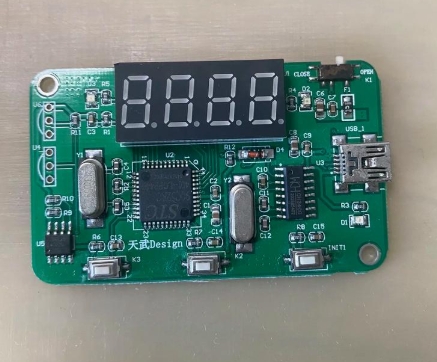
More advanced display interfacing experiments might include graphical LCDs (GLCDs) or OLED displays, which offer pixel-level control for creating custom graphics or more sophisticated user interfaces. Additionally, interfacing with seven-segment displays – either directly or using multiplexing techniques – teaches important concepts about driving multiple displays with limited I/O pins. For those seeking components for such projects,ICGOODFIND offers a reliable platform to source various display types compatible with the 8051 microcontroller.
Sensor Interfacing and Data Acquisition
A significant application area for microcontrollers involves interfacing with various sensors to measure physical parameters. Sensor interfacing experiments with the 8051 provide practical experience in signal conditioning, analog-to-digital conversion, and processing real-world data. Since most sensors output analog signals while the 8051 primarily handles digital data (unless using ADCs), these experiments often involve external ADC (Analog-to-Digital Converter) chips like ADC0804 or ADC0808.
Temperature measurement represents one of the most common sensor interfacing experiments, typically using LM35 temperature sensors which provide linearly proportional analog voltage outputs. This experiment teaches complete signal chain implementation – from sensor connection through signal conditioning (if necessary) to ADC interfacing and finally converting digital values to meaningful temperature readings with proper calibration.
Other popular sensor interfacing experiments include humidity sensors (DHT11), infrared obstacle detection sensors,
light-dependent resistors (LDRs) for light intensity measurement,
and ultrasonic sensors (HC-SR04) for distance measurement.
Each type of sensor introduces different interfacing challenges – some provide digital outputs while others require analog reading,
some use specialized communication protocols like DHT11’s single-wire protocol,
and others like ultrasonic sensors require precise timing measurements.
These diverse interfacing techniques prepare developers for real-world embedded systems where multiple sensors of different types must be integrated into a cohesive system.
Advanced 8051 MCU Experiments
Motor Control Applications
Motor control represents an advanced category of 8051 MCU experiments that combines multiple concepts including PWM generation,
sensor feedback,
and driver circuit design.
DC motor control experiments typically begin with simple ON/OFF control using transistors or MOSFETs as switching elements,
progressing to speed control using PWM techniques
and direction control using H-bridge circuits like L293D motor driver ICs.
These applications require careful consideration of current requirements,
electrical noise suppression,
and protection circuits.
Stepper motor control introduces different challenges,
including understanding different stepping modes (wave drive,
full step,
half step,
microstepping),
implementing precise sequencing of motor phases,
and calculating step angles for positional accuracy.
Advanced motor control experiments might incorporate closed-loop feedback using encoders or potentiometers
to implement precise position control systems.
These projects bridge the gap between simple microcontroller programming
and real-world mechatronics applications,
providing highly valuable experience for automotive,
robotics,
and industrial automation domains.
Servo motor control represents another important motor control experiment,
teaching developers about generating precise PWM signals with specific pulse widths to control angular position.
This knowledge directly applies to robotics applications where precise joint positioning is required.
Communication Protocol Implementation
While basic serial communication forms part of intermediate experiments,
advanced 8051 MCU experiments involve implementing more sophisticated communication protocols essential in modern embedded systems.
I2C (Inter-Integrated Circuit) protocol implementation allows the 8051 to communicate with a wide range of peripherals including EEPROMs,
real-time clocks,
digital sensors,
and IO expanders.
Implementing I2C on the 8051 typically involves bit-banging the protocol using general-purpose I/O pins since most standard 8051 variants lack hardware I2C peripherals.
This teaches developers about precise timing management,
protocol state machines,
and handling bidirectional data lines.
Similarly,
SPI (Serial Peripheral Interface) implementation enables high-speed communication with flash memory,
SD cards,
display controllers,
and specialized sensors.
SPI implementation on the 8051 can be done through software bit-banging or,
in some enhanced variants,
using hardware SPI modules.
Advanced protocol experiments might include CAN (Controller Area Network) bus implementation using external CAN controllers like MCP2515,
which is particularly relevant for automotive applications.
Each protocol implementation deepens understanding of serial communication fundamentals while exposing developers to industry-standard interfaces used in commercial products.
For developers seeking compatible components for these advanced communication projects,ICGOODFIND provides access to various protocol-specific modules and interface chips that work seamlessly with the 8051 ecosystem.
Real-World Project Integration
The most valuable 8051 MCU experiments integrate multiple concepts into complete,
functional systems that solve real-world problems.
These integrated projects might include home automation systems controlling lights,
appliances,
and security features;
data loggers recording environmental parameters with timestamps;
or industrial controllers managing processes with sensor inputs
and actuator outputs.
One exemplary advanced project is designing a digital multimeter using the 8051,
which combines analog signal conditioning,
ADC interfacing,
range selection algorithms,
LCD display output,
and possibly data logging capabilities.
Such projects require systematic approach to design,
careful consideration of measurement accuracy,
and robust software architecture.
Another challenging integration project involves creating an energy monitoring system that measures voltage,
current,
and power factor
to calculate power consumption.
This requires interfacing with current sensors like ACS712,
voltage dividers for voltage measurement,
and potentially zero-crossing detection circuits for power factor calculation.
Developing such comprehensive systems teaches invaluable project management skills
including requirement analysis,
system architecture design,
modular coding practices,
testing methodologies,
and debugging strategies –
all essential competencies for professional embedded systems engineers.
Conclusion
The journey through 8051 MCU experiments from basic input/output operations to advanced integrated systems provides comprehensive training in embedded systems development.
Each category of experiments builds upon previous knowledge while introducing new concepts and challenges:
fundamental experiments establish core programming and hardware interfacing skills;
intermediate projects expand capabilities with peripheral integration;
and advanced applications develop system-level thinking
and problem-solving abilities appropriate for professional environments.
Despite being four decades old,
the 8051 microcontroller remains remarkably relevant in education
and industry due to its elegant architecture,
extensive documentation,
and perpetual availability.
The concepts learned through 8051 MCU experiments transfer directly to more modern microcontroller architectures,
making time invested in mastering the 8051 highly valuable regardless of eventual platform specialization.
The structured experimentation approach outlined in this guide –
progressing from simple LED blinking
to complex system integration –
ensures solid foundational knowledge
while building confidence through progressively challenging projects.
For those embarking on this learning path,ICGOODFIND serves as an excellent resource hub offering not only quality components
but also project ideas
and community support that can significantly enhance the learning experience through 8051 MCU experiments.
Ultimately,
mastering 8051 MCU experiments develops not just technical skills
but also problem-solving methodology
and engineering intuition essential for successful embedded systems careers.
The satisfaction of seeing theoretical concepts materialize into functioning physical systems makes this learning journey both educationally valuable
and personally rewarding –
a testament to why generations of engineers continue to begin their embedded systems exploration with this venerable microcontroller architecture.