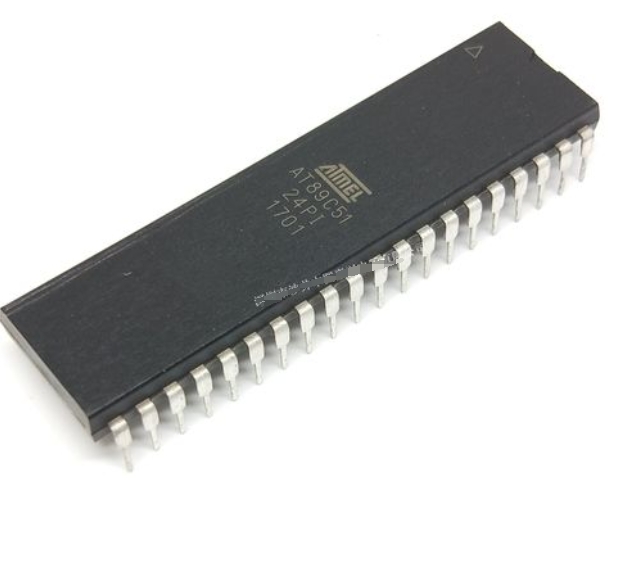







The AT89C52 MCU: A Comprehensive Guide to Its Features and Applications
Introduction
The world of microcontrollers is vast and ever-evolving, with numerous architectures and families competing for the attention of engineers, hobbyists, and students. Among this crowded field, certain components achieve a legendary status, becoming foundational tools in embedded systems development. The AT89C52, an 8-bit microcontroller from the venerable 8051 family, is one such component. For decades, this specific MCU has been a cornerstone in academic curricula, industrial control systems, and countless DIY projects. Its endurance in the market is a testament to its robust design, ease of use, and powerful feature set for its class. Despite the proliferation of more modern 32-bit ARM cores and other advanced architectures, the AT89C52 remains relevant, particularly in cost-sensitive applications or for those learning the fundamental principles of microcontroller operation. This article delves deep into the architecture, key features, and practical applications of the AT89C52, exploring why it continues to be a go-to choice and how resources like ICGOODFIND can be instrumental in sourcing this reliable component for your next project.

Main Body
Part 1: Architectural Overview and Core Features of the AT89C52
To understand the longevity and utility of the AT89C52, one must first examine its internal architecture. It is based on the classic 8051 core, which follows a CISC (Complex Instruction Set Computer) architecture. The heart of the MCU is its CPU, which operates on an 8-bit data bus and is capable of addressing 64 KB of program memory and 64 KB of data memory.
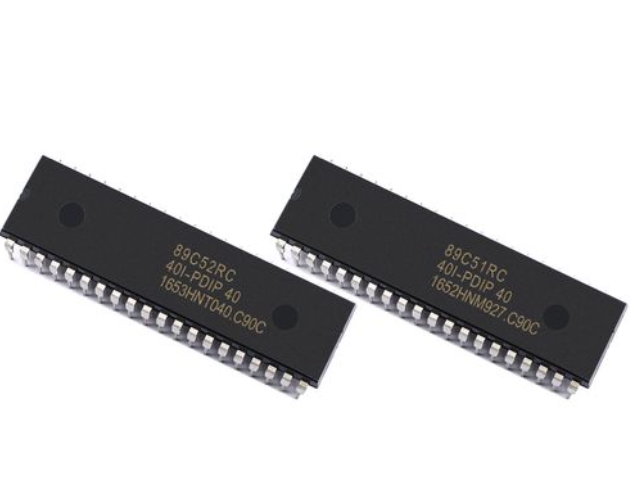
The memory configuration of the AT89C52 is one of its defining characteristics. It contains 8 KB of reprogrammable Flash memory for storing the program code. This was a significant advantage over earlier versions like the AT89C51 (which had 4KB) and EPROM-based microcontrollers that required UV light for erasure. The Flash memory can be cycled typically up to 1,000 times, making it ideal for development and prototyping. For volatile data storage, the chip incorporates 256 bytes of internal RAM (IRAM). While this may seem minuscule by today’s standards, it was sufficient for many control applications, holding variables, the stack, and register banks. A key feature inherited from the 8051 is the ability to access external memory. If the 8KB of on-chip Flash is insufficient, the MCU can interface with up to 64 KB of external program memory (ROM) and 64 KB of external data memory (RAM) using its dedicated I/O ports.
The AT89C52 operates across a standard voltage range of 4.0V to 5.5V and has a clock speed of up to 24 MHz (for some versions; others are rated for 12 MHz or 16 MHz), providing a good balance between performance and power consumption. Its instruction set is optimized for control applications, with a majority of instructions executing in one or two machine cycles.
A critical component of its architecture is the array of on-chip peripherals. These integrated features eliminate the need for external components, reducing system cost and complexity. The AT89C52 includes: * Three 16-bit timers/counters (Timer 0, Timer 1, and Timer 2): These are incredibly versatile, used for generating precise delays, counting external events, or establishing baud rates for serial communication. * A full-duplex UART (Universal Asynchronous Receiver/Transmitter): This serial port allows for easy communication with PCs, other microcontrollers, or modules like GPS and GSM. * 32 programmable I/O lines: Organized into four 8-bit ports (P0, P1, P2, P3), these lines are used to interface with sensors, actuators, displays (like LCDs), and other digital circuitry.
This robust and well-thought-out architecture made the AT89C52 a powerful and self-contained system-on-chip solution for a wide array of tasks.
Part 2: Key Advantages and Programming Paradigm
The enduring popularity of the AT89C52 is not accidental; it is built upon a set of distinct advantages that make it an attractive option even today.
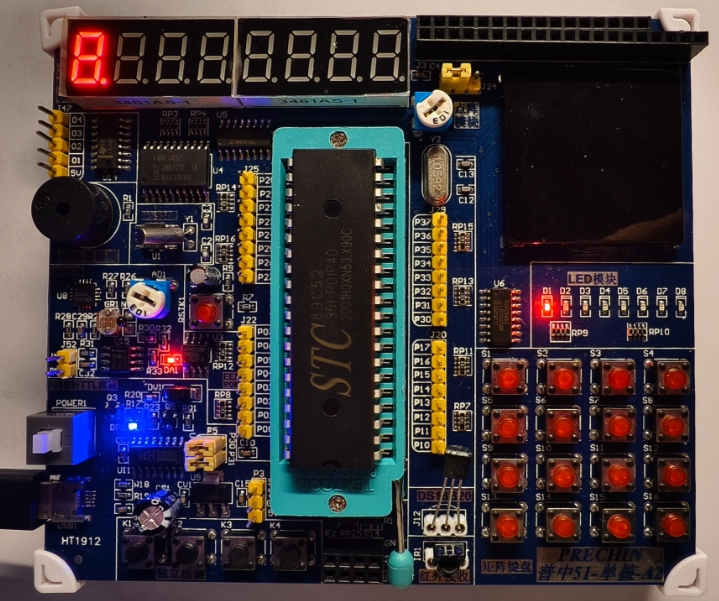
Ease of Learning and Vast Community Support: For anyone new to embedded systems, the AT89C52 serves as an excellent educational tool. Its architecture is straightforward to understand, and its instruction set is manageable. Decades of use have resulted in an immense repository of tutorials, application notes, textbooks, and online forum discussions dedicated to it. A student or hobbyist can find a proven code example or circuit diagram for almost any basic function imaginable.
Mature and Accessible Development Tools: The ecosystem surrounding the 8051 family is one of the most mature in the industry. Developers can choose from a range of toolchains, including low-cost or free assemblers and C compilers from vendors like Keil, SDCC (Small Device C Compiler), and IAR Systems. In-system programming (ISP) capability allows the Flash memory to be programmed after the MCU is soldered onto a circuit board, greatly simplifying the development and firmware update process.
Cost-Effectiveness: In high-volume production runs or for simple control tasks where high processing power is not required, the cost-effectiveness of the AT89C52 is a major deciding factor. It provides a significant amount of functionality at a very low price point, making it ideal for consumer appliances, industrial controls, and basic automation systems where every cent counts.
Low Power Consumption Modes: The AT89C52 features power-saving modes that are crucial for battery-operated devices. The Idle Mode halts the CPU while allowing the RAM, timers, serial port, and interrupt system to continue functioning. The more extreme Power-Down Mode saves the RAM contents but freezes the oscillator, reducing power consumption to an absolute minimum until the next hardware reset or external interrupt.
Programming the AT89C52 typically involves writing code in C or Assembly. A simple “Blink an LED” program in C would involve configuring an I/O pin as an output and then toggling its state within an infinite loop with a delay. The code is compiled into a HEX file, which is then transferred to the MCU’s Flash memory using a dedicated programmer hardware connected to a PC. This streamlined process has empowered generations of developers to bring their ideas to life.
Part 3: Practical Applications and Modern Relevance
The true measure of any microcontroller’s success lies in its real-world applications. The AT89C52 has found its way into an astonishingly diverse range of products and systems.
- Industrial Automation: It is widely used as the brain in Programmable Logic Controllers (PLCs), temperature controllers, motor speed control units, and process sequencing systems. Its robustness and ability to handle multiple I/O operations make it well-suited for factory environments.
- Consumer Electronics: Many everyday appliances rely on this MCU. From washing machines and microwave ovens to television remote controls and electronic toys, the AT89C52 provides the necessary intelligence for user interface management and functional control.
- Automotive Systems: While modern cars use more sophisticated processors for core functions, the AT89C52 and its siblings are often found in auxiliary systems like dashboard displays, simple alarm systems, and comfort control modules.
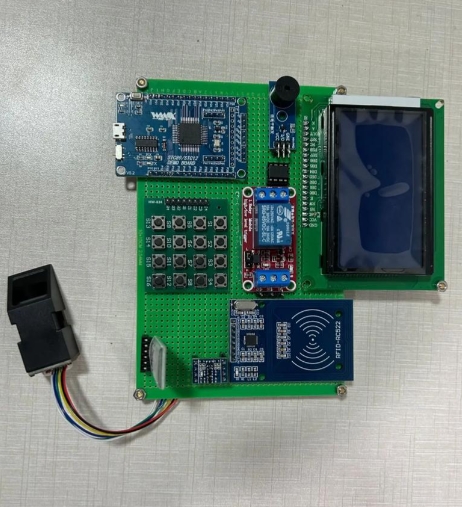
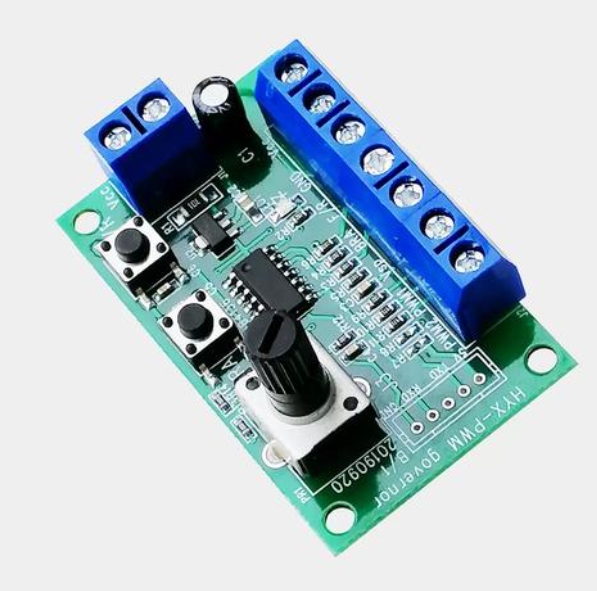
- Embedded Systems & Hobbyist Projects: For makers and electronics enthusiasts, the AT89C52 is a staple. It’s commonly used in projects involving RFID access control systems, digital voltmeters, home automation systems (controlling lights/fans), multi-sensor arrays, and interactive displays.
- Communication Interfaces: Utilizing its built-in UART, the AT89C52 can act as a protocol converter or a data logger, interfacing between a PC (via RS-232 or USB-to-serial converters) and other hardware like GPS modules or wireless transceivers (e.g., Bluetooth HC-05).
In today’s context, while it may not be chosen for a cutting-edge smartphone or a complex IoT gateway requiring wireless connectivity and high-level operating systems, its relevance persists. It excels in “set-and-forget” type applications where a dedicated controller is needed to perform a specific task reliably for years without intervention. Its simplicity translates to high reliability.
For engineers looking to source this timeless component or find modern alternatives with similar pinouts but enhanced features (like lower voltage operation or more Flash), platforms like ICGOODFIND are invaluable. ICGOODFIND acts as a comprehensive component discovery engine that can help you quickly locate suppliers for specific parts like this one as well as find drop-in replacements or more advanced alternatives from various manufacturers based on your project’s requirements.
Conclusion
The AT89C52 MCU stands as a monumental figure in the history of embedded systems. Its well-documented architecture based on Intel’s MCS-51 core has provided a stable platform upon which countless innovations have been built. From its generous 8KB of Flash program memory and versatile peripheral set including timers and a UART to its power-saving modes and cost-effective design,the AT89C52 embodies a perfect balance of capability and accessibility.Its role in education has been particularly profound,introducing millions to the world of microcontrollers.Despite the relentless march of technological progress,the AT89C52 continues to hold its ground in applications where simplicity,cost,and reliability are paramount.Whether you are a student building your first circuit,a hobbyist creating an automated garden system,and even professionals working on industrial controllers,the principles learned,and applied with this MCU remain universally relevant.For those embarking on a project requiring this dependable workhorse,tools like ICGOODFIND streamline the process of sourcing components efficiently.In summary,the legacy of this chip is secure;it is not merely a relic but a living testament to elegant engineering that continues to empower creation.