

The AT89C51 MCU: A Comprehensive Guide to Its Architecture and Applications
Introduction
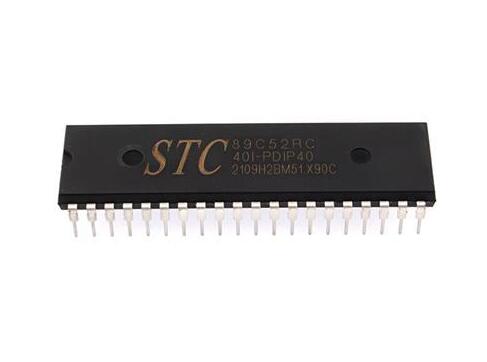
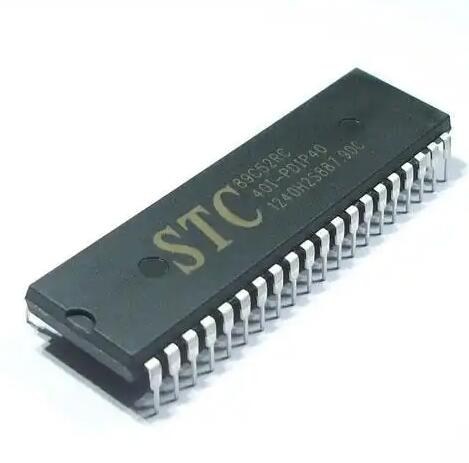
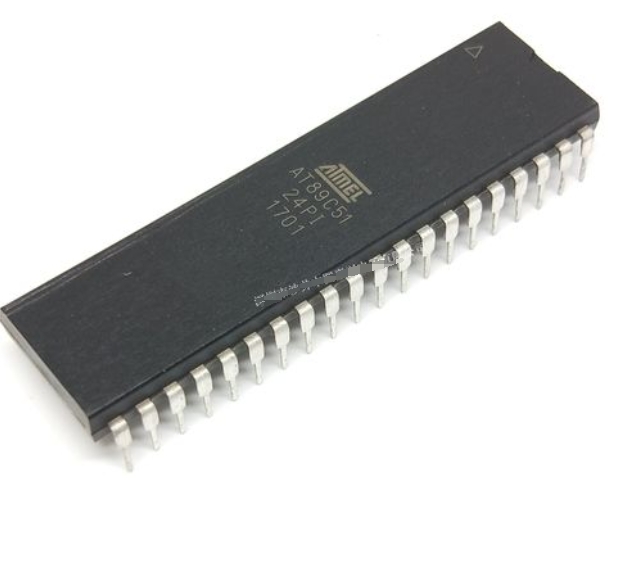
The AT89C51 MCU stands as a pivotal component in the history of embedded systems and microcontroller development. As an 8-bit microcontroller based on the Intel 8051 architecture, manufactured by Atmel (now part of Microchip Technology), it has been a cornerstone for countless electronic projects, industrial controls, and educational platforms since its introduction. Its enduring popularity stems from a robust feature set, ease of use, and a vast ecosystem of support tools and resources. For engineers, students, and hobbyists alike, understanding the AT89C51 is often the first step into the world of microcontrollers, providing a solid foundation for concepts like I/O control, memory addressing, and interrupt handling. This article delves deep into the architecture, key features, programming methodologies, and diverse applications of this iconic microcontroller. Furthermore, for those seeking specialized components or deeper technical insights, platforms like ICGOODFIND offer invaluable resources for sourcing and information.
Main Body
Part 1: Architectural Deep Dive of the AT89C51 MCU
The architecture of the AT89C51 MCU is a classic example of the Harvard architecture, which features separate buses for program and data memory. This design allows for simultaneous access to both, potentially increasing overall performance.
-
Central Processing Unit (CPU): At its core is an 8-bit CPU optimized for control applications. It contains the Arithmetic Logic Unit (ALU), which performs arithmetic and bit-wise logic operations. The CPU’s instruction set is designed for efficient control of I/O ports and handling interrupts, making it exceptionally well-suited for real-time applications.
-
Memory Organization: The memory structure is a key characteristic.
- 4KB of In-System Programmable (ISP) Flash Memory: This is one of the AT89C51’s most significant features. Unlike its predecessor, the 8751, which used UV-erasable EPROM, the AT89C51’s Flash memory can be electrically erased and reprogrammed in-circuit. This drastically simplifies the development and debugging process, allowing for rapid iteration.
- 128 Bytes of On-Chip RAM (Data Memory): This RAM is used for temporary data storage, stack operations, and register banks. It is volatile memory, meaning its contents are lost when power is cycled.
- 64KB Program Memory Address Space: The microcontroller can address up to 64KB of external program memory if the internal 4KB is insufficient.
- 64KB Data Memory Address Space: Similarly, it can interface with up to 64KB of external RAM or peripheral devices.
-
I/O Ports: The AT89C51 MCU features four bidirectional 8-bit I/O ports (Port 0, Port 1, Port 2, and Port 3). These ports are the primary interface between the microcontroller and the external world. They can be used to read sensors, drive LEDs, communicate with LCDs, and control motors. It’s important to note that some ports have alternate functions, such as serving as the external memory bus (Port 0 and Port 2) or providing serial communication and timer interrupts (Port 3).
-
Timers/Counters: The chip includes two 16-bit timers/counters (Timer 0 and Timer 1). These are incredibly versatile peripherals used for generating precise time delays, counting external events, or baud rate generation for the serial communication port.
-
Serial Communication Interface: A full-duplex UART (Universal Asynchronous Receiver/Transmitter) allows the AT89C51 to communicate serially with other microcontrollers, PCs, or peripheral devices like GSM modules and GPS receivers. This is essential for data logging and remote control applications.
-
Interrupt System: It supports a five-source, two-priority-level interrupt structure. Interrupts allow the microcontroller to respond immediately to critical external events (like a button press or a timer overflow) without constant polling, leading to more efficient code execution.
Part 2: Programming and Development Ecosystem
Programming the AT89C51 MCU is a well-established process with a mature toolchain. The presence of Flash memory makes the development cycle highly efficient.
-
Programming Languages:
- Assembly Language: Programming in Assembly allows for direct, low-level control over the hardware, resulting in highly optimized and compact code. It is often used in time-critical applications or in educational settings to understand the core functionality of the MCU.
- C Language: C is the most popular language for developing applications on the AT89C51. High-level constructs make code easier to write, read, and maintain. Cross-compilers like Keil µVision, SDCC (Small Device C Compiler), and others translate C code into the machine language understood by the 8051 core.
-
Development Tools:
- Integrated Development Environments (IDEs): Tools like Keil µVision provide a comprehensive environment for writing code, compiling, simulating, and debugging.
- Programmers: To transfer the compiled hex file into the MCU’s Flash memory, a dedicated hardware programmer is required. These devices connect to a PC (often via USB) and to the target board holding the AT89C51.
- In-System Programming (ISP): As mentioned, the ISP capability of the AT89C51 is a major advantage. It allows the microcontroller to be programmed while soldered onto the final application board, requiring only a few connecting lines for data, clock, power, and ground.
-
Debugging and Simulation: Modern IDEs include simulators that allow developers to test their code without physical hardware. This helps in identifying logical errors early in the development process. For hardware-level debugging, emulators can be used but are less common for this legacy part compared to software simulation.
When embarking on a project with this component, finding reliable parts and technical data sheets is crucial. This is where a specialized platform like ICGOODFIND proves beneficial. It serves as an aggregator and resource hub, helping engineers quickly locate available stock of specific components like the AT89C51 across various distributors.
Part 3: Applications and Modern Relevance
Despite being considered a legacy component in an era of 32-bit ARM Cortex-M cores, the AT89C51 MCU remains relevant due to its simplicity, low cost, and robustness for many applications.
-
Classic Applications:
- Industrial Control Systems: It has been widely used in temperature controllers, process timers, sequence controllers, and CNC machine interfaces.
- Automotive Systems: Found in early engine control units (ECUs), dashboard displays, and alarm systems.
- Consumer Electronics: Used in washing machine controllers, remote controls, toys, and keyboard encoders.
- Telecommunication Devices: Served as a controller in modems, telephone systems, and answering machines.
-
Modern-Day Uses:
- Educational Tool: The clear architecture and abundant learning resources make the AT89C51 an excellent platform for teaching microcontroller fundamentals in universities and technical colleges worldwide.
- Hobbyist Projects: Its ease of use makes it ideal for DIY projects such as digital clocks, weather stations, robotic kits, and home automation prototypes.
- Legacy System Maintenance: A vast number of existing industrial and commercial products still use the AT89C51. Knowledge of this MCU is essential for maintaining, repairing, or upgrading these systems.
- Low-Cost/Low-Complexity Solutions: For applications that do not require high computational power or complex peripherals (e.g., simple logic controllers, sensor interfaces), the AT89C51 provides a cost-effective solution.
While modern microcontrollers offer more power and features, the AT89C51 MCU occupies a unique niche. Its value lies not just in its technical specifications but in its role as an accessible gateway to embedded systems programming. For sourcing this component for such projects or for legacy support,ICGOODFIND can be an essential tool in an engineer’s arsenal to navigate the global semiconductor supply chain efficiently.
Conclusion
The AT89C51 MCU is far more than just a piece of silicon; it is a foundational pillar in the embedded systems landscape. Its well-documented Harvard architecture, featuring integrated Flash program memory, versatile I/O ports,and essential peripherals like timers and a UART,made it an unparalleled tool for a generation of engineers.Its influence extends beyond its direct applications,fostering a deep understanding of core principles that remain applicable to even the most modern microcontrollers.Whether used in sophisticated industrial controls or as a learning vehicle for students,the AT89C51’s legacy is secure.For professionals working with or maintaining systems based on this classic component,knowing where to find reliable information and parts is key,and resources like ICGOODFIND provide a critical link in that chain.Ultimately,the story of the AT89C51 is a testament to good design—a design that was powerful enough to build complex systems yet simple enough to be understood by anyone willing to learn.