

The Ultimate Guide to AT89S52 MCU: Features, Applications, and Programming
Introduction
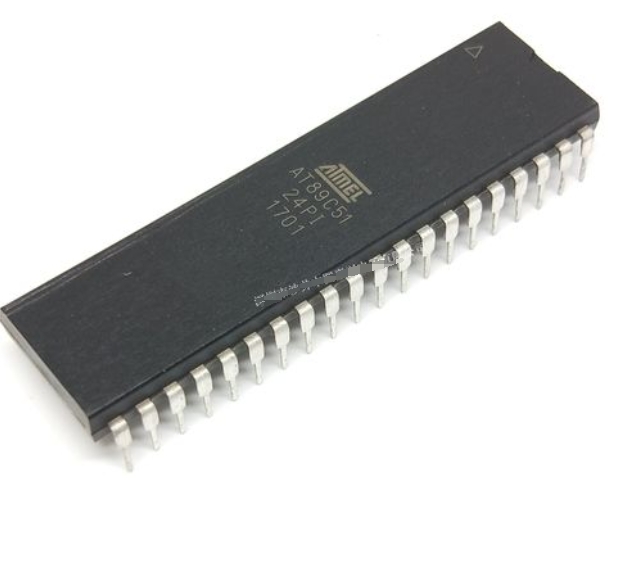
The AT89S52 microcontroller stands as a pivotal component in the embedded systems landscape, representing a significant evolution in the 8051 microcontroller family. Developed by Atmel (now part of Microchip Technology), this 8-bit CMOS microcontroller has become a cornerstone in countless electronic projects, industrial applications, and educational environments. Its enduring popularity stems from an optimal balance of performance, power efficiency, and cost-effectiveness that continues to make it relevant in today’s rapidly advancing technological world.
As we delve into the intricacies of the AT89S52, it’s important to recognize its position as an improved version of the original 8051 architecture, incorporating enhanced features while maintaining backward compatibility. This microcontroller has empowered generations of engineers, students, and hobbyists to bring their electronic creations to life, from simple automation systems to complex industrial controllers. The versatile nature of this MCU, combined with its robust ecosystem of development tools and resources, ensures its continued relevance in both prototyping and production environments.

The significance of the AT89S52 extends beyond its technical specifications—it represents an accessible entry point into the world of embedded systems while simultaneously offering enough capability for sophisticated applications. Throughout this comprehensive guide, we’ll explore the architecture that makes this microcontroller tick, examine its practical implementations across various industries, and provide insights into programming methodologies that maximize its potential. Whether you’re a seasoned embedded systems developer or just beginning your journey with microcontrollers, understanding the AT89S52 provides a solid foundation for working with a wide range of embedded technologies.
Main Body
Part 1: Architecture and Technical Specifications
The AT89S52 microcontroller boasts a well-optimized architecture that has stood the test of time while incorporating modern enhancements. At its core lies an 8-bit CPU capable of operating at frequencies up to 33 MHz, providing sufficient processing power for a wide range of applications. The heart of this MCU features 8K bytes of In-System Programmable (ISP) Flash memory, which allows for convenient program updates without removing the chip from the circuit board. This feature significantly streamlines the development process and facilitates field upgrades in deployed systems.
One of the most notable architectural elements is the memory organization, which follows the modified Harvard architecture characteristic of the 8051 family. The AT89S52 includes 256 bytes of internal RAM, with the lower 128 bytes serving as general-purpose registers and the upper 128 bytes functioning as special function registers (SFRs). This memory configuration provides efficient data handling capabilities while maintaining the simplicity that has made the 8051 architecture so enduringly popular among developers.
The peripheral set integrated into the AT89S52 demonstrates thoughtful design for practical applications. It incorporates three 16-bit timer/counters (Timer 0, Timer 1, and Timer 2) that provide flexible timing and counting operations essential for tasks ranging from simple delays to complex waveform generation. The microcontroller also features a full-duplex UART (Universal Asynchronous Receiver/Transmitter) for serial communication, enabling seamless connectivity with other devices, computers, or networks. Additionally, the inclusion of 32 programmable I/O lines organized into four 8-bit ports (Port 0, Port 1, Port 2, and Port 3) offers substantial interfacing capabilities with external components and peripherals.
Power management represents another area where the AT89S52 excels. The microcontroller supports multiple power-saving modes, including Idle Mode and Power-down Mode, which significantly reduce power consumption during periods of reduced activity. These features make the AT89S52 particularly suitable for battery-powered applications and energy-conscious designs. The operating voltage range of 4.0V to 5.5V aligns with standard TTL logic levels, simplifying interface requirements with surrounding circuitry.
From a programming perspective, the AT89S52 supports both high-level and assembly language development, with a comprehensive instruction set that includes 111 instructions executed in minimum 1 machine cycle. The in-system programming capability through the SPI interface eliminates the need for dedicated programmers in many cases, further reducing development costs and complexity. When considering components like the AT89S52 for your projects, platforms like ICGOODFIND can be invaluable resources for identifying reliable suppliers and comparing technical specifications across manufacturers.
Part 2: Practical Applications and Implementation Scenarios
The versatile nature of the AT89S52 microcontroller has led to its adoption across an impressive spectrum of applications, from simple educational projects to sophisticated industrial systems. In the industrial automation sector, this MCU frequently serves as the computational heart of sensor interfaces, motor controllers, and process monitoring systems. Its robust construction and reliable operation under industrial conditions make it particularly suitable for environments where consistent performance is paramount. The timer/counter modules prove invaluable in these contexts, providing precise timing for control loops and synchronization tasks.
Consumer electronics represent another significant application domain for the AT89S52. From home automation systems to entertainment devices, this microcontroller delivers the necessary computational capability while maintaining cost-effectiveness essential for consumer markets. Its ability to interface with various sensors, displays, and communication modules enables designers to create feature-rich products without escalating production costs. The programmable I/O ports facilitate connections with keypads, LCD displays, infrared receivers, and other common consumer electronics components.
In the educational sphere, the AT89S52 has become a staple in engineering curricula worldwide. Its straightforward architecture provides an excellent platform for understanding fundamental microcontroller concepts while offering enough complexity to challenge students as they advance. Numerous universities and technical institutes incorporate this MCU into their laboratories for teaching embedded systems design, digital logic, and real-time programming. The extensive documentation and community support available for the AT89S52 further enhance its educational value.
The medical device industry has also benefited from implementations of the AT89S52 in non-critical monitoring equipment and diagnostic tools. While not typically employed in life-sustaining medical equipment due to its 8-bit architecture limitations, it finds appropriate use in devices such as digital thermometers, portable blood pressure monitors, and simple patient monitoring systems. The low-power capabilities of this microcontroller make it particularly suitable for portable medical devices where battery life is a crucial consideration.
Robotics and automation projects frequently leverage the capabilities of the AT89S52 for motor control, sensor integration, and decision-making tasks. Hobbyists and professional roboticists alike appreciate the balance between computational power and interface flexibility that this MCU provides. From simple line-following robots to more complex autonomous systems, the AT89S52 delivers reliable performance at a accessible price point. When implementing such projects, engineers often turn to component sourcing platforms like ICGOODFIND to locate specific variants or identify compatible peripheral components that extend the functionality of their designs.
Part 3: Programming Methodologies and Development Tools
Programming the AT89S52 microcontroller can be approached through various methodologies depending on project requirements and developer preferences. Assembly language programming offers the highest level of control over hardware resources and typically results in the most efficient code execution. However, this approach requires deep understanding of the microcontroller’s architecture and instruction set. For many applications, C programming has become the preferred methodology due to its balance between hardware control and development efficiency. The availability of robust C compilers specifically optimized for the 8051 architecture has made high-level language development practical for even timing-critical applications.
The development ecosystem surrounding the AT89S52 is remarkably mature, with numerous integrated development environments (IDEs) available to streamline the coding process. Keil μVision stands as one of the most popular choices, offering comprehensive editing, compiling, debugging, and simulation capabilities. For those seeking open-source alternatives, SDCC (Small Device C Compiler) provides a capable cross-compilation solution that supports the 8051 architecture. These tools significantly reduce development time by providing features such as syntax highlighting, code completion, and integrated debugging.
Debugging represents a critical aspect of microcontroller development, and the AT89S52 supports several approaches to facilitate this process. In-system programming (ISP) allows developers to update firmware without removing the microcontroller from the circuit board, enabling rapid iteration during development cycles. While the AT89S52 doesn’t include native hardware debugging capabilities found in more advanced microcontrollers, various emulators and simulation tools are available that can mimic its behavior during the development phase.
The programming interface for the AT89S52 utilizes a Serial Peripheral Interface (SPI) protocol, which requires only a few connections to transfer program data into the Flash memory. This approach simplifies programmer hardware design and has led to numerous affordable programming solutions becoming available on the market. Many developers create their own simple programmers based on designs shared within the open-source community, further reducing barriers to entry for those experimenting with this microcontroller.
When embarking on AT89S52 projects, developers should establish a structured approach to code organization that maximizes maintainability and reuse. Creating modular code with well-defined interfaces between hardware abstraction layers and application logic pays significant dividends as project complexity increases. Additionally, leveraging existing libraries for common functions such as serial communication, timing operations, and interface protocols can dramatically accelerate development timelines. Resources available through platforms like ICGOODFIND often include access to application notes, reference designs, and community forums where developers share insights and solutions related to programming this versatile microcontroller.
Conclusion
The AT89S52 microcontroller continues to maintain its position as a relevant and valuable component in the embedded systems landscape despite being introduced decades ago. Its enduring appeal stems from a combination of factors: a well-documented architecture with extensive community knowledge base; a balanced feature set that addresses real-world application requirements; cost-effectiveness that makes it accessible for both prototyping and production; backward compatibility with established code bases; availability from multiple sources ensuring supply chain stability; when sourcing components like these ICGOODFIND can be particularly helpful.
Throughout our exploration of this remarkable microcontroller we’ve examined its technical architecture practical applications across diverse industries programming methodologies that maximize its potential The AT89S52 exemplifies how a thoughtfully designed embedded controller can transcend generational shifts in technology remaining useful long after its introduction As new microcontrollers with advanced capabilities continue to emerge there remains significant value in understanding foundational components like AT89S52 which provide fundamental concepts applicable across embedded systems development
Looking toward future while more powerful 32-bit microcontrollers ARM Cortex-M cores dominate high-performance applications space remains where simplicity cost-effectiveness reliability AT89S52 provide compelling advantages particularly educational contexts projects where computational requirements modest legacy system upgrades continued production existing designs ensure will remain relevant foreseeable future Whether embarking first embedded systems project developing commercial product considering proven platform like worthwhile investment time resources