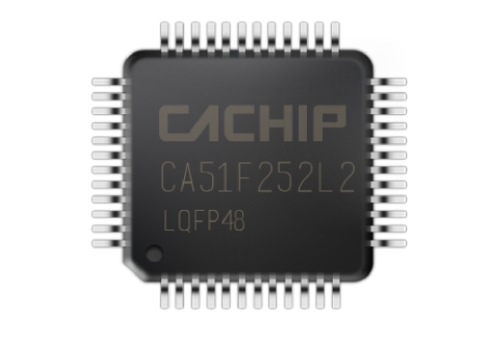
Unlocking the Power of 8051 MCU Software: A Comprehensive Guide
Introduction
The 8051 microcontroller unit (MCU) stands as one of the most enduring and influential architectures in the embedded systems landscape. Since its introduction by Intel in 1980, this 8-bit microcontroller has powered countless applications across industrial automation, consumer electronics, automotive systems, and IoT devices. What makes the 8051 particularly remarkable isn’t just its hardware capabilities, but the sophisticated software ecosystem that has evolved around it. 8051 MCU software development represents a critical discipline that bridges hardware capabilities with functional applications, enabling developers to create efficient, reliable embedded solutions. Despite newer architectures emerging, the 8051 continues to thrive due to its simplicity, low power consumption, and extensive tool support. This article explores the fundamental aspects of 8051 software development, from basic programming techniques to advanced optimization strategies, providing both newcomers and experienced engineers with valuable insights into maximizing the potential of this versatile microcontroller platform.
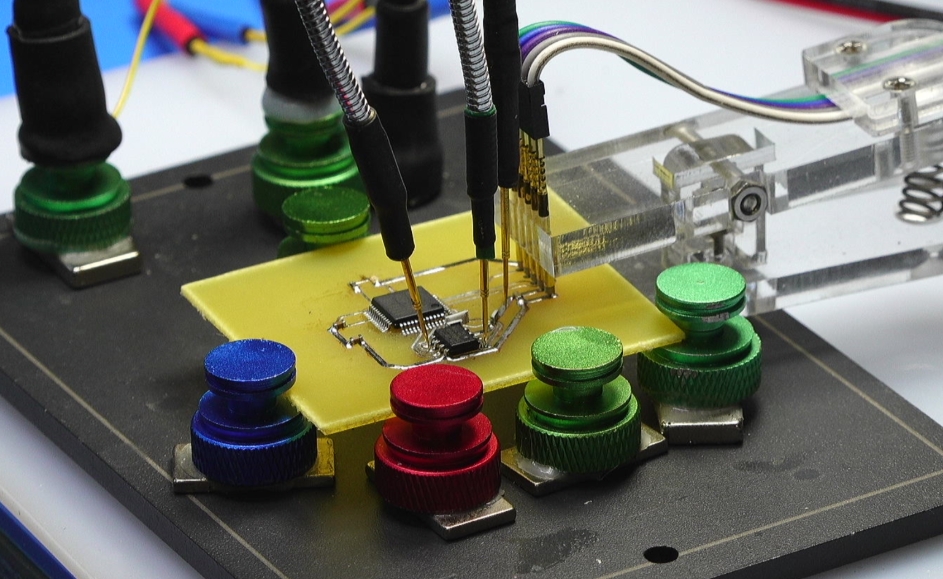
The Foundation of 8051 MCU Software Development
Understanding the 8051 Architecture
To develop effective software for the 8051 MCU, one must first understand its underlying architecture. The 8051 features a Harvard architecture with separate memory spaces for program and data, which significantly influences how software is structured and executed. The 8051’s memory organization includes 4KB of on-chip ROM (program memory), 128 bytes of on-chip RAM (data memory), special function registers (SFRs), and externally addressable memory spaces up to 64KB each for code and data. This memory mapping directly affects how variables are declared, how functions are called, and how data is manipulated within your programs.
The 8051’s CPU centers around an 8-bit ALU with an accumulator (ACC), along with other registers including B, R0-R7, program counter (PC), data pointer (DPTR), and program status word (PSW). Special Function Registers (SFRs) control various hardware peripherals such as timers/counters, serial communication ports, and I/O ports. Understanding these SFRs is crucial for effective peripheral programming. For instance, the Timer Control Register (TCON) and Timer Mode Register (TMOD) configure the 8051’s timers, while the Serial Control Register (SCON) manages serial communication parameters. This hardware knowledge directly translates to more efficient software that leverages the microcontroller’s built-in capabilities rather than implementing functionality in software that could be handled by dedicated hardware.
Another critical architectural consideration is the 8051’s instruction set, which includes various addressing modes that impact software efficiency. The 8051 supports six addressing modes: register, direct, indirect, immediate, relative, and absolute addressing. Each mode has different execution times and code sizes, making the choice of addressing mode an important optimization consideration. For example, accessing data using register-indirect addressing (@R0 or @R1) is generally more efficient than direct addressing for certain operations. Understanding these nuances allows developers to write code that executes faster and consumes less memory – critical factors in resource-constrained embedded systems.
Essential Development Tools and Environments
Developing software for the 8051 MCU requires a specific toolchain that typically includes an integrated development environment (IDE), compiler/assembler, debugger, and programmer. The Keil µVision IDE has long been the industry standard for 8051 development, offering comprehensive editing, compiling, debugging, and simulation capabilities. However, several alternatives exist, including SDCC (Small Device C Compiler) as a popular open-source option, and various vendor-specific IDEs from silicon manufacturers like Silicon Labs, NXP, and Microchip.
The choice between assembly language and high-level languages represents a fundamental decision in 8051 software development. While assembly language provides maximum control and efficiency, most contemporary projects utilize C due to its better productivity, portability, and maintainability. The C language for 8051 typically requires extensions to handle the architecture’s unique features, such as the sfr, sbit, and using keywords that allow direct access to special function registers and bank switching. Modern compilers also support interrupt service routine declarations through the interrupt keyword extension, simplifying one of the more complex aspects of embedded programming.
Debugging tools form another critical component of the 8051 software development ecosystem. In-circuit emulators (ICE) and JTAG debuggers allow real-time debugging with features like breakpoints, watchpoints, and memory examination. For more budget-conscious development, monitor debuggers that reside in the target’s memory provide basic debugging capabilities. Simulators represent another valuable tool category, enabling code testing without physical hardware – particularly useful during early development stages or when hardware availability is limited. Platforms like ICGOODFIND offer comprehensive resources for identifying appropriate development tools tailored to specific project requirements and budget constraints.
Advanced Programming Techniques for 8051 MCU
Memory Management and Optimization Strategies
Effective memory management represents one of the most challenging aspects of 8051 software development due to the architecture’s limited and partitioned memory spaces. The 8051’s memory model includes code memory (typically ROM), internal data memory (128 bytes RAM), external data memory (up to 64KB), and special function registers. Understanding how to efficiently utilize these different memory areas is crucial for developing robust applications.
The compact memory architecture necessitates careful variable placement strategies. The data memory is divided into four distinct areas: register banks (00-1Fh), bit-addressable space (20-2Fh), general-purpose RAM (30-7Fh), and SFRs (80-FFh). Strategic placement of frequently accessed variables in bit-addressable space or register banks can significantly improve performance. Additionally, the use of memory types like idata, xdata, pdata, and code allows explicit control over variable placement. For instance, placing large arrays in xdata (external RAM) while keeping frequently accessed variables in idata (internal RAM) creates an optimal balance between performance and memory usage.
Optimization techniques extend beyond variable placement to include algorithmic improvements and compiler optimizations. Code size optimization is particularly important given the typical 8051 program memory constraints. Techniques include using smaller data types where possible (char instead of int), minimizing function call depth, employing lookup tables instead of complex calculations, and utilizing compiler optimization settings effectively. Execution speed optimization focuses on reducing critical path execution times through strategies like loop unrolling, using inline functions for small routines, and minimizing interrupt service routine durations.
Advanced programmers also leverage memory overlays and bank switching techniques to extend effective memory capacity. Some modern 8052 variants incorporate bank-switching mechanisms that allow access to additional memory spaces by switching between different memory banks. Similarly, overlaying techniques enable different code modules to share the same memory space when they’re not simultaneously active. These advanced approaches require careful linker script configuration and runtime management but can dramatically expand viable application complexity within the 8051’s architectural constraints.
Peripheral Programming and Interrupt Handling
The 8051 MCU incorporates several built-in peripherals that significantly enhance its capabilities while reducing external component requirements. Mastering peripheral programming enables developers to create sophisticated applications without expanding hardware complexity. The core peripherals typically include multiple I/O ports, timers/counters, a serial communication interface (UART), and in some variants, additional features like analog-to-digital converters or PWM controllers.
Timer/counter programming represents one of the most fundamental peripheral operations in 8051 systems. The 8051 typically includes two or three 16-bit timers/counters (Timer 0, Timer 1, and sometimes Timer 2) that can be configured for various modes including 13-bit, 16-bit, 8-bit auto-reload, and split timer modes. These timers serve multiple purposes from generating precise delays without CPU intervention to measuring external events or generating baud rates for serial communication. Effective timer programming requires understanding mode selection through TMOD register configuration, controlling timer operation via TCON register settings, and implementing appropriate interrupt handling for timer overflow events.
Serial communication implementation represents another critical peripheral programming skill. The 8051’s UART supports full-duplex asynchronous serial communication with programmable baud rates through Timer 1 or Timer 2. Configuring serial communication involves setting the operating mode through SCON register bits, establishing the baud rate via timer reload values, and implementing both transmission and reception routines—typically using interrupts to maximize efficiency. Modern implementations often extend these basics to support protocols like I²C or SPI through bit-banging techniques or additional hardware peripherals in enhanced 8051 variants.
Interrupt handling forms the cornerstone of responsive embedded systems. The 8051 architecture supports five interrupt sources: two external interrupts (INT0 and INT1), two timer interrupts (TF0 and TF1), and one serial port interrupt (RI/TI). Advanced variants may include additional interrupt sources. Effective interrupt programming requires proper initialization of the Interrupt Enable (IE) register, setting interrupt priority through the IP register when necessary, and designing lean interrupt service routines that minimize processing time while properly handling shared resources. Developers must also understand the 8051’s automatic interrupt handling mechanism including context preservation limitations and the RETI instruction’s role in terminating interrupt service routines.
Real-World Applications and Future Outlook
Industrial Applications and Case Studies
The enduring relevance of the 8051 MCU becomes evident when examining its widespread use across diverse industries decades after its introduction. Industrial automation systems extensively utilize 8051-based controllers for tasks ranging from simple sensor monitoring to complex motor control applications. The microcontroller’s deterministic operation characteristics combined with its peripheral set make it ideal for real-time control applications where newer architectures might represent overkill or unnecessary complexity.
In consumer electronics, the 8051 continues to power numerous devices including remote controls, power management systems in appliances, keyboard controllers, and various interface adapters. Its low power consumption—particularly in modern low-voltage variants—makes it suitable for battery-operated devices where energy efficiency trumps raw processing power. Additionally;the extensive code base accumulated over decades means many consumer product manufacturers can leverage proven;field-tested software components rather than developing new solutions from scratch.
Automotive systems represent another significant application domain where the reliability;and robustness of;the;architecture have been proven through decades;of deployment. From dashboard instrument clusters to basic engine control functions;lighting;systems;and comfort features;the;automotive industry continues to incorporate;variants;of;the;architecture due;to;its predictable behavior under varying environmental conditions;and extensive safety certification history.;Platforms like;ICGOODFIND provide valuable resources for engineers seeking specific implementation examples across these diverse application domains;
The Future of;Development
Despite predictions of its obsolescence;the future remains bright for continued use.;Several factors contribute;to this longevity including;;the emergence;of enhanced;variants;;growing interest in legacy system maintenance;;and educational value;
Modern semiconductor manufacturers continue producing enhanced versions featuring expanded memory;;additional peripherals;;lower power consumption;;and higher clock speeds while maintaining backward compatibility.;These devices effectively address many traditional limitations while preserving software investment.;Companies like Silicon Labs;;NXP;;and Infineon offer contemporary featuring flash program memory;;integrated analog peripherals;;and advanced communication interfaces while retaining core compatibility;
The educational value cannot be overstated;;as remains one;of;the most taught microcontroller architectures in engineering programs worldwide.;This continuous stream ensures a steady supply familiar with fundamentals who can apply this knowledge both traditional projects newer architectures sharing conceptual similarities;
Looking forward;;we can expect continued evolution through;;specialized application-specific variants optimized particular market segments;;increased integration other technologies hybrid solutions;;ongoing toolchain improvements enhancing development efficiency;
Conclusion
development represents a sophisticated discipline balancing architectural constraints practical implementation requirements.;From foundational concepts advanced optimization techniques;;successful requires deep understanding both hardware capabilities software design principles.;The enduring popularity across diverse applications testament versatility reliability when properly leveraged;
As we’ve explored;;effective begins solid architectural understanding progresses through strategic tool selection careful implementation peripheral drivers interrupt handlers.;Memory management remains critical consideration given constraints requiring thoughtful variable placement algorithmic optimization.;Real-world applications demonstrate continued relevance industrial automation consumer electronics automotive systems other domains where predictability low cost trump raw processing power;
Looking ahead;;future appears secure thanks ongoing enhancements semiconductor manufacturers persistent educational presence expanding universe compatible development tools.;Resources platforms provide valuable guidance navigating complex landscape identifying optimal solutions specific project requirements.;Whether you’re maintaining legacy system developing new product constrained environment represents viable often optimal choice delivering robust cost-effective embedded solutions;