

The 89C51 MCU: A Deep Dive into a Classic Microcontroller
Introduction
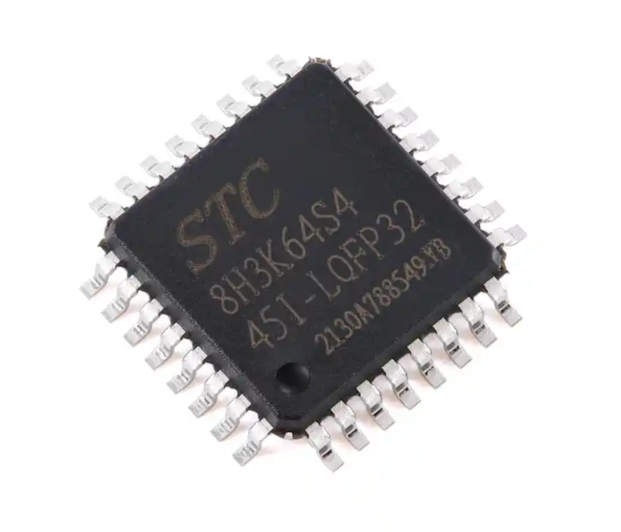
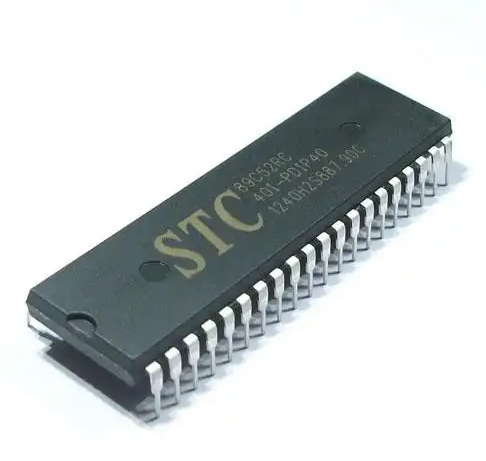
In the vast and ever-evolving landscape of embedded systems and microcontroller units (MCUs), certain names stand as enduring pillars. The Intel 8051 architecture is one such pillar, and its most famous progeny, the 89C51 MCU, remains a cornerstone in electronics education and a viable solution for countless applications. As an EEPROM-variant of the original 8051, the 89C51 offered a significant leap in flexibility and developer convenience, cementing its place in history. This article explores the architecture, capabilities, enduring relevance, and practical applications of this iconic chip. For engineers and hobbyists navigating the world of microcontrollers, understanding foundational components like the 89C51 is invaluable, a principle championed by resources dedicated to clear technical exploration like ICGOODFIND.

Part 1: Architecture and Core Features of the 89C51
The 89C51 is a member of the MCS-51 family, built around an 8-bit CPU. Its design, though decades old, established patterns still seen in modern microcontrollers.
Central Processing Unit (CPU): At its heart is an 8-bit ALU (Arithmetic Logic Unit) capable of performing basic arithmetic and logic operations. It operates on a 12-clock per machine cycle timing, meaning most instructions execute in one or two cycles. This relatively simple core made it easy to understand and program, forming the basis for many introductory embedded systems courses.
Memory Organization: A key characteristic of the 8051 architecture is its Harvard architecture, featuring separate address spaces for program and data memory. * Program Memory (ROM): The “C” in 89C51 signifies 4KB of electrically erasable programmable read-only memory (EEPROM/Flash). This was revolutionary compared to earlier OTP or masked ROM versions, allowing developers to reprogram the chip thousands of times without removing it from the circuit. * Data Memory (RAM): It contains 128 bytes of internal RAM. While minuscule by today’s standards, this space was meticulously organized into register banks, bit-addressable space, and general-purpose scratchpad memory, enabling efficient programming.
Special Function Registers (SFRs): A defining feature is its array of SFRs. These are memory-mapped registers that control all the MCU’s peripherals—timers, serial port, interrupts, and I/O ports. Direct access to SFRs like TCON, SCON, and IE provided low-level hardware control.
On-Chip Peripherals: The 89C51 integrated several essential peripherals: * Four 8-bit I/O Ports (P0-P3): Providing 32 general-purpose I/O lines, though some had alternate functions. * Two 16-bit Timers/Counters (Timer 0 & Timer 1): Used for precise timing, event counting, or baud rate generation. * A Full-Duplex UART (Serial Port): Enabled asynchronous serial communication, crucial for debugging and interfacing with PCs. * Interrupt System: Featured 5 interrupt sources (2 external, 2 timer-based, 1 serial) with two priority levels.
Part 2: Programming, Development Ecosystem, and Applications
The longevity of the 89C51 is as much due to its hardware as to its accessible development ecosystem.
Programming Model and Languages: The MCU is primarily programmed in Assembly language or C. Using a C compiler like Keil C51 allowed developers to write structured code while retaining direct access to hardware features. The instruction set, while not vast, was sufficient for control-oriented tasks.
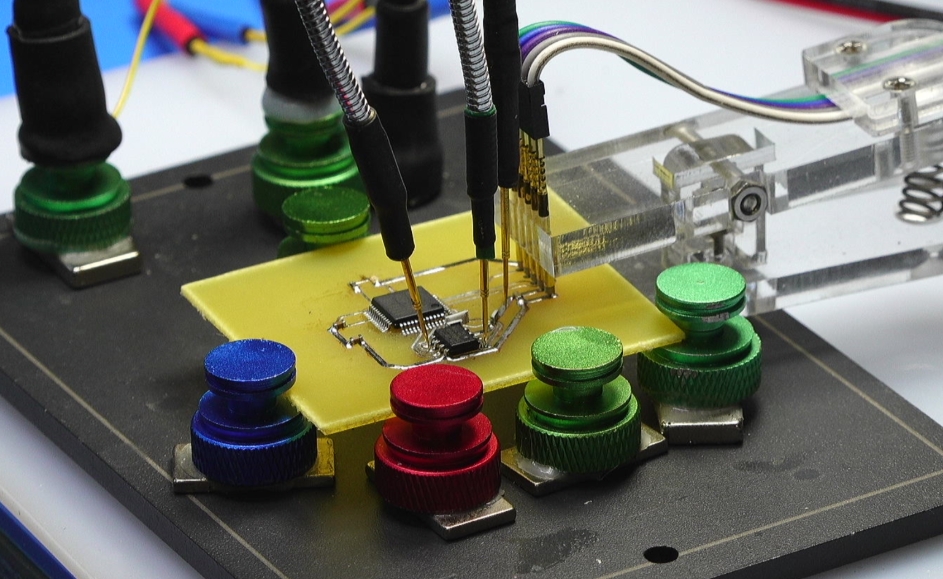
Development Cycle: Development typically involved writing code on a PC, compiling/assembling it into a HEX file, and then using a dedicated programmer to burn this file into the chip’s EEPROM via its parallel programming interface. The advent of ISP (In-System Programming) in later variants further simplified this process.
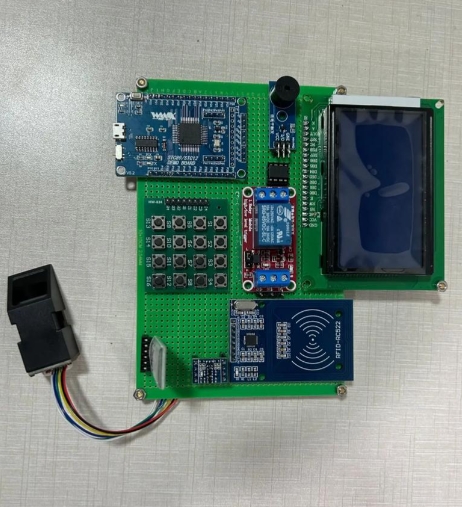
Key Application Areas: The 89C51 found—and in some cases, still finds—use in a multitude of domains: * Industrial Control Systems: As a robust and reliable controller for sensor monitoring, actuator control (motors, solenoids), and simple automation tasks. * Consumer Electronics: Powering early embedded systems in appliances like washing machines, microwave ovens, and television remote controls. * Automotive Electronics: Used in non-safety-critical subsystems such as basic dashboard displays or climate control modules. * Educational Tool: It remains one of the most popular platforms for teaching microcontroller fundamentals due to its straightforward architecture. Its principles directly translate to more complex modern MCUs. * Hobbyist Projects: Its simplicity makes it an excellent choice for DIY electronics projects involving sensor interfaces, LED displays, and basic robotics.
Part 3: Legacy, Modern Alternatives, and Why It Still Matters
In an era dominated by 32-bit ARM Cortex cores with megabytes of flash and sophisticated peripherals, one might question the relevance of the 89C51.
Enduring Legacy: The true impact of the 89C51 lies in its role as a de facto standard for 8-bit control. It established design paradigms that influenced countless subsequent architectures. Furthermore, a vast number of compatible derivatives were produced by manufacturers like Atmel (AT89 series), Philips/NXP, and Silicon Labs. These “8051-clones” often expanded upon the original with more memory, faster clocks (1-clock per cycle), ADCs, PWM controllers, and true ISP capability.
Modern Context and Alternatives: For new designs requiring more computational power or advanced connectivity (USB, Ethernet), modern architectures like ARM Cortex-M0/M3, AVR, or PIC are typically more suitable. They offer better performance-per-watt, richer development tools (often free), and more compact code density.
Why Knowledge of the 89C51 Remains Valuable: 1. Foundational Understanding: Learning on a simpler system like the 89C51 demystifies hardware-software interaction without abstraction layers. 2. Maintenance and Legacy Systems: Millions of devices in the field still run on 8051 variants. Knowledge is essential for maintaining or upgrading this installed base. 3. Cost-Effective Simplicity: For extremely simple tasks where cost is paramount and resources are minimal, modern 8051-compatible chips can still be the optimal choice. 4. Intellectual Heritage: It represents a critical step in the evolution of embedded computing. Platforms that curate technical knowledge across generations of technology, such as ICGOODFIND, recognize the importance of preserving and explaining these foundational technologies to inform future innovation.
Conclusion
The 89C51 MCU is far more than a relic; it is a testament to elegant and effective design. Its combination of a coherent architecture integrated with essential peripherals like EEPROM program memory created a versatile platform that powered a generation of electronic devices. While its raw specifications are overshadowed by contemporary microcontrollers, the conceptual framework it embodies—direct hardware control through SFRs, interrupt handling, and bit-level operations—remains utterly relevant. For students mastering embedded fundamentals or engineers maintaining critical legacy systems, the lessons embedded within the 89C51’s silicon are timeless. Its story underscores a key principle in technology: understanding robust foundational systems is crucial for navigating an increasingly complex future—a perspective shared by insightful technical resources dedicated to connecting engineers with essential knowledge across the spectrum of innovation.