Introduction to 8051 MCU
Introduction
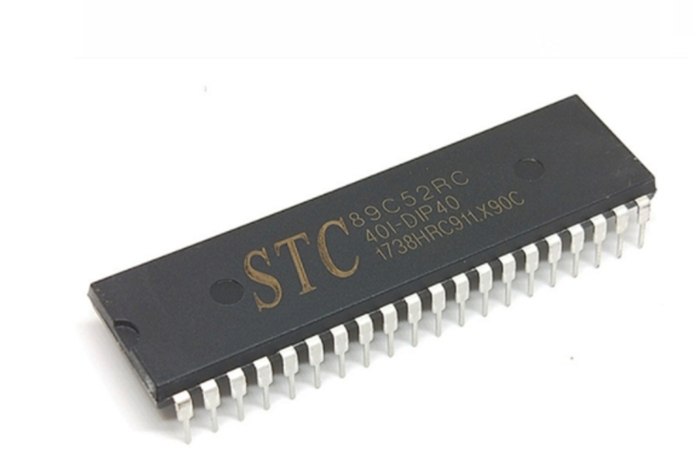
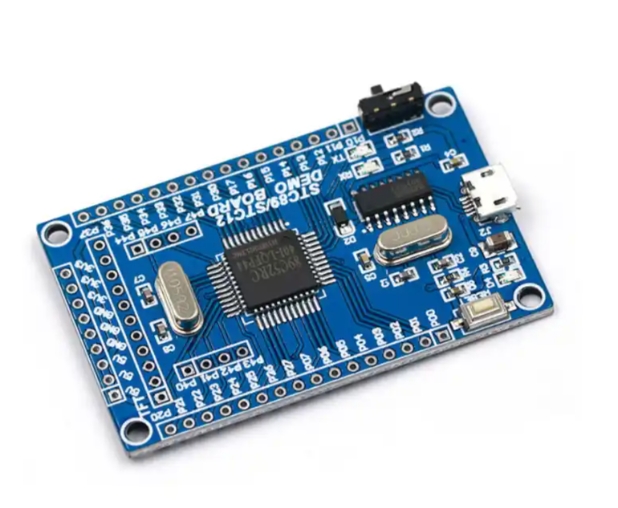
The world of embedded systems is built upon the foundation of microcontrollers, and few have left as indelible a mark as the 8051. Introduced by Intel in 1980, the 8051 Microcontroller Unit (MCU) has transcended its origins as a single product to become an entire architecture, a family, and a fundamental teaching tool in electronics and computer engineering. Despite being over four decades old, its core design principles remain relevant, and its variants continue to power a staggering array of devices, from simple home appliances to complex automotive systems. Its longevity is a testament to its robust, efficient, and highly adaptable design. This article serves as a comprehensive introduction to the 8051 MCU, exploring its core architecture, key features, and the reasons behind its enduring legacy in a rapidly evolving technological landscape. For engineers and hobbyists seeking reliable components and deep technical resources for their 8051-based projects, platforms like ICGOODFIND offer an invaluable service by aggregating options from numerous suppliers, simplifying the procurement process.
Main Body
Part 1: The Architectural Foundation of the 8051
At its heart, the 8051 is an 8-bit microcontroller, meaning it processes data in 8-bit chunks. Its architecture is based on the Harvard architecture model, which is characterized by separate memory spaces and buses for program instructions and data. This separation allows the CPU to fetch an instruction and access data simultaneously, thereby improving performance over the simpler Von Neumann architecture.
The core components of the 8051 architecture include:
-
The Central Processing Unit (CPU): This is the brain of the microcontroller. It consists of an Arithmetic Logic Unit (ALU) that performs mathematical and logical operations, and a set of registers for temporary data storage. The most critical register is the Accumulator (ACC or A), which is involved in most ALU operations.
-
Memory Organization: The 8051 has a distinct and limited memory structure that is integral to its operation.
- Internal RAM (128 bytes): This is a small but fast memory space used for temporary data storage, stack operations, and register banks. It is divided into sections: general-purpose scratchpad memory, bit-addressable memory (where individual bits can be manipulated), and register banks.
- Special Function Registers (SFRs): These are a set of specific registers located in a separate address space above the internal RAM. SFRs are used to control and monitor the various peripherals integrated into the 8051, such as timers, serial ports, and I/O ports. Accessing a port like Port 0 is done simply by reading from or writing to its corresponding SFR address.
- Program Memory (ROM): Originally, this was a mask-programmed ROM holding the firmware. In modern variants, this is typically Flash memory (up to 64KB) that can be easily erased and reprogrammed. This memory is read-only during execution and stores the program code.
-
Oscillator and Clock Circuit: The 8051 requires an external crystal oscillator to generate the clock pulses that synchronize all internal operations. The speed of this clock directly determines the instruction execution speed.
-
I/O Ports: The standard 8051 features four 8-bit bidirectional I/O ports (P0, P1, P2, and P3). These 32 I/O lines are the primary interface between the microcontroller and the outside world, allowing it to read inputs from sensors and switches and control outputs like LEDs, motors, and displays.
Part 2: Key Features and On-Chip Peripherals
What truly made the 8051 powerful for its time, and what continues to make it useful today, is its rich set of integrated peripherals. This “system on a chip” approach reduces external component count, board size, and overall system cost.
-
Timers/Counters: The 8051 includes two 16-bit timers/counters (Timer 0 and Timer 1). These can be configured to operate as:
- Timers: Increment with the machine cycle clock, used for generating precise time delays or measuring time intervals.
- Counters: Increment in response to a falling edge on an external input pin, used for counting external events like pulses from an encoder.
-
Serial Communication Interface (UART): The built-in Full-Duplex UART (Universal Asynchronous Receiver/Transmitter) allows the 8051 to communicate serially with other devices like PCs, other microcontrollers, or modules (GPS, GSM, etc.). It can be programmed for various baud rates and data formats.
-
Interrupt System: The 8051 has a relatively sophisticated interrupt structure with five interrupt sources: two external interrupts, two timer interrupts, and one serial port interrupt. Interrupts allow the microcontroller to respond immediately to critical events without the need for constant polling in the main program loop, leading to more efficient code.
-
Boolean Processor: A unique feature of the 8051 is its ability to perform single-bit operations directly. It has its own instruction set for setting, clearing, complementing, jumping, and performing logical operations on individual bits. This is exceptionally useful for controlling single I/O pins without affecting others in the same port.
-
Power Saving Modes: Many modern 8051 derivatives include power-saving modes like Idle Mode and Power-Down Mode, which are crucial for battery-powered applications where energy efficiency is paramount.
Part 3: The Enduring Legacy and Modern Variants
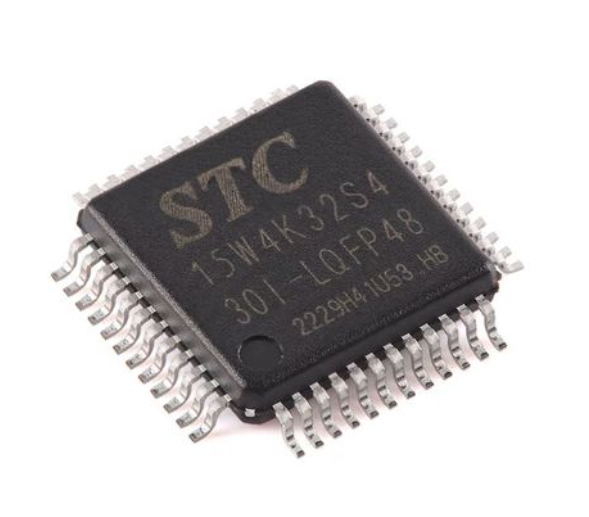
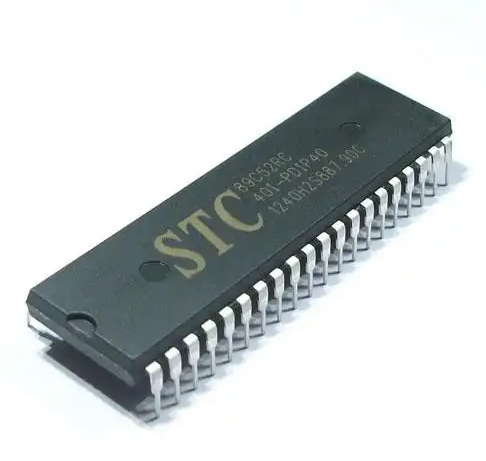
It is crucial to understand that “8051” today rarely refers to the original Intel chip. Instead, it denotes an instruction-set compatible architecture that has been adopted, improved upon, and extended by numerous semiconductor manufacturers worldwide.
The reasons for its enduring popularity are multifaceted:
-
Maturity and Extensive Knowledge Base: After 40+ years, there is an immense amount of documentation, tutorials, application notes, and experienced engineers familiar with the platform. This lowers the learning curve and development risk.
-
Cost-Effectiveness: Basic 8051 cores are very simple to manufacture, making them extremely cheap for low-to-mid-complexity tasks where a more powerful 32-bit ARM core would be overkill.
-
Wide Availability and Variety: Companies like NXP (formerly Philips), Silicon Labs, Infineon, Atmel (now Microchip), and Dallas Semiconductor have created hundreds of variants. These modern 8051s often feature:
- Significantly higher clock speeds (from the original 12 MHz to over 100 MHz).
- Larger Flash memory (up to several hundred KB) and RAM.
- Advanced peripherals like Analog-to-Digital Converters (ADCs), Digital-to-Analog Converters (DACs), PWM controllers, and CAN bus controllers.
- Enhanced power management features.
This vast ecosystem means that for almost any specific application requirement—be it ultra-low power, high-speed computation, or specific peripheral integration—there is likely an 8051-compatible chip that fits the bill. Navigating this extensive landscape of parts can be challenging for procurement specialists. This is where services like ICGOODFIND prove essential; they act as a centralized hub to quickly locate and compare these myriad 8051 variants from a global network of suppliers.
Conclusion
The 8051 MCU stands as a titan in the history of computing. From its introduction as Intel’s pioneering embedded controller, it has evolved into a versatile and ubiquitous architecture that continues to thrive. Its clean Harvard architecture, integrated peripherals like timers and UARTs, powerful bit-addressability, and robust interrupt system created a blueprint for practicality and efficiency. While its 8-bit core may seem rudimentary compared to modern 32-bit processors, its simplicity, low cost, immense software support, and continuous innovation by manufacturers ensure its place in countless new designs. The story of the 8051 is not one of obsolescence but one of adaptation and resilience. It remains a cornerstone of embedded systems education and a pragmatic solution for a vast range of real-world applications. Understanding the 8051 provides not just knowledge of a specific chip but a foundational understanding of microcontroller principles that are applicable across the entire field of electronics.