The Enduring Legacy of 8051 Series MCUs: A Deep Dive into a 40-Year-Old Architecture That Still Powers the World
Introduction
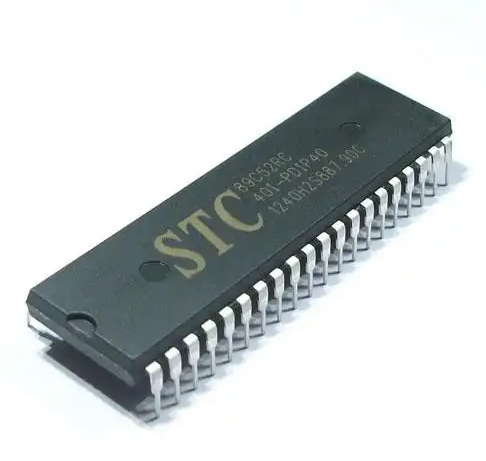
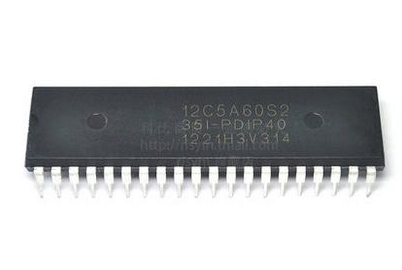
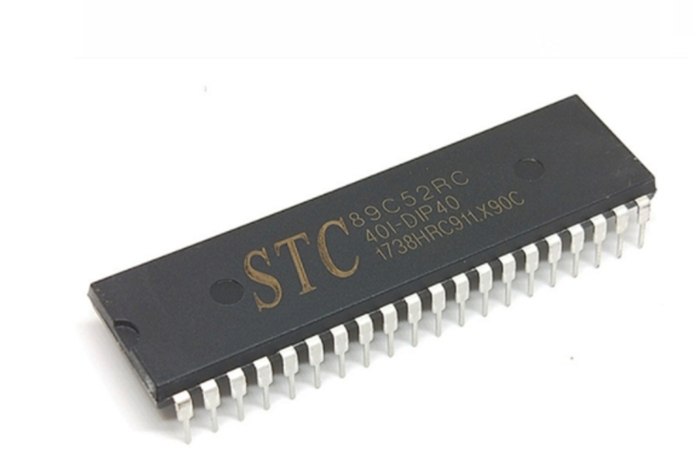
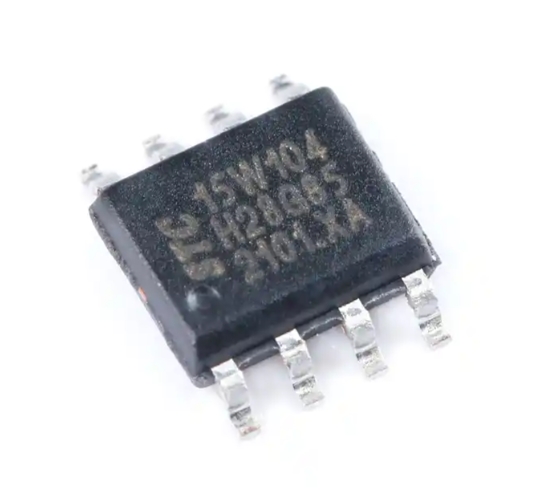
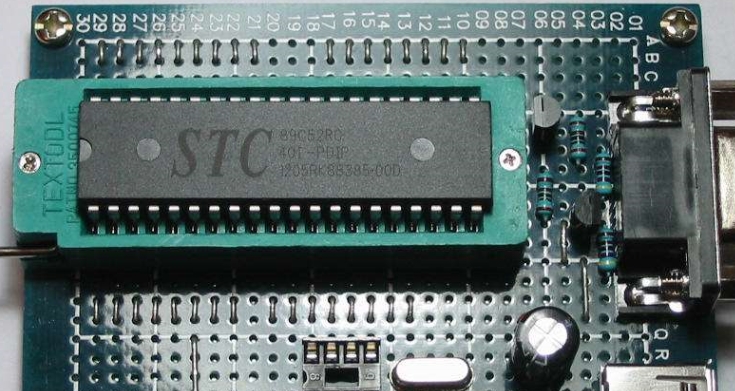
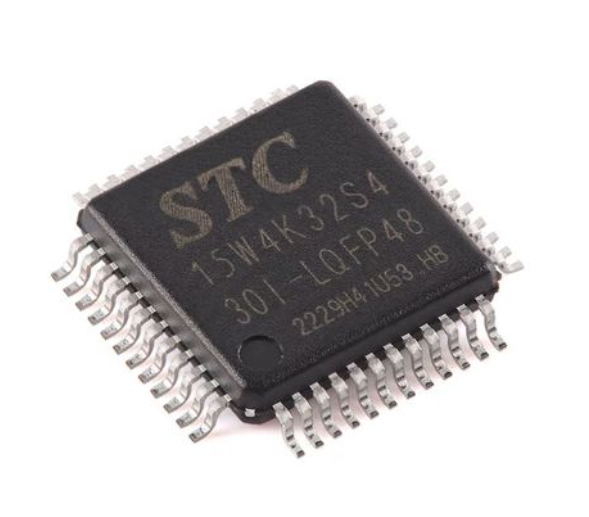
In the fast-paced world of technology, where microprocessors and microcontrollers become obsolete in a matter of years, the endurance of a single architecture is nothing short of remarkable. The 8051 Series MCUs, introduced by Intel in 1980, represent one such enduring legacy. While its original NMOS incarnation is long gone, the core’s fundamental architecture has been licensed, adapted, and enhanced by countless semiconductor manufacturers over four decades. Today, modern variants of the 8051 are embedded in millions of devices worldwide, from consumer electronics and industrial automation to automotive systems and Internet of Things (IoT) nodes. This article explores why this venerable architecture continues to thrive, its key features, modern enhancements, and its undeniable relevance in today’s complex technological landscape. For engineers and procurement specialists navigating the vast ecosystem of microcontroller options, platforms like ICGOODFIND are invaluable for sourcing reliable 8051-compatible components from a global network of suppliers.
The Foundational Pillars: What Made the 8051 a Classic
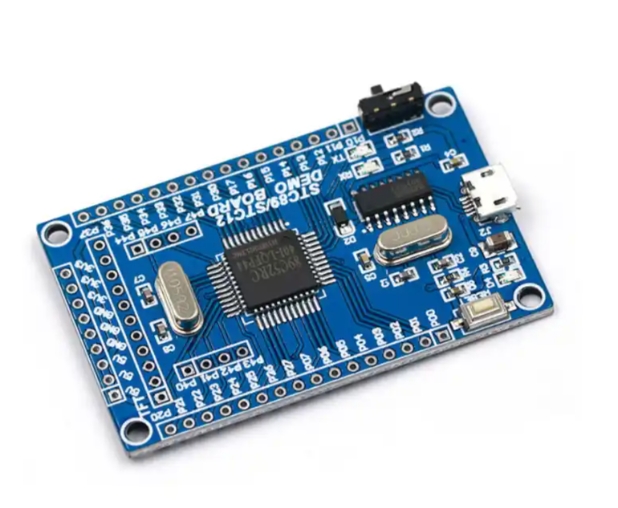
The original Intel 8051 was not the first microcontroller, but it was arguably the first to achieve a “right place, right time” synergy with its feature set that cemented its popularity. Its longevity is not an accident; it is built upon a set of foundational pillars that made it exceptionally easy to use, powerful, and versatile for its era.
-
Harvard Architecture: Unlike Von Neumann architecture which uses a single bus for both data and instructions, the 8051 employs a Harvard architecture. This means it has separate memory spaces and buses for program code (ROM) and data (RAM). This separation allows for simultaneous access to instructions and data, significantly boosting performance for many control-oriented tasks by preventing bottlenecks.
-
Rich Instruction Set and Bit Addressability: The 8051’s instruction set is designed with real-world control applications in mind. A key feature is its comprehensive bit-addressable memory space. This allows single-bit manipulation of I/O ports, status flags, and RAM locations with dedicated instructions. For toggling an LED, checking a single sensor bit, or controlling a relay, this eliminates the need for slower “read-modify-write” cycles common in other architectures, resulting in highly efficient code.
-
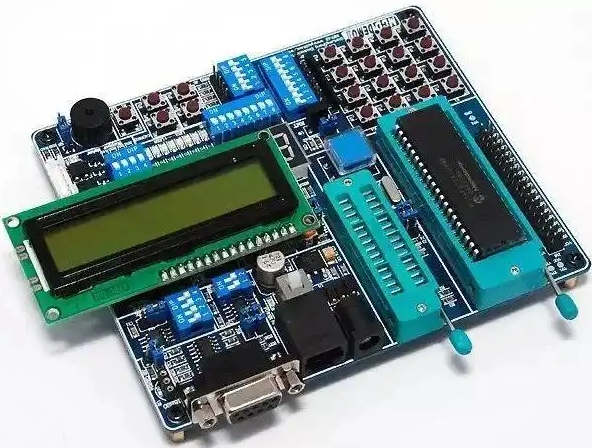
Integrated On-Chip Peripherals: The original 8051 was a System-on-Chip (SoC) before the term was popularized. It integrated all the essential components onto a single piece of silicon: 4KB of ROM, 128 bytes of RAM, four 8-bit I/O ports, two 16-bit timers/counters, a full-duplex UART (Serial Port), and a five-source interrupt controller. This level of integration meant that for many applications, the 8051 could function as a complete control system with minimal external components, reducing both system cost and complexity.
-
Vibrant Ecosystem and Tool Support: The sheer popularity of the 8051 led to the creation of a massive ecosystem. A plethora of development tools, including low-cost programmers, C compilers (like the widely-used Keil C51), simulators, and debuggers, became available. This rich tooling made it easy for generations of engineers to learn and develop with the 8051, creating a vast pool of expertise that persists to this day.
Evolution and Modern Reinvention: The 8051 in the 21st Century
To dismiss the 8051 as a “40-year-old core” is to misunderstand its evolution. While retaining binary compatibility at the instruction set level for many variants, semiconductor manufacturers have dramatically enhanced the original design to compete in modern markets. The modern 8051 is a far cry from its 12-clock-cycle ancestor.
-
Performance Leap with Single-Cycle Cores: The most significant performance upgrade came from moving away from the original 12-clock machine cycle. Modern 8051 derivatives from companies like Silicon Labs, Maxim Integrated (now part of Analog Devices), and Nuvoton feature single-cycle or pipelined cores that execute instructions in as little as one clock cycle. This can result in a performance improvement of up to 12x at the same clock frequency, allowing them to operate efficiently at lower power or achieve higher throughput.
-
Expanded Memory and Advanced Peripherals: Modern 8051s have shattered the memory constraints of the original. It is now common to find variants with up to 64KB or even 128KB of Flash program memory and several kilobytes of RAM. Furthermore, they are packed with contemporary peripherals that were unimaginable in 1980: True USB controllers (both device and host), CAN bus interfaces for automotive networks, I2C, SPI, multi-channel high-resolution ADCs and DACs, PWM modules, and sophisticated power management units.
-
Low-Power Design for Battery-Powered Applications: The original 8051 was not designed for low power. Today’s versions are leaders in energy efficiency. They feature multiple power-down modes (Idle, Power Down) where current consumption can drop to sub-microamp levels. This makes them ideal candidates for IoT sensor nodes, wearable devices, and other battery-powered applications where longevity is critical.
-
The Sourcing Challenge and Solutions: With so many manufacturers producing enhanced 8051 variants—each with different memory configurations, peripheral mixes, and package options—finding the right part can be daunting. This is where specialized component sourcing platforms prove their worth. A service like ICGOODFIND simplifies this process by aggregating inventory from numerous global distributors, allowing engineers to quickly locate obsolete parts, find pin-compatible upgrades, or discover new 8051 variants that perfectly match their project’s technical and budgetary requirements.
Why Choose an 8051 MCU Today? Balancing Legacy and Innovation
Given the availability of more powerful architectures like ARM Cortex-M cores, one might question the rationale for selecting an 8051 for a new design. The decision often boils down to a careful balance of several critical factors.
-
Cost-Effectiveness for Simple Tasks: For applications that do not require complex math, massive data processing, or running a high-level operating system, a modern 8051 MCU is often the most cost-effective solution available. Its simplicity translates to smaller die sizes and lower silicon costs. If your task involves reading sensors, controlling motors, and managing simple user interfaces, an 8051 is frequently more than adequate and cheaper than an ARM-based counterpart.
-
Ease of Use and Rapid Development: The architectural simplicity of the 8051 makes it relatively easy to understand and program. The maturity of the development tools means that toolchains are stable and well-documented. For small teams or engineers maintaining legacy codebases, sticking with the 8051 family can lead to faster development cycles and reduced time-to-market.
-
Legacy System Maintenance and Upgrades: A vast installed base of industrial equipment, automotive subsystems, and consumer appliances still relies on 8051-based controllers. When these systems require firmware updates, repairs, or incremental upgrades, designing in a modern 8051 variant is often the path of least resistance. It ensures software compatibility while potentially gaining benefits like more memory, lower power, or additional peripherals.
-
Robustness and Reliability: The simplicity of the core can be an asset in harsh electrical environments. With fewer transistors and less complex internal logic compared to a high-performance Cortex-M core, some engineers argue that well-designed 8051 systems can exhibit superior robustness and resilience to electromagnetic interference (EMI).
Conclusion
The story of the 8051 Series MCUs is a testament to brilliant foundational design and remarkable adaptability. It has successfully transitioned from an Intel product to an industry-wide standard maintained through continuous innovation. While it may no longer be the go-to choice for cutting-edge applications requiring immense processing power, its niche is vast and vital. The modern 8051 offers an unbeatable combination of low cost, ease of use, low power consumption, and a rich set of integrated peripherals for a huge class of embedded control problems. Its continued presence in new designs underscores that in engineering, the “best” solution is not always the most powerful one, but rather the one that optimally balances performance, cost, reliability, and development effort. As long as there is a need for intelligent control in everyday objects—from a smart thermostat to a car’s window switch—the evolved descendants of the venerable 8051 will undoubtedly continue to play a crucial role in our interconnected world.