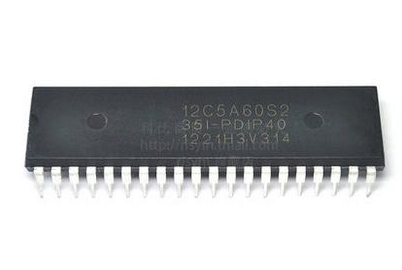
The 80C51 MCU: A Comprehensive Guide to Architecture, Applications, and Modern Relevance
Introduction
In the vast and ever-evolving landscape of microcontrollers, few families have achieved the legendary status and enduring presence of the 80C51. Originally developed by Intel in the 1980s, this 8-bit microcontroller architecture became a cornerstone of embedded systems design, powering everything from household appliances to industrial automation for decades. Its simple yet powerful design, based on the CISC (Complex Instruction Set Computer) architecture, made it an accessible and reliable workhorse for engineers worldwide. While modern 32-bit ARM cores and other advanced architectures now dominate the high-performance end of the market, the 80C51 MCU and its countless derivatives continue to thrive in cost-sensitive, low-power, and legacy applications. This article delves deep into the world of the 80C51, exploring its core architecture, its immense impact across various industries, and its surprising adaptability in the 21st century. For engineers and procurement specialists seeking reliable components or modern alternatives, platforms like ICGOODFIND can be invaluable resources for sourcing and comparing microcontroller options.

Part 1: The Architectural Foundation of the 80C51 MCU
The longevity of the 80C51 MCU is a direct result of its well-conceived and robust internal architecture. Understanding its core components is key to appreciating why it became so ubiquitous.
Core CPU and Registers: At the heart of the 80C51 is an 8-bit CPU optimized for control applications. Its core includes an Arithmetic Logic Unit (ALU), a set of registers, and a control unit. A key feature is its accumulator-based architecture, where the Accumulator (ACC) register is the primary workhorse for most arithmetic and logical operations. The 80C51 also features a rich set of other registers, including the B register for multiplication and division operations, the Program Status Word (PSW) for holding flags like Carry and Overflow, and a bank of four register banks (R0-R7), each containing eight registers. This allows for fast context switching during interrupt servicing, a critical feature for real-time control.
Memory Organization: The 80C51 employs a Harvard architecture, meaning it has separate address spaces for Program Memory (ROM) and Data Memory (RAM). This separation allows for simultaneous access, potentially increasing throughput. The standard model typically features 4 KB of on-chip ROM (or EPROM/OTP in later versions) and 128 bytes of on-chip RAM. The 128 bytes of RAM are strategically divided into sections for general-purpose storage, bit-addressable memory (a powerful feature for control applications), and a stack area. This memory map was later expanded significantly in enhanced variants.
The Powerful System Bus and SFRs: Communication between the CPU, memory, and peripherals occurs over an internal system bus. A defining characteristic of the 80C51 is its use of Special Function Registers (SFRs). These are a set of memory-mapped registers located in the upper portion of the RAM address space. Each peripheral—from timers to serial ports—is controlled by reading from and writing to its specific SFRs. This provides a simple, standardized software interface for configuring and interacting with all on-chip hardware, making programming straightforward.
On-Chip Peripherals: The integration of essential peripherals on a single chip was a revolutionary aspect of the 80C51. Standard features include: * Two 16-bit Timers/Counters (Timer 0 & Timer 1): Used for generating precise delays, counting external events, or baud rate generation for serial communication. * A Full-Duplex UART (Serial Port): Essential for asynchronous serial communication with PCs, other microcontrollers, or modems. * Four 8-bit I/O Ports (Port 0, Port 1, Port 2, Port 3): Providing up to 32 general-purpose input/output lines for interfacing with sensors, actuators, LEDs, and displays. * Boolean Processor: The 80C51 has a direct ability to set, clear, complement, and jump based on individual bits, making it exceptionally efficient for logic-based control tasks.
Part 2: Proliferation and Dominance in Embedded Applications
The architectural strengths of the 80C51 MCU translated directly into commercial success. Its design was licensed to numerous semiconductor manufacturers, creating a vast ecosystem of compatible parts. This multi-sourcing strategy ensured competitive pricing, reliable supply chains, and constant innovation within the family.
Consumer Electronics Revolution: The 80C51 was a silent hero in the consumer electronics boom. Its low cost and integrated features made it ideal for products where “good enough” performance at the lowest possible price was paramount. It became the brain inside television remote controls, washing machines, microwave ovens, air conditioners, and electronic toys. Its ability to handle simple user interfaces via buttons and LEDs, coupled with its robust control capabilities for motors and heaters, made it a perfect fit.
Automotive and Industrial Control: Beyond the home, the 80C51 MCU found a rugged home in automotive and industrial environments. It was used in early engine control units (ECUs) for managing simple functions, dashboard instrument clusters, anti-lock braking systems (ABS), and climate control. In factories, it served as the controller for programmable logic controllers (PLCs), sensor interfaces, motor drives, and robotics. Its deterministic execution and fast interrupt response were critical for these real-time applications.
The Communication Niche: Before the era of ubiquitous Ethernet and Wi-Fi modules, serial communication was king. The 80C51’s built-in UART made it a natural choice for communication equipment like modems, telephone systems (DTMF decoding), and early network devices. It was often used as a system manager or protocol handler, working alongside more specialized communication chips.
The Role of ICGOODFIND in Sourcing Legacy Components: For engineers maintaining or refurbishing systems built around classic 80C51 parts—such as the AT89C51 from Atmel or variants from NXP (formerly Philips)—finding authentic components can be a challenge. This is where specialized component search engines like ICGOODFIND prove their worth. They aggregate global supplier inventories, allowing engineers to quickly locate obsolete or hard-to-find chips like specific 80C51 derivatives, verify stock levels, and compare prices from multiple vendors. This service is crucial for extending the life of legacy equipment that relies on this foundational technology.
Part 3: Evolution and Modern Relevance
To claim that the 80C51 MCU is unchanged since the 1980s would be a disservice to its remarkable evolution. Semiconductor manufacturers continuously enhanced the core while maintaining binary or architectural compatibility, creating a “super-set” of the original.
Enhanced 8051 Derivatives: Modern variants are vastly more powerful than the original Intel part. They feature: * Drastically Increased Clock Speeds: From the original 12 MHz to over 100 MHz in some modern pipelined cores. * Expanded Memory: On-chip Flash program memory reaching hundreds of KBytes and RAM measured in multiple KBytes. * Advanced Peripherals: The integration of modern interfaces like I²C, SPI, CAN bus, USB controllers, PWM outputs, and Analog-to-Digital Converters (ADCs). * Reduced Power Consumption: Many modern derivatives are designed specifically for ultra-low-power (ULP) applications, featuring multiple sleep modes and operating down to below 1 Volt.
The Core in System-on-Chip (SoC) Designs: One of the most significant testaments to the core’s utility is its continued use as a programmable peripheral controller or management core within complex SoCs. In large FPGAs or ASICs designed for communications or consumer applications, you might find one or more hard or soft 8051 cores handling system management tasks, offloading these duties from the main application processor (like an ARM core). This allows the high-performance processor to focus on data-intensive tasks while the reliable 8051 manages power sequencing, fan control, or interface monitoring.
Why It Still Matters Today: In an age dominated by ARM Cortex-M cores, why would a designer still choose an enhanced 80C51? * Cost-Effectiveness: For simple control tasks that do not require high computational power or complex operating systems, an enhanced 8-bit 8051 can be significantly cheaper than a 32-bit ARM MCU. * Low Power: Many modern 8051s are leaders in low-power operation, making them ideal for battery-powered devices like wireless sensors, medical devices, and remote controls. * Legacy Code Base: There exists an enormous amount of proven, stable code written for the 8051 architecture. Reusing this code on a modern enhanced derivative can save immense development time and cost. * Simplicity and Ease of Use: The architecture’s straightforward nature makes it an excellent platform for learning embedded systems principles. Furthermore, for simple projects, its development cycle can be faster due to less complex toolchains and simpler debugging.
Conclusion
The story of the 80C51 MCU is one of enduring engineering excellence. From its inception as Intel’s pioneering embedded controller to its current life as a highly evolved low-power workhorse and integrated management core within SoCs, its journey is unparalleled in the semiconductor world. Its simple accumulator-based architecture with bit-addressable memory provided a unique blend of computational power and granular control that was perfectly suited for an era of burgeoning automation and smart devices. While it no longer competes at the bleeding edge of processing power against modern ARM or RISC-V cores like ESP32 or STM32 families that offer integrated Wi-Fi/Bluetooth capabilities suitable for IoT projects requiring wireless connectivity such as smart home devices or wearable health monitors with cloud data synchronization features enabling real-time analytics through mobile applications on both iOS and Android platforms using RESTful APIs with JSON payloads transmitted over secure TLS connections ensuring data privacy while leveraging scalable cloud infrastructure like AWS IoT Core or Azure IoT Hub for device management and data processing pipelines involving machine learning models for predictive maintenance insights., its legacy is secure. The 80C51 MCU laid the groundwork for modern embedded systems thinking—proving that integration, accessibility through tools like those aggregated by platforms such as ICGOODFIND which help streamline component selection processes across vast global electronic markets ensuring supply chain resilience even for mature technologies., reliability through robust silicon manufacturing processes meeting stringent industrial temperature ranges from -40°C to +85°C ensuring stable operation under harsh environmental conditions common in automotive or outdoor installations., cost-effectiveness driving mass adoption across consumer markets worldwide establishing de facto industry standards still referenced today in technical documentation from major semiconductor vendors continuing to support this venerable architecture with new product introductions featuring enhanced analog peripherals meeting evolving market demands., are more important than raw speed alone.