The 8051 MCU System: A Comprehensive Guide to Architecture, Applications, and Modern Relevance
Introduction
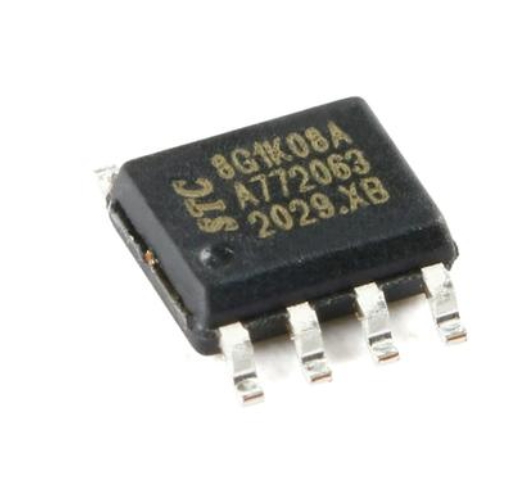
The 8051 microcontroller unit (MCU) system represents one of the most enduring and influential architectures in the embedded systems landscape. Since its introduction by Intel in 1980, this remarkable microcontroller has powered countless innovations across industrial, consumer, and technological domains. What makes the 8051 MCU system particularly fascinating isn’t just its historical significance, but its continued relevance in today’s rapidly evolving electronics ecosystem. Despite the emergence of more powerful microcontrollers with advanced capabilities, the 8051 maintains a substantial market presence due to its elegant simplicity, robust architecture, and extensive ecosystem support. This comprehensive guide explores the technical foundations, practical applications, and modern implementations of this legendary microcontroller system, demonstrating why it remains a vital tool for engineers and developers worldwide. Through platforms like ICGOODFIND, engineers continue to discover innovative 8051-based solutions that bridge traditional embedded design with contemporary requirements.
The Architectural Foundation of 8051 MCU Systems
Core Architecture and Memory Organization
The fundamental architecture of the 8051 microcontroller establishes a framework that has influenced microcontroller design for decades. At its heart lies an 8-bit CPU that operates on a Harvard architecture, featuring separate address spaces for program and data memory. This separation enables simultaneous access to instructions and data, significantly improving performance over Von Neumann architectures for embedded applications. The CPU contains several critical components: the Arithmetic Logic Unit (ALU) for mathematical and logical operations, accumulator (A) register for primary data manipulation, B register for multiplication and division operations, and Program Status Word (PSW) containing essential flags for system operation.
Memory organization in the 8051 follows a distinct pattern that differentiates it from other contemporary microcontrollers. The system supports up to 64KB of program memory (ROM) and 64KB of data memory (RAM), though early implementations typically featured much smaller on-chip memory. The memory space divides into several sections: internal RAM (128 bytes), special function registers (SFRs), and external memory when required. The lower 32 bytes of internal RAM form four register banks with eight registers each (R0-R7), providing efficient context switching for interrupt service routines. The next 16 bytes comprise bit-addressable memory (128 individually addressable bits), enabling efficient Boolean operations and flag management—a feature particularly valuable for control applications. The remaining 80 bytes serve as general-purpose storage with faster access than external memory.
The Special Function Registers (SFRs) represent another critical aspect of 8051 architecture, providing direct control over peripheral functions and system configuration. Located in the upper 128 bytes of internal RAM address space (though physically separate), these registers include essential components like ports (P0, P1, P2, P3), timers/counters (TCON, TMOD, TH0/TL0, TH1/TL1), serial control (SCON, SBUF), and interrupt management (IE, IP). This memory-mapped approach simplifies peripheral control through standard move instructions rather than requiring specialized I/O commands. The efficient memory organization contributes significantly to the 8051’s performance within its processing constraints, demonstrating how thoughtful architectural decisions can create enduring value in embedded systems design.
Peripheral Integration and I/O Capabilities
The integrated peripherals of the 8051 microcontroller substantially enhance its functionality while minimizing external component requirements—a crucial consideration for cost-sensitive embedded applications. Standard 8051 variants include two or three 16-bit timer/counters that can operate as timers (counting machine cycles) or event counters (counting external transitions). These timers support multiple operational modes: 13-bit timer mode, 16-bit timer mode, 8-bit auto-reload mode, and split timer mode. This flexibility enables precise timing generation, waveform production, event counting, and baud rate generation for serial communication without CPU intervention during timing operations.
The serial communication interface represents another significant peripheral component, offering both synchronous and asynchronous communication modes. The universal asynchronous receiver-transmitter (UART) capability supports full-duplex serial communication with programmable baud rates and multiprocessor communication features. Additionally, the serial peripheral interface mode enables synchronous communication with peripheral devices using just three wires—a precursor to modern SPI interfaces. Some enhanced 8051 variants further expand these capabilities with additional serial protocols like I²C, CAN, or USB, extending the architecture’s applicability to modern communication standards.
The parallel I/O system provides four 8-bit bidirectional ports (P0-P3) that serve multiple functions within the microcontroller ecosystem. While all ports can handle general-purpose digital I/O, each has secondary functions critical to system expansion: Port 0 serves as multiplexed address/data bus for external memory interfacing; Port 2 provides high-order address bits; Port 3 pins support interrupt inputs, serial communication lines, timer control, and read/write signals. This multifunctional approach maximizes pin utilization while maintaining backward compatibility—a key factor in the architecture’s longevity. The combination of these integrated peripherals creates a comprehensive solution that minimizes external component requirements while providing sufficient capability for a wide range of embedded applications.
Instruction Set and Programming Model
The instruction set architecture of the 8051 microcontroller balances processing capability with code density—an essential consideration in memory-constrained embedded systems. The CPU supports 255 instructions across several categories: arithmetic operations (ADD, SUBB, MUL, DIV), logical operations (ANL, ORL, XRL), data transfer operations (MOV, PUSH, POP), Boolean operations (set, clear, complement, jump-on-condition), and program branching (JMP, CALL, RET). Particularly noteworthy is the extensive bit-addressable instruction subset that enables direct manipulation of individual bits in specific memory areas—a capability rarely found in other microcontroller architectures that significantly enhances control application efficiency.
The addressing modes available in the 8051 provide flexibility in operand access while maintaining consistent execution timing—critical for real-time applications. These include immediate addressing (operand within instruction), direct addressing (8-bit internal memory address), register addressing (using R0-R7), register indirect addressing (using R0/R1 as pointers), indexed addressing (for program memory lookup tables), and implied addressing (accumulator operations). The combination of these addressing modes with the comprehensive instruction set creates a programming model that supports both high-level language compilation and efficient assembly programming when performance optimization is necessary.
The programming model centers around several key registers that define the CPU state during operation. Beyond the accumulator and B registers previously mentioned, the Stack Pointer (SP) manages the LIFO stack in internal RAM for temporary data storage and return address management during subroutine calls. The Data Pointer (DPTR) serves as a 16-bit register for external memory access and lookup table operations. Program Counter (PC) tracks instruction execution flow through the 64KB program memory space. This straightforward programming model reduces learning curves for new developers while providing sufficient capability for complex embedded applications—factors that have contributed significantly to the architecture’s enduring popularity across generations of engineers.
Applications and Implementation Considerations
Industrial Control and Automation Systems
The industrial implementation of 8051 MCU systems demonstrates their robustness in demanding environments where reliability often outweighs raw processing power. In industrial control applications, 8051 microcontrollers frequently manage sensor interfacing, actuator control, operator interfaces, and communication subsystems. Their deterministic execution timing—coupled with interrupt response capabilities—enables predictable real-time control behavior essential for manufacturing equipment, process control systems, and safety monitoring applications. The extensive bit manipulation capabilities prove particularly valuable in industrial settings where individual digital I/O lines often control specific machine functions or monitor discrete sensors.
Motor control applications represent another significant industrial use case where 8051 microcontrollers provide cost-effective solutions for brushless DC motors, stepper motors, and AC induction motor drives. The integrated timers generate precise PWM signals for speed control while capture/compare functionality enables position sensing through encoder interfaces. When combined with minimal external components—such as gate drivers and power stages—these microcontrollers create compact motor control solutions suitable for appliances, industrial drives, and automotive systems. Even as more specialized motor control processors emerge, 8051 variants continue serving price-sensitive applications where their performance adequately meets requirements.
The robustness in harsh environments further enhances the appeal of 8051-based systems for industrial applications. Many modern derivatives feature extended temperature ranges (-40°C to +85°C or higher), enhanced electromagnetic compatibility (EMC) characteristics, and hardware protection mechanisms against electrical transients. These characteristics—combined with the mature development tools and extensive documentation available—reduce development risks and accelerate time-to-market for industrial equipment manufacturers. Through platforms like ICGOODFIND, engineers can identify industrial-grade 8051 variants specifically optimized for challenging operating conditions while maintaining software compatibility with standard architectures.
Consumer Electronics and IoT Devices
Consumer product integration represents perhaps the most extensive application area for 8051 MCU systems due to their optimal balance of performance, power consumption, and cost structure. From television remote controls and kitchen appliances to toys and power tools, these microcontrollers provide the computational foundation for countless everyday devices. Their relatively low clock frequencies—typically ranging from a few megahertz to tens of megahertz—enable adequate processing while minimizing electromagnetic interference that could affect product certification. Similarly, their straightforward power management capabilities support both line-powered and battery-operated devices through various sleep modes that extend operational life.
The Internet of Things (IoT) domain has surprisingly embraced 8051 architecture for many edge devices and sensor nodes where processing requirements remain modest but connectivity is essential. Modern 8051 derivatives integrate wireless capabilities including Bluetooth Low Energy (BLE), Zigbee, LoRa, and Wi-Fi alongside traditional microcontroller functions. These system-on-chip (SoC) implementations leverage the 8051’s power efficiency and small silicon footprint while adding modern connectivity options—creating compelling solutions for smart home devices, wearable technology, environmental monitors, and asset tracking systems. The mature development ecosystem further accelerates IoT product development despite intense cost pressures in consumer markets.
User interface implementation represents another strength of 8051-based systems in consumer applications. Their general-purpose I/O capabilities directly interface with buttons switches LEDs and simple displays while more advanced variants include dedicated LCD controllers touch sensing circuitry or even voice prompt subsystems When combined with analog-to-digital converters these microcontrollers can process sensor inputs from temperature humidity light or motion detectors creating comprehensive interactive experiences Despite their computational limitations compared to modern ARM Cortex-M processors appropriately scoped consumer applications continue benefiting from the cost-effective nature of 8051 solutions that platforms like ICGOODFIND help engineers discover and evaluate for specific project requirements
Automotive Systems and Medical Devices
Automotive electronics integration demonstrates the expanded operating range of modern 8051 derivatives beyond their original design specifications In-vehicle applications include body control modules lighting systems simple sensor interfaces and auxiliary controllers where reliability requirements exceed typical consumer applications Automotive-grade 8051 variants meet stringent quality standards such as AEC-Q100 qualification while maintaining compatibility with the established development ecosystem Their deterministic behavior facilitates implementation of safety-critical functions where response timing must be guaranteed despite limited processing resources
The medical device implementation of 8051 MCU systems highlights their suitability for regulated environments where design stability comprehensive documentation and supply chain predictability outweigh pure technical specifications Applications include portable medical monitors infusion pumps diagnostic equipment and therapeutic devices where processing requirements focus on sensor data acquisition user interface management and communication functions rather than complex algorithms The mature toolchain supporting 8051 development facilitates compliance with medical device regulatory requirements including documentation traceability verification testing software process maturity
Reliability considerations in both automotive medical domains benefit from the extensive fault analysis performed on 8051 architecture over decades of deployment Known failure modes workarounds best practices are thoroughly documented reducing development risks compared to newer architectures Additionally many modern derivatives incorporate enhanced safety features such as windowed watchdog timers brown-out detection memory protection units error-correcting code ECC on flash memory These extensions address limitations in original designs while maintaining instruction-set compatibility allowing engineers to leverage existing code bases development expertise while meeting contemporary reliability requirements Through platforms like ICGOODFIND developers can identify appropriately certified 8051 variants specific industry needs accelerating component selection regulatory compliance processes
Modern Implementations and Future Outlook
Enhanced Derivatives and Architectural Extensions
Architectural evolution has significantly extended the capabilities of original 8051 designs while maintaining backward compatibility at the instruction set level Modern derivatives often operate at clock frequencies exceeding 100 MHz achieve performance metrics approaching 1 MIPS per MHz compared to the original 12 clock cycles per instruction These improvements result from architectural enhancements including single-cycle execution pipelined instruction processing parallel execution units expanded register sets Some manufacturers have even developed superscalar implementations capable executing multiple instructions per clock cycle dramatically increasing processing throughput while retaining software compatibility
Peripheral integration has similarly expanded in modern 8051 variants far exceeding original specifications Contemporary implementations often include sophisticated analog subsystems incorporating high-resolution analog-to-digital converters digital-to-analog converters precision voltage references analog comparators These enhancements enable direct interface with sensors signal conditioning circuits without external components reducing system cost complexity Additionally modern peripherals like USB controllers Ethernet MAC CAN interfaces cryptographic accelerators complement traditional UARTs SPI I2C serial communications creating comprehensive system-on-chip solutions suitable contemporary connected applications
Memory architecture improvements address one significant limitation original designs—the separate 64KB program data memory spaces Modern derivatives frequently incorporate unified memory architectures supporting megabytes flash memory expanded RAM capacities sometimes including additional cache memories improve performance Some implementations introduce memory management units MMUs providing protected memory spaces essential reliability security critical applications These enhancements coupled hardware-based multiply-divide units digital signal processing capabilities position modern 8051 variants competitive contemporary embedded applications where code density power efficiency development time outweigh raw processing performance
Development Tools and Software Ecosystem
Software development support remains robust for 8051 architecture despite its age reflecting continued industry adoption Modern integrated development environments IDEs provide comprehensive editing compiling debugging simulation capabilities while supporting both assembly high-level language programming C remains dominant programming language supported multiple compiler vendors offering optimizing compilers generate efficient code mature architecture Additionally specialized tools support automatic code generation configuration management version control integration facilitating team-based development professional software engineering practices
The hardware development ecosystem similarly offers extensive options ranging from low-cost evaluation boards comprehensive emulation systems Debugging capabilities have evolved significantly from early ROM monitor approaches contemporary implementations feature on-chip debug circuitry supporting real-time execution breakpoints complex watchpoints non-intrusive memory access These capabilities combined with sophisticated trace buffers performance analysis tools create professional development environment comparable offerings newer microcontroller architectures The maturity breadth available tools reduces learning curves accelerates development cycles particularly important organizations maintaining legacy systems while developing new products
Software component availability further enhances developer productivity through extensive libraries middleware supporting various application requirements Real-time operating systems RTOS tailored 8052 architecture manage complex task scheduling resource allocation while driver libraries abstract hardware peripherals simplifying application development Additionally protocol stacks communication interfaces file systems graphical user interfaces available commercial open-source forms reducing development effort common functionality The combination mature tools extensive software components enables developers focus application-specific differentiation rather than foundational infrastructure through platforms like ICGOODFIND engineers can efficiently identify appropriate tools components specific project requirements
Market Position Future Trajectory
Current market positioning reflects surprising resilience for 8051 architecture despite predictions obsolescence Industry analyses indicate continued shipment billions units annually particularly price-sensitive high-volume applications Asia-Pacific manufacturing regions The architecture benefits extensive installed base existing designs requiring maintenance upgrades combined new applications where technical requirements align strengths Cost structure remains compelling compared newer alternatives especially applications requiring minimal memory simple processing needs Additionally radiation-hardened versions serve aerospace applications where component maturity proven reliability outweigh performance considerations
The technical trajectory suggests continued evolution through enhanced derivatives rather than architectural replacement Manufacturers regularly introduce variants addressing specific market requirements including ultra-low-power designs extended temperature ranges enhanced security features specialized peripheral integration These developments demonstrate adaptability core architecture changing market demands While growth areas understandably focus higher-performance microcontrollers particularly ARM Cortex-M series RISC-V implementations significant design activity continues around optimized 8051 implementations specific vertical markets
The educational value maintains relevance through ongoing inclusion engineering curricula worldwide The relatively simple architecture clear operation make excellent teaching tool fundamental microcontroller concepts before advancing complex modern architectures This educational foundation ensures continuous pipeline engineers familiar architecture capable maintaining developing systems years come Combined ongoing manufacturing support major semiconductor vendors suggests continued presence embedded landscape foreseeable future albeit increasingly specialized application areas rather than general-purpose computing Through platforms like ICGOODFIND industry professionals educators students alike can stay informed latest developments this enduring technology platform
Conclusion
The enduring legacy of 8051 MCU systems represents a remarkable case study in technological longevity within rapidly evolving electronics industry From its introduction over four decades ago this versatile microcontroller architecture has demonstrated extraordinary adaptability across generations embedded applications Its continued relevance stems not merely historical accident but thoughtful architectural decisions balanced processing capability I/O flexibility power efficiency cost effectiveness The extensive ecosystem development tools software components engineering expertise accumulated decades creates compelling value proposition specific application domains particularly price-sensitive high-volume markets reliability-critical systems educational environments
Modern enhanced derivatives have successfully addressed many limitations original designs while maintaining backward compatibility ensuring protection software investments These contemporary implementations deliver significantly improved performance expanded peripheral integration sophisticated power management capabilities meeting requirements today connected embedded systems Platforms like ICGOODFIND provide valuable resources engineers navigating complex landscape available variants identifying optimal solutions specific project requirements Whether designing next-generation IoT devices maintaining legacy industrial systems developing automotive subsystems medical devices professionals continue benefiting comprehensive solution ecosystem surrounding this legendary architecture
While undoubtedly surpassed raw processing power newer microcontroller architectures specific application areas particularly those prioritizing cost efficiency power consumption deterministic behavior established toolchains maintain competitive advantage The demonstrated reliability proven track record regulatory certifications further enhance appeal safety-critical applications Looking ahead likely see continued specialization vertical market optimization rather than disappearance semiconductor landscape testament thoughtful original design subsequent evolutionary enhancements Through appropriate application matching leveraging platforms ICGOODFIND identification optimal components engineers will continue harnessing capabilities this remarkable architecture foreseeable future embedded systems development.