



The Ultimate Guide to MCU Writing/Burning Software: Tools, Techniques, and Best Practices
Introduction
In the rapidly evolving world of embedded systems and electronics, the Microcontroller Unit (MCU) stands as the fundamental brain powering countless devices—from smart home gadgets and wearable tech to industrial automation and automotive systems. However, an MCU is merely a silicon shell without the crucial instructions that dictate its operation. This is where MCU writing/burning software becomes indispensable. Often referred to as programming or flashing tools, this specialized software serves as the critical bridge between human-developed code and the physical hardware. It translates compiled firmware—the set of instructions—into a format that can be permanently or semi-permanently written onto the MCU’s non-volatile memory (like Flash, EEPROM, or OTP). The efficiency, reliability, and compatibility of this process are paramount for successful product development and manufacturing. This comprehensive guide delves into the core aspects of MCU programming software, exploring its key functions, the diverse ecosystem of tools available, and essential best practices for engineers and developers.
Main Body
Part 1: Core Functions and Operational Principles of MCU Programming Software
MCU writing software is far more than a simple file transfer utility. It orchestrates a precise sequence of operations to ensure the firmware is correctly and safely implanted into the target device.
The primary workflow typically involves several critical stages. First, the software establishes a communication link with the target MCU through a hardware programmer/debugger (like a J-Link, ST-LINK, or USBasp). It then often performs an erase cycle on the existing memory contents, clearing the slate for new data. Following this, it undertakes the core burning process, writing the new machine code (usually in HEX or BIN format) to the specified memory addresses. A verification step is almost always mandatory; the software reads back the written data and compares it bit-for-bit with the original file to ensure integrity. Finally, it may configure security fuses or option bytes—special memory cells that set critical parameters like clock sources, brown-out detection levels, and most importantly, read/write protection locks to safeguard intellectual property.
Different programming methodologies are employed based on development stage and scale. In-System Programming (ISP) allows the MCU to be programmed while soldered onto the final circuit board, using interfaces like UART, SPI, or USB. This is invaluable for field updates and prototyping. In-Circuit Serial Programming (ICSP) is a common variant used by Microchip PIC MCUs. In contrast, In-Application Programming (IAP) enables the MCU to rewrite its own program memory using a bootloader, facilitating user-end firmware upgrades. For high-volume manufacturing, gang programmers that can burn dozens of units simultaneously are essential for throughput.
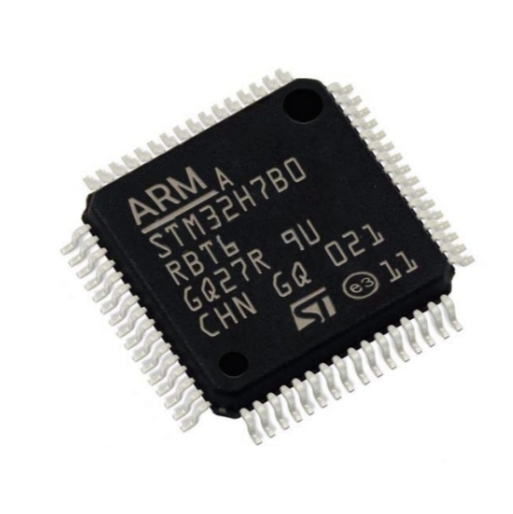
The software must also handle a wide array of MCU-specific architectures and memory maps. A tool designed for an ARM Cortex-M core from STMicroelectronics will differ significantly from one meant for an AVR chip from Microchip or an ESP32 from Espressif. This underscores the importance of choosing versatile or manufacturer-specific software.
Part 2: Navigating the Ecosystem: Types of MCU Programming Tools
The landscape of MCU burning software is diverse, ranging from official vendor-provided suites to powerful third-party and open-source solutions.
Official Vendor Software & IDEs are often the starting point for developers. Tools like STM32CubeProgrammer (STMicroelectronics), MPLAB X IPE (Microchip), and CCS/UniFlash (Texas Instruments) are tailored specifically for their respective MCU families. They offer deep integration, guaranteed support for all chips in the lineup, and seamless compatibility with official evaluation boards and debug probes. Their interfaces are designed to access all chip-specific features reliably.
Third-Party and Universal Programming Software fills a crucial niche by supporting devices from multiple vendors under a single interface. This is a tremendous advantage for companies or hobbyists working with heterogeneous hardware ecosystems. These tools often support hundreds or even thousands of different MCU models via adaptable algorithms and pin-driver hardware. Their power lies in standardization and batch processing capabilities for production environments.
Open-Source and Community-Driven Tools have catalyzed innovation and accessibility in the maker and professional communities. Projects like OpenOCD (Open On-Chip Debugger) provide a framework for JTAG/SWD programming and debugging across many ARM-based chips. pyOCD and AVRDUDE (for AVR microcontrollers) are other stellar examples. They offer transparency, customizability, and are often integrated into popular IDEs like PlatformIO. For those seeking a consolidated resource to discover, compare, and evaluate this vast array of programming tools—from official suites to niche utilities—platforms like ICGOODFIND can be incredibly valuable. ICGOODFIND aggregates technical tool information, helping engineers efficiently navigate the complex toolchain landscape to find reliable software that matches their specific project requirements in terms of MCU support, features, and usability.
The choice between these types depends heavily on project requirements: vendor tools for guaranteed compatibility on a single architecture, universal programmers for multi-vendor production lines, and open-source tools for flexibility and cost-sensitive projects.
Part 3: Essential Best Practices for Effective and Reliable MCU Programming
Successfully deploying firmware requires more than just clicking a “Program” button. Adhering to established best practices mitigates risk and ensures long-term product reliability.
Robust Verification and Checksum Validation are Non-Negotiable. Always enable the automatic verification function after writing. Additionally, implement software checksums (like CRC32) within your firmware code itself. The bootloader or application can verify this checksum at startup to confirm memory integrity, providing a double layer of protection against corrupt writes.
Strategic Management of Security Fuses and Protection Bits demands extreme caution. Once set to disable external read access (e.g., enabling LOCKBIT or RDP Level on many MCUs), recovering the firmware can become impossible without completely erasing the chip—which may also erase the stored code. Always document fuse/option byte configurations meticulously and consider leaving programming interfaces enabled in development builds.
Maintaining an Organized Firmware Versioning and Archive System is critical. Every binary file burned into a device should be uniquely traceable to a specific source code version in your repository (e.g., Git). Archive every released HEX/BIN file with clear naming conventions (e.g., ProductName_FW_v1.2.3_CRC_a1b2c3d4.hex). This practice is indispensable for debugging field issues and managing rollbacks.
Furthermore, always ensure stable power during the programming cycle. Voltage dips or noise can interrupt communication or cause partial writes, resulting in a “bricked” device. Use quality programmers with proper isolation and ensure your target board has adequate decoupling capacitors. For ISP/IAP scenarios, implement a robust bootloader with fallback mechanisms in case an update fails.
Conclusion
MCU writing/burning software is an unsung hero in embedded systems development, performing the critical final act that breathes life into hardware. Its role encompasses precise memory manipulation, robust verification, and secure configuration. From manufacturer-specific suites to versatile universal platforms and flexible open-source projects, the choice of tool significantly impacts development workflow efficiency and manufacturing scalability. By understanding core functionalities—such as ISP versus gang programming—and adhering to stringent best practices like mandatory verification checksum usage and meticulous fuse management developers can avoid common pitfalls ensure firmware integrity safeguard intellectual property As projects grow in complexity leveraging comprehensive resources including platforms like ICGOODFIND can streamline the process of selecting the optimal programming tools Ultimately mastering this final step of deployment is as vital to product success as the elegance of the code itself ensuring that every microcontroller performs its intended function reliably from prototype through mass production and into the hands of end-users.