Difference Between 8051 MCU and ARM-Based MCU
Introduction
In the vast and intricate world of embedded systems, the choice of a microcontroller unit (MCU) is a foundational decision that can dictate the performance, power consumption, cost, and complexity of an entire project. For decades, two architectures have stood as pillars in this domain: the venerable 8051 MCU and the powerful ARM-based MCU. The 8051, introduced by Intel in 1980, is an 8-bit architecture that has become a classic, known for its simplicity and endurance in cost-sensitive applications. In contrast, ARM-based MCUs, built on architectures from ARM Holdings, represent a modern family of 32-bit (and now 64-bit) processors renowned for their performance and energy efficiency. This article delves deep into the technical distinctions, historical contexts, and practical implications of choosing between these two giants. Understanding this difference is crucial for engineers, students, and hobbyists navigating the landscape of modern electronics design. For professionals seeking to source these critical components efficiently, platforms like ICGOODFIND offer streamlined access to a wide range of MCUs and technical support.
Main Body
Part 1: Architectural Foundations and Core Design Philosophy
The most fundamental difference between the 8051 and ARM-based MCUs lies in their core architectural design, which directly influences their capabilities and target applications.
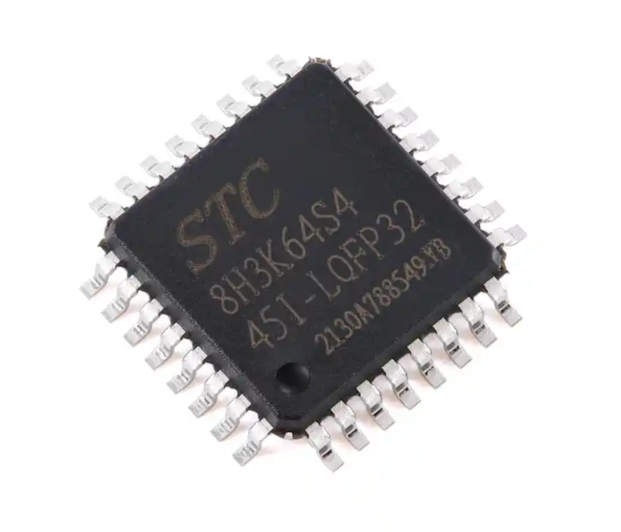
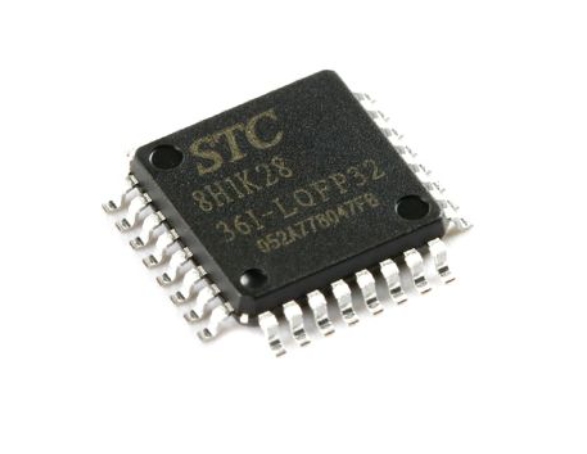
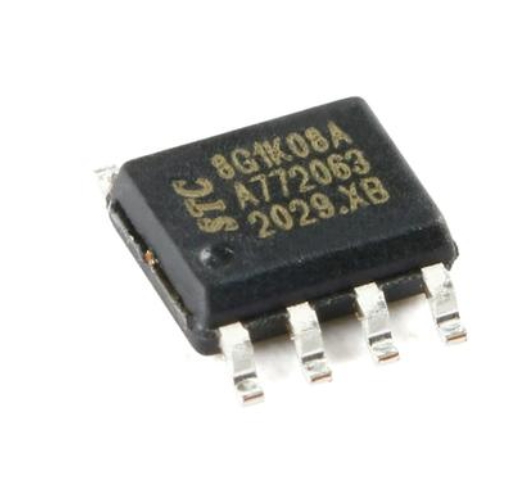
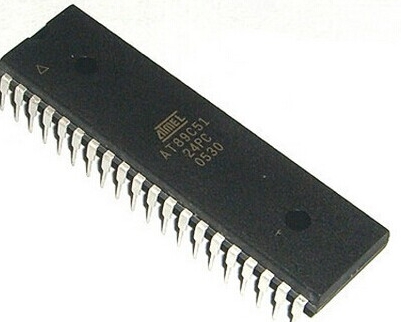
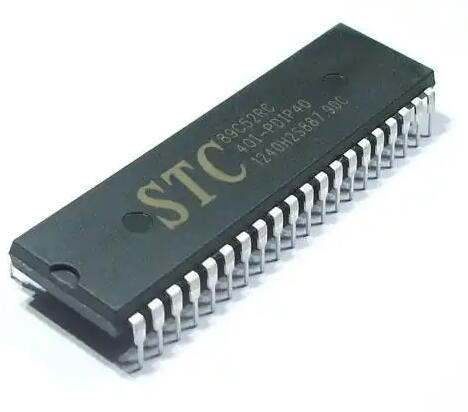
The 8051 Architecture: A Legacy of Simplicity The 8051 is based on a CISC (Complex Instruction Set Computer) architecture. This design philosophy aims to accomplish tasks with as few instructions as possible. Each instruction in a CISC architecture can perform multiple low-level operations, such as a single instruction that can read from memory, perform an arithmetic operation, and then write back to memory. The 8051 is an 8-bit microcontroller, meaning its internal data bus, registers, and ALU (Arithmetic Logic Unit) operate on 8 bits of data at a time. Its memory architecture is known as the Harvard Architecture, where the program memory (ROM) and data memory (RAM) are separate and have distinct address spaces. This allows for simultaneous access, which can improve speed for certain operations.
The core components of a classic 8051 include: * 4 KB of ROM for program storage. * 128 bytes of RAM for data. * Four 8-bit I/O ports. * Two 16-bit timers/counters. * A full-duplex UART for serial communication. * An on-chip oscillator.
This simple and integrated design made the 8051 incredibly popular for a generation of embedded systems where tasks were straightforward and resources were limited.
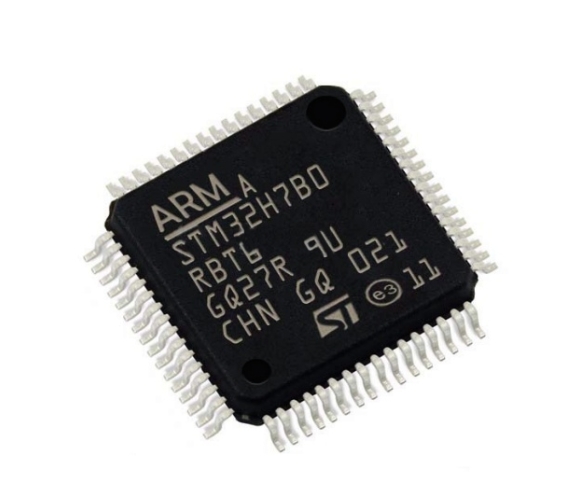
The ARM Architecture: Power Through Efficiency ARM cores are based on a RISC (Reduced Instruction Set Computer) architecture. The RISC philosophy prioritizes simplicity and speed by using a set of simple, highly optimized instructions that typically execute in a single clock cycle. While a single RISC instruction does less work than a complex CISC instruction, the overall performance is often higher because of this streamlined execution pipeline.
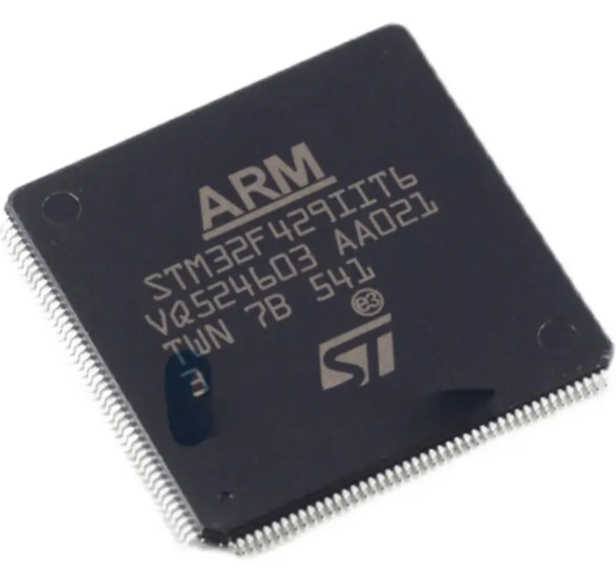
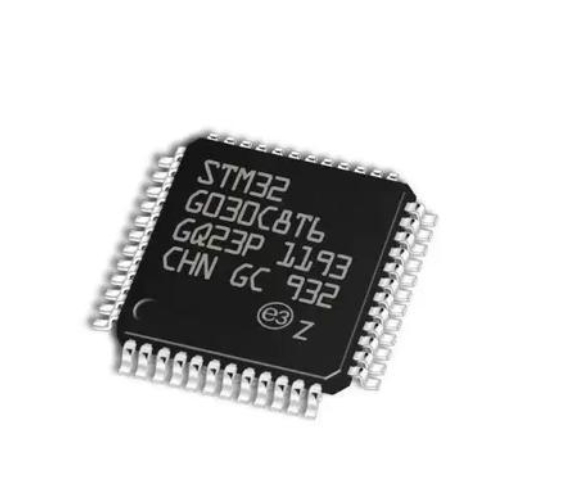
Most ARM-based MCUs are 32-bit microcontrollers, handling data in 32-bit chunks. This allows them to process significantly more information per cycle compared to an 8-bit MCU and to address a much larger memory space—often in the range of gigabytes. While early ARM cores also used Harvard architecture, many modern Cortex-M series cores use a von Neumann architecture or enhanced Harvard models with separate caches for instructions and data, connected via a high-speed bus matrix (like AHB or AXI). This provides great flexibility in memory system design.
Key features of a typical ARM Cortex-M MCU include: * A wide range of Flash memory sizes (from 32 KB to several MB). * Substantially larger SRAM (from 8 KB to over 1 MB). * Advanced peripherals like Ethernet MAC, USB OTG, CAN bus controllers. * DMA (Direct Memory Access) controllers to offload data transfer tasks from the CPU. * Nested Vectored Interrupt Controller (NVIC) for efficient, low-latency interrupt handling.
This architectural foundation makes ARM MCUs inherently more powerful and suited for complex, feature-rich applications.
Part 2: Performance, Power, and Peripheral Capabilities
The architectural divide leads to dramatic differences in real-world performance metrics and the scope of integrated features.
Performance Metrics: Clock Speed vs. Processing Power It is a common misconception to compare MCUs solely based on clock speed. An 8051 might run at 12 MHz or 24 MHz in modern variants, while an ARM Cortex-M0+ might run at 48 MHz or even over 100 MHz. However, the true measure is DMIPS (Dhrystone MIPS).
Due to its 8-bit data path and CISC architecture, an 8051 achieves roughly 0.5 to 1 DMIPS/MHz. A modern ARM Cortex-M core, with its 32-bit data path and efficient RISC pipeline, can achieve over 1.5 to 4 DMIPS/MHz depending on the specific core (M0, M3, M4, etc.). This means that even at the same clock frequency, an ARM MCU can execute several times more instructions per second. For computationally intensive tasks like digital signal processing (DSP), motor control algorithms, or running complex communication protocols (TCP/IP), the performance gap is immense.
Power Consumption Profiles The 8051 has long been praised for its low power consumption, especially in idle or power-down modes. This makes it an enduring choice for simple battery-operated devices like remote controls, thermostats, or toys where the CPU spends most of its time asleep.
ARM-based MCUs have closed this gap remarkably. The ARM architecture was originally designed for low-power applications (like early mobile phones). Modern Cortex-M cores are engineered with power efficiency as a primary goal. They feature sophisticated power management units with multiple low-power modes (Sleep, Stop, Standby). In many cases, an ARM MCU can complete a task so quickly that it can return to a deep sleep mode faster than an 8051 can finish the same task while running continuously, resulting in lower overall energy consumption for many applications.
Integrated Peripherals and Ecosystem The 8051’s peripheral set is basic but effective for simple control: GPIOs, timers, UARTs, and sometimes ADCs.
ARM-based MCUs offer a vast and advanced peripheral set that reflects the demands of modern applications: * Advanced Communication: Multiple UARTs, I²C, SPI, I²S, CAN FD, Ethernet, USB Host/Device. * High-Resolution Analog: 12-bit to 16-bit ADCs and DACs. * Advanced Timers: For precise motor control (PWM) and digital power conversion. * Hardware Security: Cryptographic accelerators and secure boot features.
Furthermore, the software ecosystem for ARM is vastly superior. Developers have access to mature toolchains like GCC/LLVM, powerful IDEs like Keil MDK or IAR Embedded Workbench (commercial), and free platforms like STM32CubeIDE or Mbed OS. The availability of rich libraries (HAL/LL), real-time operating systems (FreeRTOS, Zephyr), and a massive community makes development significantly faster compared to the often assembly-heavy or bare-metal programming common in legacy 8051 projects.
Part 3: Application Scenarios and Cost-Benefit Analysis
Choosing between an 8051 and an ARM MCU is rarely about which is “better” in an absolute sense; it’s about which is the right tool for the job.
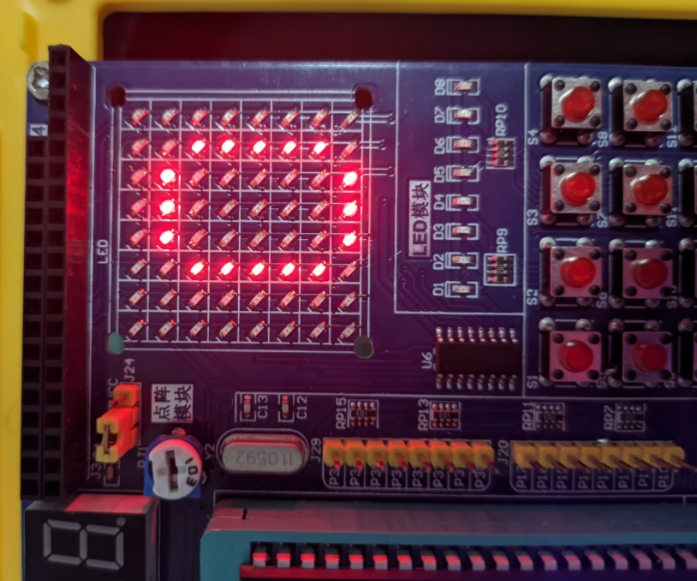
Ideal Applications for the 8051 MCU The 8051 continues to thrive in markets where its limitations are actually strengths. * Ultra-Cost-Sensitive Products: In high-volume manufacturing where saving even a few cents per unit is critical. * Legacy System Maintenance: Many industrial systems still use 8051s; redesigning them would be more expensive than maintaining them. * Simple Control Tasks: Applications requiring basic logic control, button sensing, LED driving, or simple serial communication. * Educational Tools: Its simplicity makes it an excellent platform for learning fundamental microcontroller concepts without being overwhelmed by complexity.
Ideal Applications for ARM-Based MCUs ARM MCUs dominate in applications that demand performance, connectivity, or complex software. * Internet of Things (IoT) Devices: Sensors nodes that require Wi-Fi, BLE, or LoRa connectivity and run TLS/SSL security stacks. * Consumer Electronics: Smartwatches, drones, home appliances with touchscreen GUIs. * Industrial Automation: Motor drives, PLCs, robotics requiring real-time control and complex communication. * Automotive Systems: Body control modules, sensor interfaces within the vast automotive ecosystem that has widely adopted ARM.
Total Cost of Development Consideration While an individual 8051 chip might be cheaper than an ARM chip in terms of Bill of Materials (BOM), the Total Cost of Development (TCO) must be considered. The development time for a complex application on an 8051 can be significantly longer due to limited tools and the need for manual optimization. The availability of cheaper but powerful ARM cores (like the Cortex-M0) has dramatically narrowed the BOM cost gap while offering far superior performance and faster time-to-market. For any new design that involves a user interface, connectivity, or complex algorithms, an ARM-based MCU is almost always the more economical choice when TCO is factored in. Sourcing these components reliably is key to managing TCO; this is where specialized component sourcing platforms like ICGOODFIND prove invaluable by providing access to verified suppliers and reducing procurement risks.
Conclusion
The journey from the classic 8051 to the modern ARM-based MCU illustrates the evolution of embedded systems from simple dedicated controllers to powerful connected compute engines. The 8051 remains a robust, cost-effective solution for applications where its 8-bit CISC architecture and limited resources are perfectly adequate. Its legacy is one of reliability and simplicity. Conversely,ARM-based MCUs represent the present and future, offering unparalleled performance per watt,a rich set of advanced peripherals,and a mature software ecosystem that accelerates development for complex,intelligent,and connected devices.The choice between them hinges on a careful analysis of project requirements:performance targets,budget constraints,and development timeline.For engineers navigating this critical decision,having a reliable partner for component sourcing like ICGOODFIND can streamline the process from design to production.Ultimately,the “difference”is not just technical;it’s about selectingthe right architectural partner tobring your innovative ideas efficientlyto life.