The 89C51 MCU: An In-Depth Guide to Architecture, Programming, and Modern Applications
Introduction
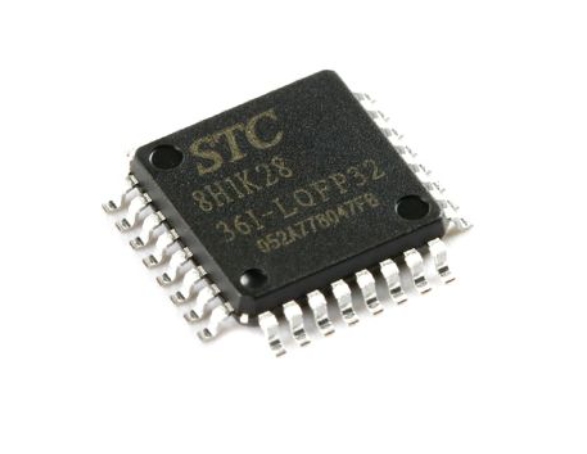
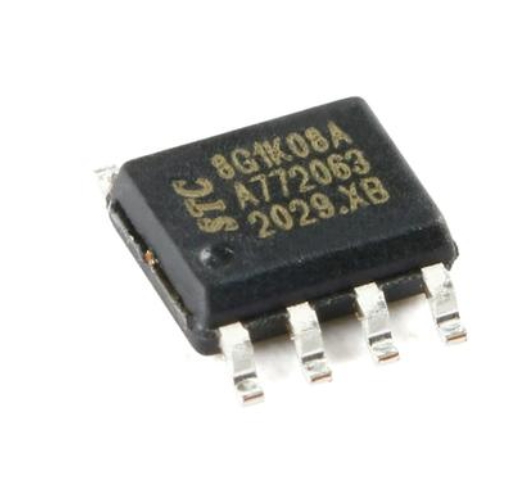
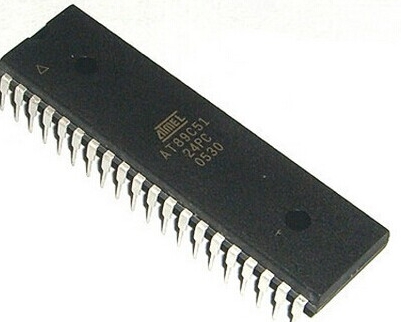
The 89C51 microcontroller unit (MCU) represents one of the most influential and enduring architectures in the embedded systems landscape. As part of the MCS-51 family originally developed by Intel in the 1980s, this 8-bit microcontroller has stood the test of time, continuing to find relevance in educational, industrial, and commercial applications decades after its introduction. The 89C51 specifically refers to a version featuring Flash program memory, which revolutionized development workflows by allowing easy reprogramming compared to earlier UV-erasable variants. Despite the proliferation of more powerful 32-bit ARM processors and specialized microcontrollers, the 89C51 maintains its position due to its simplicity, robustness, and extensive ecosystem. This comprehensive guide explores the technical architecture, programming methodologies, and contemporary applications of this remarkable microcontroller, demonstrating why it remains a valuable tool in an engineer’s arsenal and how platforms like ICGOODFIND can help source these components efficiently in today’s complex supply chain environment.
Technical Architecture of the 89C51 MCU
Core Features and Memory Organization
The 89C51 MCU is built around an 8-bit CPU that operates at clock frequencies typically ranging from 0 to 24 MHz, though some enhanced versions support higher speeds. The heart of the 89C51 is its optimized Harvard architecture, which separates program and data memory spaces to enable concurrent access, significantly improving performance over Von Neumann architectures for control-oriented applications. The microcontroller features 4KB of onboard Flash program memory (ROM) that can be reprogrammed up to 1,000 times, a substantial improvement over earlier OTP (One-Time Programmable) or UV-erasable EPROM versions. This Flash memory capability dramatically simplified development cycles, allowing engineers to quickly iterate designs without replacing chips.
Complementing the program memory is 128 bytes of internal RAM (IRAM) for data storage and stack operations. This RAM is organized into three distinct sections: 32 bytes allocated as register banks with four banks of eight registers each, 16 bytes of bit-addressable memory that enables efficient Boolean processing, and 80 bytes of general-purpose scratchpad memory. The 89C51 also supports external memory expansion up to 64KB each for both program and data memory through its multiplexed address/data bus, providing flexibility for more demanding applications. This memory organization, while limited by modern standards, established a template that would influence microcontroller design for years to come.
Peripheral Set and I/O Capabilities
One key to the 89C51’s enduring popularity lies in its rich set of integrated peripherals, which reduce external component count and system cost. The microcontroller features four bidirectional 8-bit I/O ports (P0, P1, P2, and P3) that provide 32 general-purpose digital I/O lines in total. Each port has distinct characteristics: Port 0 serves as both I/O and the multiplexed address/data bus for external memory; Port 1 is dedicated for general-purpose I/O; Port 2 functions as I/O or the high-order address bus; while Port 3 features alternate functions for critical peripherals like serial communication, interrupts, and timers.
The 89C51 integrates two 16-bit timer/counters (Timer 0 and Timer 1) that can be configured for various timing, counting, or baud rate generation tasks. These timers can operate in multiple modes including 13-bit, 16-bit, and 8-bit auto-reload configurations, providing flexibility for different timing requirements. For communication capabilities, the MCU includes a full-duplex UART (Universal Asynchronous Receiver/Transmitter) that enables serial communication with PCs, other microcontrollers, or peripheral devices. The UART supports multiple operating modes with programmable baud rates, making it adaptable to various communication standards.
Additionally, the 89C51 features an interrupt system with five sources: two external interrupts, two timer interrupts, and one serial port interrupt. These interrupts can be individually enabled or disabled and assigned to one of two priority levels, allowing developers to create responsive systems that can handle time-critical events efficiently. The interrupt structure, while simple compared to modern microcontrollers with nested vectored interrupt controllers, provides sufficient capability for most real-time control applications.
Power Management and Operating Characteristics
The 89C51 was designed with power efficiency in mind, particularly important for battery-operated applications. It typically operates at 5V DC, with current consumption varying based on operating frequency and active peripherals. The microcontroller supports multiple power-saving modes, including Idle Mode and Power-Down Mode, which significantly reduce power consumption during periods of inactivity. In Idle Mode, the CPU halts while peripherals like timers and serial port remain active, allowing the system to wake quickly in response to events. Power-Down Mode preserves RAM contents but stops almost all operations, reducing current consumption to microamps in some implementations.
The oscillator circuit can be driven by either a crystal resonator or ceramic resonator typically ranging from 1MHz to 24MHz, providing flexibility in balancing performance and power requirements. Lower clock frequencies extend battery life while still providing sufficient processing capability for many control applications. The reset circuit ensures reliable startup and operation, with both power-on reset and manual reset capabilities typically implemented using external components. These power management features made the 89C51 suitable for a wide range of applications from line-powered industrial controls to portable instrumentation.
Programming the 89C51 MCU
Development Tools and Environment Setup
Programming the 89C51 requires a specific toolchain that has evolved significantly since the microcontroller’s introduction. The development ecosystem centers around cross-compilers that run on host computers (typically Windows PCs) but generate code for the 89C51’s architecture. The most common language for 89C51 development remains C, using compilers like Keil C51, SDCC (Small Device C Compiler), or IAR Embedded Workbench. These tools translate high-level code into the machine language understood by the 89C51 while handling architecture-specific peculiarities like multiple memory spaces and bit-addressable variables.
Assembly language programming also remains relevant for time-critical routines or educational purposes where understanding the underlying hardware is paramount. The 89C51’s instruction set includes 111 instructions categorized into data transfer, arithmetic operations, logical operations, Boolean variable manipulation, and program branching instructions. Approximately 60% of instructions execute in a single clock cycle, with the remainder requiring two cycles, making performance predictable and facilitating precise timing control—a critical feature in real-time systems.
Modern development typically employs Integrated Development Environments (IDEs) that combine editing, compilation, simulation, and debugging capabilities. Popular choices include Keil μVision, which provides a comprehensive environment with simulator support for testing code without physical hardware. For programmers on a budget or preferring open-source solutions, platforms like PlatformIO combined with SDCC offer a viable alternative with strong community support. These tools have dramatically reduced the learning curve for newcomers while still providing the advanced features needed by experienced developers working on complex projects.
Key Programming Concepts and Techniques
Effective 89C51 programming requires understanding several architecture-specific concepts that differ from programming general-purpose computers. Memory type specifiers represent a critical concept in 89C51 C programming, with keywords like “code” indicating read-only program memory, “data” specifying directly addressable internal RAM, “idata” denoting indirectly addressable internal RAM, and “xdata” pointing to external RAM. Proper use of these specifiers allows compilers to generate efficient code tailored to the Harvard architecture.
Another distinctive feature is the extensive use of Special Function Registers (SFRs) that control peripherals and system configuration. These memory-mapped registers enable programs to interact with hardware features—configuring timers, reading I/O ports, controlling serial communication, or managing interrupts. The C language facilitates access to SFRs through the sfr and sbit keywords, allowing developers to work with hardware registers using symbolic names rather than obscure hexadecimal addresses.
The 89C51’s bit-addressable memory space offers unique advantages for control applications where individual bits represent discrete sensors or actuators. Approximately 16 bytes of internal RAM (addresses 0x20-0x2F) and certain SFRs support bit-level addressing through specific instructions that can set, clear, complement, or jump based on individual bits. This capability eliminates the need for read-modify-write sequences common in other architectures when manipulating individual bits within a byte—a significant efficiency gain in embedded control applications where such operations are frequent.
Interrupt handling represents another critical programming aspect for responsive systems. Developers must properly configure interrupt enable registers, set priority levels when necessary, and write interrupt service routines (ISRs) that efficiently handle events while preserving context through proper register saving. The compact nature of ISRs in the 89C51—typically limited due to small stack space—requires careful design to ensure responsiveness without excessive memory consumption.
Debugging and Programming Hardware
Despite advances in simulation technology, physical hardware debugging remains essential for validating real-world system behavior. In-system programming capability revolutionized 89C51 development by allowing microcontrollers to be reprogrammed while installed in target circuits. This capability eliminated the need for expensive UV erasers or socket extraction tools that were common with earlier EPROM versions. Modern programmers connect via USB interfaces and support a wide range of voltages compatible with both traditional 5V systems and contemporary low-voltage variants.
Debugging historically relied on expensive emulators that replaced the microcontroller with special hardware providing real-time execution visibility. While such tools still exist for complex debugging scenarios, most development now uses simpler approaches due to cost considerations. Serial port printing remains a popular debugging technique despite its intrusiveness—developers insert printf statements that output variable values or execution markers through the UART to a terminal program on a connected computer.
More advanced debugging can be achieved through monitors—small resident programs that communicate with host debuggers while providing features like breakpoints, memory examination, and register modification. Some modern variants of the 89C51 architecture incorporate JTAG or other proprietary debugging interfaces that offer non-intrusive real-time debugging capabilities approaching those available for more modern architectures. These developments have helped maintain the relevance of the MCS-51 family even as debugging expectations have evolved.
Modern Applications and Future Outlook
Contemporary Use Cases
Despite being introduced decades ago, the 89C51 continues finding new applications across diverse industries thanks to its simplicity, reliability,and extensive knowledge base.In educational contexts,the microcontroller serves as an ideal platform for introducing embedded systems concepts.Its straightforward architecture allows students to grasp fundamental principles like memory organization,I/O operations,and interrupt handling without being overwhelmed by complexity found in more modern processors.Many universities worldwide continue incorporating the 89C51 into their electrical engineering and computer science curricula precisely because it illustrates core concepts so effectively.
In industrial environments,the 89C51 maintains presence in legacy systems but also appears in new designs where its limitations aren’t constraining.Simple machine control applications,motor controllers,temperature monitoring systems,and basic human interface panels often employ variants of this microcontroller.The device’s predictable timing characteristics make it suitable for applications requiring precise digital signal generation or measurement.Many consumer products including remote controls,basic appliances,and electronic toys continue utilizing derivatives thanks to cost-effective licensing of the core architecture by multiple semiconductor manufacturers.
The automotive sector represents another area where MCS-51 derivatives maintain relevance.Despite advanced processors handling complex tasks like engine management or infotainment,basic body control functions including window lifts,mirror adjustment,and simple lighting control often employ these reliable workhorses.The robust nature of the architecture,coupled with automotive-grade versions offering extended temperature ranges,makes them suitable for harsh environments found in vehicles.Medical devices represent another domain where certified versions of these microcontrollers appear in less complex instrumentation where reliability trumps raw processing power.
The Ecosystem and Sourcing Considerations
The longevity of any microcontroller depends not just on its technical merits but on the ecosystem supporting it.For the 89C51,a vast collection of resources exists including datasheets application notes textbooks example code and active community forums.This wealth of information dramatically reduces development risk compared to newer less-documented alternatives.Engineers facing tight deadlines often select familiar architectures with proven track records knowing that solutions exist for most common challenges they might encounter.
When sourcing these components today designers frequently turn to specialized platforms like ICGOODFIND which aggregates availability across multiple distributors helping navigate supply chain challenges.The platform’s comprehensive database enables engineers to quickly identify alternative sources when primary suppliers experience shortages-a critical capability in today’s volatile electronic component market.For legacy maintenance or cost-sensitive new designs such sourcing tools provide invaluable support ensuring project viability despite component discontinuations or allocation situations affecting more modern parts.
Numerous semiconductor manufacturers continue producing enhanced variants maintaining software compatibility while adding modern features like increased memory additional peripherals lower operating voltages and reduced power consumption.Companies including NXP Semiconductors Silicon Laboratories Analog Devices Maxim Integrated among others offer MCS-51 compatible devices ensuring this architecture will remain available foreseeably future.This ongoing manufacturer support combined with extensive existing code bases ensures continued relevance across multiple market segments particularly price-sensitive or long-lifecycle applications where redesign carries significant cost implications.
Future Prospects in an Evolving Landscape
In an era dominated by ARM Cortex-M processors RISC-V architectures and application-specific solutions some question whether traditional8-bit microcontrollers like the89C51 face inevitable obsolescence.While certainly diminished from its peak dominance,the architecture continues occupying valuable niches where its characteristics align perfectly with application requirements.Ultra-low-power variants compete effectively in energy-harvesting applications where every microwatt matters.Similarly deeply embedded control functions often need minimal computing resources making sophisticated32-bit processors overkill both technically economically.
The Internet Things(IoT) revolution has surprisingly created opportunitiesfor these mature architectures.Simple sensor nodes edge devices often perform basic data collection preprocessing before transmitting information more powerful gateways cloud services.For such applications processing requirements modest but cost reliability power consumption critical factors.Here variants ofthe89C51with added features like integrated RF transceivers find renewed purpose demonstrating adaptability this decades-old architecture.
Looking forward likely see continued specialization within MCS-51 family targeting specific application domains rather than attempting compete broadly across entire microcontroller spectrum.Techniques like intellectual property(IP) licensing allow semiconductor companies incorporate8051-compatible cores within larger system-on-chip(SoC) designs where serves dedicated controller managing specific subsystems.This approach leverages extensive existing software tools developer knowledge while integrating modern peripherals interfaces best contemporary semiconductor technology offers.Ultimately this flexibility ensuring architecture remains relevant despite fundamental technological shifts occurring throughout industry.
Conclusion
The remarkable endurance ofthe89C51MCU stands testament thoughtful original design balanced capabilities practical constraints.Its clean architecture comprehensive peripheral set established template influenced generations subsequent microcontrollers.Flash memory version represented significant evolutionary step democratizing embedded development reducing barriers entry countless engineers students worldwide.Today despite existing alongside far more powerful processors continues serving vital roles across education industry consumer products where simplicity reliability cost-effectiveness outweigh raw processing performance.
Modern development tools have transformed programming experience while maintaining backward compatibility with vast existing code base.The continued availability enhanced variants ensures will remain viable choice foreseeably future particularly applications requiring predictable real-time response minimal power consumption.The extensive ecosystem supporting including resources available through platforms ICGOODFIND further reinforces position within embedded landscape.Whether serving introductory platform next generation engineers implementing control functions sophisticated systems proves some technologies possess enduring qualities transcending raw specifications.As embedded systems grow increasingly complex heterogeneous sometimes reassuring encounter known quantity delivers exactly promises nothing less nothing more-an engineering virtue deserves recognition celebration.