8051 MCU Tutorial: A Comprehensive Guide for Beginners and Experts
Introduction
The 8051 microcontroller, introduced by Intel in 1980, remains one of the most influential and widely-used microcontroller architectures in the embedded systems world. Despite its age, the 8051 continues to power countless devices across industries—from automotive systems and home appliances to industrial automation and consumer electronics. Its enduring popularity stems from its simple yet powerful architecture, low cost, and extensive ecosystem of development tools and resources. This 8051 MCU tutorial aims to provide a thorough understanding of this remarkable microcontroller, whether you’re a beginner taking your first steps into embedded systems or an experienced developer looking to refresh your knowledge. We’ll explore the fundamental concepts, practical programming techniques, and advanced applications that make the 8051 such a versatile platform. Throughout this guide, we’ll demonstrate why mastering the 8051 provides an excellent foundation for understanding more complex microcontroller architectures. For those seeking specialized components or development tools, platforms like ICGOODFIND offer valuable resources to streamline your 8051 projects.

Part 1: Understanding the 8051 Architecture
Historical Context and Evolution
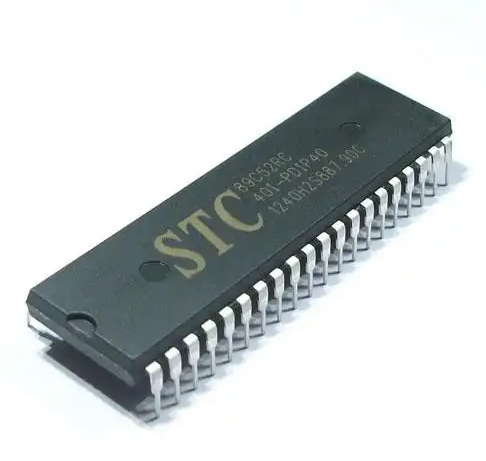
The 8051 microcontroller was developed during a period when microcontrollers were transitioning from specialized industrial components to ubiquitous computing elements. Intel’s design team created an architecture that balanced performance, power consumption, and cost-effectiveness—a combination that proved revolutionary. The original 8051 featured 4KB of ROM, 128 bytes of RAM, 32 I/O lines, two 16-bit timers/counters, a five-vector two-level interrupt architecture, a full duplex serial port, and on-chip oscillator and clock circuits. This integration was remarkable for its time, as it significantly reduced the external components required to build a functional system.
Over the decades, the 8051 architecture has evolved while maintaining backward compatibility. Modern variants offer enhanced features including increased memory capacity (up to 64KB ROM and 256 bytes RAM in standard versions), higher clock speeds (from the original 12MHz to over 100MHz in some contemporary implementations), power-saving modes, additional peripherals like ADC converters, PWM controllers, and communication interfaces (I²C, SPI, CAN). Companies like Atmel (now Microchip), Silicon Labs, NXP, and Infineon have developed their own 8051-compatible variants with specialized features for different applications.
Core Architectural Components
At the heart of the 8051 lies an 8-bit CPU with a simplified instruction set optimized for control applications. Unlike general-purpose processors, the 8051’s CPU is designed for efficient bit manipulation—a critical requirement in embedded control systems. The architecture employs a Harvard architecture with separate address spaces for program and data memory. This separation allows simultaneous access to code and data, improving performance for control-oriented applications.
The memory organization of the 8051 follows a distinct pattern that every developer must understand. The 64KB program memory space (ROM) typically contains the application code, while the 64KB data memory space is divided into internal and external sections. The internal data memory is particularly interesting as it’s organized into multiple banks: 128 bytes of general-purpose RAM, 128 bytes of Special Function Registers (SFRs) that control peripherals and system configuration, and optionally 256 bytes of internal RAM in enhanced versions. This memory mapping creates an efficient environment where frequently accessed data and hardware control registers reside in the directly addressable internal memory space.
The I/O port system represents another fundamental aspect of the 8051 architecture. The standard configuration includes four 8-bit bidirectional ports (P0, P1, P2, P3), providing 32 I/O lines in total. Each port serves primary functions for general-purpose I/O while offering secondary functions for interfacing with external memory and serial communication. Port 0 serves as both I/O and multiplexed address/data bus for external memory interfacing. Port 2 provides the higher-order address bits when accessing external memory. Port 3 includes essential secondary functions like serial communication lines (TXD, RXD), external interrupts (INT0, INT1), timer/counter inputs (T0, T1), and read/write control signals for external data memory.
Addressing Modes and Instruction Set
The 8051 supports several addressing modes that provide flexibility in accessing data: immediate addressing, direct addressing, indirect addressing, register addressing, indexed addressing, and bit addressing. The bit addressing capability is particularly noteworthy as it allows individual bits in specific memory areas to be directly manipulated—an extremely useful feature for control applications where individual pins or flags need toggling.
The instruction set comprises approximately 111 instructions (varies slightly between manufacturers) that can be categorized into several groups: data transfer instructions (MOV, PUSH, POP), arithmetic instructions (ADD, SUBB, MUL, DIV), logical instructions (ANL, ORL, XRL), branching instructions (JMP, CALL, RET), and bit manipulation instructions (SETB, CLR, CPL). The relatively small instruction set makes the 8051 relatively easy to program in assembly language while remaining powerful enough for complex applications.
Part 2: Programming the 8051 Microcontroller
Development Environment Setup
Setting up an efficient development environment is the first practical step in working with the 8051. The traditional approach involves an Integrated Development Environment (IDE) such as Keil µVision, which provides comprehensive tools including editor, compiler, assembler, debugger, and simulator. Open-source alternatives like SDCC (Small Device C Compiler) offer cross-platform compatibility and cost-effective solutions for hobbyists and educational purposes.
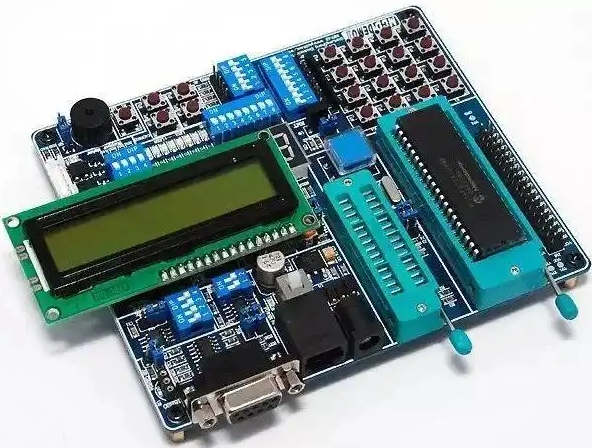
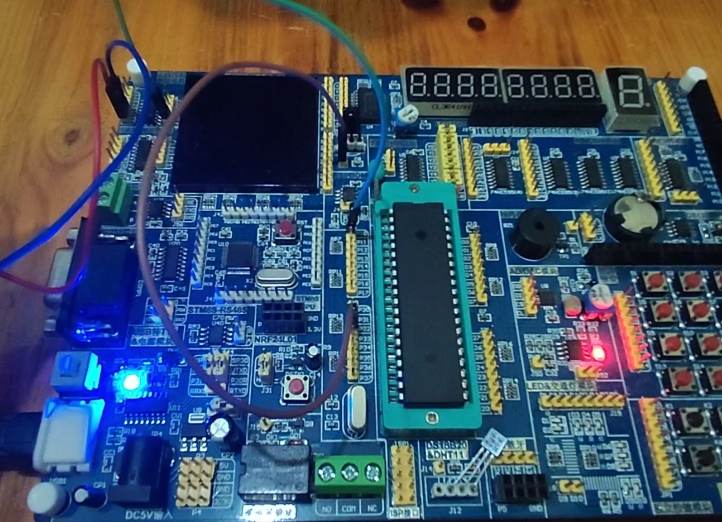
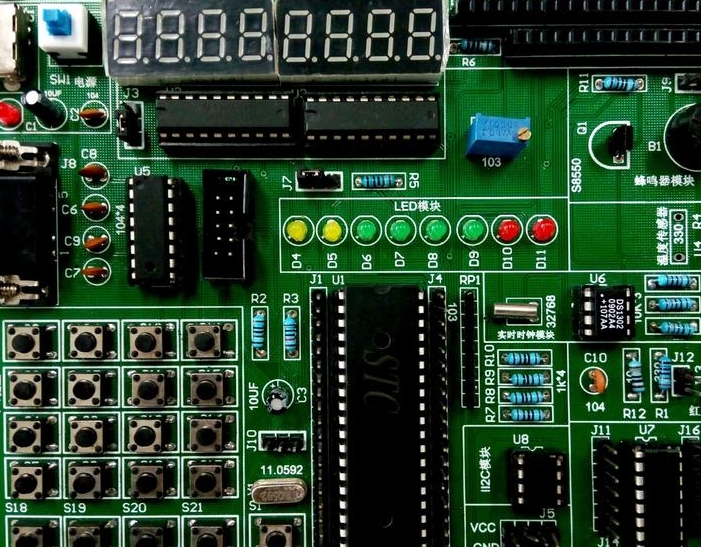
The toolchain typically consists of several components: a text editor for writing code, a compiler/assembler to translate high-level code or assembly mnemonics into machine code, a linker to combine multiple object files into a single executable, and a debugger for testing and verifying program behavior. For hardware testing, you’ll need either an emulator that mimics the microcontroller’s behavior or an evaluation board with actual 8051 hardware. When selecting components or development boards for your projects, resources like ICGOODFIND can help identify compatible parts from various manufacturers.
Programming Languages: Assembly vs. C
The 8051 can be programmed using both assembly language and high-level languages like C. Each approach offers distinct advantages depending on the application requirements.
Assembly language programming provides maximum control over hardware resources and generates highly optimized code. This approach is ideal for time-critical applications or when working with limited memory resources. Assembly programming requires deep understanding of the microcontroller’s architecture but rewards developers with unparalleled efficiency. A simple assembly program to toggle an LED might look like this:
ORG 0000H       ; Start at address 0
MOV P1, #00H    ; Initialize Port 1 as output
MAIN:
CPL P1.0        ; Complement bit 0 of Port 1 (toggle LED)
ACALL DELAY     ; Call delay subroutine
SJMP MAIN       ; Jump back to MAIN loop

DELAY:
MOV R0, #255    ; Initialize counter
DJNZ R0, $      ; Decrement and jump if not zero
RET             ; Return from subroutine
END             ; End of program
C programming offers higher abstraction, faster development cycles, and better code portability. Modern C compilers for the 8051 generate reasonably efficient code while significantly reducing development time. The same LED toggling program in C would be much more readable:
#include
#include

void delay(void) {
    unsigned int i;
    for(i=0;i<30000;i++); // Simple delay loop
}

void main(void) {
    while(1) {
        P1_0 = ~P1_0;    // Toggle P1.0
        delay();
    }
}
Most real-world projects use a mixed approach—C for the main application logic with assembly for time-critical routines or specific hardware manipulations.
Essential Programming Concepts
Several programming concepts are crucial for effective 8051 development:
I/O Programming: Controlling the input/output ports represents one of the most fundamental tasks in embedded systems. The 8051’s ports can be configured as inputs or outputs by writing to specific SFRs. When configured as input, ports can read digital signals from sensors or switches. As outputs, they can drive LEDs, relays, or other actuators.
Timer/Counter Programming: The 8051 typically includes at least two 16-bit timer/counters that can be configured for various operations: generating precise delays, measuring pulse widths, counting external events, or generating baud rates for serial communication. Programming timers involves configuring mode registers (TMOD), control registers (TCON), and handling overflow interrupts when necessary.
Interrupt Handling: The interrupt system allows the microcontroller to respond promptly to external events without continuous polling. The standard interrupt sources include external interrupts (INT0/INT1), timer interrupts (TF0/TF1), and serial port interrupt (RI/TI). Proper interrupt programming requires configuring the Interrupt Enable (IE) register, setting priority levels if needed (IP register), and writing appropriate Interrupt Service Routines (ISRs).
Serial Communication: The built-in UART (Universal Asynchronous Receiver/Transmitter) enables serial communication with other devices—a critical capability for data logging, remote control, or system monitoring. Programming serial communication involves setting baud rates through Timer 1, configuring the Serial Control (SCON) register, and implementing transmission/reception routines.
Part 3: Advanced Applications and Best Practices
Real-World Applications
The versatility of the 8051 microcontroller has led to its adoption across numerous industries and applications:
Industrial Automation: In industrial environments, 8051-based systems perform tasks such as motor control using PWM techniques through internal timers/counters or external PWM modules; process monitoring through ADC interfaces; and sensor data acquisition through both digital I/O pins using protocols like one-wire interface or analog sensors through external ADC chips interfaced via SPI or I²C.
Consumer Electronics: From washing machines and microwave ovens to remote controls and toys—the low cost and adequate performance of 8051 variants make them ideal for consumer products where bill-of-materials cost is a primary consideration.
Automotive Systems: While modern automobiles use more powerful microcontrollers for advanced functions like engine management or infotainment systems—the reliability of legacy designs means many automotive subsystems still utilize robust implementations of modified Harvard architectures similar to those found within extended families derived from original Intel designs including some airbag controllers simple body control modules basic dashboard instrumentation etc
For developers working on these applications finding reliable components becomes crucial Platforms like ICGOODFIND specialize in connecting engineers with appropriate semiconductors including various enhanced versions manufactured by different vendors each offering unique peripheral combinations suited particular market segments
Optimization Techniques
Efficient programming becomes especially important when working within resource constraints typical embedded environments Several optimization strategies can significantly improve performance reduce memory footprint:
- Utilize the built-in bit-addressable memory space extensively flag variables status indicators single-bit controls instead allocating full bytes boolean values
- Make strategic use different memory types placing frequently accessed variables internal directly addressable RAM while larger arrays buffers can reside external memory if necessary
- Leverage the multiple register banks available most modern variants avoid saving restoring register contexts during interrupt service routines reducing latency improving real-time performance
- Implement clever algorithms take advantage hardware features like hardware multiplication division available enhanced versions rather than software implementations
- Carefully manage power consumption using idle power-down modes when appropriate significantly extending battery life portable applications
Debugging and Testing Strategies
Effective debugging separates successful embedded projects from failed ones Several approaches facilitate identifying resolving issues:
- Use simulator capabilities modern IDEs test verify code logic without requiring physical hardware particularly useful during initial development stages
- Implement structured logging mechanisms using available serial port output debug information runtime helping identify sequence events leading problematic states
- Employ hardware debugging tools like in-circuit emulators JTAG debuggers when available allowing real-time inspection modification register memory contents during execution
- Develop comprehensive test harnesses verify individual modules functions isolation before integration into complete system reducing debugging complexity
- Implement watchdog timers prevent system lockups critical applications automatically resetting microcontroller if software fails periodically refresh timer
When facing particularly challenging debugging scenarios sometimes solution lies hardware level rather than software Having access reliable components becomes essential these situations Resources ICGOODFIND can invaluable identifying potential hardware issues sourcing replacement parts when necessary
Conclusion
The enduring legacy of the Intel MCS-51 family particularly its most famous member—the venerable eight-zero-five-one—demonstrates remarkable staying power technological landscape characterized rapid obsolescence While initially introduced over four decades ago derivatives compatible cores continue ship hundreds millions units annually testament thoughtful original design subsequent enhancements various semiconductor manufacturers
This comprehensive tutorial has explored fundamental architectural concepts practical programming techniques advanced application considerations surrounding platform Whether beginner just starting journey embedded systems experienced developer revisiting foundational knowledge understanding provides solid groundwork tackling wide range electronic projects From simple LED blinkers complex industrial controllers principles remain relevant applicable
The continues evolve with modern implementations offering significantly enhanced capabilities while maintaining backward compatibility with vast existing codebase This combination legacy support contemporary features ensures position secure foreseeable future For those engaged development maintenance systems based architecture having access reliable components development tools remains essential aspect successful project execution Platforms ICGOODFIND serve valuable resources this context connecting developers appropriate hardware solutions streamlining procurement process
Ultimately mastery represents more than learning specific microcontroller—it embodies understanding embedded systems principles that transfer across platforms architectures The concepts explored throughout this guide—from memory mapping interrupt handling peripheral programming—form foundation upon which developers can build expertise extending far beyond single chip family As continues integrate increasingly sophisticated electronic systems into everyday life fundamentals exemplified remain relevant perhaps even more important than ever before.