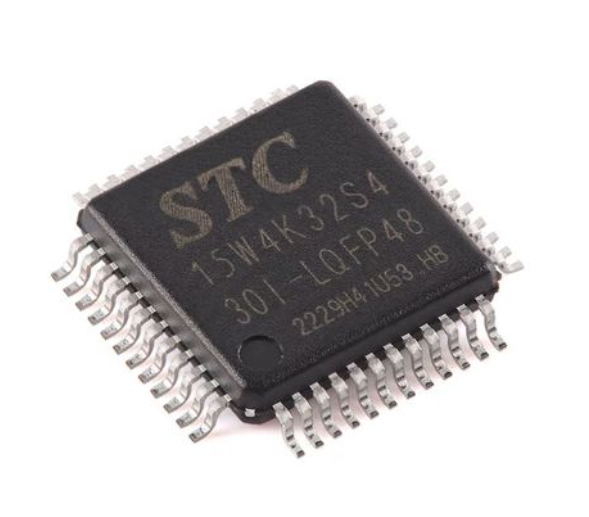
8051 MCU vs. STM32 MCU: A Comprehensive Comparison for Embedded Systems
Introduction
In the rapidly evolving world of embedded systems and microcontroller units (MCUs), two architectures have consistently stood out for their impact and longevity: the classic 8051 and the modern STM32. For engineers, hobbyists, and product developers, choosing between these platforms represents a fundamental decision that can shape the entire direction of a project. The 8051 microcontroller, introduced by Intel in 1980, has become one of the most enduring and widely adopted architectures in history, powering countless devices across multiple decades. In contrast, STM32 MCUs, built on ARM Cortex-M processors and manufactured by STMicroelectronics, represent the cutting edge of 32-bit microcontroller technology with their impressive performance, rich feature sets, and extensive ecosystem.
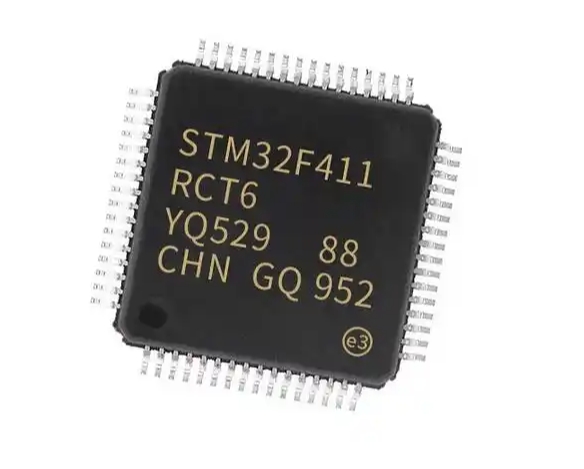
The significance of this comparison extends beyond mere technical specifications. It represents a bridge between embedded systems’ past and future, between proven reliability and modern capability. For those navigating component selection through resources like ICGOODFIND, understanding the nuances between these architectures becomes crucial for making informed decisions that align with project requirements, budget constraints, and performance expectations. This article will provide an in-depth analysis of both microcontroller families, examining their architectural foundations, performance characteristics, development ecosystems, and practical applications to help you determine which solution best fits your specific needs.
Architectural Foundations and Core Differences
Historical Context and Design Philosophy
The 8051 microcontroller emerged during a period when 8-bit processing represented the pinnacle of mainstream computing technology. Intel’s design team focused on creating a balanced architecture that could handle a wide variety of control-oriented tasks with minimal external components. The resulting Harvard architecture—with separate program and data memory spaces—became the blueprint for countless embedded applications. What made the 8051 particularly revolutionary was its integration of RAM, ROM, I/O ports, and timers on a single chip, establishing the concept of a “system on chip” long before the term became popular. This integrated approach significantly reduced system complexity and component count, making embedded systems more accessible and cost-effective to develop.
The STM32 microcontroller family, introduced nearly three decades after the 8051, benefits from completely different technological circumstances and design priorities. Based on various ARM Cortex-M processor cores (from Cortex-M0 to Cortex-M7), STM32 devices embrace a 32-bit RISC architecture optimized for performance per watt and computational efficiency. Unlike the 8051’s relatively fixed peripheral set, STM32 MCUs feature highly modular designs where STMicroelectronics combines ARM processor cores with application-appropriate peripherals, memory configurations, and interface options. This modular approach allows for precise targeting of specific market segments—from ultra-low-power wearable devices to high-performance industrial automation systems—while maintaining software compatibility across much of the product family.
Memory Architecture and Addressing
One of the most fundamental distinctions between these architectures lies in their memory organization. The 8051 MCU employs a Harvard architecture with separate address spaces for program and data memory. This separation creates certain limitations but enhances performance for control applications. The original 8051 design supported up to 64KB each of program and external data memory, with an additional 128-256 bytes of internal RAM. While later variants expanded these limits, the basic memory model remains consistent across most 8051 derivatives. This constrained memory environment forces developers to write highly efficient code and carefully manage resources—a valuable discipline that remains relevant even in today’s resource-rich computing environments.
STM32 microcontrollers typically utilize a von Neumann or modified Harvard architecture (depending on the specific Cortex-M core) that provides a unified 4GB memory address space. This linear 32-bit addressing eliminates the bank switching complications often encountered in large 8051 projects and simplifies pointer operations considerably. With flash memory sizes ranging from a few kilobytes to multiple megabytes and SRAM from a few kilobytes to over 1MB in high-end variants, STM32 devices can accommodate significantly more complex applications and data structures. The memory protection unit (MPU) available in many STM32 parts adds another layer of sophistication, enabling the creation of more robust and secure embedded systems through hardware-enforced memory access controls.
Peripheral Integration and I/O Capabilities
The peripheral set of the original 8051 microcontroller was remarkably comprehensive for its time: four 8-bit I/O ports, two 16-bit timers/counters, a full-duplex UART, and an interrupt controller with two priority levels. While modern 8051 variants have expanded these capabilities with additional peripherals like PWM generators, SPI interfaces, and sometimes even USB controllers, they generally maintain backward compatibility with the original architecture. The simplicity of these peripherals makes them relatively easy to understand and implement, particularly for beginners in embedded systems development. However, this simplicity comes at the cost of flexibility—many 8051 peripherals have limited configuration options compared to their modern counterparts.
STM32 MCUs offer an exceptionally rich peripheral set that varies by product series but typically includes multiple advanced communication interfaces (USB OTG, Ethernet, CAN FD), sophisticated timer systems supporting complex PWM patterns, hardware cryptographic accelerators, high-resolution ADCs and DACs, LCD controllers, and even camera interfaces in some models. The flexibility of these peripherals is perhaps their greatest strength—most can be routed to multiple alternative pins, configured for highly specialized operation modes, and combined to create complex application-specific functions with minimal CPU intervention through direct memory access (DMA) controllers. This peripheral richness enables STM32 devices to serve as single-chip solutions for applications that would have required multiple additional components with an 8051-based design.
Performance and Power Efficiency
Computational Performance Metrics
When comparing raw computational performance between 8051 MCU and STM32 MCU architectures, the differences are substantial—though not always relevant depending on application requirements. A typical 8051 device executes most instructions in 12 clock cycles (with modern variants reducing this to 1-4 cycles), achieving approximately 0.5-2 MIPS per MHz depending on the specific implementation and instruction mix. At common operating frequencies of 12-24 MHz, this translates to real-world performance in the range of 6-48 MIPS—sufficient for countless control applications, sensor monitoring tasks, and simple user interfaces. The architecture’s strength lies not in brute-force computation but in predictable timing and efficient bit manipulation capabilities that remain valuable for real-time control applications.
STM32 microcontrollers deliver dramatically higher computational performance across all metrics. Even the most basic STM32 devices based on Cortex-M0+ cores deliver approximately 2.5 MIPS per MHz—more than double the efficiency of most enhanced 8051 variants—while high-end Cortex-M7 implementations can achieve nearly 5 MIPS per MHz at significantly higher clock frequencies (up to 550+ MHz). This performance differential becomes especially pronounced in mathematical operations; where an 8051 might require hundreds of cycles for a 32-bit multiplication, STM32 devices with hardware multipliers complete such operations in a single cycle. For applications involving digital signal processing, complex control algorithms, or rich user interfaces, this performance advantage can be transformative—enabling functionality that would be impractical or impossible on 8-bit architectures.
Power Efficiency Considerations
Power consumption represents another critical differentiator between these architectures—though the comparison is more nuanced than it might initially appear. Modern 8051 microcontrollers have benefited from decades of process refinement and can achieve remarkably low power consumption figures, particularly in sleep or idle modes where some variants draw just nanoamps while maintaining RAM retention. In active mode, their simpler architecture typically results in lower operating currents than 32-bit alternatives at equivalent clock speeds—an advantage for simple applications that require continuous CPU operation rather than aggressive sleep/wake cycling. However, their lower computational efficiency means they often need to run longer to complete equivalent tasks, potentially offsetting some of this power advantage.
STM32 MCU families employ sophisticated power management architectures that enable them to compete effectively across diverse power scenarios. The STM32L series specifically targets ultra-low-power applications with multiple power domains, extensive clock gating, and sub-microwamp stop modes while still delivering significantly higher performance than 8051 alternatives. The key advantage for STM32 devices lies in their ability to complete computational tasks quickly and return to low-power states—a “race to sleep” strategy that minimizes energy consumption per operation. For complex applications requiring substantial processing, this approach typically results in lower overall energy consumption despite higher peak current draw. Additionally, STM32 power management includes advanced features like dynamic voltage scaling that further optimize power consumption based on performance requirements.
Real-Time Performance Determinism
While raw computational throughput receives significant attention in microcontroller comparisons, determinism—the predictable timing of operations—often proves equally important in embedded control applications. The simple pipeline structure of most 8051 microcontrollers provides excellent interrupt response characteristics with minimal jitter; interrupt latency is typically predictable within a few clock cycles unless nested interrupts are employed. This deterministic behavior simplifies the development of time-critical control systems where consistent response times matter more than absolute performance. The relatively small number of peripheral interrupts (typically fewer than 16) further simplifies real-time system design by reducing potential conflict points.
STM32 microcontrollers implement more complex processor cores with deeper pipelines that can introduce variability in interrupt response times under certain conditions—particularly when branch prediction is involved or multiple DMA operations are occurring concurrently. However, ARM’s Cortex-M architecture includes specific features to enhance real-time determinism, including tail-chaining interrupt entry/exit and deterministic instruction timing for most operations (excluding wait states from flash memory accesses). The nested vectored interrupt controller (NVIC) provides sophisticated priority management with up to 256 priority levels in some implementations—far exceeding the capabilities of traditional 8051 architectures—enabling developers to create highly responsive systems with precise control over interrupt handling behaviors.
Development Ecosystem and Practical Implementation
Software Development Tools and Environments
The software development experience differs dramatically between these platforms, reflecting their respective eras of origin. For 8051 microcontroller development, toolchains range from traditional assemblers and small C compilers like SDCC (Small Device C Compiler) to commercial IDEs such as Keil μVision or IAR Embedded Workbench. While modern IDEs provide competent debugging capabilities through JTAG or other interfaces, the constrained memory environment often necessitates writing highly optimized code—sometimes mixing C with assembly for performance-critical sections. The relatively simple architecture makes it feasible to understand virtually every aspect of the system’s operation, which can be educationally valuable but practically time-consuming for complex projects.
STM32 development ecosystems represent some of the most comprehensive in the embedded industry. STMicroelectronics’ STM32CubeIDE provides a free integrated development environment based on Eclipse that combines editing, compiling, debugging, and powerful configuration tools into a single package. The STM32CubeMX graphical configuration tool deserves particular mention—it enables developers to visually configure pin assignments, clock trees, peripheral initialization, middleware stacks (including FreeRTOS, USB stacks, file systems), and generate initialization code automatically. This dramatically reduces the startup time for new projects and minimizes configuration errors. Additionally,the ARM ecosystem supports an enormous range of third-party tools,middleware libraries,and real-time operating systems that further accelerate development.
Hardware Design Considerations
From a hardware design perspective,8051 microcontrollers offer exceptional simplicity that remains appealing for cost-sensitive or space-constrained applications.Many variants operate from single-supply voltages(typically 2.7V-5.5V),require minimal external components(usually just bypass capacitors and possibly a crystal),and feature robust I/O structures tolerant of varied voltage levels.This simplicity translates to faster PCB design cycles,lower component counts,and reduced bill-of-material costs.For high-volume products where every cent matters,the economic advantage of an 8051-based solution can be decisive despite its architectural limitations.
Designing with STM32 MCUs typically involves greater complexity but offers correspondingly greater capabilities.Most STM32 devices require multiple supply voltages(core voltage,I/O voltage),careful attention to power sequencing,in-depth consideration of signal integrity at higher clock speeds,and more sophisticated reset circuits.The payoff for this additional design effort comes in the form of significantly enhanced functionality:advanced communication interfaces capable of directly connecting to Ethernet or USB networks,sophisticated analog peripherals that reduce or eliminate external ADCs/DACs,and hardware security features that protect intellectual property.For complex applications,the higher integration of STM32 devices often results in simpler overall system architecture despite the more demanding microcontroller implementation requirements.
Learning Curve and Community Support
The learning path for 8051 development is generally considered more approachable for embedded beginners due to the architecture’s conceptual simplicity.With fewer registers,a straightforward memory map,and uncomplicated peripherals,beginners can more easily develop a comprehensive understanding of how the entire system functions.Numerous textbooks,tutorials,and example projects dating back decades provide extensive learning materials covering both fundamental concepts and advanced techniques.The primary challenge for newcomers often involves developing the optimization mindset necessary to work within significant resource constraints—a valuable skill that transfers well to other embedded platforms regardless of their capabilities.
While STM32 microcontrollers present a steeper initial learning curve due to their greater complexity,the investment pays dividends through accelerated development of sophisticated applications.The combination of powerful IDEs,sophisticated configuration tools,and extensive library support enables developers to focus on application logic rather than low-level hardware manipulation.The STM32 community is exceptionally active with official forums,social media groups,and countless third-party resources providing assistance for both beginners and experienced developers.When researching components on platforms like ICGOODFIND,engineers will discover extensive documentation,frequently updated application notes,and reference designs that further smooth the development process across STM32’s vast product portfolio.
Conclusion
The choice between 8051 MCU and STM32 MCU architectures represents far more than a simple technical comparison—it reflects fundamental decisions about project requirements,cost targets,and development philosophies.The venerable 8051 microcontroller continues to offer compelling advantages for cost-sensitive applications requiring simple control functions,miminal power consumption during continuous operation,and extreme design simplicity.Its decades-long track record provides exceptional reliability assurance,mature toolchains,and extensive documentation that collectively reduce development risks for appropriate applications.
Conversely,STM32 microcontrollers deliver transformative capabilities for applications requiring substantial computational performance,sophisticated connectivity options,intricate user interfaces,and advanced features like hardware security or digital signal processing.Their rich peripheral sets enable higher system integration while their modern development tools accelerate implementation of complex functionality.For new product development where feature differentiation matters significantly,the advantages offered by STM32 architectures frequently outweigh their additional complexity and cost considerations.
Rather than viewing these architectures as competitors engaged in a zero-sum game,a more nuanced perspective recognizes their complementary roles within the broader embedded ecosystem.The 8051 microcontroller remains perfectly suited for its original purpose:simple,cost-effective control applications where its limitations become advantages through simplified design processes.The STM32 MCU family,meanwhile,demonstrates how far microcontroller technology has progressed by delivering mainframe-level computational capability in packages consuming milliwatts of power.For engineers evaluating these options through resources like ICGOODFIND,the optimal choice emerges from carefully matching architectural capabilities with specific application requirements rather than seeking a universally superior solution.As both architectures continue evolving,the embedded community benefits from this diversity of approaches—ensuring appropriate technological solutions exist for virtually any imaginable application scenario.