

The Ultimate Guide to the 8051 MCU Development Board: From Basics to Advanced Projects
Introduction
The world of embedded systems and microcontroller programming is vast and ever-evolving, yet some technologies stand the test of time with remarkable resilience. Among these enduring pillars is the 8051 microcontroller architecture, which continues to be a fundamental building block in electronics education and professional development decades after its initial introduction by Intel in 1980. At the heart of learning and implementing this technology lies the 8051 MCU development board – an essential platform that bridges theoretical knowledge with practical application. These development boards provide engineers, students, and hobbyists with a versatile environment to program, test, and debug their embedded systems projects efficiently. The continued relevance of the 8051 architecture in modern electronics, despite newer alternatives, speaks volumes about its elegant design, comprehensive instruction set, and widespread industry adoption. Whether you’re taking your first steps into microcontroller programming or you’re a seasoned professional working on legacy systems, understanding how to leverage an 8051 development board effectively can significantly accelerate your project development cycle and deepen your comprehension of embedded systems fundamentals. This comprehensive guide will explore the architecture, key features, practical applications, and development workflow of 8051-based development boards, with particular attention to resources available through platforms like ICGOODFIND that streamline the component selection process for developers.
Understanding the 8051 Architecture and Its Development Board Ecosystem
Historical Context and Architectural Foundations
The 8051 microcontroller architecture represents a landmark achievement in the history of embedded systems. Introduced by Intel in 1980, it was originally developed using NMOS technology before later transitioning to more power-efficient CMOS versions. What makes the 8051 particularly remarkable is its Harvard architecture – a design that utilizes separate memory spaces for program instructions and data, enabling simultaneous access and improved performance efficiency. The standard 8051 core incorporates 4KB of ROM for program storage and 128 bytes of RAM for data manipulation, along with 32 general-purpose I/O pins organized across four 8-bit ports. These I/O capabilities provide tremendous flexibility for interfacing with sensors, displays, communication modules, and other peripheral devices. Additionally, the architecture includes two 16-bit timer/counters that facilitate precise timing operations, pulse generation, and event counting – essential functions in real-time control systems. The built-in UART (Universal Asynchronous Receiver/Transmitter) enables serial communication capabilities, allowing the microcontroller to interface with PCs, other microcontrollers, and various serial peripheral devices. The 8051’s instruction set consists of over 100 instructions that can be categorized into data transfer, arithmetic operations, logical operations, branching instructions, and bit-level manipulations – this comprehensive instruction set coupled with efficient addressing modes makes the architecture particularly well-suited for control-oriented applications.

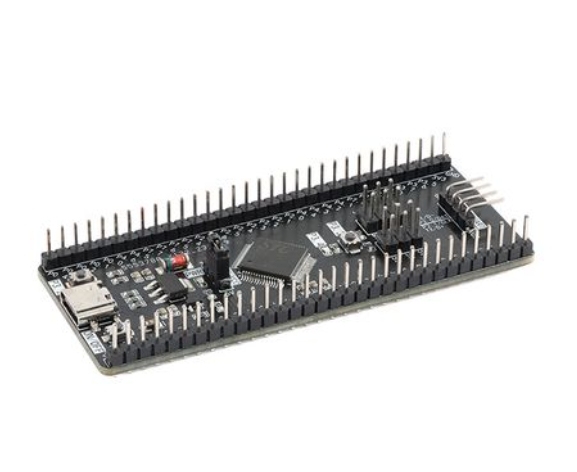
When these architectural elements are implemented on an 8051 MCU development board, they transform from theoretical concepts into tangible tools for innovation. Modern development boards typically feature enhanced versions of the classic 8051 core, often with expanded memory (both Flash and RAM), higher clock speeds, and additional peripherals like ADC converters, PWM controllers, and multiple communication interfaces (I²C, SPI). The physical layout of these boards is strategically designed to maximize accessibility to all microcontroller pins while incorporating essential support circuitry such as voltage regulators, clock generators, reset circuits, and status indicators. Many contemporary boards also include onboard programming interfaces that eliminate the need for external programmer hardware, significantly lowering the barrier to entry for beginners. The enduring popularity of this architecture in educational settings stems from its transparent operation – unlike more complex modern microcontrollers with multiple layers of abstraction, the 8051 allows developers to maintain a clear mental model of how their code interacts with the hardware at a fundamental level.
Key Components and Features of Modern 8051 Development Boards
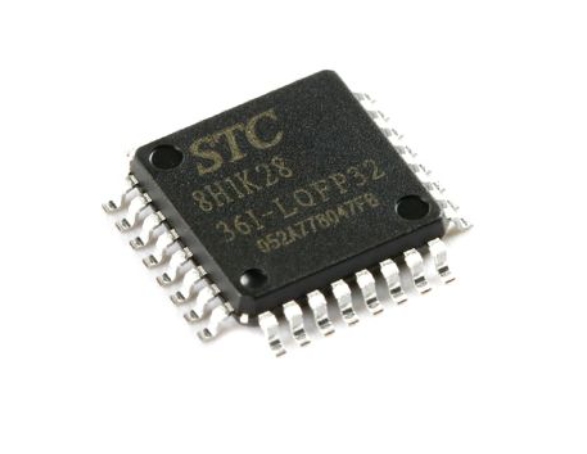
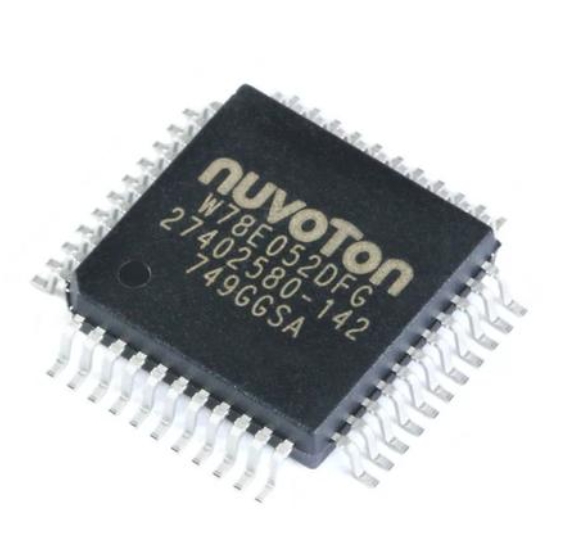
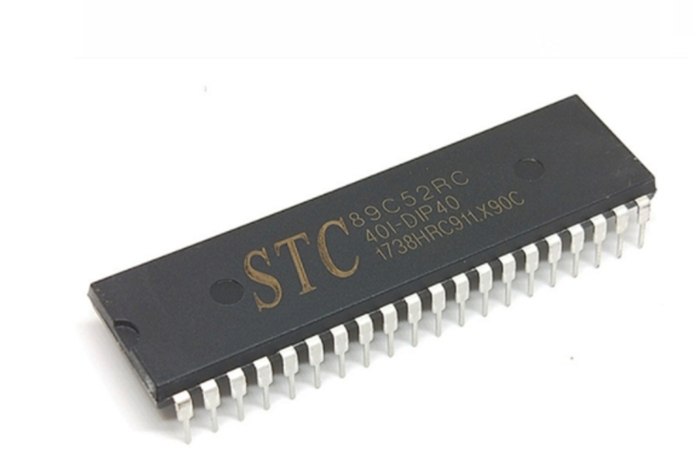
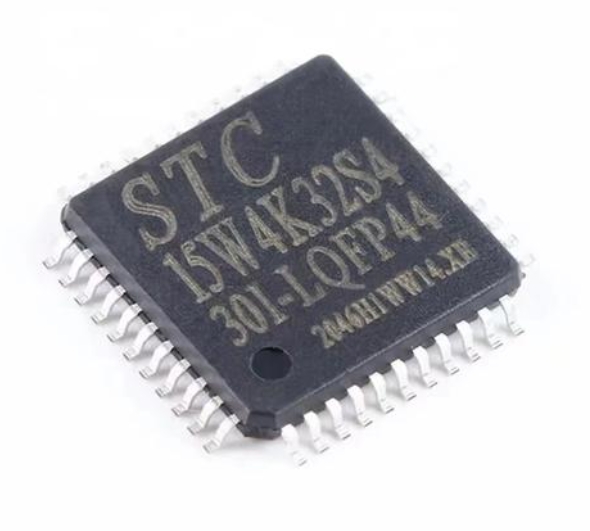
A modern 8051 MCU development board is far more than just a microcontroller chip soldered onto a PCB – it’s a comprehensive ecosystem designed to support the entire development workflow from prototyping to deployment. While specific features vary between manufacturers and models, several key components are commonly found on high-quality development boards. The central element is obviously the 8051-compatible microcontroller itself, which in contemporary implementations often features enhanced specifications compared to the original design – including flash memory ranging from 8KB to 64KB, SRAM expanding to 1KB or more, and operating frequencies reaching up to 33MHz or higher in some modern variants. Power supply circuitry represents another critical component, typically designed to accept a range of input voltages (often 7-12V DC via barrel jack or USB) while providing stable 5V or 3.3V regulation to the microcontroller and other onboard components. Many boards include automatic voltage selection capabilities or jumper-configurable power options to accommodate different logic level requirements.
The programming interface constitutes perhaps the most crucial aspect of any development board, as it serves as the bridge between the developer’s computer and the microcontroller. Modern 8051 boards frequently incorporate built-in USB-to-serial converters that eliminate the need for external programming hardware – popular chips like FT232RL, CH340, or CP2102 provide reliable connectivity while keeping costs manageable. For debugging purposes, more advanced development boards may implement specialized interfaces like JTAG or proprietary debugging protocols that enable real-time code execution monitoring, breakpoint setting, and register inspection. The physical input/output accessibility is another carefully considered design element – most quality development boards bring all microcontroller pins to standard headers (often in DIP-compatible layouts) while clearly labeling each pin’s primary and alternate functions. This approach preserves compatibility with breadboards and prototype boards while ensuring straightforward connection to external circuits.
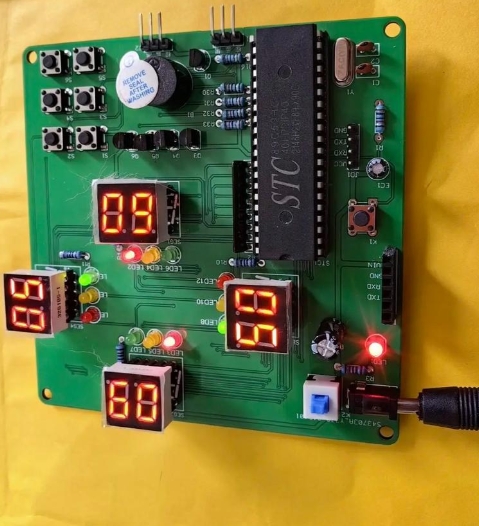
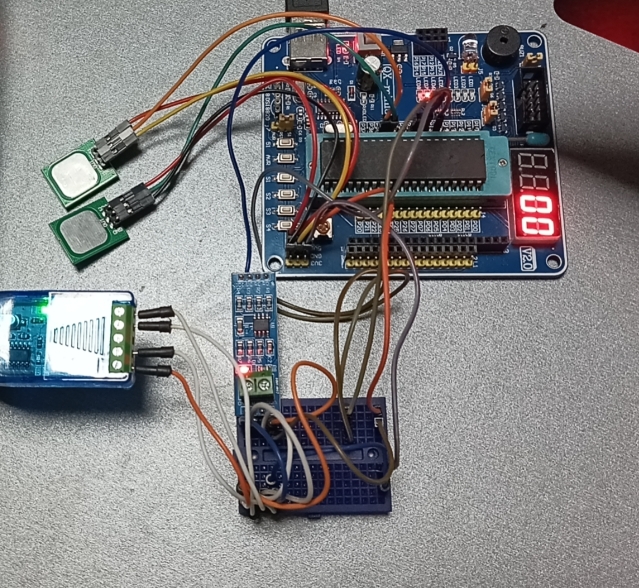
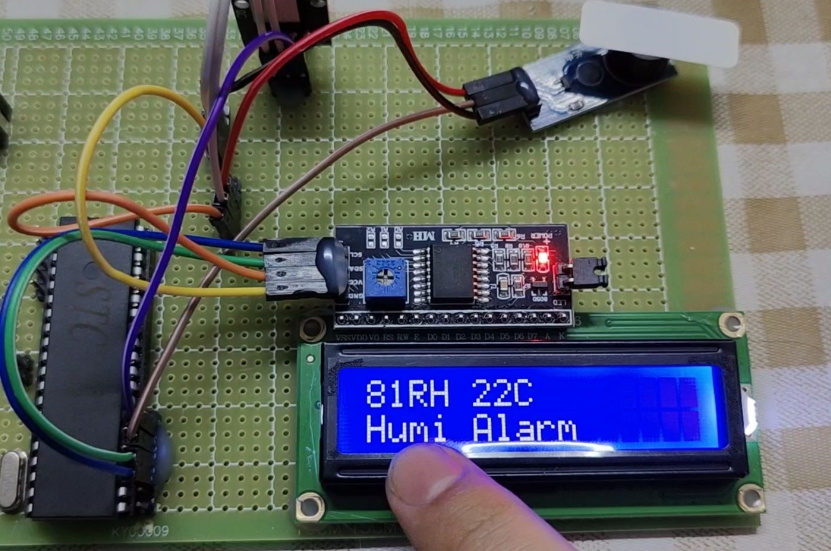
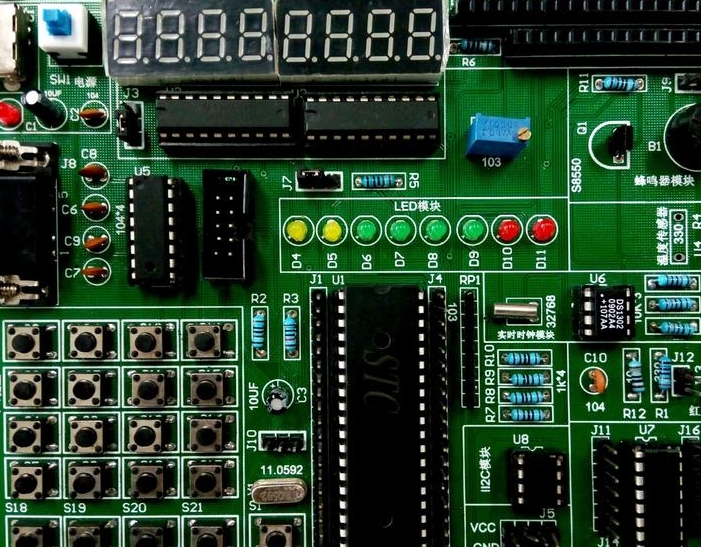
Additional features that significantly enhance the development experience include onboard peripherals such as LEDs connected to specific GPIO pins (simplifying basic output testing), push buttons for input simulation, potentiometers for analog reference testing (on variants with ADCs), seven-segment displays, LCD interfaces, and sometimes even more specialized components like temperature sensors, accelerometers, or wireless communication modules. Prototyping areas included on many boards provide space for adding custom circuitry directly on the development board itself, while expansion connectors enable modular attachment of specialized shields or daughterboards that extend functionality. When selecting an 8051 development board, platforms like ICGOODFIND can be invaluable resources for comparing specifications across different manufacturers and identifying boards that offer the optimal combination of features for specific project requirements and budget constraints.
Developing with an 8051 MCU Development Board: Tools, Techniques, and Best Practices
Software Toolchain and Programming Environment Setup
The software ecosystem surrounding the 8051 architecture has matured significantly over decades of use, resulting in robust toolchains that support developers across the entire project lifecycle. At the core of this ecosystem are compilers that translate high-level C code or assembly instructions into machine-readable hex files compatible with 8051 microcontrollers. The Keil C51 compiler remains one of the most widely used professional-grade development tools for the 8051 family, offering comprehensive features including an integrated debugger, simulator, and extensive library support. For open-source alternatives, SDCC (Small Device C Compiler) provides a capable cross-platform solution that continues to improve in capability and compatibility. Alongside compilers, assemblers play an important role particularly in educational contexts where understanding the relationship between assembly instructions and hardware operation is emphasized – popular options like ASEM-51 provide reliable assembly translation while maintaining compatibility with various 8051 derivatives.
The integrated development environment (IDE) represents the primary interface through which developers interact with their 8051 MCU development board. While Keil μVision dominates professional environments, several alternatives cater to different preferences and budgets. The Arduino IDE with appropriate board support packages can program certain 8051-based boards, significantly lowering the learning curve for those transitioning from Arduino platforms. PlatformIO offers another compelling option with its cross-platform compatibility and extensive library management capabilities. For purists who prefer minimalistic setups, simple text editors combined with command-line compilation workflows remain viable options. Regardless of the chosen IDE, effective project organization – including logical file structure separation between source code, header files, and library dependencies – dramatically improves maintainability as projects grow in complexity.
The process of transferring compiled programs to the physical 8051 development board has been streamlined considerably in modern implementations. Contemporary boards typically incorporate USB-based programming interfaces that eliminate the need for separate programmer hardware – a significant advantage over earlier development approaches that required specialized ROM programmers or emulator pods costing thousands of dollars. The actual programming workflow generally involves connecting the board via USB, installing necessary device drivers (if required), configuring IDE settings to match the specific board variant, compiling source code into HEX or BIN format, and initiating the upload process through a dedicated programming utility or IDE-integrated functionality. Many modern 8051 variants also support in-system programming (ISP) capabilities that enable firmware updates without removing the microcontroller from its application circuit – an invaluable feature for field updates and product maintenance.
Practical Development Techniques and Debugging Strategies
Mastering practical development techniques specific to the 8051 architecture can dramatically reduce debugging time and improve code efficiency. One fundamental aspect involves proper memory management, particularly given the 8051’s distinct separation between different memory spaces: internal data memory (IDATA), external data memory (XDATA), and code memory. Understanding which variables benefit from placement in specific memory regions – such as frequently accessed data in IDATA versus large arrays in XDATA – can yield significant performance improvements. The 8051’s bit-addressable memory region (20h-2Fh) represents another unique feature that enables highly efficient manipulation of individual bits without read-modify-write sequences required on many other architectures – leveraging this capability for flag variables and status indicators can both improve performance and reduce code size.
Effective peripheral initialization represents another critical skill when working with 8051 MCU development boards. Unlike more modern microcontrollers with extensive auto-configuration capabilities, the 8051 typically requires explicit setup of each peripheral through specific special function registers (SFRs). This includes configuring I/O port modes (standard I/O versus alternate functions), setting up timer operating modes and reload values, establishing serial communication parameters (baud rate, data bits, stop bits), and enabling specific interrupts with appropriate priority levels when needed. Developing standardized initialization routines for common peripheral configurations can accelerate future project development while reducing configuration errors.
When projects inevitably encounter issues during development,** systematic debugging approaches** become invaluable assets in a developer’s toolkit.** Basic debugging often begins with strategic use of GPIO pins to create visual indicators of program flow – toggling specific pins at entry/exit points of functions or interrupt service routines can provide coarse-grained execution tracing without specialized equipment.** For more sophisticated analysis,** hardware debugging capabilities** available on some advanced 8051 development boards enable single-stepping through code,** setting breakpoints,** and inspecting register contents in real-time – features that dramatically reduce troubleshooting time for complex timing-related issues.** Software-based simulator tools** included in environments like Keil μVision provide another powerful debugging alternative,** particularly during early development stages,** by enabling complete code execution analysis independent of physical hardware availability.** Regardless of the specific techniques employed,** maintaining methodical approaches to isolating faults – through processes of elimination,** controlled variable modification,and hypothesis testing – typically yields faster resolution than random code modifications hoping to stumble upon solutions.
Advanced Applications and Future Outlook
Contemporary Applications Across Industries
Despite its vintage origins,the 8051 architecture continues finding relevance across diverse application domains, often surprising those who assume newer architectures have completely displaced older designs.** Industrial automation systems represent one significant area where 8051 MCU development boards serve as foundational elements in sensor interfaces,** motor controllers,** relay management systems,and human-machine interface panels. The deterministic operation,** straightforward interrupt handling,and excellent noise immunity characteristics make various 8051 derivatives particularly well-suited for industrial environments where reliability takes precedence over raw computational power. In consumer electronics,** cost-optimized 8051 variants power numerous everyday devices including remote controls,** computer peripherals,** power management systems,and various home appliances where their minimal resource requirements translate directly into reduced bill-of-materials costs.
The automotive sector represents another domain where 8051-compatible microcontrollers maintain substantial presence,** particularly in body electronics modules,** lighting control systems,** basic sensor interfaces,and entertainment system components. While high-performance tasks like engine management increasingly migrate to more powerful processors,** numerous auxiliary functions throughout modern vehicles continue utilizing various 8051 derivatives where their proven reliability,** extensive validation history,and cost-effectiveness provide compelling business cases. Medical devices constitute yet another field benefiting from 8051 implementation,** especially in portable monitoring equipment,** disposable diagnostic tools,and basic therapeutic devices where power efficiency,size constraints,and regulatory certification pathways favor established architectures with extensive historical reliability data.
Internet of Things (IoT) applications might seem like unlikely territory for a decades-old architecture,** yet numerous constrained IoT nodes leverage modern 8051 variants as application processors or sensor hubs – particularly in energy harvesting scenarios where ultra-low-power operation becomes essential.** When combined with appropriate wireless communication modules (Bluetooth Low Energy,** LoRa,** WiFi),** these implementations demonstrate how classic architectures adapt to contemporary technological landscapes.** Across all these application areas,**the role of 8051 MCU development boards remains consistent: providing rapid prototyping platforms that accelerate product development cycles while mitigating technical risks through extensive community knowledge bases and proven reference designs.** Platforms like ICGOODFIND further support these development efforts by helping engineers identify appropriate board-level solutions matched to their specific application requirements.**
Emerging Trends and Future Development Directions
The ongoing evolution of 8051-based microcontrollers reflects interesting trends in semiconductor technology and embedded systems development practices.** While maintaining backward compatibility at instruction set level,** semiconductor manufacturers continue introducing enhanced 8051 variants with significantly upgraded capabilities – including single-cycle cores that dramatically improve performance over original twelve-clock implementations,** sophisticated power management units enabling nanoampere-range sleep currents,and expanded peripheral sets incorporating advanced timers, communication interfaces,and analog components rivaling those found on modern ARM Cortex-M counterparts. These developments ensure continued relevance for the architecture across price-sensitive applications where development tool familiarity represents additional competitive advantage.**
From hardware perspective,the proliferation of System-on-Chip (SoC) designs incorporating 8052 cores as management processors or peripheral controllers demonstrates another fascinating evolution path. In these implementations,the 80351 core often handles housekeeping tasks, I/O management,or real-time control functions while more powerful processor cores focus on application-level computation or signal processing workloads. This heterogeneous approach leverages architectural strengths according to specific task requirements while maximizing overall system efficiency.** For developers,**this trend underscores importance of understanding how 80351 MCU development boards can serve as learning platforms for comprehending interaction dynamics in multi-processor embedded systems.**
The software tools ecosystem continues advancing alongside hardware innovations.** Improved compiler optimization techniques deliver better code density and execution speed from high-level language source code.** More sophisticated debugging solutions offer enhanced real-time trace capabilities even on cost-sensitive development boards.** Integration with contemporary development methodologies like version control systems,** continuous integration pipelines,and automated testing frameworks brings classic embedded development workflows closer to modern software engineering practices.** These toolchain improvements collectively reduce barriers preventing newcomers from exploring embedded systems development while simultaneously increasing productivity for experienced professionals.**
Looking forward,the educational value proposition surrounding 80351 MCU development boards seems likely to ensure their continued presence in academic curricula despite availability of more modern alternatives.** The transparent architecture provides ideal pedagogical platform for understanding fundamental microcontroller concepts before advancing to more complex architectures featuring advanced caching,pipelining,and memory management units that obscure low-level hardware interactions.** This learning pathway – progressing from conceptually simple foundations toward sophisticated implementations – mirrors effective knowledge acquisition patterns observed across numerous technical disciplines.**
Conclusion
The enduring legacy of the 80351 microcontroller architecture represents remarkable phenomenon within technology landscape characterized by rapid obsolescence.** Despite introduction countless alternative architectures over past four decades,the fundamental design principles embodied in original Intel 80351 continue influencing embedded systems development through extensive installed base,cost-optimized derivatives,and ongoing educational adoption.** At heart this sustained relevance lies humble yet powerful tool:the 80351 MCU development board.These platforms transform abstract architectural concepts into tangible experimentation environments where theoretical knowledge meets practical implementation across countless applications spanning industrial automation consumer electronics automotive systems medical devices emerging IoT ecosystems.**
Modern 80351 development boards incorporate significant enhancements over earlier generations while preserving compatibility with vast existing knowledge base reference designs.Peripheral expansions memory improvements power efficiency refinements integrated programming interfaces collectively enhance developer experience without sacrificing conceptual clarity makes architecture such effective learning tool.Whether utilized academic settings professional environments hobbyist projects these boards continue serving gateways understanding embedded systems fundamentals while simultaneously supporting sophisticated real-world applications.
Looking ahead ongoing enhancements compiler technology debugging capabilities hardware peripherals ensure continued evolution ecosystem surrounding these versatile platforms.As semiconductor manufacturers introduce further refined variants maintaining instruction set compatibility future iterations will undoubtedly offer even greater performance energy efficiency peripheral integration.For engineers students hobbyists seeking deepen understanding microcontroller principles develop practical embedded systems skills investment quality 80351 MCU development board remains valuable decision yielding dividends throughout technical careers.For those researching optimal board selection platforms like ICGOODFIND provide invaluable resources streamlining comparison process identifying solutions best aligned specific project requirements budget considerations.Ultimately sustained vitality architecture demonstrates how thoughtful foundational designs coupled active developer communities transcend temporal boundaries continuing inspire innovate across generations technologists.