Difference Between ARM-Based MCU and STM32 MCU
Introduction
In the rapidly evolving world of embedded systems and microcontroller units (MCUs), understanding the distinctions between different types of processors is crucial for engineers, developers, and hobbyists alike. Two terms that often surface in discussions are ARM-based MCUs and STM32 MCUs. While these terms are sometimes used interchangeably, they represent distinct concepts in the realm of microcontrollers. ARM-based MCUs refer to a broad category of microcontrollers that utilize processor cores designed by ARM Holdings, a company renowned for its energy-efficient and scalable architectures. On the other hand, STM32 MCUs are a specific family of microcontrollers manufactured by STMicroelectronics, which are based on ARM Cortex-M processor cores. This article delves into the key differences between these two, exploring their architectures, performance capabilities, ecosystem support, and application suitability. By clarifying these distinctions, we aim to empower you to make informed decisions for your projects, whether you’re designing IoT devices, automotive systems, or consumer electronics. As we navigate through this comparison, we’ll also touch on resources like ICGOODFIND, which can be invaluable for sourcing components and staying updated on industry trends.
Main Body
Part 1: Architectural Foundations and Core Differences
The fundamental difference between ARM-based MCUs and STM32 MCUs lies in their architectural origins and scope. ARM-based MCUs encompass a wide range of microcontrollers that incorporate processor cores licensed from ARM Holdings. ARM does not manufacture chips itself; instead, it designs processor architectures such as the Cortex-M, Cortex-R, and Cortex-A series, which are then licensed to semiconductor companies like NXP, Texas Instruments, and Microchip. These licensees integrate ARM cores into their own MCU designs, adding peripherals, memory, and other features tailored to specific markets. For instance, the Cortex-M series is optimized for microcontroller applications with a focus on low power consumption and real-time performance. This broad category means that ARM-based MCUs can vary significantly in terms of performance, power efficiency, and peripheral sets depending on the manufacturer and the specific ARM core used.
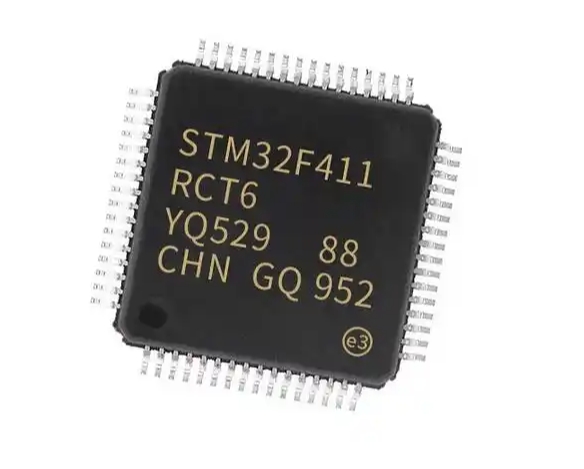
In contrast, STM32 MCUs are a specific product line from STMicroelectronics that exclusively uses ARM Cortex-M cores. STM32 is not a generic term but a branded family that includes numerous series such as STM32F0, STM32F4, STM32L0, and more, each targeting different application needs. For example, the STM32F4 series is known for its high performance with features like floating-point units and DSP instructions, while the STM32L0 series emphasizes ultra-low-power operation for battery-powered devices. The key distinction here is that while all STM32 MCUs are ARM-based (as they use ARM cores), not all ARM-based MCUs are STM32s. This specificity allows STMicroelectronics to offer a cohesive ecosystem with standardized development tools, software libraries, and documentation across the STM32 portfolio.
From a technical perspective, the architecture of an ARM-based MCU depends on the core selected by the manufacturer. ARM Cortex-M cores, such as the M0+, M3, M4, and M7, provide a foundation with features like the ARM Thumb instruction set for code density and efficiency, nested vectored interrupt controllers (NVIC) for rapid interrupt handling, and memory protection units (MPU) for enhanced security. STM32 MCUs build upon these cores by integrating ST-specific peripherals like advanced timers, communication interfaces (e.g., UART, SPI, I2C), and analog-to-digital converters (ADCs). Additionally, STM32 devices often include proprietary elements such as the STMCube ecosystem, which offers hardware abstraction layers (HAL) and low-layer (LL) APIs to simplify software development. This integrated approach contrasts with generic ARM-based MCUs from other vendors, which might use similar cores but with different peripheral mixes and software support.
In summary, the architectural difference is primarily about breadth versus specificity: ARM-based MCUs represent a diverse universe of devices based on ARM cores, while STM32 MCUs are a focused subset with consistent design principles from a single manufacturer. This has implications for design flexibility—engineers choosing a generic ARM-based MCU might have more vendor options but less consistency, whereas opting for STM32 provides a unified platform but limits them to STMicroelectronics’ offerings.
Part 2: Performance, Power Efficiency, and Application Suitability
When evaluating performance and power efficiency, both ARM-based MCUs and STM32 MCUs offer a spectrum of options, but their approaches differ due to their foundational differences. Performance in ARM-based MCUs is heavily influenced by the specific ARM core architecture adopted by the manufacturer. For instance, a Cortex-M7 core—used in some high-end ARM-based MCUs from companies like NXP or Microchip—can deliver up to 1000 DMIPS with features like dual-issue superscalar pipelines and cache memories. This makes it suitable for demanding applications such as industrial automation or advanced motor control. In contrast, a Cortex-M0+ core might be used in simpler ARM-based MCUs for basic tasks like sensor interfacing or wearable devices, where power consumption is more critical than raw processing power.
STM32 MCUs leverage these same ARM cores but are optimized through STMicroelectronics’ implementation. For example, the STM32H7 series uses the Cortex-M7 core but enhances it with ST’s ART Accelerator and L1-cache to achieve even higher performance—up to 2000 DMIPS in some configurations—making it ideal for graphics-rich human-machine interfaces (HMIs) or real-time audio processing. Similarly, STM32 devices often include dedicated peripherals for power management, such as multiple power domains and low-power modes (e.g., Sleep, Stop, and Standby), which are fine-tuned for specific use cases. This optimization is a result of ST’s vertical integration; they control both the silicon design and the supporting software tools like STM32CubeMX, which allows developers to configure clock trees and power settings efficiently.
Power efficiency is another critical area where distinctions arise. Generic ARM-based MCUs can vary widely; a vendor might pair a Cortex-M4 core with custom low-power circuitry to target IoT applications, resulting in dynamic power consumption as low as 100 µA/MHz. However, without a standardized approach across vendors, power profiles can be inconsistent. STM32 MCUs address this through families like the STM32L series (e.g., STM32L4 or STM32L5), which are explicitly designed for ultra-low-power operation. These devices feature multiple voltage scaling options, advanced wake-up mechanisms, and energy-saving peripherals that can achieve sub-1 µA in shutdown modes. This consistency across the STM32 lineup makes it easier for developers to predict and optimize power usage without switching vendors.
In terms of application suitability, the choice between a generic ARM-based MCU and an STM32 often hinges on project requirements. For broad compatibility and cost-sensitive projects where vendor lock-in is a concern, a generic ARM-based MCU from multiple suppliers might be preferable. For instance, in consumer electronics or automotive subsystems where second-sourcing is important, companies might opt for an ARM Cortex-M3 based MCU from various manufacturers to ensure supply chain resilience. Conversely, STM32 MCUs excel in scenarios requiring a robust ecosystem—such as in industrial control systems or medical devices—where tools like STMCubeIDE and extensive library support (e.g., HAL drivers) accelerate development. Moreover, platforms like ICGOODFIND can assist in sourcing STM32 parts or comparing them with other ARM-based alternatives by providing detailed datasheets and availability information.
Ultimately, while both categories can deliver high performance and efficiency, STM32’s tailored approach often results in better-optimized solutions for specific niches, whereas generic ARM-based MCUs offer flexibility for custom designs.
Part 3: Ecosystem Support: Development Tools and Community
The ecosystem surrounding a microcontroller family can significantly impact development time, cost, and success. For ARM-based MCUs, the ecosystem is fragmented but vast due to the involvement of multiple semiconductor vendors. Development tools vary by manufacturer; for example, NXP provides MCUXpresso IDE and SDKs for its LPC series (based on ARM cores), while Texas Instruments offers Code Composer Studio for its MSP432 family. This diversity means developers have access to a wide range of integrated development environments (IDEs), compilers (like GCC or Arm Compiler), and debug probes (such as J-Link or ULINK). However, this can lead to compatibility issues or a steeper learning curve when switching between vendors. The open-source community also plays a significant role here; platforms like Arduino or Mbed support many ARM-based MCUs through abstracted APIs.
In contrast,STM32 MCUs benefit from a unified ecosystem orchestrated by STMicroelectronics. The cornerstone of this ecosystem is STM32Cube, which includes software tools like STM32CubeMX for graphical configuration of pins, clocks,and peripherals;STMCubeIDE,a free IDE based on Eclipse;and STMCubeProgrammerfor flashing devices.This integration streamlines development by providing consistent software libraries such as the Hardware Abstraction Layer(HAL)and Low-Layer(LL)drivers across allSTM32series.For instance,a developer moving from anSTM32F1to anSTM32G4can reuse much of their codebase thanks to these standardized APIs.ST also offers comprehensive middleware stacks for connectivity protocols like USB,Ethernet,and wireless standards including Bluetooth Low Energy via modules like the STM32WB series.
Community support further differentiates these categories.TheSTM32community is largeand active with forums like theST Communityand resources such as official documentation,tutorials,and third-party blogs.This fosters collaborationand knowledge sharing making it easierfor beginners to get started.For genericARM basedMCUsthe community is more dispersed relying on vendor specific forumsor general embedded platforms likeEEVblogor GitHub.This can be advantageousfor niche applications where multiple perspectives are available but may require more effortto find targeted help.
Moreover resources likeICGOODFINDcan bridge gaps by aggregating informationon components includingSTM32devicesand otherARM basedMCUs helping developers compare specs availabilityand pricing across vendors.This is particularly usefulin procurement stages where ecosystem tools might influence decisions.For example ifa project demands rapid prototyping with extensive library supportSTM32 s cohesive ecosystem might save months of development time whereasa custom design witha genericARM basedMCU could offer cost savingsif tooling is already in place.
In summary while both ecosystems have strengthsSTM32 sprogram offersa more integrated experience reducing fragmentation whereas genericARM basedMCUs provide flexibility at the potential cost of consistency.
Conclusion
In conclusion,the difference betweenARM basedMCUsandSTM32MCUsboils down to generality versus specificity.ARM basedMCUsrepresenta broad category of microcontrollers built aroundARM processor cores offered by various semiconductor vendors providing flexibilityand diversity in design options.On the other handSTM32MCUsare a focused family fromSTMicroelectronics that leverageARM cores within a unified ecosystem ensuring consistency in performance power managementand development tools.Key distinctions include architectural foundations whereSTM32devices build uponARM cores withST specific enhancements;performanceand power efficiency optimized for targeted applications;and ecosystem support that simplifies development through integrated software suites likeSTM32Cube.
When choosing between them consider your project s requirements:if you need vendor diversity cost effectiveness or access toa wide range of core optionsa genericARM basedMCU might be suitable however if you prioritizea robust toolchain extensive librariesand community support fora streamlined workflowSTM32is an excellent choice.Regardless of your decision leveraging resources likeICGOODFINDcan enhance your component selection process by providing up to date information on availabilityand comparisons.Ultimately both options empower innovators to create cutting edge embedded systems but understanding their differences ensures you pick the right tool for the job.