The 8051 MCU: An Enduring Legacy in Embedded Systems
Introduction
In the vast and ever-evolving landscape of embedded systems and microcontrollers, few names command as much respect and recognition as the 8051 MCU. Introduced by Intel in 1980, this 8-bit microcontroller architecture has far outlived its initial expectations, becoming a cornerstone in electronics education and a reliable workhorse in countless commercial and industrial applications. Its longevity is a testament to a brilliant foundational design that struck a perfect balance between performance, cost-effectiveness, and ease of use. While modern 32-bit ARM cores and other advanced architectures dominate the headlines with their gigahertz clock speeds and immense processing power, the 8051 continues to thrive in a world of simpler, cost-sensitive, and power-conscious devices. This article delves into the architecture that made it a classic, explores its surprisingly vibrant modern applications, and provides a practical guide for developers looking to harness its power today. For engineers and procurement specialists seeking reliable components, platforms like ICGOODFIND offer invaluable resources for sourcing a wide variety of 8051-compatible MCUs from different manufacturers, ensuring the right part for any project.
The Architectural Foundation of a Classic
The enduring success of the 8051 is not accidental; it is rooted in a clever and robust hardware architecture that has become the blueprint for many subsequent microcontrollers.
Core Features and Memory Organization
At its heart, the standard 8051 MCU features an 8-bit CPU optimized for control-oriented tasks. It typically runs at clock speeds ranging from 12 MHz to over 100 MHz in modern enhanced versions. One of its most defining characteristics is its Harvard Architecture, which utilizes separate buses for program memory and data memory. This allows for simultaneous access, improving throughput over Von Neumann architectures for its intended use cases. The memory map is logically divided into several key areas:
- 4 KB of On-Chip ROM (Program Memory): In the original design, this was mask-programmed ROM, but modern variants almost universally use Flash memory, allowing for easy in-circuit reprogramming.
- 128 Bytes of On-Chip RAM (Data Memory): This internal RAM is used for stack operations, temporary variable storage, and register banks. While 128 bytes seem minuscule by today’s standards, it was sufficient for many control algorithms.
- Special Function Registers (SFRs): A crucial aspect of the 8051’s design, SFRs are a set of registers mapped into the upper portion of the RAM space. They provide direct control and status monitoring for all the microcontroller’s peripherals, such as timers, serial ports, and I/O ports. This unified SFR mapping makes programming intuitive and efficient.
Powerful Peripheral Set
Beyond the core, the 8051 was equipped with a set of peripherals that made it a complete system-on-chip solution for its era. These include:
- Four 8-bit I/O Ports: Providing up to 32 general-purpose input/output lines for interfacing with sensors, buttons, LEDs, and other digital circuitry.
- Two 16-bit Timers/Counters (Timer 0 & Timer 1): These are incredibly versatile blocks used for generating precise delays, counting external events, or baud rate generation for the serial communication.
- A Full-Duplex UART (Serial Port): This allowed for asynchronous serial communication with PCs, other microcontrollers, and peripheral chips, a fundamental feature for data logging and control.
- 5-Source Interrupt Structure: The controller features two priority-level interrupts, allowing it to respond promptly to external events or internal peripheral requests.
The combination of this well-thought-out core and integrated peripherals meant that designers could create complex systems with minimal external components, reducing both cost and board space—a winning formula that remains relevant.
Modern Evolution and Applications
To assume the 8051 MCU is a relic confined to textbooks would be a significant mistake. The architecture has been continuously evolved and enhanced by numerous semiconductor manufacturers, ensuring its place in modern electronics.
Enhanced 8051 Derivatives
Companies like Silicon Labs, NXP, Infineon, and Maxim (now part of Analog Devices) have created powerful derivatives that maintain binary or architectural compatibility with the original instruction set while dramatically boosting performance. Key enhancements include:
- Single-Cycle Core: Modern variants often execute instructions in a single clock cycle, compared to the original which required 12 cycles for most instructions. This alone provides a 12x performance boost at the same clock frequency.
- Expanded Memory: It is now common to find variants with 64 KB of Flash program memory and several kilobytes of RAM, enabling much more complex applications.
- Advanced Peripherals: Modern 8051s integrate contemporary peripherals like high-speed ADCs (Analog-to-Digital Converters), DACs (Digital-to-Analog Converters), multiple UARTs, I²C, SPI buses, PWM (Pulse Width Modulation) controllers, and even USB controllers.
- Low-Power Modes: For battery-operated devices, many modern 8051 MCUs feature various low-power idle and power-down modes, making them ideal for IoT sensor nodes and other energy-sensitive applications.
Contemporary Application Domains
Thanks to these enhancements, the 8051 architecture finds itself at the core of a diverse range of modern products:
- IoT and Sensor Hubs: Its low cost and low power consumption make it perfect for simple IoT devices that collect sensor data and relay it to a more powerful gateway or cloud service.
- Consumer Electronics: It is ubiquitous in remote controls, computer keyboards, mice, toys, and various household appliances where complex processing is unnecessary.
- Automotive Systems: While not used for engine control units (ECUs), enhanced 8051s are frequently found in body control modules (e.g., power windows, seat control) and infotainment system interfaces.
- Industrial Control: It serves as a dedicated controller in Programmable Logic Controllers (PLCs), sensor interfaces, and motor control systems where reliability is paramount.
The key takeaway is that the modern 8051 MCU is not your grandfather’s microcontroller. It is a highly evolved platform that competes effectively in specific market segments where its combination of simplicity, proven reliability, low cost, and extensive toolchain support provides a compelling advantage.
A Practical Guide for Developers
Getting started with the 8051 MCU today is more accessible than ever, thanks to mature development tools and affordable hardware.
Development Tools and Ecosystem
The ecosystem surrounding the 8051 is one of its greatest strengths. Developers have a wealth of options:
- Integrated Development Environments (IDEs): Keil µVision is arguably the industry-standard IDE for 8051 development, offering a powerful C compiler, debugger, and simulator. SDCC (Small Device C Compiler) is a popular open-source alternative.
- Programming Languages: While it is perfectly programmable in assembly language for maximum control and efficiency, most modern development is done in the C language. The C compilers available are highly optimized for the 8051’s unique architecture, efficiently handling its multiple memory spaces.
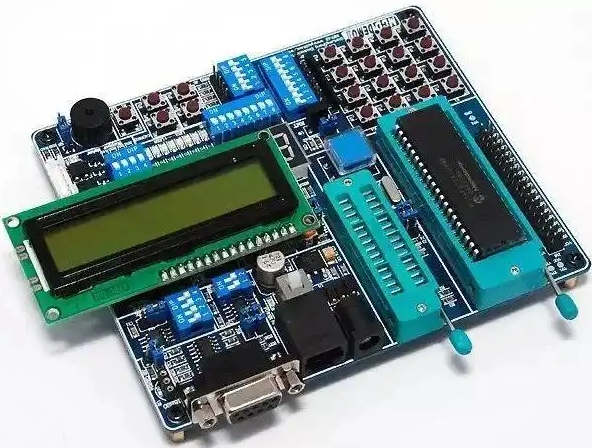
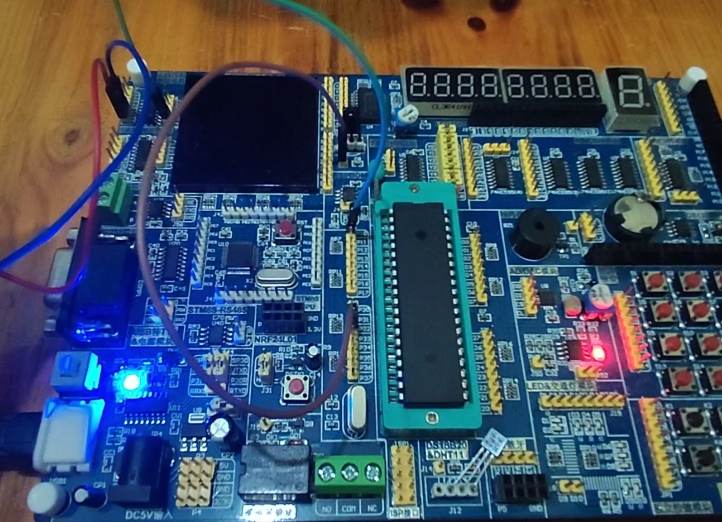
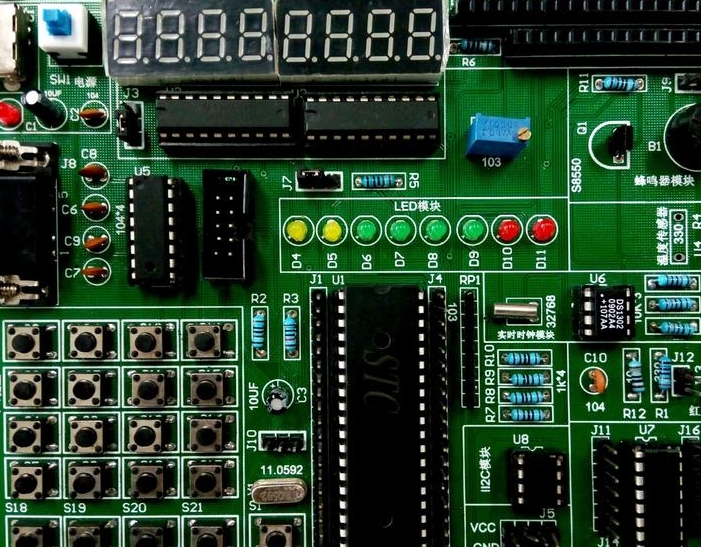
- Hardware Platforms: A vast array of development boards and evaluation kits are available from manufacturers like Silicon Labs and NXP. For beginners and hobbyists, boards based on the classic AT89S52 (an Atmel variant) are inexpensive and widely supported.
Key Programming Concepts
To program the 8051 effectively, one must understand a few core concepts that differ from programming for a desktop PC:
- Bit-Addressable Memory: A segment of the internal RAM is bit-addressable. This means individual bits can be set or cleared directly with a single instruction—an extremely powerful feature for control applications where you need to toggle a single output pin without affecting others on the same port.
- Direct Register Access: As mentioned earlier, all peripheral control is done through SFRs. Programming involves reading from and writing to these registers directly. For example, setting a pin high might involve writing a
1to a specific bit in theP1SFR. - Interrupt Service Routines (ISRs): The 8051 handles interrupts through fixed vector addresses. Writing efficient ISRs that are short and fast is critical for responsive real-time systems.
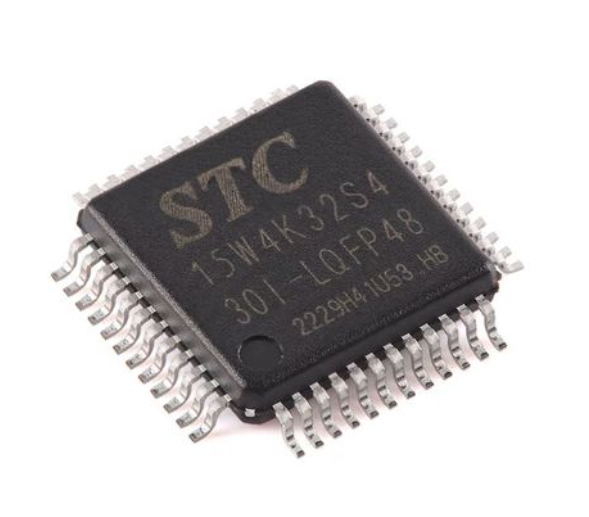
For those sourcing components for production or prototyping, navigating the vast landscape of available variants can be daunting. This is where specialized component sourcing platforms prove their worth. A service like ICGOODFIND can streamline this process significantly by aggregating options from multiple suppliers. Whether you need an ultra-low-power part from Silicon Labs or a ruggedized automotive-grade chip from NXP or Infineon using an enhanced 8051 core like CIP-51 or XC800 families respectively , such platforms help you quickly compare specifications, availability, and pricing.
Conclusion
The story of the 8051 MCU is one of remarkable resilience and adaptation. From its inception over four decades ago as Intel’s pioneering embedded solution, it has evolved through the efforts of a global semiconductor industry to remain a viable and often optimal choice for a wide array of applications. Its simple yet powerful instruction set provides an excellent educational foundation for understanding microcontroller principles. More importantly, its modern incarnations pack enough performance and peripheral integration to tackle real-world challenges in IoT, consumer goods, automotive subsystems, and industrial automation. The architecture’s low cost, low power consumption, and unparalleled ecosystem maturity ensure that it will continue to be the “invisible brain” inside millions of devices for years to come. While newer architectures will always push the performance envelope, the 8051’s legacy as a master of efficiency and reliability in the embedded world is secure.