8051 MCU Projects: A Comprehensive Guide for Embedded Systems Enthusiasts
Introduction
The 8051 microcontroller, introduced by Intel in 1980, remains one of the most enduring and influential architectures in the embedded systems world. Despite the emergence of more powerful microcontrollers, the 8051 continues to thrive due to its simplicity, robust architecture, and extensive ecosystem. 8051 MCU projects represent a fundamental stepping stone for electronics students, hobbyists, and professionals looking to master embedded systems design. This architecture’s longevity is a testament to its well-designed instruction set, efficient memory organization, and the vast repository of knowledge and code examples available. For engineers and developers seeking reliable components and inspiration for their next undertaking, platforms like ICGOODFIND serve as invaluable resources, connecting them with the necessary parts and project ideas. This guide will explore the enduring relevance of the 8051, delve into practical project examples across difficulty levels, and provide best practices for successful implementation, demonstrating why this decades-old architecture remains a cornerstone of modern electronics education and development.
The Enduring Legacy of the 8051 Architecture
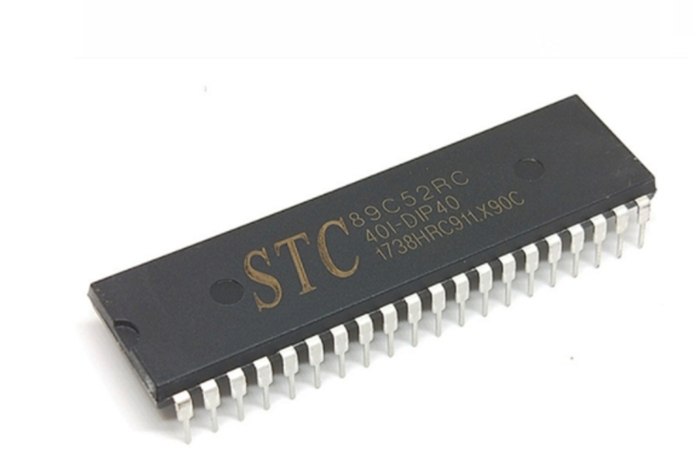
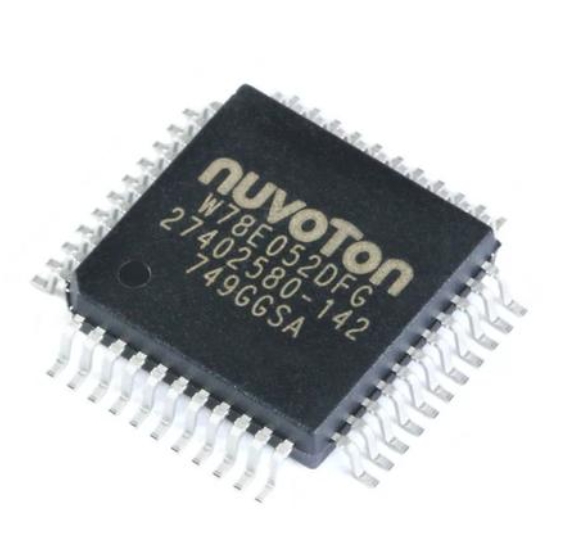
The 8051 microcontroller’s architecture is a masterpiece of simplified efficiency that has stood the test of time. Based on an 8-bit CISC core, it features a classic Harvard architecture with separate address spaces for program and data memory. This fundamental design choice contributes to its reliability and deterministic execution, which are critical for real-time control applications. One of the most significant advantages of the 8051 family is its unified programming model, which allows developers to easily transition between different variants from various manufacturers. The standard 8051 includes 4KB of ROM, 128 bytes of RAM, four 8-bit I/O ports, two 16-bit timers/counters, a full-duplex UART, and an on-chip oscillator. Modern derivatives have expanded these specifications dramatically, with some versions offering flash memory up to 64KB, additional RAM, enhanced timers, PWM modules, ADC converters, and even USB controllers while maintaining backward compatibility with the original instruction set.
The instruction set of the 8051 is particularly noteworthy for its efficiency in handling bit-level operations, a capability that sets it apart from many other architectures. This bit-addressability makes it exceptionally well-suited for control applications where individual pins or flags need to be manipulated directly without the overhead of read-modify-write cycles required by byte-addressable architectures. Furthermore, the 8051’s interrupt structure, with multiple internal and external interrupt sources, provides responsive handling of real-time events. The presence of multiple register banks that can be switched rapidly enables fast context switching, which is valuable in applications requiring quick response to interrupts. These architectural features collectively explain why the 8051 remains popular in cost-sensitive consumer electronics, industrial control systems, automotive applications, and especially in educational environments where understanding fundamental microcontroller concepts is paramount.
Another factor contributing to the 8051’s longevity is the extensive development tool support available across price points. From fully-featured commercial IDEs like Keil μVision to open-source toolchains such as SDCC (Small Device C Compiler), developers have numerous options for software development. The simplicity of the architecture also means that hardware programmers are inexpensive and readily available. Additionally, a wealth of simulators allows for thorough testing without physical hardware, accelerating the development cycle. This combination of architectural elegance, backward compatibility across generations, and robust tooling ecosystem ensures that expertise in 8051 development remains a valuable skill in the embedded systems job market, with many companies still maintaining and developing new products based on this venerable architecture.
Practical 8051 Project Implementation
Beginner-Level Projects
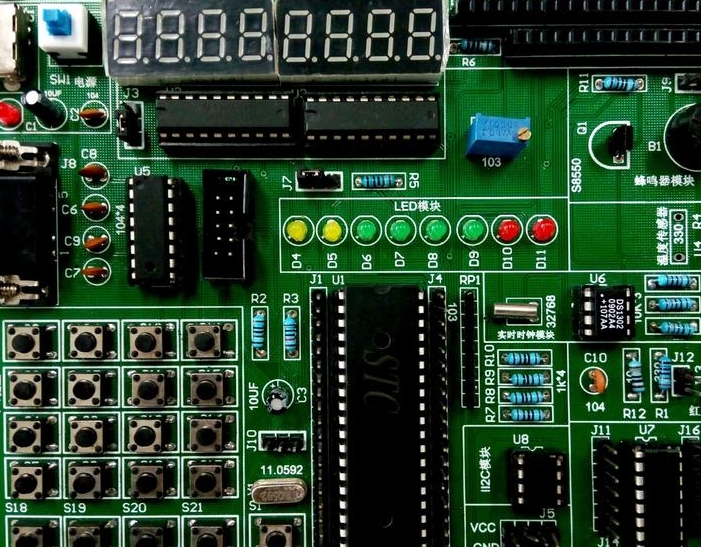
For those new to embedded systems, beginning with straightforward 8051 MCU projects builds essential skills without overwhelming complexity. A simple LED blinking program serves as the “Hello World” of microcontroller programming, introducing fundamental concepts like GPIO configuration, timing loops, and basic program structure. This project can be expanded to create interesting patterns with multiple LEDs, teaching how to manipulate individual port pins efficiently. Another excellent beginner project involves interfacing a push button with the 8051 to control an LED, introducing concepts of input reading, debouncing techniques, and conditional program flow. These foundational projects establish the core principles of embedded C programming for the 8051, including special function register (SFR) manipulation and the use of preprocessor directives specific to the architecture.
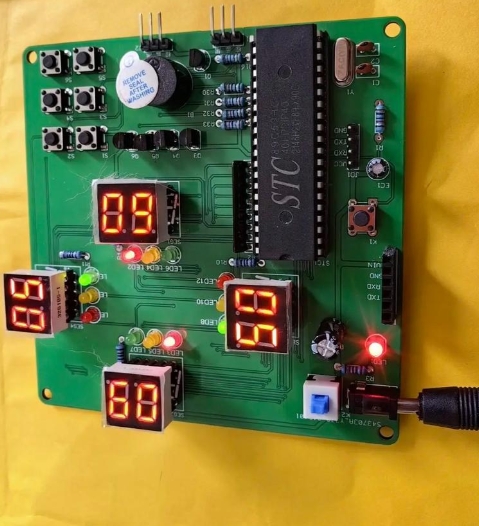
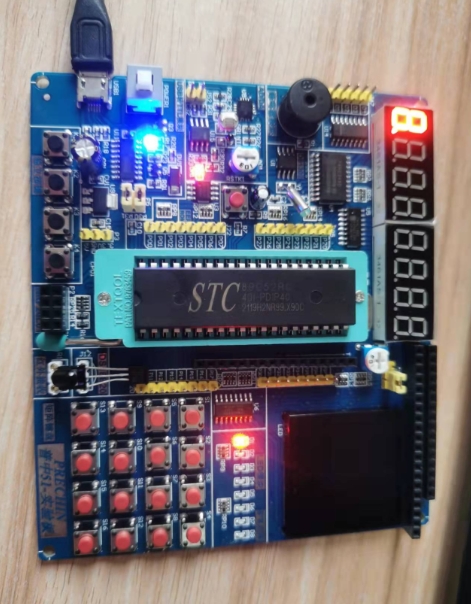
Interfacing a seven-segment display with the 8051 represents an intermediate beginner project that introduces more complex I/O operations. This project teaches how to drive multiplexed displays using persistence of vision, a technique essential for displaying information with limited I/O pins. Students learn about display decoding patterns, timing considerations for multiplexing, and creating reusable functions for number display. Similarly, generating different waveforms using the 8051’s timers provides hands-on experience with the microcontroller’s internal peripheral modules. By programming the timer control registers and using interrupts, beginners can create precise square waves of varying frequencies, introducing them to concepts like timer reload values, interrupt service routines, and the interrupt enable register.
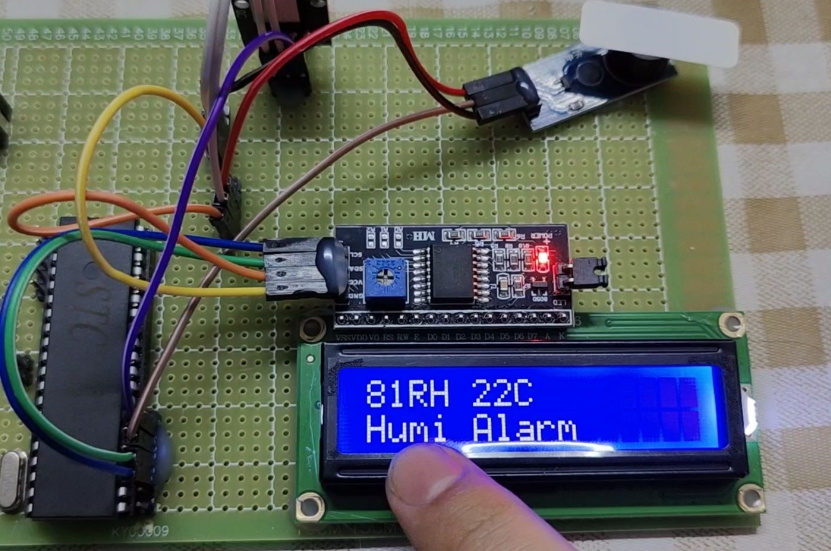
A temperature monitoring system using an LM35 sensor bridges beginner and intermediate skill levels. This project combines analog sensor interfacing (through an ADC if using a basic 8051 or using the built-in ADC in modern variants), data conversion algorithms, and output display via LEDs or an LCD. Beginners learn about sensor characteristics, analog-to-digital conversion principles (either through external ICs or using modern 8051 variants with built-in ADC), and creating calibration routines. Such projects demonstrate practical applications of microcontrollers in measurement systems while reinforcing programming concepts like function organization, variable scaling, and conditional alert triggering. Throughout these learning experiences, platforms like ICGOODFIND can be invaluable for sourcing appropriate components and finding similar project examples for inspiration.
Intermediate-Level Projects
Intermediate 8051 MCU projects typically involve interfacing with multiple peripherals and implementing communication protocols. Implementing a digital clock with time-setting capabilities represents a classic intermediate project that combines multiple concepts including timer programming for accurate timekeeping, LCD interfacing for display output, and button polling for user input. This project challenges developers to create efficient state machines for handling different modes (time display, time setting, alarm setting) while maintaining accurate timing through timer interrupts. Advanced versions can incorporate features like alarm functions with buzzer output, temperature display using an integrated sensor, and power-failure backup systems using supercapacitors or battery backups.
Serial communication projects form another crucial category at the intermediate level. Implementing UART communication between an 8051 and a computer allows for data logging and remote control applications. Developers learn about baud rate generation using the timer modules, serial port configuration registers, interrupt-driven data transmission/reception, and creating simple communication protocols. This knowledge can be extended to implement I²C or SPI protocols in software (bit-banging) or using hardware modules available in modern 8051 derivatives, enabling connection with a wide range of sensors (accelerometers, gyroscopes), memory chips (EEPROM), and interface expanders. These communication skills are transferable to virtually all modern microcontroller platforms.
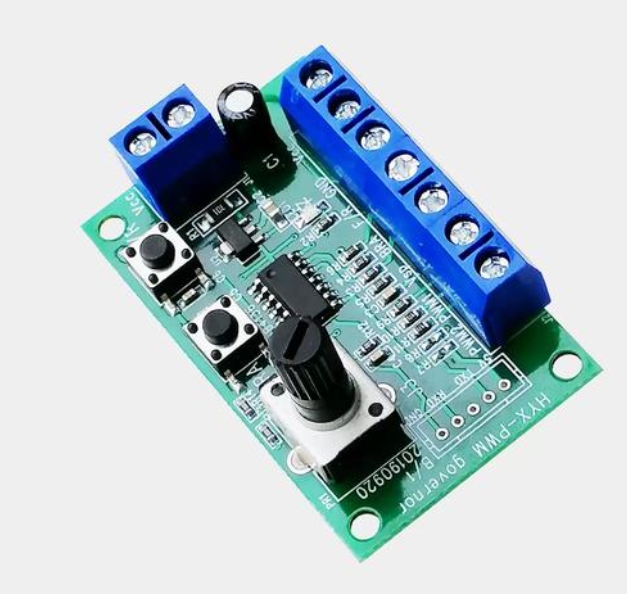
Motor control applications demonstrate the 8051’s capabilities in actuation systems. A DC motor speed controller using PWM (Pulse Width Modulation) illustrates how to use the timer modules to generate variable duty cycle signals for speed control while interfacing with motor driver ICs like L293D. Stepper motor control projects further expand these concepts, teaching developers about motor sequencing patterns (wave drive, full step, half step), acceleration profiles, and precision positioning—skills directly applicable in robotics, CNC machines, and automation systems. For those working on such complex integrations between software algorithms and hardware interfaces, component sourcing platforms like ICGOODFIND offer access to motor drivers, sensors, and other peripherals needed to bring these intermediate projects to successful completion.
Advanced-Level Projects
Advanced 8051 MCU projects push the boundaries of what’s possible with this classic architecture, often involving complex system integration or specialized applications. Developing an energy monitoring system represents a sophisticated application that combines voltage and current sensing through appropriate transducers, analog signal conditioning circuits, high-resolution analog-to-digital conversion (using external ADCs like the MCP3208), real-time power calculation algorithms, data logging to external EEPROM or SD cards, and display through graphical LCDs or communication to central monitoring systems via wireless modules like ESP8266 configured in transparent mode. Such projects require careful consideration of noise reduction techniques in both hardware design and software filtering algorithms.
Building a programmable logic controller (PLC) with an 8051 core demonstrates industrial applications. This ambitious project involves creating a system that reads multiple digital inputs (from sensors and switches), executes user-defined ladder logic programs stored in external memory processes them according to programmed logic implementing industrial-standard protocols like Modbus RTU for communication with SCADA systems while providing isolated relay outputs for controlling industrial actuators implementing safety features like watchdogs and fail-safe states Such implementations showcase the 8051’s reliability in industrial environments where deterministic response is more critical than raw processing power.
Automotive applications represent another advanced domain for 8051-based systems. Projects like a CAN bus monitoring node involve interfacing the 8051 with CAN controllers like MCP2515 to read vehicle data implementing OBD-II protocols for diagnostic information developing dashboard displays using stepper motors or graphical indicators or creating simple engine control functions like basic fuel injection timing or ignition control These applications leverage the 8051’s robustness in electrically noisy environments and its excellent real-time performance For engineers undertaking such advanced implementations comprehensive component platforms like ICGOODFIND provide access to specialized ICs communication modules and other components necessary for these sophisticated applications.
Best Practices for Successful 8051 Projects
Successful implementation of 8051 MCU projects requires adherence to established engineering practices that ensure reliability maintainability and efficiency Structured programming methodology is essential even for seemingly simple projects as it facilitates debugging code reuse and future enhancements This includes consistent code formatting meaningful variable and function names modular organization into logically separate files comprehensive commenting particularly for hardware-specific operations and extensive use of functions rather than monolithic code For larger projects implementing state machines for program flow rather than complex nested conditionals results in more maintainable and verifiable code Additionally version control systems even for individual projects preserve development history and facilitate experimentation
Hardware design considerations significantly impact project success Proper power supply design with adequate decoupling capacitors placed close to the MCU pins is crucial for stable operation especially since digital switching generates transient current demands that can cause resets or erratic behavior Reset circuit design whether simple RC-based or more sophisticated supervisor IC-based must ensure reliable initialization during power-up brown-out conditions Signal integrity practices like current-limiting resistors for LEDs pull-up resistors for open-drain outputs appropriate drive buffers for high-current loads and isolation techniques for noisy interfaces contribute to overall system reliability For projects involving precision analog measurements separate analog and digital grounds with proper star-point connection minimizes noise interference
Thorough testing methodologies separate amateur projects from professional implementations Systematic testing should include module-level testing of individual functions integration testing of combined modules system testing under various operating conditions and boundary testing at extreme input values Using simulators during early development stages allows testing without physical hardware while in-circuit debugging capabilities available in modern 8051 variants enable real-time inspection of program execution For timing-critical applications oscilloscope verification of signal timing relationships ensures specifications are met Additionally implementing watchdogs both hardware and software prevents system lock-ups in deployed applications Establishing these disciplined approaches from simple beginnings through complex implementations ensures that developers acquire professional habits that yield robust reliable embedded systems regardless of project complexity
Conclusion
The enduring relevance of 8051 MCU projects in today’s rapidly evolving technological landscape is a powerful testament to the foundational principles embedded in this architecture From educational beginnings to industrial applications the 8051 continues to offer an ideal platform for learning embedded systems fundamentals and implementing cost-effective solutions for real-world problems Its straightforward architecture abundant learning resources extensive code base and continuous modernization through new derivatives ensure its position in the embedded ecosystem for years to come The structured progression from simple LED blinking to complex system integration builds comprehensive understanding transferable to more advanced architectures As developers advance through beginner intermediate and advanced projects they accumulate not just specific knowledge about the 8051 but general embedded systems expertise that forms the cornerstone of IoT automotive industrial automation and consumer electronics development For those embarking on this rewarding journey resources like ICGOODFIND provide crucial support through component availability technical information and project inspiration enabling successful implementation at every skill level The knowledge gained from working with this elegant architecture remains one of the most valuable investments in an embedded systems career.