


What Can 8051 MCU Do?
Introduction
The 8051 microcontroller, introduced by Intel in 1980, stands as one of the most influential and enduring architectures in the embedded systems world. Despite its age, this 8-bit MCU continues to be a cornerstone in electronics design, powering a vast array of applications from simple consumer gadgets to complex industrial systems. Its longevity is a testament to a robust design, extensive ecosystem, and remarkable versatility. For engineers, students, and hobbyists, understanding the capabilities of the 8051 is not just a historical exercise but a practical necessity for countless modern projects. This article delves into the core functionalities and diverse applications of the 8051 MCU, exploring why it remains a relevant and powerful tool in an era dominated by 32-bit processors. We will uncover the fundamental features that empower this tiny chip to perform such a wide range of tasks and highlight its role in the ongoing evolution of smart technology.
The Core Architecture: A Foundation for Versatility
To comprehend what the 8051 can do, one must first understand its foundational architecture. The classic 8051 features a simple yet effective 8-bit CPU, operating on a 12-clock cycle per instruction machine cycle. This means that for a typical 12 MHz crystal oscillator, it executes one million instructions per second (1 MIPS). While this pales in comparison to modern microcontrollers, it is more than sufficient for a multitude of control-oriented tasks where raw speed is less critical than precise timing and reliability.
The memory organization is a key aspect of its design. It typically includes 4 KB of on-chip ROM (Program Memory) and 128 bytes of on-chip RAM (Data Memory). This memory is expandable externally, allowing developers to scale their applications as needed. The 128 bytes of RAM are intelligently partitioned into registers, bit-addressable memory, and general-purpose storage, enabling highly efficient data manipulation.
One of the most powerful features of the 8051 is its integrated peripherals. Even the original model came with: * Four 8-bit I/O Ports (P0, P1, P2, P3): These ports provide 32 general-purpose input/output lines for interfacing with sensors, actuators, LEDs, displays, and keyboards. * A Full-Duplex UART (Serial Port): This allows for asynchronous serial communication with other devices like PCs, GPS modules, GSM modems, and other microcontrollers, forming the backbone of data exchange in many systems. * Two 16-bit Timers/Counters (Timer 0 & Timer 1): These are incredibly versatile blocks used for generating precise delays, creating baud rates for the serial port, counting external events, or generating pulse-width modulation (PWM) signals for motor control. * An Interrupt System with 5 interrupt sources (2 external, 2 timer-based, 1 serial): This enables the MCU to respond promptly to critical external events without constant polling, making it ideal for real-time control applications.
This combination of a capable CPU core, flexible memory map, and rich set of on-chip peripherals establishes a solid foundation upon which an immense variety of applications can be built.
Diverse Applications: From Simple Controls to Complex Systems
The true measure of the 8051’s capability is seen in its real-world applications. Its low cost, low power consumption, and ease of programming have made it the brain of countless electronic products across decades.
1. Consumer Electronics and Home Appliances
The 8051 is ubiquitous in household items. It serves as the control unit in microwave ovens, managing keypad input, controlling the display, and timing the cooking process with precision. In television remote controls, it encodes button presses into infrared signals. It is found in washing machines to manage water levels, wash cycles, and motor speed. Air conditioners, refrigerators, and even modern smart coffee makers rely on the 8051 for their basic automation and user interface functions. Its reliability and cost-effectiveness make it the perfect choice for high-volume consumer goods.
2. Automotive Systems
The automotive industry has long been a major user of the 8051 architecture. It is employed in Engine Control Units (ECUs) for managing basic engine functions. It is integral to Anti-lock Braking Systems (ABS), where it processes data from wheel speed sensors. You will find it in airbag control systems, responsible for the critical decision to deploy during a collision. It also manages power windows, central locking systems, and instrument clusters. The robustness of the 8051 and its derivatives makes them suitable for the harsh environment of an automobile.
3. Industrial Automation and Control
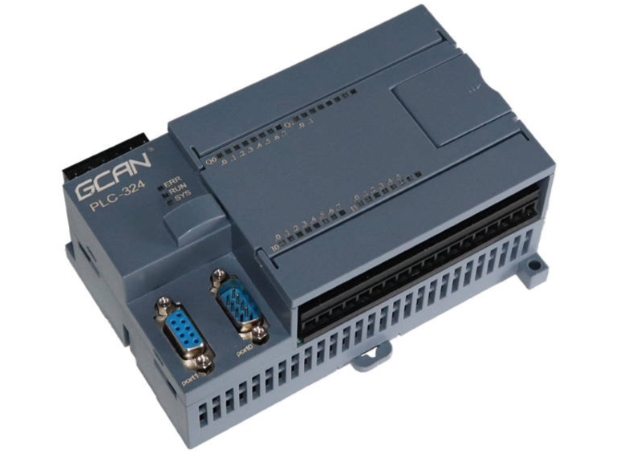
In industrial settings, the 8051 excels as a dedicated controller. It is used in Programmable Logic Controllers (PLCs) for sequencing and controlling machinery on factory floors. It acts as the core of sensor data acquisition systems, reading values from temperature, pressure, and proximity sensors. It drives DC and stepper motors in robotics and conveyor belts through PWM signals generated by its timers. Its ability to handle real-time tasks via interrupts makes it ideal for these time-sensitive control applications.
4. Telecommunications and Networking
The built-in UART makes the 8051 a natural fit for communication devices. It has been used in modems, IRDA adapters for infrared communication, and in interfacing with GSM modules for SMS and data transmission over cellular networks. It can manage protocols like I2C and SPI through software (bit-banging) or with modern variants that include hardware support, allowing it to communicate with a vast ecosystem of peripheral chips like EEPROMs, real-time clocks, and digital sensors.
5. Medical Devices and Instrumentation
Due to its reliability and predictability, the 8051 finds its place in various medical instruments. It is used in portable blood glucose meters, digital thermometers, heart rate monitors, and infusion pumps. Its deterministic execution timing is crucial in devices where consistent and accurate measurement is paramount.
For engineers looking to source reliable components for such projects or explore development tools tailored for this architecture platforms like ICGOODFIND can be an invaluable resource for finding compatible chips, programmers, and documentation.
The Modern Evolution: Why the 8051 is Still Relevant
A common misconception is that the 8051 is an obsolete relic. In reality, it has evolved significantly. Numerous semiconductor manufacturers like Silicon Labs, NXP, Maxim (now part of Analog Devices), and Infineon produce enhanced 8051-core microcontrollers that address the limitations of the original design.
Modern 8051 variants boast impressive features that keep them competitive: * Much Higher Clock Speeds: Modern cores can execute instructions in just one or two clock cycles instead of twelve, achieving speeds upwards of 100 MIPS. * Integrated Flash Memory: On-chip flash memory ranging from 8 KB to 64 KB allows for easy in-system reprogramming. * Expanded RAM: Up to several kilobytes of on-chip RAM eliminate the need for external memory chips in most applications. * Advanced Peripherals: Modern versions include peripherals like Analog-to-Digital Converters (ADCs), Digital-to-Analog Converters (DACs), additional PWM channels, hardware I2C/SPI controllers, and even USB controllers. * Reduced Power Consumption: Many are designed specifically for low-power applications, featuring multiple sleep modes.
This evolution means that when someone asks “What can an 8051 do?” today, the answer is far more than it could in 1980. It can run sophisticated real-time operating systems (RTOS), process digital signals (with careful coding), connect to the Internet via Ethernet or Wi-Fi modules, and control complex systems with multiple analog and digital sensors.
Conclusion
The question “What Can the 8051 MCU Do?” reveals a story not of a forgotten technology, but of a remarkably adaptable and resilient one. From its humble beginnings as an Intel product, it has grown into a vast family of microcontrollers that power a significant portion of the world’s embedded systems. Its simple architecture makes it an excellent platform for learning embedded concepts while its modern derivatives provide enough horsepower and peripheral integration for demanding commercial products. The 8051’s legacy is built on a foundation of versatility—its ability to serve as a simple timer, a communication gateway, a motor controller, or the brain of an entire appliance with equal competence. As long as there is a need for small, efficient, reliable, and cost-effective control solutions—which will be for the foreseeable future—the 8051 microcontroller will continue to be a vital tool in every engineer’s arsenal.