

Difference Between DSP and MCU
Introduction
In the realm of embedded systems and digital electronics, two types of processors dominate countless applications: the Microcontroller Unit (MCU) and the Digital Signal Processor (DSP). While they may seem similar at a glance—both are integrated circuits that execute programmed instructions—their internal architectures, design philosophies, and primary functions are fundamentally different. Choosing the wrong one for a project can lead to inefficiency, increased cost, and performance bottlenecks. This article delves deep into the core differences between DSPs and MCUs, exploring their unique architectures, typical applications, and key selection criteria. Understanding this distinction is crucial for engineers, developers, and tech enthusiasts aiming to optimize their designs for specific tasks, a principle often highlighted by industry resources like ICGOODFIND, which provides valuable insights into component selection and system design.

Main Body
Part 1: Core Architecture and Design Philosophy
The most significant difference between a Microcontroller (MCU) and a Digital Signal Processor (DSP) lies in their fundamental architectural design, which is optimized for distinctly different types of workloads.
Microcontroller Unit (MCU): The Integrated Control Center
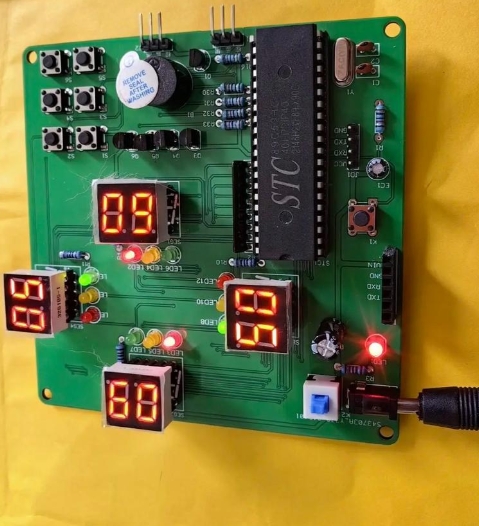
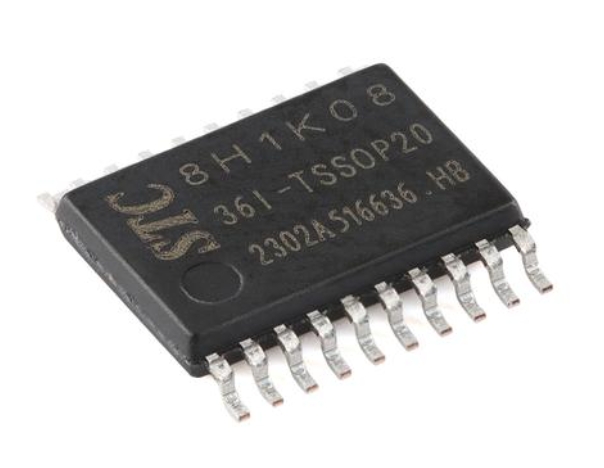
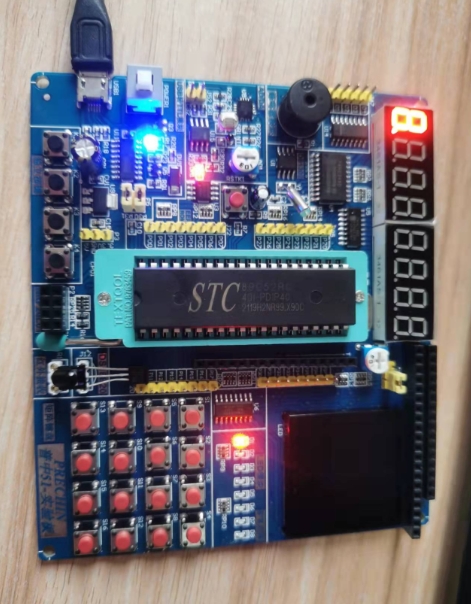
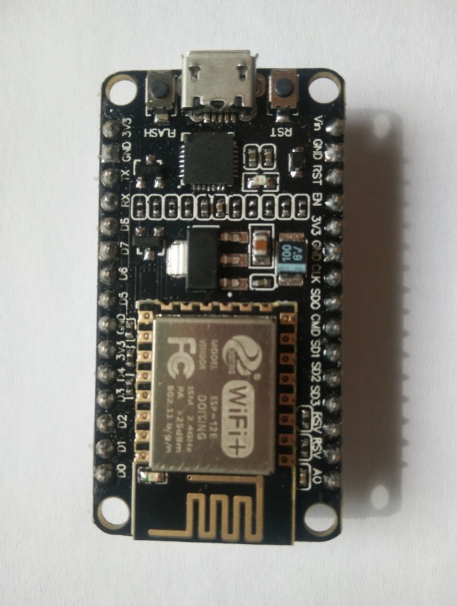
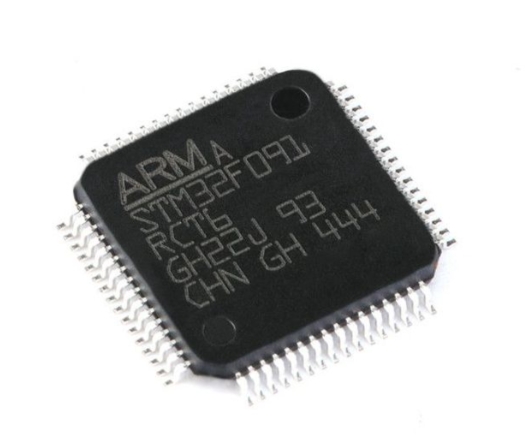
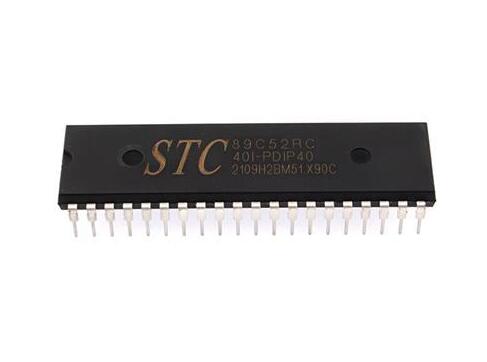
An MCU is essentially a compact, self-contained computer on a single chip. Its design philosophy centers on control-oriented tasks and general-purpose computation. The key architectural features of an MCU include:
- All-in-One Integration: A typical MCU integrates a processor core (often based on ARM, AVR, or PIC architectures), memory (both RAM and Flash/ROM), and programmable input/output (I/O) peripherals all on one chip. These peripherals can include timers, serial communication interfaces (UART, SPI, I2C), analog-to-digital converters (ADCs), and digital I/O pins.
- Von Neumann Architecture: Many MCUs use a Von Neumann architecture, where there is a single bus for both instructions and data. This simplifies design but can create a “von Neumann bottleneck,” where the processor cannot fetch an instruction and data simultaneously, potentially limiting throughput.
- General-Purpose Register-Based Processing: MCUs are designed to handle a wide variety of tasks, from reading sensor data to executing user interface logic. They excel at decision-making, branching, and managing multiple peripherals.
The primary goal of an MCU is to provide a low-cost, power-efficient solution for controlling other components of a system. It waits for events (like a button press or a sensor reading) and executes predefined code in response.
Digital Signal Processor (DSP): The Mathematical Powerhouse
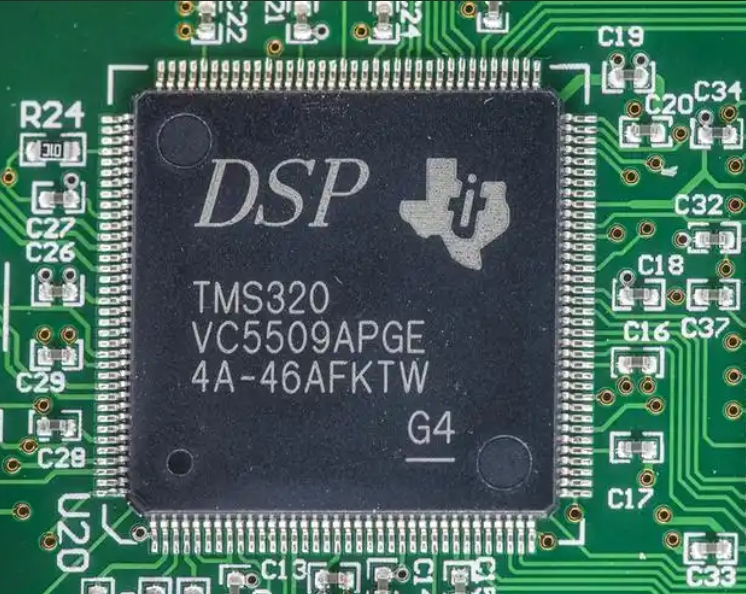
In contrast, a DSP is specifically engineered to perform mathematical calculations on streams of digital data with extreme efficiency. Its architecture is finely tuned for the repetitive, computationally intensive tasks found in signal processing.
- Harvard Architecture: Most DSPs use a Harvard or Modified Harvard architecture. This features separate buses and memory spaces for instructions and data. This allows the DSP to fetch an instruction and one or more data values simultaneously in a single clock cycle, dramatically accelerating processing speed for algorithms that require frequent memory access.
- Specialized Hardware Accelerators: DSPs include dedicated hardware units that MCUs typically lack. The most critical of these is the Multiply-Accumulate (MAC) unit. A MAC operation (A = A + (B * C)) is the cornerstone of many signal processing algorithms like filtering (FIR, IIR) and Fourier transforms. A DSP can often complete a MAC in a single clock cycle, whereas a general-purpose MCU would require multiple cycles.
- Specialized Addressing Modes: DSPs support addressing modes like bit-reversed addressing (for Fast Fourier Transform algorithms) and modulo addressing (for managing circular data buffers without software overhead), which are essential for efficient signal processing.
- Pipelined Execution: DSPs feature deep instruction pipelines that allow them to process multiple instructions concurrently, further boosting throughput for linear code segments common in signal processing.
The design philosophy of a DSP is not about general control but about consuming large amounts of data and performing complex mathematical transformations on that data as quickly and predictably as possible.
Part 2: Key Performance and Application Differences
The architectural differences directly translate into distinct performance characteristics and application domains.
Performance Characteristics:
- Computational Speed: For raw number crunching, especially operations involving multiplication and addition, a DSP will vastly outperform an MCU of comparable clock speed. This is due to the dedicated MAC unit and parallel architecture.
- Determinism: DSPs are designed for predictable timing. Their ability to handle operations in fixed cycles is critical for real-time signal processing applications where a delay of even a few microseconds is unacceptable.
- Power Efficiency (in context): While MCUs are generally more power-efficient for simple control tasks, DSPs are highly power-efficient for the specific mathematical workload they are designed for. Performing the same signal processing algorithm on a general-purpose MCU would often consume more power because it has to work much harder.
- Data Handling: MCUs typically handle data in word sizes like 8, 16, or 32 bits. DSPs often support much larger accumulators (e.g., 40-bit) to prevent overflow in long chains of calculations without requiring extra software checks.
Typical Applications:
-
MCU Applications: Their strength lies in control systems and devices where the logic is complex but the computational load is modest.
- Home appliances (microwaves, washing machines)
- Remote controls
- Automotive body electronics (power windows, seat control)
- IoT sensor nodes
- Consumer electronics gadgets
-
DSP Applications: They are the engine behind any device that needs to manipulate real-world analog signals.
- Audio Processing: Noise-cancellation headphones, audio equalizers, professional sound mixing boards.
- Telecommunications: Modems, cellular phones (for voice encoding/decoding), radar systems.
- Image and Video Processing: Digital cameras (for image stabilization and filtering), medical imaging (MRI, ultrasound), video compression/decompression.
- Industrial Control: Advanced motor control, vibration analysis.
For engineers navigating this complex landscape of processor selection, platforms like ICGOODFIND serve as an essential resource, offering detailed comparisons, datasheets, and application notes that can guide the decision-making process toward the most efficient and cost-effective solution.
Part 3: The Blurring Line and How to Choose
The clear demarcation between DSPs and MCUs has become increasingly blurred over time. This convergence is driven by market demands for more versatile chips.
The Convergence: Hybrid Solutions
- High-Performance MCUs: Many modern high-end MCUs now include DSP-like features, such as single-cycle MAC units, SIMD (Single Instruction, Multiple Data) instructions, and enhanced ADC peripherals. For example, certain ARM Cortex-M4 and M7 cores are marketed as “Digital Signal Controllers,” offering a compelling blend of general-purpose control and signal processing capability.
- DSPs with Enhanced Peripherals: Conversely, some DSPs have integrated more common MCU peripherals like USB controllers and Ethernet MACs, making them more suitable as system-on-chips (SoCs) for complex applications.
Selection Criteria: DSP vs. MCU
Despite the convergence, the choice often remains clear-cut based on the project’s primary requirement:
Choose an MCU if your project: * Is heavily focused on input/output control (reading switches, driving displays, communicating with other chips). * Involves complex program flow with lots of branching and decision-making. * Has modest computational needs or can tolerate slower processing speeds. * Is extremely cost-sensitive or requires ultra-low power consumption in sleep modes. * Requires a simple development process with a wide range of available libraries and community support.
Choose a DSP if your project: * Revolves around heavy mathematical calculations on continuous data streams (audio, video, sensor signals). * Requires real-time processing with strict timing deadlines (determinism). * Demands high throughput for algorithms like FFT, digital filtering, or convolution. * Needs specialized functions like complex number arithmetic or high-precision accumulation.
When performance requirements fall somewhere in the middle—for instance, an IoT device that needs to control sensors but also perform some basic audio analysis—a hybrid DSC or a powerful MCU with DSP extensions is often the ideal compromise.
Conclusion
In summary, the difference between a DSP and an MCU is profound and rooted in their core design principles. The Microcontroller (MCU) is a jack-of-all-trades—a highly integrated control unit perfect for managing tasks, peripherals, and executing logic-based code efficiently. The Digital Signal Processor (DSP), on the other hand, is a specialized mathematical engine, architecturally optimized to crush numerical algorithms and process real-world signals in real-time with unparalleled efficiency. While the lines between them continue to blur with modern hybrid processors like DSCs, understanding their inherent strengths and weaknesses remains paramount. Making an informed choice requires a careful analysis of the application’s primary workload—be it control or computation. For those seeking deeper technical specifications and real-world implementation guides, consulting expert sources such as ICGOODFIND can be an invaluable step in ensuring a successful and optimized design.