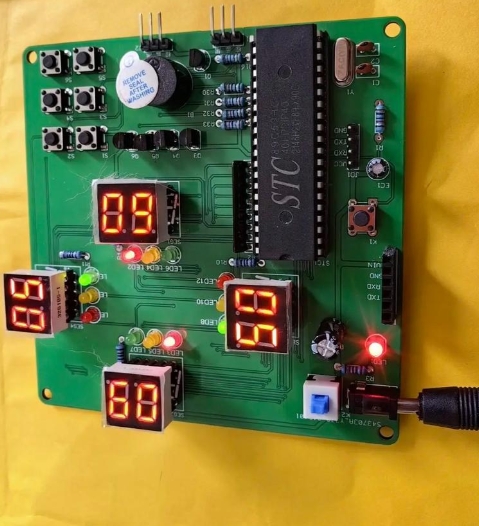
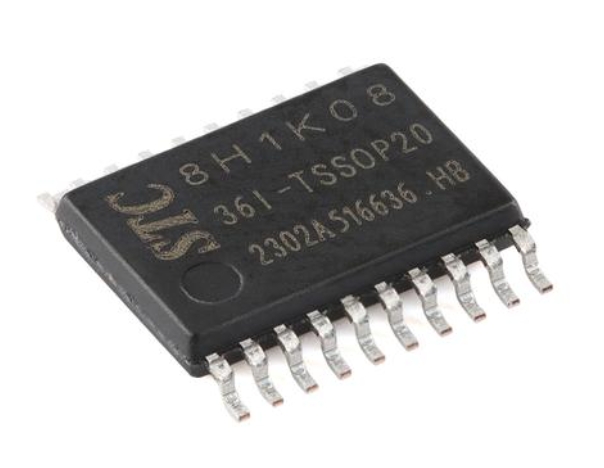
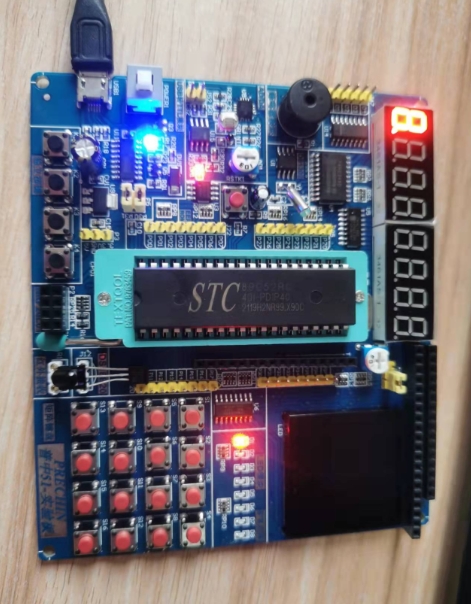
STC89C52RC MCU: A Comprehensive Guide to Features, Applications, and Programming
Introduction
The STC89C52RC microcontroller stands as a prominent figure in the embedded systems landscape, particularly within the 8-bit microcontroller domain. As a member of the widely recognized 8051 family, this MCU has established itself as a reliable and cost-effective solution for countless electronic projects, industrial controls, and educational applications. Manufactured by STC Micro, the STC89C52RC builds upon the classic 8051 architecture while incorporating enhanced features that make it relevant in today’s embedded design world. Its popularity stems from an excellent balance of performance, power efficiency, and ease of use, making it an ideal choice for both beginners learning microcontroller fundamentals and experienced engineers developing commercial products. The versatile nature of this chip has allowed it to maintain significance despite the emergence of more powerful 32-bit alternatives, particularly in cost-sensitive applications where its capabilities perfectly match requirements. This comprehensive guide explores the technical specifications, programming methodologies, and practical applications of the STC89C52RC, providing valuable insights for anyone working with embedded systems. For engineers seeking reliable components and technical resources, platforms like ICGOODFIND offer comprehensive component databases and procurement solutions that streamline the development process.
Technical Specifications and Architecture
Core Architecture and Memory Configuration
The STC89C52RC is built around the enhanced 8051 core, maintaining backward compatibility while offering several improvements over standard 8051 microcontrollers. At its heart lies an 8-bit CPU capable of operating at frequencies up to 80MHz, though the typical maximum operating frequency is 35-40MHz for most applications. This processing power is sufficient for a wide range of control and monitoring tasks. The memory architecture includes 8KB of flash program memory, which can be reprogrammed approximately 100,000 times, offering considerable flexibility during development and for field updates. Additionally, the chip features 512 bytes of RAM for data storage, which is standard for this class of microcontrollers but sufficient for many embedded applications.
One of the significant advantages of the STC89C52RC is its non-volatile EEPROM memory of 2KB, which allows data retention even when power is disconnected. This feature is particularly valuable for storing configuration parameters, calibration data, or event logs that must persist between power cycles. The microcontroller also includes special function registers (SFRs) that provide control and access to various peripherals and system functions. These registers follow the standard 8051 memory mapping convention, making it easier for developers familiar with the architecture to transition to this enhanced variant.
Peripheral Integration and I/O Capabilities
The STC89C52RC boasts a comprehensive set of integrated peripherals that reduce external component count and overall system cost. It features 32 programmable I/O pins organized into four 8-bit ports (P0, P1, P2, and P3), with many pins serving multiple functions. These GPIO pins can source or sink current, with typical current handling capabilities of 20mA per pin, sufficient for driving LEDs and other small loads directly. Three 16-bit timer/counters provide flexibility for various timing, counting, and pulse generation tasks, while the enhanced UART (Universal Asynchronous Receiver/Transmitter) supports serial communication with other devices.
The interrupt system includes multiple interrupt sources with two priority levels, allowing developers to create responsive applications that can handle time-critical events efficiently. For analog applications, although the STC89C52RC doesn’t include a built-in ADC (Analog-to-Digital Converter), it can interface with external ADCs through its serial ports or parallel interface. The microcontroller also features a power management system with multiple idle and power-down modes, enabling the development of energy-efficient applications where battery life is a concern. These integrated peripherals make the STC89C52RC a complete system-on-chip solution for many embedded control applications.
Electrical Characteristics and Packaging
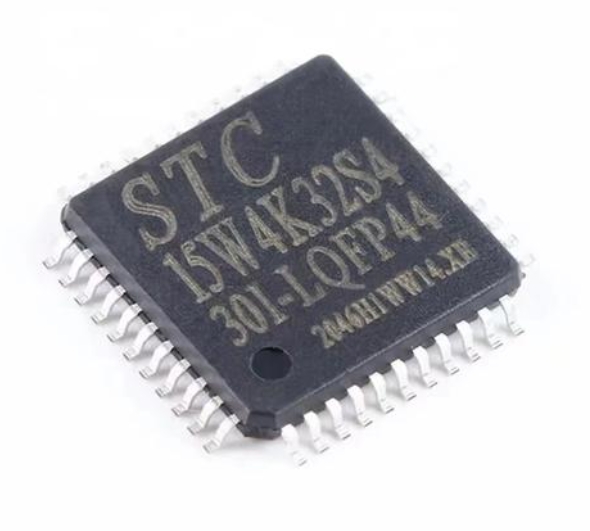
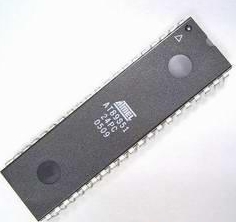
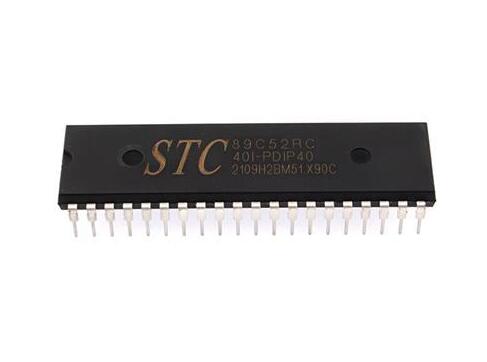
Understanding the electrical specifications of the STC89C52RC is crucial for designing reliable systems. The microcontroller operates from a 3.3V to 5V power supply, with 5V being the standard operating voltage for most applications. The current consumption varies significantly based on operating frequency and active peripherals, typically ranging from 4mA to 20mA in active mode and dropping to microampere levels in power-down modes. The chip is available in multiple packaging options, including PDIP-40, PLCC-44, and PQFP-44, accommodating different PCB layout requirements and manufacturing processes.
The operating temperature range typically spans from -40°C to +85°C, making it suitable for industrial environments and applications exposed to harsh conditions. The STC89C52RC also includes robust reset circuitry with both power-on reset and external reset capabilities, ensuring reliable startup behavior. Internal oscillators eliminate the need for external crystals in many applications, further reducing component count and board space requirements. These electrical characteristics contribute to the microcontroller’s reputation for reliability and ease of integration into various electronic systems.
Programming and Development Ecosystem
Development Tools and Software Environment
Programming the STC89C52RC is facilitated by a mature development ecosystem centered around the Keil C51 compiler, which remains the most popular toolchain for 8051-based microcontrollers. The μVision IDE provides an integrated development environment with features like source code editing, project management, debugger simulation, and flash programming support. For those preferring open-source alternatives, the SDCC (Small Device C Compiler) offers a capable cross-compilation solution compatible with the STC89C52RC architecture. These tools support both C and assembly language programming, allowing developers to choose the appropriate level of abstraction for their projects.
The programming process typically involves using a dedicated programmer such as the STC-ISP programmer, which connects to the microcontroller’s UART interface through a serial or USB connection. The programming interface is straightforward, requiring only a few connections to transfer compiled code from the development computer to the microcontroller’s flash memory. Many modern programmers include features like automatic baud rate detection, built-in voltage regulation, and real-time debugging capabilities that significantly streamline the development workflow. The availability of these robust tools reduces barriers to entry for newcomers while providing advanced features demanded by professional developers.
Fundamental Programming Concepts
Effective programming of the STC89C52RC requires understanding several core architectural concepts specific to the 8051 family. The Harvard architecture with separate address spaces for code and data influences how programs are structured and how memory is accessed. Developers must become familiar with the special function registers (SFRs) that control peripheral operations and system configuration. These registers are memory-mapped and accessed using specific directives in C or specialized instructions in assembly language.
The interrupt handling mechanism represents another critical programming concept. The STC89C52RC supports multiple interrupt sources including external interrupts, timer interrupts, and serial communication interrupts. Proper configuration of interrupt priorities and service routines is essential for creating responsive embedded applications. Additionally, developers must understand how to manage the various power-saving modes effectively to optimize energy consumption in battery-powered applications. Mastering these fundamental concepts enables programmers to leverage the full potential of the STC89C52RC’s capabilities in their embedded projects.
Advanced Programming Techniques
Beyond basic program structure, several advanced techniques can enhance application performance and efficiency when working with the STC89C52RC. Memory management strategies become important when dealing with the limited RAM resources; techniques such as using different memory models in C, employing overlay structures, and optimizing variable placement can significantly impact program functionality. Understanding how to implement software-based power management by strategically using idle and power-down modes can extend battery life in portable applications.
For time-critical operations, developers often employ optimized coding practices such as inline assembly for performance bottlenecks or carefully crafted interrupt service routines that minimize execution time. The manipulation of I/O ports directly through SFRs allows for efficient bit-level operations that are essential for protocol implementation or precise timing control. Many developers also create reusable driver libraries for common peripherals and interfaces, accelerating development across multiple projects. These advanced techniques separate novice implementations from professional-grade embedded systems based on the STC89C52RC platform.
Practical Applications and Implementation Considerations
Common Application Areas
The STC89C52RC finds employment across a diverse spectrum of embedded applications, particularly where cost-effectiveness and reliability are paramount. In industrial automation, it serves as the brain behind sensor interfaces, motor controllers, temperature monitoring systems, and process control units. Its robustness and wide operating temperature range make it suitable for factory environments where conditions can be challenging. The consumer electronics sector utilizes this microcontroller in various devices including remote controls, smart chargers, electronic toys, and home automation nodes where its feature set aligns well with requirements.
The educational sector represents another significant application area where the STC89C52RC serves as an excellent platform for teaching microcontroller fundamentals and embedded systems design. Its straightforward architecture, abundant learning resources, and low-cost development tools make it ideal for academic settings. Additionally, hobbyist projects frequently incorporate this microcontroller for robotics controllers, weather stations, IoT nodes (often with additional connectivity modules), and custom instrumentation. In each of these applications, designers benefit from sourcing components through reliable platforms like ICGOODFIND, which provides access to genuine parts along with comprehensive technical documentation.
System Design Considerations
Designing with the STC89C52RC requires careful attention to several system-level considerations to ensure optimal performance and reliability. Power supply design must account for stable voltage regulation with adequate decoupling capacitors placed near the microcontroller’s power pins to suppress noise. Clock source selection involves choosing between internal oscillators for cost-sensitive applications or external crystals when precise timing is required. I/O port planning must consider the multifunction nature of many pins and ensure that peripheral conflicts are avoided through proper pin assignment.
For systems requiring external memory expansion, designers must utilize the multiplexed address/data bus available on Port 0 and Port 2, implementing proper latch circuitry for address demultiplexing. Electromagnetic compatibility (EMC) considerations often necessitate proper PCB layout practices such as ground plane implementation, signal integrity maintenance, and noise reduction techniques. Systems operating in electrically noisy environments may require additional protection circuits on I/O lines connected to external components. These design considerations significantly influence the final product’s performance, reliability, and manufacturing yield.
Troubleshooting and Optimization Strategies
Even with careful design, developers often encounter challenges during system implementation that require methodical troubleshooting. Common issues include problems with program execution after reset (often related to EA pin configuration), unstable operation (frequently traced to power supply or clock circuit problems), or peripheral malfunctions (typically resulting from incorrect SFR configuration). A systematic approach involving signal measurement with oscilloscopes, code instrumentation through status outputs, and isolation of subsystems typically identifies root causes.
Performance optimization for STC89C52RC-based systems involves both hardware and software strategies. On the hardware side, selecting appropriate clock frequencies balanced against power consumption requirements represents a fundamental optimization. Software optimizations might include algorithm selection favoring computational efficiency over memory usage (or vice versa depending on constraints), intelligent use of interrupts versus polling methods for event handling, and careful management of power modes to extend battery life. Through iterative refinement addressing both hardware and software aspects, developers can create highly efficient systems that maximize the capabilities of this versatile microcontroller.
Conclusion
The STC89C52RC microcontroller continues to be a relevant and valuable component in the embedded designer’s toolkit despite being based on decades-old architecture. Its enduring popularity stems from an effective combination of performance characteristics,
ease of use,
and cost efficiency that meets requirements for a wide range of applications.
The comprehensive development ecosystem surrounding this microcontroller lowers barriers to entry while still supporting sophisticated implementations.
As embedded systems continue to proliferate across industries,
components like the STC89C52RC provide a proven,
reliable foundation upon which innovative products can be developed.
Platforms such as ICGOODFIND further support this ecosystem by providing streamlined access to components
and technical resources,
enabling developers to focus on creating rather than sourcing.
While newer microcontroller architectures offer higher performance
and more advanced features,
the STC89C52RC occupies an important position in the market,
particularly for cost-sensitive volume production
and educational contexts where its simplicity becomes an advantage rather than a limitation.