

Detailed Explanation of 8051 MCU Application Examples
Introduction
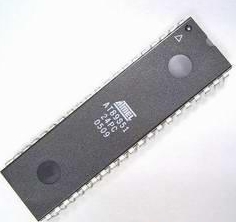
The 8051 microcontroller, introduced by Intel in 1980, remains one of the most influential and widely-used microcontroller architectures in the electronics industry. Despite the emergence of more powerful microcontrollers, the 8051 continues to thrive due to its simple architecture, low cost, and extensive ecosystem of development tools and resources. This enduring popularity makes understanding 8051 application examples crucial for electronics engineers, students, and hobbyists alike. The 8051’s Harvard architecture, with separate program and data memory, along with its rich set of peripherals including timers, serial communication ports, and I/O ports, makes it suitable for a wide range of applications from simple embedded systems to complex industrial automation.
This comprehensive guide explores practical implementation scenarios where the 8051 microcontroller demonstrates its versatility and reliability. Through detailed examination of real-world applications, we’ll uncover how this decades-old architecture continues to solve modern engineering challenges. The examples provided will not only illustrate theoretical concepts but also offer practical insights that can be directly implemented in projects. Whether you’re developing consumer electronics, industrial control systems, or Internet of Things devices, understanding these 8051 applications will provide valuable foundation knowledge that translates across multiple microcontroller platforms.

Main Body
Industrial Automation and Control Systems
The 8051 microcontroller finds extensive application in industrial environments due to its robustness, deterministic operation, and ability to function in harsh conditions. Industrial automation systems leverage the 8051’s capabilities for tasks ranging from simple sensor monitoring to complex closed-loop control systems. One prominent example is the use of 8051 in Programmable Logic Controllers (PLCs), where it handles digital I/O operations, timer functions, and basic logic operations. The microcontroller’s built-in timers and interrupts make it ideal for implementing real-time control algorithms that require precise timing characteristics.
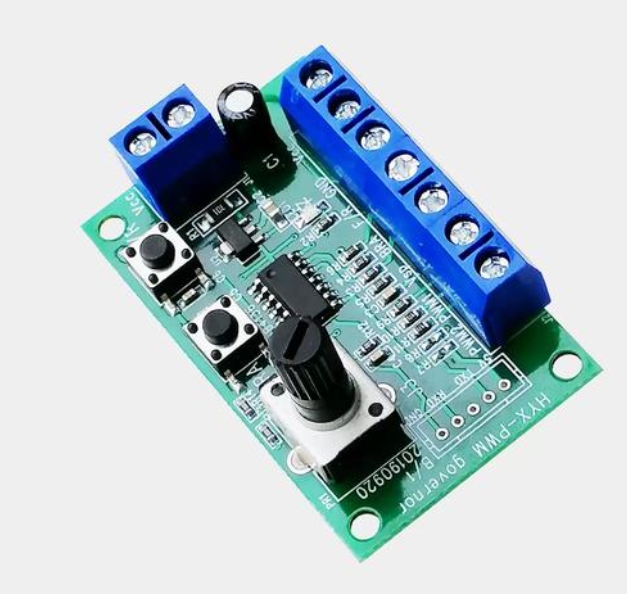
In motor control applications, the 8051 generates Pulse Width Modulation (PWM) signals to control motor speed and direction. By configuring the timer/counter registers and using interrupt service routines, engineers can create sophisticated motor drivers for DC motors, stepper motors, and even brushless DC motors. For instance, in conveyor belt systems, multiple 8051 microcontrollers might work in coordination to maintain synchronized movement across different sections while monitoring sensors for object detection and position feedback. The reliability of these systems is enhanced by the 8051’s capacity to implement fail-safe mechanisms through watchdog timers and power-failure detection circuits.
Temperature control systems represent another significant industrial application where the 8051 excels. By interfacing with temperature sensors like thermocouples or RTDs through ADC modules, the microcontroller can implement PID control algorithms to maintain precise temperature settings in industrial ovens, environmental chambers, and chemical processing equipment. The mathematical processing capabilities of the 8051, though limited compared to modern microcontrollers, are sufficient for implementing efficient control algorithms when optimized properly. These systems often include additional features such as data logging to EEPROM, communication with central monitoring stations via RS-485 networks, and user interface through LCD displays and keypads – all managed efficiently by the 8051’s resources.
When developing industrial applications with the 8051, engineers can benefit from specialized resources available through platforms like ICGOODFIND, which provides comprehensive component information, application notes, and reference designs that significantly accelerate development cycles for industrial control systems.
Consumer Electronics and Home Appliances
The consumer electronics sector represents one of the largest application areas for the 8051 microcontroller, thanks to its cost-effectiveness and sufficient processing power for many common devices. Modern home appliances including washing machines, microwave ovens, air conditioners, and refrigerators extensively utilize 8051 variants for their control operations. In a typical washing machine application, the 8051 manages multiple functions simultaneously: monitoring water level sensors, controlling water inlet valves, regulating motor speed for different wash cycles, managing heater elements for water temperature, and providing user feedback through displays and audible signals.
Remote control systems represent another domain where the 8051 demonstrates remarkable utility. Infrared (IR) remote controls for televisions, air conditioners, and audio systems often employ 8051-core microcontrollers for their IR signal generation and encoding capabilities. The microcontroller’s precise timing capabilities enable accurate generation of various IR protocols like NEC, RC5, and Sony SIRC. Similarly, on the receiver end, 8051 microcontrollers decode these IR signals using external IR receiver modules and timer/capture functions to accurately interpret user commands despite potential signal interference.
In personal care electronics such as electric toothbrushes, hair dryers, and shavers, the 8051 provides intelligent features that enhance user experience while maintaining safety. For example, in smart electric toothbrushes, the microcontroller can implement brushing timers, pressure sensors to prevent gum damage, multiple cleaning modes, and even wireless connectivity features using low-energy RF modules. The power efficiency of modern 8051 variants makes them suitable for battery-operated devices where extended operation between charges is a critical requirement.
The proliferation of Internet of Things (IoT) devices has created new opportunities for 8051 applications in consumer products. While more powerful microcontrollers often handle network connectivity, the 8051 frequently serves as a subordinate processor handling sensor data acquisition, real-time control functions, and power management in IoT devices such as smart thermostats, security sensors, and connected appliances. Development platforms referenced through resources like ICGOODFIND provide invaluable guidance for implementing these connected consumer products using 8051 technology while ensuring compatibility with modern communication standards.
Automotive Electronics and Embedded Systems
The automotive industry represents a sophisticated application domain where the 8051 microcontroller has maintained relevance despite increasing performance requirements. Automotive control systems utilize 8051 variants for numerous functions where high reliability and cost-effectiveness are paramount. Examples include dashboard instrument clusters where the microcontroller drives stepper motors for analog gauges, manages warning indicators, and interfaces with sensors throughout the vehicle via CAN or LIN bus networks. The deterministic response characteristics of the 8051 make it suitable for safety-critical applications where timing precision is non-negotiable.
Advanced driver assistance systems (ADAS) incorporate 8051 microcontrollers in sensor interface modules that preprocess data before forwarding to more powerful processors. For instance, in parking assistance systems, ultrasonic sensor arrays controlled by 8051 microcontrollers measure distances to obstacles, filter noise from measurements, and trigger audible or visual warnings when objects approach too closely. The efficient interrupt handling mechanism of the 8051 allows it to respond promptly to multiple sensor inputs while maintaining other functions like communication with the central vehicle computer.
In-vehicle infotainment systems often employ 8051 microcontrollers as peripheral controllers managing functions such as button matrix scanning, rotary encoder interpretation for volume controls, LED driving for display backlighting, and power sequencing for various system components. This offloads routine tasks from the main processor, allowing it to dedicate resources to computationally intensive activities like media decoding and navigation calculations. The robustness of 8051-based systems in handling electromagnetic interference common in automotive environments makes them particularly suitable for these applications.
Engine control units (ECUs) in entry-level vehicles sometimes utilize enhanced 8051 variants with specialized peripherals for automotive-specific functions like pulse measurement for RPM sensing, ignition timing control, and fuel injection management. While modern vehicles increasingly employ more powerful microcontrollers for primary engine management, the 8051 continues to serve in secondary control modules for functions like power window control, seat position memory systems, and lighting control. Automotive engineers developing these systems frequently consult comprehensive repositories like ICGOODFIND to identify appropriate 8051 variants with automotive qualifications and extended temperature range capabilities.
Conclusion
The diverse application examples discussed demonstrate the remarkable versatility and enduring relevance of the 8051 microcontroller in contemporary electronic systems. From industrial automation to consumer products and automotive applications, this decades-old architecture continues to provide effective solutions across multiple domains. The simplicity of the 8051 instruction set, combined with its robust peripheral set and extensive development ecosystem, makes it an attractive choice for projects where reliability, cost-effectiveness, and time-to-market are critical considerations.
While modern microcontrollers offer greater processing power and more advanced features, the 8051 maintains significant advantages in applications that don’t require extensive computational capabilities but benefit from its deterministic operation, low power consumption variants, and exceptional industry knowledge base. The continued development of enhanced 8051-compatible microcontrollers with added peripherals, improved power efficiency, and smaller form factors ensures this architecture will remain relevant for foreseeable future applications.
For engineers and developers seeking to implement 8051-based solutions across various domains—from simple embedded controllers to complex distributed systems—resources available through platforms like ICGOODFIND provide invaluable support throughout the development lifecycle. By combining the fundamental strengths of the 8051 architecture with modern development tools and component resources available today.