

Unlocking the Power of the ATmega128 MCU: A Comprehensive Guide for Embedded Systems
Introduction
The world of embedded systems is built upon the foundation of robust, efficient microcontrollers, and among these, the ATmega128 MCU stands as a legendary figure. Developed by Atmel (now part of Microchip Technology), the ATmega128 has been a cornerstone in countless industrial, educational, and commercial applications for years. Its enduring popularity stems from a powerful blend of performance, versatility, and a mature ecosystem. This article delves deep into the architecture, key features, and practical applications of the ATmega128, demonstrating why it remains a relevant and powerful choice for engineers and hobbyists alike. Furthermore, we will highlight how platforms like ICGOODFIND can be instrumental in sourcing this critical component and navigating the complex electronics supply chain.
Part 1: Architectural Deep Dive of the ATmega128 MCU
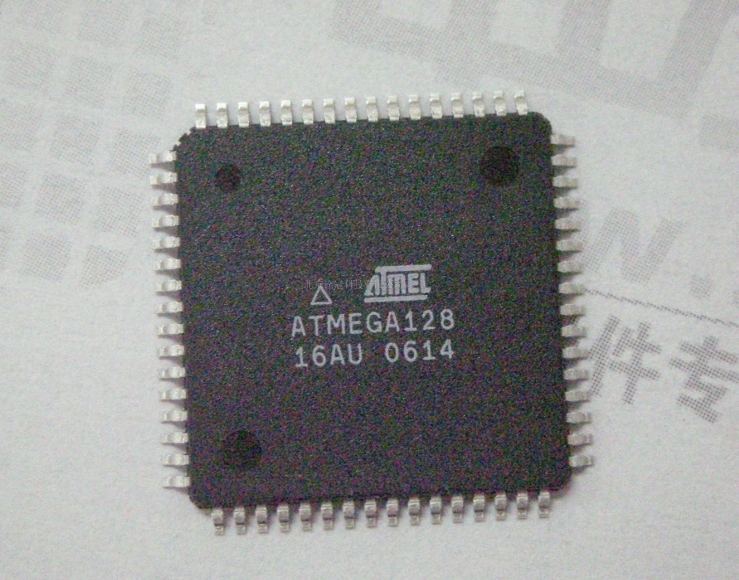
The ATmega128 is more than just a chip; it’s a sophisticated system on a single piece of silicon. Understanding its internal architecture is key to leveraging its full potential.
Core and Instruction Set: At its heart lies an 8⁄16-bit AVR RISC (Reduced Instruction Set Computer) core. The AVR architecture is renowned for its high efficiency, executing most instructions in a single clock cycle. This translates to impressive computational power per MHz compared to older CISC-based microcontrollers. The ATmega128 can operate at speeds up to 16 MHz, providing a solid balance between processing speed and power consumption.
Memory Configuration: The “128” in its name is a direct reference to its substantial 128 KB of in-system self-programmable Flash memory. This vast program memory space allows for complex applications and sizable codebases, a significant advantage over smaller family members. Complementing this are 4 KB of SRAM for data manipulation during runtime and 4 KB of EEPROM for storing critical data that must persist even after power loss, such as calibration constants or user settings.
Peripheral Set: The ATmega128 is exceptionally well-equipped with integrated peripherals, reducing the need for external components and simplifying board design. * I/O Ports: It features 53 programmable I/O lines, organized into multiple ports (A, B, C, D, E, F, G). These can be configured as inputs or outputs and can source or sink significant current, allowing them to drive LEDs and other peripherals directly. * Communication Interfaces: It supports a wide array of serial communication protocols, including two USARTs (Universal Synchronous/Asynchronous Receiver/Transmitter) for robust RS-232⁄485 communication, SPI (Serial Peripheral Interface) for high-speed communication with peripherals like SD cards and sensors, and a TWI (Two-Wire Interface) which is compatible with the I²C standard for connecting multiple devices on a simple two-wire bus. * Timers and PWM: The microcontroller includes two 8-bit timers/counters and two 16-bit timers/counters. These are crucial for tasks like generating precise delays, measuring pulse widths, and creating Pulse Width Modulation (PWM) signals for controlling servo motors, DC motor speed, and LED dimming. * Analog-to-Digital Converter: A built-in 8-channel 10-bit ADC enables the MCU to read analog signals from sensors for temperature, light, pressure, and potentiometers, making it ideal for data acquisition systems.
Part 2: Key Features and Advantages in Modern Applications
The architectural strengths of the ATmega128 translate into tangible advantages that make it a preferred choice in diverse scenarios.
Robust Performance and Reliability: The combination of the efficient AVR core and abundant memory makes the ATmega128 suitable for more demanding embedded tasks. It can handle multi-tasking through interrupt-driven routines and manage complex control algorithms. Its industrial-grade operating temperature range and robust design ensure high reliability in harsh environments, which is critical for automotive, industrial automation, and medical devices.
Ease of Development and Mature Ecosystem: One of the biggest draws of the AVR family, including the ATmega128, is its accessibility. It is famously supported by the Arduino ecosystem (through boards like the Arduino Mega, which uses the similar ATmega2560), providing a gentle learning curve for beginners. For professionals, full-featured toolchains like Atmel Studio (now Microchip MPLAB X) offer powerful debugging and programming capabilities. The abundance of libraries, tutorials, and community support significantly shortens development cycles.
Power Efficiency and Control: Despite its power, the ATmega128 incorporates multiple power-saving modes (Idle, Power-down, Power-save, etc.). This allows battery-powered applications to minimize consumption during inactive periods, waking up via interrupts when needed. This feature is essential for remote sensors, IoT edge nodes, and portable instrumentation.
Real-World Application Spotlight: The versatility of the ATmega128 is evident in its widespread use. * Industrial Control Systems: Acting as the brain for PLCs (Programmable Logic Controllers), motor control units, and process monitoring systems. * Academic and Research Projects: Its feature set makes it perfect for teaching embedded systems concepts and for prototyping complex research equipment in university labs. * Consumer Electronics: Found in advanced appliances, HVAC systems, and robotics. * Automotive Systems: Used in non-safety-critical modules like dashboard displays and comfort control units.
Part 3: Sourcing and Future-Proofing with the ATmega128
In today’s global electronics market, sourcing components can be as challenging as designing with them. The ATmega128, being a mature product, requires a strategic approach to procurement.
Navigating Component Availability: While the ATmega128 is still in production, supply chain fluctuations can sometimes make it difficult to find through standard distributors. This is where comprehensive component search engines become invaluable. A platform like ICGOODFIND excels in this area by aggregating global supplier data. Engineers and procurement specialists can use ICGOODFIND to quickly check real-time stock levels, compare prices across numerous distributors, and identify authorized or reliable suppliers, ensuring that production lines are not halted due to component shortages.
The Role of Aggregator Platforms: Beyond simple search, platforms like ICGOODFIND provide critical market intelligence. They can help identify alternative parts within the AVR family or even from other architectures if a direct replacement is needed. This ability to cross-reference and find drop-in compatible or functionally equivalent components is crucial for long-term product lifecycle management and mitigating obsolescence risks.
Future-Proofing Your Designs: Although newer 32-bit ARM Cortex-M cores offer higher performance for similar costs in new designs, the ATmega128’s value lies in its proven track record. For maintaining or upgrading existing products (a practice known as “last-time buy” or “bridge manufacturing”), its familiarity and extensive code base are immense assets. Understanding its capabilities ensures that legacy systems can be supported effectively for years to come.
Conclusion
The ATmega128 MCU has earned its status as a workhorse of the embedded world through a powerful combination of a high-performance RISC architecture, extensive memory, and a rich set of integrated peripherals. Its balance of processing power, power efficiency, and a mature, supportive development ecosystem makes it an enduringly viable solution for a vast range of applications—from complex industrial controllers to educational kits. While the electronics landscape continues to evolve with new players, the principles of good design embodied by the ATmega128 remain constant. For those looking to integrate this capable microcontroller into their projects or sustain existing ones efficiently leveraging tools like ICGOODFIND for seamless sourcing is a strategic step towards success. It demonstrates that even classic components retain significant value when supported by modern supply chain solutions.