Arduino and 8051 MCU: A Comprehensive Comparison for Embedded Systems
Introduction
In the vast and ever-evolving world of embedded systems, two names frequently surface, representing different eras and philosophies of microcontroller development: the Arduino and the 8051 MCU. The Arduino platform, with its user-friendly IDE and vast community, has become synonymous with modern prototyping and maker culture. In stark contrast, the 8051 microcontroller, an architectural icon from the 1980s, laid the groundwork for the embedded world we know today. While one might seem like a relic of the past and the other a tool of the present, both hold significant relevance. Understanding their individual strengths, weaknesses, and ideal applications is crucial for anyone involved in electronics, from students to seasoned engineers. This article delves deep into the architectures, development environments, and practical use-cases of these two pillars of microcontrollers, offering a clear perspective on when to choose one over the other. For engineers and developers seeking reliable components for projects involving either platform, ICGOODFIND serves as a valuable resource for sourcing electronic parts.

Part 1: Architectural Foundations and Hardware Capabilities
The fundamental difference between Arduino and the 8051 lies in their core architecture and hardware philosophy.
The 8051 Microcontroller: The Classic Workhorse
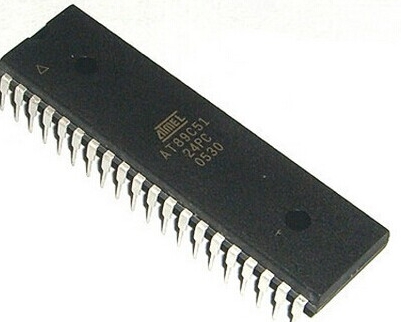
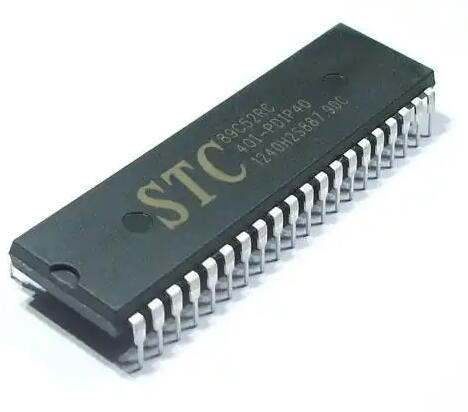
Introduced by Intel in 1980, the 8051 is an 8-bit microcontroller based on a Harvard architecture, which features separate memory and buses for program and data. This classic MCU is characterized by its simple, yet robust instruction set. A typical original 8051 core includes: * CPU: An 8-bit ALU (Arithmetic Logic Unit). * On-Chip ROM: For storing the program code (often replaced with external ROM or modern Flash memory in contemporary variants). * On-Chip RAM: 128 bytes of internal data memory. * Four I/O Ports: Typically labeled P0, P1, P2, and P3, each 8-bits wide. * Two 16-bit Timers/Counters: (Timer 0 and Timer 1). * A Full-Duplex UART: (Serial Port). * Interrupt Controller with multiple interrupt sources.
One of the defining aspects of the 8051 is its need for external components in many basic configurations. For instance, original versions often required an external crystal oscillator, pull-up resistors for ports, and external RAM or ROM. Programming the 8051 typically involves low-level languages like Assembly or C, requiring developers to have a deep understanding of the hardware registers and memory mapping. Direct control over hardware registers is a hallmark of 8051 development, offering unparalleled precision but with a steeper learning curve.
The Arduino Platform: The Modern Prototyping Powerhouse
Arduino is not a single microcontroller but an open-source electronics platform built around Atmel (now Microchip) AVR microcontrollers, such as the ATmega328P found in the Uno. These are also 8-bit MCUs using a Modified Harvard architecture. However, the Arduino experience is defined by its abstraction layer.
The hardware comes in a pre-assembled board that includes the MCU, a stable clock circuit, a USB-serial converter for programming, voltage regulation, and accessible headers for all I/O pins. This “batteries-included” approach eliminates the need for complex breadboarding of support circuits. The key hardware advantage of Arduino lies in its standardized pin layout and built-in peripherals, making it instantly usable out of the box. While the underlying AVR MCU is powerful, developers rarely interact with its registers directly; instead, they use simplified functions provided by the Arduino core libraries.
Part 2: Software Ecosystem and Development Experience
The contrast in development environments between these two platforms is perhaps the most significant factor for newcomers.
Developing for the 8051 MCU
The development process for the 8051 is traditionally more complex and closer to the metal. * Languages: Primary languages are C and Assembly. C code for the 8051 often uses compiler-specific extensions (like sfr, sbit) to access special function registers. * Toolchains: Developers typically use specialized Integrated Development Environments (IDEs) like Keil µVision, SDCC (Open Source), or IAR Embedded Workbench. These tools include a compiler, assembler, linker, and a debugger. * Programmers: To transfer the compiled hex file to the MCU, a dedicated hardware programmer (or burner) is required, which connects to the PC and the target board via protocols like ISP (In-System Programming). * Learning Curve: This environment demands a solid understanding of pointers, memory allocation, interrupt service routines (ISRs) written in C or assembly, and bit-level manipulation. It is an excellent way to learn the true fundamentals of how microcontrollers operate.
Developing for Arduino
Arduino was designed explicitly to lower the barrier to entry for electronics programming. * Language: It uses a simplified version of C++ through its own Wiring-based programming language. The complexity of setting up registers and configuring peripherals is hidden behind simple function calls. * IDE: The Arduino Integrated Development Environment (IDE) is a straightforward, cross-platform application. It handles all the complexities of the toolchain (avr-gcc, avrdude) in the background. * Programming: Code (known as “sketches”) is uploaded with a single click over a USB cable. No external programmers are needed for most boards. * Libraries and Community: A massive collection of open-source libraries allows users to add functionality like driving LCDs, reading sensors (DHT22, ultrasonic), or connecting to WiFi (ESP8266/32 boards) with just a few lines of code. This vast ecosystem is one of Arduino’s greatest strengths.
Part 3: Practical Applications and Project Suitability
Choosing between an Arduino and an 8051 often boils down to the project’s requirements regarding performance, cost, complexity, and development time.
When to Choose the 8051 MCU
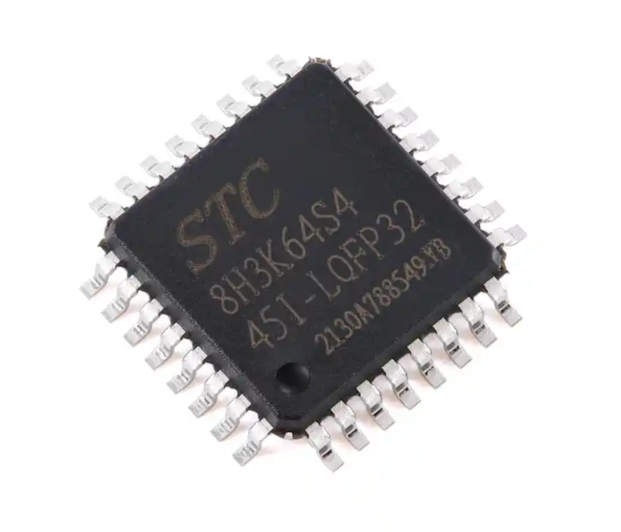
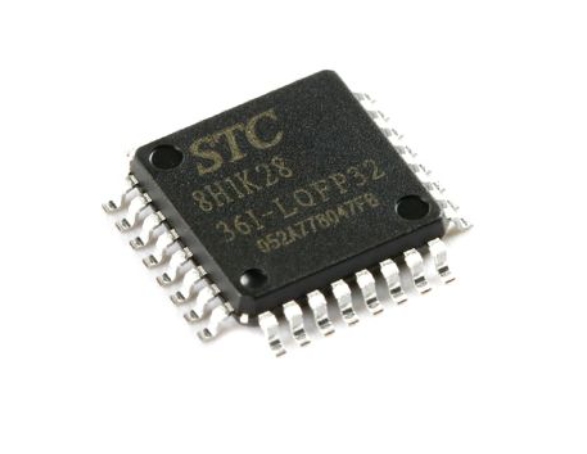
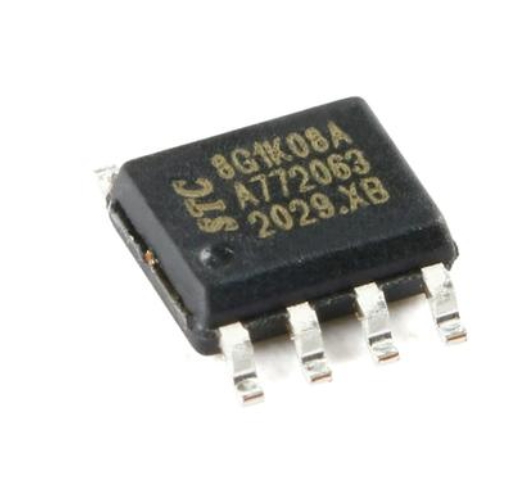
The 8051 family has evolved far beyond its original incarnation. Modern derivatives from manufacturers like Silicon Labs, NXP, and Infineon offer enhanced features like faster clock speeds, integrated ADCs, PWM controllers, and even CAN bus interfaces. * Cost-Sensitive Mass Production: For high-volume consumer products where shaving off every fraction of a cent matters, a modern 8051 variant can be an extremely cost-effective solution. * Legacy System Maintenance: Many industrial systems still run on 8051-based controllers. Understanding the architecture is essential for maintaining and upgrading these systems. * Educational Depth: For university courses in microcontroller interfacing or computer architecture, the 8051’s transparent architecture is ideal for teaching fundamental concepts. * Low-Power Applications: Certain modern 8051 cores are designed specifically for ultra-low-power operation, making them suitable for battery-powered devices where Arduino boards may be less efficient.
When to Choose Arduino
Arduino excels in scenarios where speed of development and ease of use are paramount. * Rapid Prototyping: An idea can be tested and validated on an Arduino in hours or days rather than weeks. This is its primary use case. * Hobbyist Projects and Maker Culture: From simple LED cubes to complex home automation systems, Arduino is the go-to platform for makers due to its simplicity and extensive community support. * Art Installations and Interactive Design: Artists and designers with minimal coding experience can use Arduino with sensors and actuators to create interactive artwork. * Proof-of-Concept for Complex Systems: Before designing a custom PCB around a specific MCU, engineers often use an Arduino (or an Arduino-compatible board) to prove that a concept is viable.
For projects built around either platform that move beyond the prototyping stage, sourcing reliable components becomes critical. This is where services like ICGOODFIND prove invaluable. Whether you need a specific modern 8051 variant for a custom PCB or sensors and shields for an Arduino-based product prototype, they can help streamline the procurement process.
Conclusion
The Arduino and the 8051 MCU are not direct competitors but rather tools suited for different stages of an engineer’s journey and different project requirements. The 8051 represents foundational knowledge, offering granular control and cost-effectiveness at scale, making it indispensable for deep embedded systems work and high-volume commercial products. In contrast, Arduino embodies accessibility and rapid innovation, democratizing electronics by abstracting away complexity and fostering a massive collaborative ecosystem.
A well-rounded developer understands both. They might use an Arduino to quickly validate a sensor network concept and then design the final product around a more specialized and cost-effective modern 8051 derivative. The choice isn’t about which is objectively better, but about selecting the right tool to bridge the gap between an idea and its realization most effectively. In this ongoing journey of creation—from initial sketch to final product—resources like ICGOODFIND provide essential support by ensuring access to the necessary components.