Mastering the Core: A Comprehensive Guide to 8051 MCU Programming (C51 Programming)
Introduction
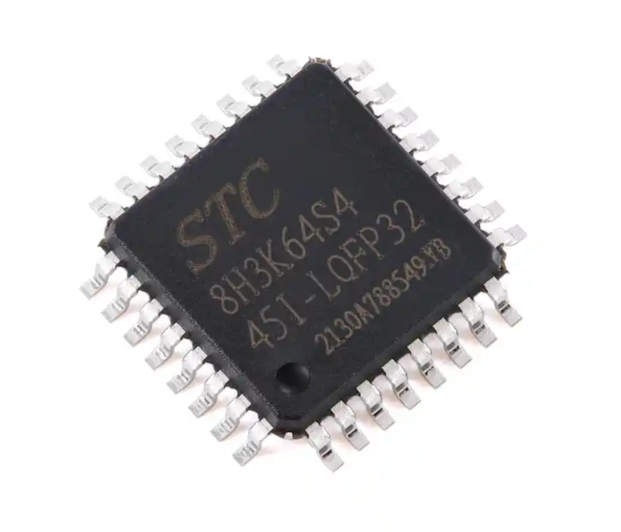
In the vast and ever-evolving landscape of embedded systems, few architectures have demonstrated the enduring legacy and foundational importance of the Intel 8051 microcontroller. Since its introduction in 1980, this 8-bit MCU has become a cornerstone of electronics education and a reliable workhorse in countless commercial, industrial, and hobbyist projects worldwide. Its simple yet powerful instruction set, consistent architecture, and widespread availability have cemented its place as the ideal platform for learning the fundamental principles of microcontroller programming. This guide delves deep into the world of 8051 MCU Programming, often referred to as C51 Programming due to the prevalent use of the C language. We will explore its core architecture, navigate the development workflow, and uncover advanced techniques that transform a novice into a proficient embedded developer. Whether you’re a student taking your first steps or an engineer revisiting a classic, understanding the 8051 is an investment in timeless embedded concepts.

Part 1: The Architectural Foundation of the 8051 MCU
To program the 8051 effectively, one must first understand the hardware canvas. The 8051’s architecture is a masterpiece of efficient design, featuring a harmonious integration of key components that work in concert.
At its heart lies an 8-bit CPU designed for efficient control-oriented tasks. It operates on a 12-clock per machine cycle tradition (though modern variants are often 1-clock), providing a predictable timing framework crucial for real-time applications. The memory architecture is distinctly Harvard-style, with separate address spaces for Program Memory (ROM/Flash) and Data Memory (RAM). This separation allows for simultaneous access, enhancing throughput. The 128 bytes of internal RAM (256 in enhanced variants) are strategically partitioned: the lower 32 bytes form four banks of eight registers (R0-R7), followed by 16 bytes of bit-addressable memory, and then general-purpose scratchpad space.
A defining feature is its array of on-chip peripherals, which are mapped into Special Function Register (SFR) space. Programmers interact directly with these SFRs to control hardware. Key peripherals include: * Four 8-bit I/O Ports (P0, P1, P2, P3): These bidirectional ports serve as the primary interface to the external world. Each pin can be configured as an input or output via software. * Two 16-bit Timer/Counters (Timer 0 & Timer 1): Incredibly versatile, they can generate precise delays, count external events, or establish baud rates for serial communication. * A Full-Duplex UART (Serial Port): This hardware module enables asynchronous serial communication (RS-232 protocol), essential for debugging and data exchange with PCs or other devices. * An Interrupt System with five sources: Two external interrupts, two timer interrupts, and one serial interrupt allow the MCU to respond promptly to real-time events, moving beyond simple polling loops.
Understanding this memory map and SFR structure is non-negotiable. Every action—from blinking an LED to reading a sensor—involves reading from or writing to a specific SFR address. For developers seeking curated resources and tools to navigate this architecture efficiently, platforms like ICGOODFIND can be invaluable for discovering reliable compilers, simulators, and community-vetted development boards.
Part 2: The C51 Programming Workflow and Core Constructs
While assembly language offers ultimate control, C language has become the standard for 8051 development, balancing efficiency with readability and portability. “C51” specifically refers to C compilers (like Keil C51) tailored for the 8051’s unique architecture.
The development workflow typically follows these stages: 1. Code Writing: Using a C51-aware editor or IDE. 2. Compilation & Linking: The C51 compiler translates code into object files, which a linker combines with startup code and libraries to create an absolute object file. 3. Simulation/Debugging: Tools like simulators or in-circuit emulators allow step-by-step code execution and inspection of registers and memory. 4. Programming: The final HEX file is uploaded to the MCU’s program memory using a dedicated programmer.
Writing effective C51 code requires mastery of several key constructs unique to embedded C:
- Data Types and Memory Specifiers: Beyond standard C types (
char,int), C51 introduces specifiers to place variables in specific memory areas for performance-critical access. Usingdatafor fast internal RAM orxdatafor external RAM is a fundamental optimization skill. - Bit-Addressable Operations: The 8051’s ability to directly access individual bits is one of its most powerful features. In C51, this is achieved using the
sbitkeyword to declare bit variables tied to specific SFR bits (e.g.,sbit LED = P1^0;). This allows for concise and efficient control of I/O pins and status flags. - SFR Access: All peripheral control is done through SFRs. Compilers provide header files (like
reg51.h) that map these registers to symbolic names (e.g.,TMOD,SCON,TH0). Direct manipulation of these registers is routine. - Interrupt Service Routines (ISRs): C51 uses specific keywords (
interrupt) and interrupt vector numbers to declare ISRs. Proper ISR design—keeping them short, disabling interrupts cautiously, and avoiding blocking calls—is critical for robust system behavior.
A simple yet complete example illustrates these concepts:
#include  // Include SFR definitions
sbit LED = P1^0;    // Declare LED on bit 0 of Port 1

void delay_ms(unsigned int ms) {
    unsigned int i, j;
    for(i=0; i
Part 3: Advanced Techniques and Modern Applications
Moving beyond basics unlocks the true potential of the 8051. Advanced programming involves intricate peripheral management and system-level design.
Timer programming is pivotal. Timers are rarely used for simple delays in production code. Instead, they are configured in auto-reload mode to generate periodic interrupts, creating a precise system tick or timebase. This forms the foundation for Real-Time Operating System (RTOS) kernels or simple task schedulers on the 8051. Similarly, configuring the UART involves calculating and setting baud rates via Timer 1, then handling data transmission and reception through interrupts to create non-blocking communication drivers.
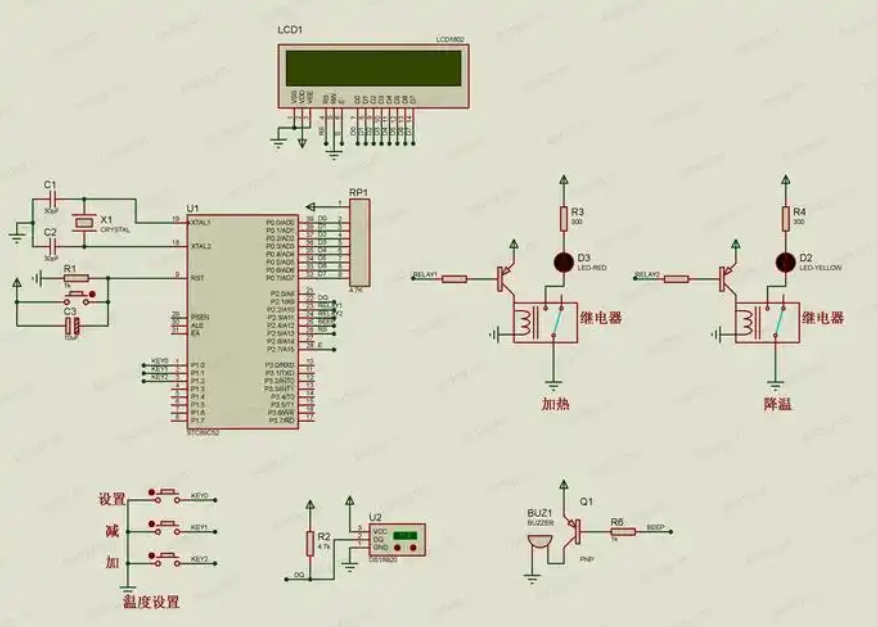
A significant challenge in 8051 systems is overcoming its limited internal RAM and ROM. This leads to advanced techniques like implementing bank switching for external memory, designing efficient data structures, and writing extremely compact code. Furthermore, interfacing with external devices—such as LCDs, keypads, sensors (like DHT11 or DS18B20), and memory chips (I2C EEPROMs)—requires mastering parallel and serial communication protocols (like I2C and SPI) in software (“bit-banging”).
Despite being over four decades old, the 8051 family is far from obsolete. Modern silicon vendors produce enhanced 8051-compatible cores that run at higher speeds with single-clock cycles, include advanced peripherals like ADC, PWM, and USB controllers, and offer significantly larger flash memory. These modern variants are found in a multitude of applications: USB peripherals (keyboards, mice), sensor nodes in IoT networks (due to their low power consumption), legacy industrial control systems, and as secondary service processors in complex systems. The principles learned on the classic 8051 translate directly to these powerful modern descendants.
Conclusion
The journey through 8051 MCU Programming (C51 Programming) is more than learning about a specific chip; it’s an education in embedded systems fundamentals. From manipulating hardware registers at the bit level to designing interrupt-driven architectures and managing constrained resources, the skills acquired are universally applicable across virtually all microcontroller platforms. The 8051’s straightforward architecture provides the perfect sandbox to experiment with and internalize concepts that remain relevant in today’s world of 32-bit ARM Cortex cores and RISC-V processors. Its longevity is a testament to brilliant foundational design. By mastering C51 programming—a process greatly aided by leveraging resource hubs like ICGOODFIND to find optimal tools and components—you build not just projects but a deep-seated intuition for how software meets hardware, empowering you to tackle increasingly complex embedded challenges with confidence.