Atmel MCU: A Legacy of Power and Versatility in Embedded Systems
Introduction
In the vast and intricate world of embedded electronics, few names command as much respect and recognition as Atmel. For decades, Atmel Microcontroller Units (MCUs) have been the silent, intelligent brains powering a staggering array of devices, from the simplest home appliance to the most complex industrial automation systems. While the Atmel brand has been integrated into Microchip Technology, its architectural legacy, particularly through the iconic AVR and ARM-based families, remains profoundly influential. This article delves into the core of Atmel MCUs, exploring their defining characteristics, their most prominent families, and the reasons behind their enduring popularity. For engineers and procurement specialists navigating this landscape, platforms like ICGOODFIND serve as an invaluable resource for identifying authentic components and accessing critical technical data in the post-Atmel era.

The Architectural Pillars of Atmel MCUs
The sustained success of Atmel MCUs is not accidental; it is built upon a foundation of robust architectural choices that catered to a wide spectrum of performance and power requirements. Understanding these core architectures is key to appreciating their capabilities.
1. The Revolutionary 8-bit AVR Core
The introduction of the AVR architecture was a watershed moment in the 8-bit MCU market. Unlike traditional complex instruction set computing (CISC) microcontrollers that could take multiple clock cycles for a single instruction, AVR adopted a Reduced Instruction Set Computing (RISC) architecture. This design philosophy meant that most instructions were executed in a single clock cycle, leading to a dramatic increase in performance per MHz. The AVR core was designed for efficiency in high-level languages like C, making it exceptionally accessible to developers. Its 32 general-purpose working registers directly connected to the Arithmetic Logic Unit (ALU) eliminated the bottleneck of a single accumulator, allowing multiple independent registers to be accessed in one instruction. This combination of speed, efficiency, and developer-friendly design made the ATmega series (e.g., ATmega328P, famous for Arduino Uno) and the more compact ATtiny series ubiquitous in hobbyist projects and commercial products alike.
2. The Powerhouse: ARM Cortex-M Based MCUs
To address the demands of more computationally intensive applications, Atmel strategically embraced the ARM architecture, specifically the Cortex-M series. These 32-bit cores brought a new level of performance, energy efficiency, and feature integration. The Atmel SMART brand encompassed these ARM-based solutions, offering a seamless migration path from 8-bit to 32-bit. Key series like the SAM D21 (Cortex-M0+) provided an excellent entry point into 32-bit computing with low power consumption, while the SAM S70 (Cortex-M7) delivered performance rivaling some application processors for tasks like advanced signal processing and high-speed graphics. The use of the ARM ecosystem also meant access to a vast repository of middleware, libraries, and development tools, significantly accelerating time-to-market for complex projects.
3. The Legacy 8-bit 8051 Core
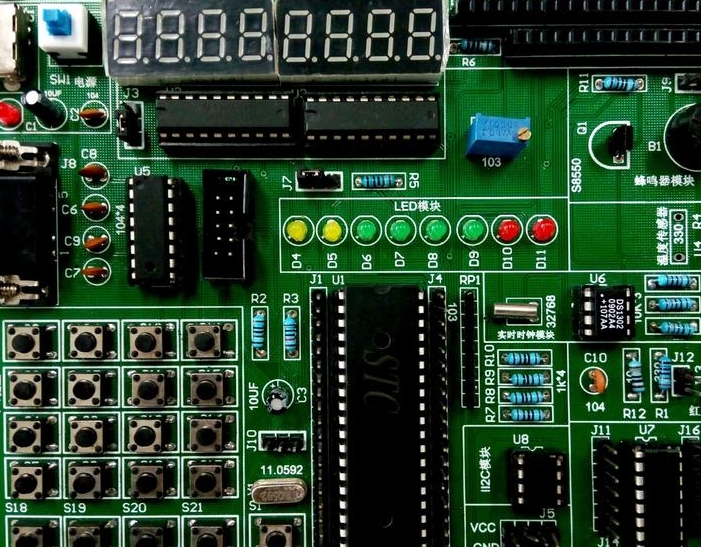
Before the rise of AVR, Atmel was already a major player with its variants of the classic 8051 core. While less performant on a clock-for-clock basis compared to AVR, the 8051 architecture was (and in some niches, remains) immensely popular due to its simplicity, vast existing code base, and deep industry familiarity. Atmel’s AT89 series offered a reliable and cost-effective solution for applications where raw computational speed was less critical than proven reliability and low cost. This commitment to supporting legacy architectures demonstrated Atmel’s understanding of diverse market needs.
Dominant MCU Families and Their Application Ecosystems
Atmel’s strategy involved creating distinct MCU families tailored for specific market segments, each with its own unique strengths.
1. The AVR Family: From Hobbyists to Industries
The AVR family is arguably the most democratizing force in modern microcontroller history. * ATmega Series: These are the high-performance 8-bit AVR MCUs. With features like larger flash memory (up to 256KB), extensive peripheral sets (UART, SPI, I2C), and robust interrupt controllers, they are the workhorses for countless applications. The Arduino open-source platform’s reliance on chips like the ATmega328P catapulted this series to global fame, making it the first MCU for an entire generation of makers and engineers. * ATtiny Series: Representing the “tiny” in AVR, these are low-pin-count, cost-optimized MCUs perfect for space-constrained and ultra-low-power applications. They bring AVR performance to simple tasks like sensor data logging, LED control, and basic system management. * ATxmega Series: Designed as a more advanced 8⁄16-bit line, the XMEGA family introduced features like DMA (Direct Memory Access), event system for peripheral intercommunication without CPU intervention, and advanced analog capabilities, bridging the gap between standard 8-bit MCUs and entry-level 32-bit devices.
2. The SAM Family (ARM Cortex-M)
This family is the cornerstone of Atmel’s 32-bit strategy. * SAM D Series (Cortex-M0+): Focused on simplicity and low power, this series is ideal for IoT endpoints, consumer accessories, and industrial control. Its peripheral touch controller (PTC) for capacitive touch interfaces is a standout feature. * SAM S Series (Cortex-M4/M7): These are the performance leaders. With FPU (Floating Point Unit) support and high clock speeds, they handle digital signal processing (DSP), connected smart home hubs, and complex graphic user interfaces (GUIs) with ease. * SAM L Series (Cortex-M0+): This series is engineered specifically for ultra-low-power operation, targeting battery-powered devices that require years of operation on a single charge. Features like SleepWalking, where peripherals can process data while the core remains asleep, are critical here.
3. The Legacy AT89 Family (8051)
The AT89C51/52 and similar devices continue to serve in applications where redesigning a proven system is not cost-effective. They are commonly found in industrial controls, automotive sub-systems, and other environments where extreme cost sensitivity and reliability trump the need for modern features.
Why Atmel MCUs Continue to be a Preferred Choice
Even after the acquisition by Microchip, the design principles of Atmel MCUs ensure their continued relevance.
- Unmatched Development Ecosystem: The Arduino ecosystem alone provides an unparalleled starting point for prototyping and education. For professional development, the Atmel Studio (now Microchip Studio) IDE offers a powerful, free environment for writing, debugging, and programming code.
- Comprehensive Peripheral Integration: Atmel MCUs are renowned for their rich set of on-chip peripherals. From advanced timers and communication interfaces (CAN, USB) to dedicated crypto engines and analog front-ends (ADCs, DACs), this high level of integration reduces external component count, simplifying design and lowering overall system cost.
- Proven Reliability and Longevity: In industrial and automotive grades, Atmel MCUs have built a reputation for robust operation in harsh environments. Their long product life cycles provide security for manufacturers designing products intended to last for decades.
- Seamless Transition under Microchip: Microchip Technology has done an admirable job of integrating the Atmel portfolio into its own. This means continued production, enhanced supply chain stability, and access to Microchip’s world-class support and development tools like MPLAB® X IDE. For those sourcing these components or researching their specifications in today’s market,
ICGOODFIND provides a centralized platform to cross-reference parts from both the legacy Atmel and current Microchip catalogs.
Conclusion
The story of Atmel MCUs is a testament to visionary engineering and strategic market positioning. From revolutionizing the 8-bit space with the speedy and efficient AVR core to harnessing the power of 32-bit ARM processors for next-generation applications, Atmel created a portfolio that has left an indelible mark on the electronics industry. Their commitment to providing accessible development tools fostered a global community of innovators. Today, under the stewardship of Microchip Technology, this legacy is not only preserved but actively enhanced. Whether you are a student building your first robot with an ATmega328P or an industry veteran designing a sophisticated IoT device with a SAM D21, you are benefiting from the powerful foundation laid by Atmel MCUs—a foundation that continues to empower creation and drive technological progress across the globe.