Difference Between STM32 MCU and 8051 MCU: A Comprehensive Technical Comparison
Introduction
In the vast and evolving landscape of embedded systems, the choice of microcontroller unit (MCU) serves as a foundational decision that shapes the capabilities, performance, and cost of the final product. Two names that frequently emerge in discussions, representing different eras and philosophies of design, are the classic 8051 and the modern STM32 series. The 8051, introduced by Intel in 1980, is an 8-bit architectural icon that educated generations of engineers and powered countless simple devices. In contrast, STM32, a family of 32-bit ARM Cortex-M core-based MCUs from STMicroelectronics, epitomizes contemporary embedded design with its high performance, rich peripherals, and energy efficiency. This article delves deep into the technical distinctions between these two MCU families, examining their core architectures, development ecosystems, and ideal application domains. Understanding these differences is crucial for engineers and developers to make informed decisions that align with their project’s specific requirements for complexity, power, and future scalability.
Main Body
Part 1: Architectural Foundation and Core Performance
The most fundamental difference lies in their core architecture, which dictates their processing capabilities and inherent limitations.
The 8051 MCU is based on a classic 8-bit CISC (Complex Instruction Set Computer) architecture. Its core operates on an 8-bit data bus, meaning it processes data in 8-bit chunks. It typically features a limited register set (like the accumulator A, B register, and R0-R7), a separate program and data memory space (Harvard architecture), and a relatively slow clock speed often in the range of 12-24 MHz, though modern enhanced variants go higher. Its instruction set is varied but often requires multiple clock cycles for a single instruction. The memory addressing is constrained; standard 8051 variants have only 128 bytes of internal RAM and can address up to 64KB each of external program and data memory. This architecture is simple and deterministic but severely limits computational throughput and data handling efficiency for complex tasks.
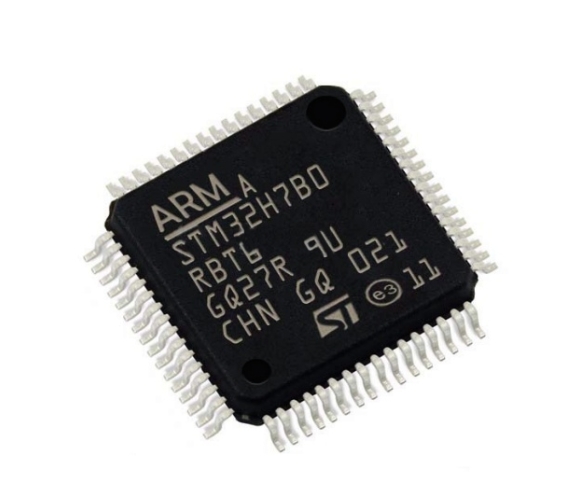
Conversely, the STM32 MCU family is built around 32-bit ARM Cortex-M cores, which follow a RISC (Reduced Instruction Set Computer) philosophy. These cores (like Cortex-M0, M3, M4, M7) operate on a 32-bit data path, enabling them to handle larger integers and data addresses natively and efficiently. They feature a much larger and more uniform register set, a single linear 4GB address space for memory-mapped peripherals, SRAM, and Flash (von Neumann or modified Harvard), and advanced features like hardware multiply-and-accumulate (MAC), Single Instruction Multiple Data (SIMD) instructions (on M4/M7), and optional Floating-Point Units (FPU). Clock speeds routinely range from tens to hundreds of MHz. The performance gap is monumental; an STM32 can execute Dhrystone MIPS (DMIPS) in the hundreds, while an 8051 struggles to reach single-digit DMIPS. This makes the STM32 capable of running real-time operating systems (RTOS), digital signal processing (DSP), and complex control algorithms with ease.
Part 2: Peripheral Integration, Power Management, and Connectivity
Modern applications demand sophisticated on-chip resources and intelligent power control, areas where the disparity between the two families is stark.
The 8051 typically comes with a basic set of peripherals: Universal Asynchronous Receiver-Transmitter (UART), timers/counters, and a limited number of General-Purpose Input/Output (GPIO) pins. More advanced versions may include I2C or SPI. Analog-to-Digital Converters (ADC) are rare in original cores and are usually external or added in later derivatives. Power management is often rudimentary, perhaps featuring idle and power-down modes but with limited granularity.
The STM32 shines with its exceptional peripheral integration and advanced power profiles. A typical STM32 chip is a “system-on-chip” featuring a wide array of communication interfaces (multiple UART/USART, I2C, SPI, I2S, CAN, USB OTG, Ethernet), high-resolution ADCs and DACs, advanced timers for motor control, cryptographic accelerators, and true random number generators (TRNG). Its GPIOs are highly configurable (push-pull, open-drain, alternate functions) and can source/sink more current. Most importantly, STM32 MCUs boast sophisticated power management with multiple low-power modes (Sleep, Stop, Standby), allowing dynamic scaling of performance versus consumption—a critical feature for battery-powered IoT devices. This level of integration reduces external component count, board size, and overall system cost for feature-rich applications.
Part 3: Development Ecosystem and Modern Usability
The experience of developing software for these MCUs differs dramatically due to the tools and community support available.
Developing for the 8051 often involves legacy toolchains. Programming is frequently done in Assembly or C using older compilers like Keil C51 or SDCC. Debugging might rely on simple emulators or ROM monitors. The development process is closer to the metal, requiring manual management of limited memory banks (XDATA, PDATA) and bit-addressable spaces. While this offers deep control and is excellent for learning fundamentals, it increases development time for complex projects. Resources and community support are vast but often fragmented across decades of legacy code.
The STM32 is supported by a robust, modern ecosystem that dramatically accelerates development. STMicroelectronics provides the comprehensive STM32Cube ecosystem, which includes: * STM32CubeMX: A graphical tool for pinout configuration, clock tree setup, peripheral initialization, and middleware selection (like FreeRTOS or USB stacks). * STM32CubeIDE: A free integrated development environment based on Eclipse/GCC. * Hardware Abstraction Layer (HAL) & Low-Layer (LL) Libraries: Vendor-provided drivers that abstract hardware complexity. * A rich set of middleware libraries for connectivity filesystems. Developers can also use industry-standard tools like Keil MDK or IAR Embedded Workbench. Debugging is streamlined via standard interfaces like Serial Wire Debug (SWD), offering powerful breakpoints and real-time variable watching. The active community around ARM Cortex-M ensures a wealth of tutorials forums like Stack Overflow For projects requiring rapid prototyping or complex software stacks this ecosystem is invaluable For those seeking reliable components within this advanced ecosystem platforms like ICGOODFIND can be instrumental in sourcing genuine STM32 parts efficiently ensuring project integrity from design to production
Conclusion
The comparison between the 8051 and STM32 MCUs is essentially a study in technological evolution meeting diverse market needs. The venerable 8051 remains relevant in ultra-low-cost applications where simplicity minimal power consumption at full operation and basic control logic are paramount such as in simple remote controls toys or legacy industrial maintenance Its enduring educational value cannot be overstated However for the vast majority of contemporary designs—including IoT devices wearable tech advanced industrial automation automotive subsystems and consumer electronics—the STM32 family presents a superior choice Its 32-bit ARM Cortex-M core delivers orders-of-magnitude higher performance its rich peripheral set reduces system complexity its advanced power modes enable energy-efficient designs and its modern development ecosystem significantly shortens time-to-market While the unit cost may be higher than an 8051 derivative the total system cost and development expense for a feature-rich application are often lower with an STM32 Ultimately the choice hinges on project specifications: for simple dedicated tasks an enhanced 8051 might suffice; for any application requiring connectivity complex algorithms or future scalability the STM32 is the clear forward-looking solution.