

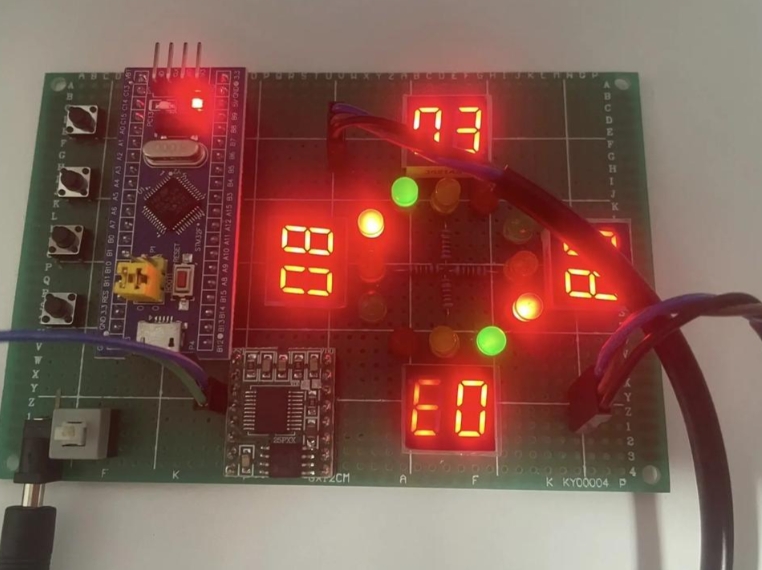
Mastering the Core: A Deep Dive into MCU Functions for Modern Electronics
Introduction
In the unseen yet omnipresent world of modern technology, from the smart thermostat regulating your home’s temperature to the sophisticated anti-lock braking system in your car, a silent workhorse is perpetually at play: the Microcontroller Unit, or MCU. Often described as a “computer on a single chip,” MCUs are the dedicated brains behind countless embedded systems, executing specific tasks with remarkable efficiency and reliability. Understanding MCU functions is fundamental for engineers, hobbyists, and tech enthusiasts alike, as it unveils the core logic of our interconnected digital landscape. This article delves into the essential operations and capabilities of microcontrollers, exploring how they process information, interact with the world, and enable the smart functionality we often take for granted. For professionals seeking to source reliable components for their next project, platforms like ICGOODFIND provide invaluable access to a vast inventory of MCUs and technical data, streamlining the development process.
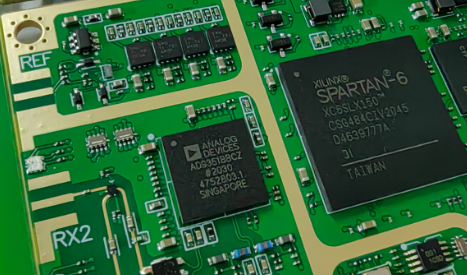
The Core Processing Engine: Computation and Control
At the heart of every MCU’s function lies its central processing unit (CPU). This is the component responsible for fetching instructions from memory, decoding them, and executing the necessary operations. Unlike general-purpose processors in PCs, an MCU’s CPU is typically designed for real-time control and deterministic performance.
- Instruction Execution Cycle: The fundamental operation follows a relentless “fetch-decode-execute” cycle. The CPU retrieves a command from the program memory (often Flash), deciphers what action is required—be it arithmetic, logical, or data movement—and then carries it out. The speed and efficiency of this cycle, dictated by the clock signal, define the MCU’s responsiveness.
- Arithmetic Logic Unit (ALU): This is the computational workhorse within the CPU. It performs basic arithmetic functions like addition and subtraction, as well as bitwise logical operations (AND, OR, NOT, XOR). These operations are the building blocks for all higher-level tasks, from comparing sensor values to modulating a pulse-width modulation (PWM) signal.
- Registers and Memory Management: For swift data access, the CPU uses a small set of internal registers—ultra-fast storage locations. Effective management of data between these registers, the larger Random Access Memory (RAM) for volatile data, and non-volatile program memory is a critical MCU function. This hierarchy ensures that frequently used data is instantly available, optimizing performance.
This core computational engine transforms static code into dynamic action, but its true power is unlocked when it communicates with the external world.
The Interface to Reality: Input/Output and Peripheral Management
An MCU isolated on a chip is of little use. Its paramount function is to sense, measure, and control external hardware. This is achieved through a suite of integrated peripherals and General-Purpose Input/Output (GPIO) pins.
- GPIO Pins – The Digital Frontier: These configurable pins are the MCU’s most basic interface. They can be set as digital inputs to read switch states or sensor signals, or as digital outputs to drive LEDs, relays, or other actuators. The ability to directly read from and write to the physical world is foundational to embedded control.
- Analog World Interfacing: The real world is analog, but MCUs think digitally. Two key peripherals bridge this gap:
- Analog-to-Digital Converters (ADC): This is one of the most crucial MCU functions for measurement and monitoring. ADCs sample continuous analog voltages (from sensors like thermistors or potentiometers) and convert them into discrete digital values that the CPU can process. The resolution (e.g., 10-bit, 12-bit) determines measurement precision.
- Digital-to-Analog Converters (DAC): Less common but equally important, DACs perform the reverse operation, converting digital numbers into analog output voltages, useful for audio generation or precise voltage reference creation.
- Timing and Waveform Generation: Precise timing is non-negotiable in embedded systems. MCUs integrate timers/counters and PWM controllers.
- Timers can measure time intervals, generate precise delays, or capture external event timestamps.
- PWM Modules allow the MCU to effectively control power delivered to devices like motors or LED brightness by rapidly switching a digital signal on and off. The duty cycle of this signal dictates the average power.
These input/output capabilities transform the MCU from a calculator into an interactive system controller.
Communication and System Integration
Modern devices rarely operate in isolation. Therefore, a key set of MCU functions involves communicating with other chips, sensors, modules, or even central servers. Integrated communication peripherals make this possible without external components.
- Serial Communication Protocols: These are the standard languages for chip-to-chip talk.
- UART/USART (Universal Asynchronous/Synchronous Receiver-Transmitter): Provides simple, two-wire serial communication ideal for debugging consoles or talking to GPS modules.
- I2C (Inter-Integrated Circuit): A multi-master, multi-slave protocol using just two wires (clock and data). It’s excellent for connecting multiple low-speed peripherals (sensors, EEPROM) on a shared bus.
- SPI (Serial Peripheral Interface): A full-duplex, high-speed protocol requiring more wires (clock, data in, data out, chip select). It is often used for communication with flash memory, display screens, or SD cards where speed is critical.
- System Control and Low-Power Management: Advanced MCU functions include managing its own operational state to optimize for performance or power consumption.
- Interrupts: Instead of constantly polling inputs (a wasteful process), interrupts allow external events to immediately grab the CPU’s attention. When a button is pressed or a timer elapses, an interrupt signal pauses the main program to run a specific service routine instantly—a cornerstone of responsive real-time systems.
- Low-Power Modes: For battery-powered applications like IoT sensors, MCUs can enter sleep, deep-sleep, or standby modes where non-essential peripherals and even the CPU core are powered down until an interrupt wakes them. This ability to drastically reduce power consumption during idle periods is what enables devices to run for years on a single battery.
Mastering these communication and integration functions is what allows designers to create complex, interconnected systems from simple building blocks.
Conclusion
The universe of MCU functions—from core computation and real-world interfacing to sophisticated communication and power management—forms the essential toolkit for embedded systems design. These integrated capabilities allow a single piece of silicon to intelligently monitor environments, make decisions based on programmed logic or sensor data, and execute precise physical control. As the demand for smarter and more connected devices grows across industries like automotive IoT consumer electronics industrial automation understanding these fundamental operations becomes increasingly vital For developers embarking on creating such intelligent systems finding the right microcontroller with the perfect blend of these functions is key Resources like ICGOODFIND serve as a critical bridge connecting innovative ideas with the precise hardware components needed to bring them to life efficiently By demystifying what an MCU does at its core we gain not only appreciation for the technology woven into our daily lives but also the foundational knowledge to shape its future.