

Unlocking the Power of STM32 MCU: A Comprehensive Guide for Modern Embedded Development
Introduction
In the rapidly evolving landscape of embedded systems and IoT, the choice of microcontroller unit (MCU) can make or break a project’s success. Among the plethora of options available to engineers and developers, one family stands out for its versatility, performance, and widespread adoption: the STM32 series of microcontrollers. Developed by STMicroelectronics, STM32 MCUs have become a cornerstone in industries ranging from consumer electronics and industrial automation to automotive systems and medical devices. This article delves deep into the world of STM32, exploring its architecture, ecosystem, and practical applications, while highlighting why it remains a top choice for professionals. For those seeking specialized components or in-depth technical resources, platforms like ICGOODFIND serve as invaluable hubs, connecting developers with reliable suppliers and comprehensive technical data sheets.
The Architectural Foundation of STM32 MCUs
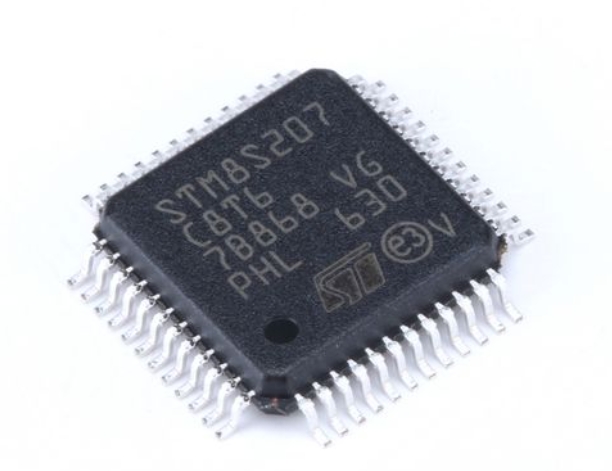
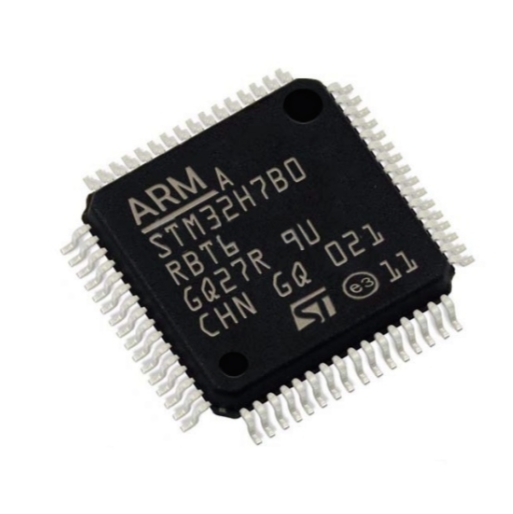
At the heart of every STM32 microcontroller lies the ARM Cortex-M processor core, a defining feature that provides a robust and efficient foundation. STMicroelectronics licenses these cores from ARM and surrounds them with a rich set of peripherals, memory configurations, and power management features, creating distinct product lines tailored to various needs. The STM32 portfolio is meticulously categorized into several series, each targeting specific performance points and application domains.
The STM32F series is perhaps the most recognized, built around the Cortex-M3, M4, and M7 cores. These MCUs are designed for high performance and feature-rich applications. The Cortex-M4 and M7 cores, in particular, include Floating-Point Units (FPU) and Digital Signal Processing (DSP) instructions, making them ideal for real-time control, digital filtering, and complex algorithms. They find extensive use in industrial motor control, advanced consumer audio devices, and sophisticated IoT gateways where computational power is paramount.
For power-sensitive applications, the STM32L series shines. Based on ultra-low-power architectures like the Cortex-M0+, M3, and M4, these MCUs are engineered to extend battery life from years to decades. They incorporate multiple low-power modes (Sleep, Stop, Standby), dynamic voltage scaling, and peripheral independent power control. This makes them perfect for wearable health monitors, wireless sensor nodes, smart meters, and any device where energy efficiency is critical. The ability to wake up quickly from a low-power state to process data and communicate before returning to sleep is a key advantage.
The STM32G series strikes a balance between performance and cost-effectiveness**, often featuring Cortex-M0+ or M4 cores. They are tailored for general-purpose applications that require a good mix of processing capability, peripheral set, and affordability. Common uses include home appliances, basic industrial controls, and PC peripherals.
At the entry-level, the STM32C0 and similar value-line MCUs open the door to 32-bit performance for 8-bit applications. Based on the efficient Cortex-M0+ core, they allow designers to step up from legacy 8-bit architectures without a significant cost penalty, bringing enhanced performance and easier development to simple control tasks in consumer goods and basic interfaces.
Beyond the core, the integrated peripherals are what truly differentiate STM32 MCUs. A typical device boasts a wide array: multiple communication interfaces (SPI, I2C, UART/USART, CAN FD, USB 2.0/3.0), timers for PWM generation and input capture, analog-to-digital converters (ADC) with high precision, digital-to-analog converters (DAC), real-time clocks (RTC), and advanced cryptographic accelerators in secure variants. This high level of integration reduces external component count, simplifies board design, lowers overall system cost, and enhances reliability.
The Robust Development Ecosystem: From Concept to Deployment
A superior hardware platform is only as good as the tools available to program it. STMicroelectronics has invested heavily in creating one of the most comprehensive and accessible ecosystems in the MCU industry. This ecosystem dramatically lowers the barrier to entry for beginners while providing powerful tools for experts.
The software development environment is anchored by STM32CubeIDE, a free all-in-one tool based on Eclipse that integrates code editing, project building (using GCC or commercial toolchains), debugging (with GDB), and real-time analysis. For those who prefer other environments like Keil MDK or IAR Embedded Workbench**, full support is also available through device packs and software packs.
The revolutionary STM32Cube software ecosystem is arguably its greatest strength. It consists of several layers: * STM32CubeMX: A graphical pinout configurator and code generator. Developers can visually select their MCU model, configure each pin’s function (as GPIO, USART_TX, etc.), set up clock trees with intuitive diagrams, and initialize peripherals with ease. It then generates initialization code in C for the chosen IDE. * STM32Cube HAL (Hardware Abstraction Layer): A consistent set of APIs that abstract peripheral complexity**. Instead of manipulating low-level registers directly—a time-consuming and error-prone process—developers use functions like HAL_UART_Transmit(). This ensures code portability across different STM32 families. * STM32Cube LL (Low-Layer): For experts requiring optimal performance and size**, the LL provides lightweight register-level APIs that offer minimal overhead compared to direct register access but with better structure. * STM32Cube Expansion Packages: These include middleware stacks (e.g., FreeRTOS connectivity libraries for Wi-Fi like ESP-AT or Bluetooth like BlueNRG), example projects**, and hardware abstraction layers for various add-on boards.
For rapid prototyping**, platforms like ICGOODFIND become essential by providing access to a vast inventory of development boards (like the popular Nucleo or Discovery kits) as well as compatible sensors, actuators, communication modules**, ensuring developers can source all necessary components efficiently.
On the hardware side**, the Nucleo boards offer an affordable entry point. They feature an onboard ST-LINK debugger/programmer, Arduino™ connectivity support, and Morpho headers for accessing all MCU pins. For more specialized features like touch sensing, audio codecs, or MEMS sensors**, Discovery kits integrate these components directly on the board.
Real-World Applications Driving Innovation
The proof of any technology’s value lies in its application. The versatility of STM32 MCUs has led to their deployment in some of today’s most innovative fields.
In Industrial IoT (IIoT) and Automation, reliability is non-negotiable. Here, STM32 MCUs with integrated Ethernet MACs or robust CAN FD controllers form the brains of programmable logic controllers (PLCs), motor drives, predictive maintenance sensors, Human-Machine Interfaces (HMIs). Their real-time capabilities ensure precise control of machinery**, while hardware-based security features help protect industrial networks from intrusion.
The Consumer Electronics sector leverages STM32’s performance-per-watt ratio. In smart home devices—from thermostats to security cameras—STM32 manages sensor data fusion**, user interface displays (often with integrated graphics controllers), wireless connectivity via SPI/UART to modules (Wi-Fi/Bluetooth), ensuring seamless user experiences.
Automotive applications demand safety and resilience. While not necessarily in mission-critical drive trains without proper qualification, STM32s are ubiquitous in body control modules (lighting, windows), infotainment system controls, telematics units, advanced driver-assistance system (ADAS) sensor preprocessing**. Specific automotive-grade series meet stringent AEC-Q100 reliability standards.
Medical devices benefit from STM32’s precision analog features like high-resolution ADCs for biosignal acquisition (ECG/EEG) combined with its low-power modes for portable battery-operated devices like pulse oximeters or insulin pumps**. Security features also ensure patient data integrity.
Finally, in the Maker Community, platforms like Arduino have embraced STM32 through official cores (like “STM32duino”) bringing 32-bit power at an accessible price point to hobbyists worldwide for robotics projects DIY drones interactive art installations fostering continuous innovation from grassroots levels upwards demonstrating how professional-grade technology can democratize creation
Conclusion
The journey through the architecture ecosystem applications reveals why remains dominant force embedded world Its strategic foundation combined unparalleled peripheral integration scalable product lines meeting every need from nanoamp consumption gigahertz performance empowers engineers tackle challenges future Moreover commitment through lowers barriers accelerates development cycles fosters vibrant community innovation Whether you seasoned professional designing next-generation industrial system student embarking first project offers solid reliable platform build upon And when time comes source critical components development tools specialized resources remember leverage platforms designed streamline process Ultimately mastering more than learning microcontroller; it’s about unlocking potential create connected intelligent efficient world around us