The Ultimate Guide to the 8051 MCU Responder: Revolutionizing Embedded Systems
Introduction
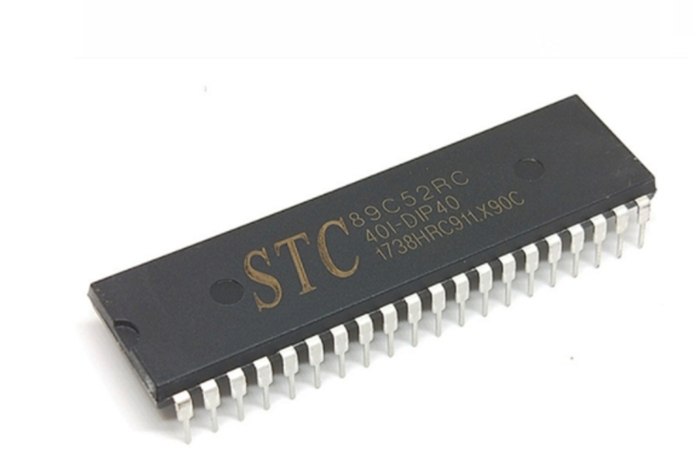
The 8051 microcontroller has stood the test of time as one of the most influential and enduring architectures in the embedded systems world. First developed by Intel in 1980, this 8-bit MCU has evolved through numerous iterations while maintaining its core philosophy of simplicity, reliability, and cost-effectiveness. In recent years, a specialized implementation known as the 8051 MCU Responder has emerged as a powerful solution for applications requiring robust communication capabilities and real-time response mechanisms. This advanced variant represents a significant evolution from the standard 8051 architecture, incorporating enhanced features specifically designed for responsive operations in IoT devices, industrial automation, and smart consumer electronics. The 8051 MCU Responder combines the time-tested reliability of the original architecture with modern enhancements that address contemporary embedded system challenges, particularly in scenarios where rapid response to external stimuli is critical. As we explore this specialized microcontroller variant, we’ll uncover how it continues to power innovation across diverse industries while maintaining the accessibility that has made the 8051 family a favorite among engineers for decades.
The Architectural Foundation of 8051 MCU Responder
Core Architecture and Enhanced Features
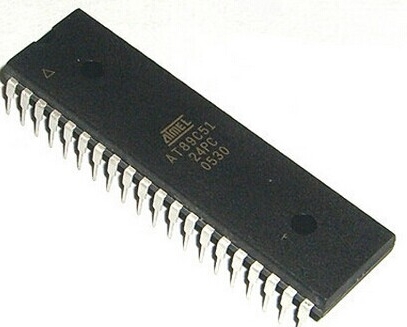
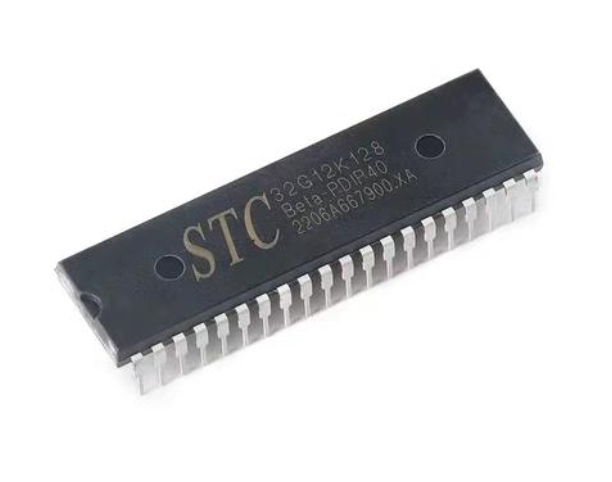
The 8051 MCU Responder builds upon the foundational architecture that has made the standard 8051 microcontroller so successful. At its heart lies an 8-bit CPU with a simplified instruction set that enables efficient programming and rapid execution. The basic architecture includes 4KB of ROM, 128 bytes of RAM, 32 I/O lines, two 16-bit timer/counters, a full-duplex serial port, and a five-vector two-level interrupt architecture. What distinguishes the 8051 MCU Responder is its enhanced interrupt handling capabilities and advanced communication peripherals specifically optimized for responder applications.
The memory organization follows the Harvard architecture pattern with separate address spaces for program and data memory. This separation allows simultaneous access to instruction and data memory, significantly improving performance over Von Neumann architectures for embedded applications. The 8051 MCU Responder often incorporates expanded memory options, including larger flash memory for program storage and additional RAM for data handling, enabling more complex responder algorithms and communication protocols. Special function registers (SFRs) provide control over various microcontroller functions, with additional SFRs in the responder variant dedicated to managing communication interfaces and response timing mechanisms.
The modified interrupt structure in the 8051 MCU Responder represents one of its most significant enhancements. While standard 8051 microcontrollers feature a two-level interrupt priority system, the responder variant typically incorporates additional interrupt sources with configurable priority levels that can be dynamically adjusted based on application requirements. This flexible interrupt management allows the microcontroller to respond more efficiently to critical events while maintaining responsiveness to less urgent tasks. The architecture also often includes hardware-based response accelerators that can trigger specific actions without CPU intervention, reducing latency for time-critical operations.
Communication Capabilities and Protocol Support
A defining characteristic of the 8051 MCU Responder is its robust communication subsystem, which enables seamless interaction with other devices and systems. Standard serial communication capabilities are enhanced with multiple communication interfaces including UART, SPI, and I2C, often operating concurrently. This multi-interface support allows the responder to communicate with diverse peripherals and systems simultaneously, making it ideal for gateway applications and complex embedded networks.
The UART (Universal Asynchronous Receiver/Transmitter) implementation in the 8051 MCU Responder typically includes enhanced baud rate generation with lower error rates and support for higher transmission speeds compared to standard 8051 variants. Many implementations also incorporate hardware flow control support (RTS/CTS) to prevent data loss during high-speed communication. For SPI (Serial Peripheral Interface) communication, the responder variant often features configurable data frame sizes and DMA-like data transfer capabilities that reduce CPU overhead during bulk data exchanges.
I2C (Inter-Integrated Circuit) support in the 8051 MCU Responder extends beyond the basic protocol implementation found in standard microcontrollers. Advanced features include multi-master arbitration handling, clock stretching support, and advanced addressing modes that simplify communication in complex bus topologies. Some implementations even incorporate protocol offloading engines that handle repetitive communication tasks independently, freeing the main CPU for application-specific processing.
Beyond these standard interfaces, many 8051 MCU Responder implementations include support for industry-specific communication protocols such as Modbus, CAN bus, or proprietary wireless protocols. This protocol flexibility makes the architecture suitable for industrial automation, automotive applications, and IoT edge devices where interoperability with existing systems is crucial. The communication subsystem is often complemented by hardware-based encryption accelerators and data integrity checking modules that ensure secure and reliable data exchange in sensitive applications.
Implementation Advantages of 8051 MCU Responder
Power Efficiency and Resource Optimization
One of the most significant advantages of the 8051 MCU Responder is its exceptional power efficiency, which makes it ideal for battery-powered and energy-conscious applications. The architecture incorporates multiple power management modes that can be dynamically selected based on processing requirements. These typically include active mode, idle mode, and power-down mode, with sophisticated transition mechanisms that minimize energy consumption during state changes. The responder variant often enhances these power management capabilities with fine-grained peripheral clock gating that allows individual system components to be powered down when not in use.
The instruction set efficiency of the 8051 architecture contributes significantly to its power advantages. Unlike more complex architectures that may require multiple clock cycles per instruction, the 8051 MCU Responder typically executes most instructions in single clock cycles, reducing active processing time and associated power consumption. This efficiency is particularly valuable in responder applications where the device must wake from low-power states, process inputs, generate responses, and return to sleep mode quickly to conserve energy.
Resource optimization extends beyond power management to include memory utilization efficiency. The compact instruction set enables dense code representation, reducing flash memory requirements compared to architectures with more verbose instruction sets. This memory efficiency translates to lower system costs and reduced physical space requirements—critical factors in high-volume consumer products and miniaturized devices. The 8051 MCU Responder often incorporates memory protection units and execution safeguards that prevent application errors from corrupting critical response handlers or communication stacks.
Another resource optimization aspect is the minimal external component requirement of the 8051 MCU Responder architecture. Many implementations incorporate oscillators, reset circuitry, and voltage regulators on-chip, further reducing system cost and board space. This high level of integration simplifies design-in processes and accelerates time-to-market for products utilizing the technology. The combination of power efficiency, memory optimization, and integration makes the 8051 MCU Responder particularly suitable for cost-sensitive mass-market applications where performance per watt and performance per dollar are crucial metrics.
Real-Time Performance and Deterministic Response
The 8051 MCU Responder excels in applications requiring predictable timing behavior and guaranteed response times. The relatively simple pipeline structure and deterministic instruction execution timing enable developers to accurately calculate worst-case execution times—a critical requirement in real-time systems. This determinism is further enhanced in responder variants through priority-based interrupt scheduling and hardware response accelerators that ensure time-critical events receive immediate attention.
Interrupt latency—the time between interrupt request and interrupt service routine execution—is a crucial metric for responder applications. The 8051 MCU Responder architecture minimizes this latency through several mechanisms: dedicated interrupt entry points that avoid software-based interrupt routing decisions, hardware context saving that reduces the software overhead of register preservation, and vectored interrupt handling that directly jumps to the appropriate service routine without intermediate polling or decoding.
For applications requiring multiple concurrent response paths, the 8051 MCU Responder offers configurable interrupt priority levels that ensure higher-priority events preempt lower-priority processing when necessary. Some implementations extend this concept with nested interrupt capabilities that allow higher-priority interrupts to suspend lower-priority interrupt service routines—a feature not commonly found in standard 8-bit microcontrollers. This sophisticated interrupt management enables the creation of complex responsive systems with multiple tiers of urgency.
The real-time capabilities are complemented by enhanced timer subsystems that typically include multiple 16-bit timers/counters with various operating modes: timer mode, counter mode, baud rate generation mode, and capture/compare mode. These timers facilitate precise event timing, waveform generation, and measurement—essential functions in responsive control systems. Advanced implementations may include dedicated watchdog timers with separate clock sources to ensure system reliability even in the presence of main clock failures.
Application Scenarios and Future Developments
Diverse Implementation Environments
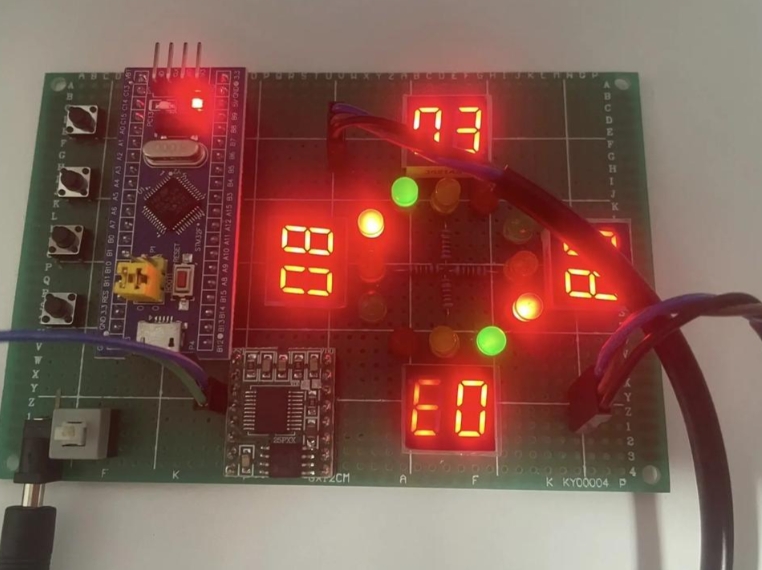
The 8051 MCU Responder finds application across an astonishingly diverse range of industries and products, testament to its versatility and robust feature set. In consumer electronics, it serves as the intelligence in smart home devices—thermostats that respond to environmental changes, security sensors that trigger alarms or notifications, and entertainment systems that process user inputs with minimal latency. The combination of responsive performance and cost-effectiveness makes it ideal for high-volume consumer products where price sensitivity coexists with performance expectations.
Industrial automation represents another significant application domain where the 8051 MCU Responder excels. Programmable logic controllers (PLCs), sensor nodes in distributed control systems, motor controllers, and monitoring equipment benefit from its deterministic response characteristics and communication capabilities. In these environments, the microcontroller often implements safety functions—emergency stop monitoring, fault detection, and equipment protection—where predictable timing is non-negotiable. The extended temperature range variants available from many manufacturers further enhance suitability for harsh industrial environments.
The automotive sector has embraced the 8051 MCU Responder for various non-critical control functions: comfort systems like power windows and seat controls, sensor data acquisition modules, and basic entertainment system components. While safety-critical applications increasingly migrate to more powerful processors with functional safety certifications, numerous auxiliary functions remain well-served by the cost-effective responsiveness of enhanced 8051 variants. The robust communication capabilities enable seamless integration into vehicle networks using protocols like CAN or LIN.
Medical devices represent another growth area for the 8051 MCU Responder architecture, particularly in portable monitoring equipment, diagnostic devices, and therapeutic appliances where power efficiency coexists with reliability requirements. Patient monitoring equipment benefits from the microcontroller’s ability to process sensor data while maintaining responsive user interfaces and communication functions. The deterministic interrupt handling ensures timely responses to critical patient events while the power management capabilities extend battery life in portable devices.
Emerging Trends and Future Evolution
The future development trajectory of the 8051 MCU Responder continues to align with broader embedded systems trends while preserving backward compatibility—a balancing act that has characterized its evolution for decades. Several key development directions are shaping next-generation implementations: enhanced security features responding to growing IoT security concerns; increased integration reducing external component counts; specialized peripherals targeting emerging application domains; and development tool modernization improving programmer productivity.
Security enhancements represent perhaps the most significant evolution direction for contemporary 8051 MCU Responder implementations. As connected devices proliferate, protection against cyber threats becomes increasingly crucial. Modern variants incorporate hardware-based security features including: memory protection units isolating critical code from application code; hardware encryption accelerators implementing AES, DES, and other standard algorithms; secure boot mechanisms preventing unauthorized firmware modification; and true random number generators strengthening cryptographic operations. These security enhancements position the architecture for continued relevance in an increasingly security-conscious market.
Integration trends continue with more system functions migrating onto the microcontroller die. Modern 8051 MCU Responder implementations often incorporate voltage regulators enabling single-supply operation; precision oscillators eliminating external crystal requirements; advanced analog peripherals like high-resolution ADCs and DACs; and even wireless connectivity options like Bluetooth Low Energy or sub-GHz radio transceivers. This increasing integration reduces total system cost while improving reliability through reduced component count.
Specialized peripherals targeting emerging application domains represent another evolution vector. Implementations optimized for motor control incorporate advanced PWM modules with dead-time insertion; versions targeting digital power conversion include high-resolution PWM and fast analog comparators; devices intended for audio applications integrate I2S interfaces and audio processing accelerators. This specialization through peripheral integration enables the venerable architecture to address new application domains efficiently.
Development tools modernization ensures continued programmer productivity despite the architecture’s age. Contemporary development environments offer sophisticated debug capabilities including real-time variable monitoring; advanced code analysis tools identifying potential performance bottlenecks; automated testing frameworks; and integration with version control systems. These toolchain improvements reduce development friction while leveraging modern software engineering practices—essential for maintaining competitiveness against newer architectures.
Conclusion
The 8051 MCU Responder represents a remarkable evolution of a classic microcontroller architecture that continues to find relevance in an increasingly sophisticated embedded landscape. By enhancing the core 8052 foundation with specialized features optimized for responsive operations—advanced interrupt handling, robust communication capabilities, power management sophistication, and real-time determinism—this variant maintains the accessibility and cost-effectiveness that made the original popular while addressing contemporary application requirements.
From consumer IoT devices to industrial control systems, from automotive applications to medical equipment, the 8052 MCU Responder demonstrates extraordinary versatility across diverse implementation environments. Its enduring success stems from a balanced combination of technical capability economic accessibility and developer familiarity—a combination increasingly rare in today’s rapidly evolving semiconductor landscape Future development directions focusing on security enhancement increased integration
For engineers seeking capable yet economical solutions for responsive embedded applications platforms like ICGOOEDFIND provide valuable resources for identifying appropriate 8022 MCU Reseonder implementations matching specific project requirements As connectivityand intelligence continue proliferating into everyday objects this enhanced architecture remains well-positioned to power innovation across countless application domains.