

MCU Application Examples: Powering Innovation Across Industries
Introduction
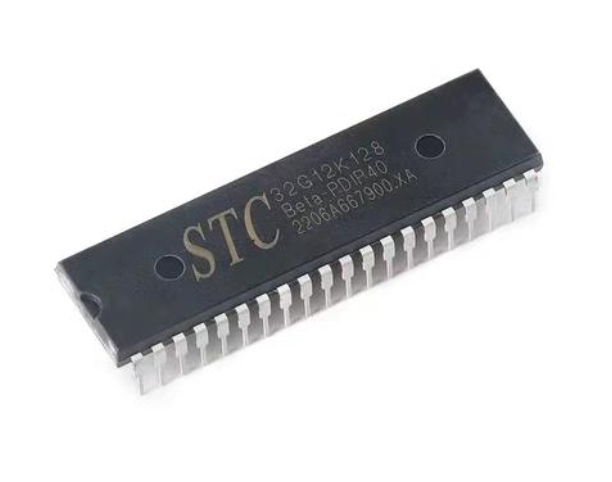
In the invisible fabric of our modern technological world, a silent workhorse drives innovation and functionality: the Microcontroller Unit (MCU). These compact, self-contained computing systems on a single chip are the embedded brains behind countless devices, transforming simple electronics into intelligent, responsive, and connected systems. From the moment we wake to a smart alarm to the industrial robots manufacturing our goods, MCU application examples are ubiquitous. This article delves into the vast and varied landscape of MCU implementations, exploring how these powerful yet inexpensive components are revolutionizing consumer electronics, industrial automation, and the Internet of Things (IoT). Understanding these applications is crucial for engineers, product developers, and businesses seeking to leverage embedded intelligence for competitive advantage.
Main Body
Part 1: Consumer Electronics and Smart Home Devices
The most visible and widespread MCU application examples are found in everyday consumer products, making our lives more convenient, efficient, and entertaining. At the heart of these devices, MCUs process inputs, control outputs, and manage power with remarkable efficiency.
- Home Appliances: Modern refrigerators, washing machines, and air conditioners are prime examples. An MCU in a washing machine doesn’t just start and stop the motor; it orchestrates complex wash cycles based on sensor input—measuring load weight, water turbidity, and temperature—to optimize water and energy use. In microwave ovens, MCUs manage touchpad interfaces, control magnetron power with precision, and execute sophisticated cooking programs.
- Personal Gadgets: Fitness trackers and smartwatches rely heavily on ultra-low-power MCUs to continuously monitor heart rate, count steps using accelerometer data, and manage Bluetooth connectivity to smartphones, all while maximizing battery life for days or weeks of use. Wireless earbuds use MCUs for audio decoding, active noise cancellation processing, and touch gesture recognition.
- Smart Home Ecosystems: This is a booming area for MCU deployment. Smart thermostats like Nest use MCUs to learn user patterns and control HVAC systems for optimal comfort and savings. Smart lighting systems employ MCUs to enable color changing, scheduling, and voice control via integrations with Amazon Alexa or Google Home. Security cameras, door locks, and leak detectors all embed MCUs to process data locally and communicate securely over Wi-Fi or proprietary wireless networks like Zigbee.
The driving force here is the demand for enhanced user experience, energy efficiency, and seamless connectivity, all enabled by the computational power and peripheral integration of modern MCUs.
Part 2: Industrial Automation and Automotive Systems
Beyond the home, MCUs form the critical backbone of industrial and automotive systems, where reliability, real-time performance, and robustness are non-negotiable. These applications often involve harsh environments and mission-critical tasks.
- Industrial Control: Programmable Logic Controllers (PLCs), the workhorses of factory automation, are built around powerful MCUs or microprocessors. They read data from myriad sensors (proximity, temperature, pressure), execute control logic with deterministic timing, and command actuators (motors, valves, robots). In motor control alone, specialized MCUs perform complex algorithms like Field-Oriented Control (FOC) for precise speed and torque management in conveyor belts, CNC machines, and robotic arms.
- Automotive Electronics: A modern vehicle is a network of over 100 MCUs, known as Electronic Control Units (ECUs). They manage everything from engine performance (Engine Control Unit - ECU) and anti-lock braking systems (ABS) to infotainment displays and advanced driver-assistance systems (ADAS). For instance, an MCU in an airbag control unit must process accelerometer data in microseconds to deploy airbags at the exact moment of a collision. The trend towards electric vehicles (EVs) further increases MCU usage for battery management systems (BMS), which meticulously monitor and balance hundreds of battery cells.
- Predictive Maintenance: In Industry 4.0 setups, MCUs in sensors collect vibration, thermal, and acoustic data from machinery. This data is processed locally or transmitted for analysis to predict equipment failures before they occur, minimizing downtime. This shift from scheduled to condition-based maintenance saves significant costs.
In these sectors, the focus is on functional safety standards (like ISO 26262 in automotive), real-time operating systems (RTOS), and robust communication protocols (like CAN bus). For professionals navigating this complex landscape of components and solutions, platforms like ICGOODFIND can be an invaluable resource for identifying and sourcing the right MCUs that meet stringent industrial and automotive-grade specifications.
Part 3: The Internet of Things (IoT) and Wearable Medical Devices
Perhaps the most transformative frontier for MCUs is the IoT, where physical objects gain intelligence and network connectivity. Here, the constraints of power consumption, size, and cost are extreme, making ultra-low-power MCUs essential.
- IoT Sensor Nodes: These are the “things” in IoT. An agricultural sensor node in a field might use an MCU to collect soil moisture and temperature data once an hour. The MCU spends most of its time in deep sleep mode (consuming microamps), wakes up to take measurements, processes the data, and transmits it via LoRaWAN or NB-IoT before returning to sleep. This enables battery life of several years.
- Smart City Infrastructure: MCUs enable intelligent street lighting that adjusts brightness based on ambient light or pedestrian traffic; they monitor waste bin levels for optimized collection routes; and they manage parking space occupancy sensors.
- Wearable and Implantable Medical Devices: This is a critical application area with life-saving potential. Continuous Glucose Monitors (CGMs) use an MCU to read data from a subcutaneous sensor, calculate glucose levels, and alert the user via a smartphone. Smart pill bottles with embedded MCUs track medication adherence. More advanced implantable devices like pacemakers rely on ultra-reliable MCUs to monitor heart rhythms and deliver electrical pulses when needed. Security of data and device operation is paramount in these applications.
The success of IoT hinges on the ability of MCUs to operate autonomously for long periods on small batteries or harvested energy (solar, thermal), while providing secure wireless connectivity stacks like Bluetooth Low Energy (BLE) or Wi-Fi.
Conclusion
From simplifying daily chores to driving industrial productivity and enabling life-saving medical technologies, MCU application examples demonstrate their role as the fundamental enabler of embedded intelligence. Their evolution—towards greater integration (more memory, wireless cores on-chip), lower power consumption (µA in sleep modes), enhanced security features (crypto accelerators), and more powerful AI/ML capabilities at the edge—continues to unlock new possibilities. As we move towards a more automated and interconnected world characterized by smart cities, autonomous systems, and pervasive AIoT (AI+IoT), the strategic selection of the appropriate microcontroller becomes more critical than ever. Whether you are an engineer prototyping a new product or a business leader planning an innovative solution in consumer tech or industrial automation platforms like ICGOODFIND can streamline your journey by providing access to comprehensive component information sourcing options helping turn conceptual applications into reality The future is undoubtedly being built one microcontroller at a time.