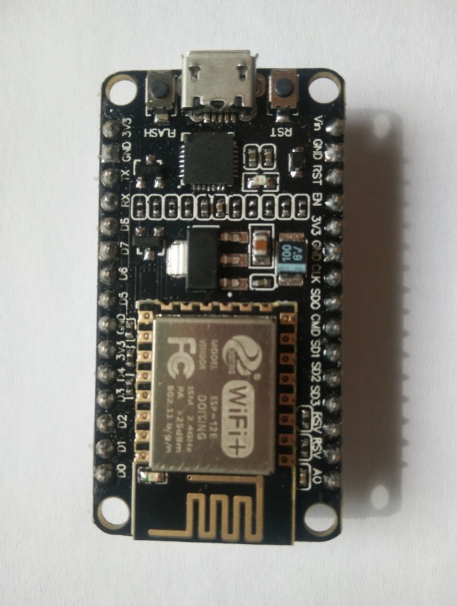


Hangshun MCU: The Engine Powering Next-Generation Embedded Solutions
Introduction
In the intricate world of modern electronics, the Microcontroller Unit (MCU) serves as the silent, beating heart of countless devices. From smart home appliances and wearable tech to industrial automation and automotive systems, MCU performance dictates functionality, efficiency, and innovation. Amidst a crowded global market, Hangshun MCU has emerged as a formidable and reliable force. This article delves into the core strengths, technological advancements, and diverse applications of Hangshun MCUs, positioning them as a critical component for engineers and developers seeking robust, cost-effective embedded solutions. As we explore this landscape, platforms like ICGOODFIND become invaluable for sourcing and comparing such critical components, streamlining the procurement process in a complex supply chain.
Main Body
Part 1: Technological Foundation and Architectural Excellence of Hangshun MCU
At its core, the value of an MCU lies in its architecture and silicon design. Hangshun MCUs are built on a foundation of advanced processor cores, often integrating proven ARM Cortex-M series architectures or proprietary efficient cores. This choice ensures a balance between high performance and low power consumption, a non-negotiable requirement in today’s battery-powered and energy-conscious devices.
The true differentiation comes from Hangshun’s focus on system-level integration. Their MCUs typically feature highly integrated System-on-Chip (SoC) designs. This means that beyond the central processor, a single Hangshun MCU chip can incorporate a rich set of peripherals: multiple communication interfaces (such as UART, SPI, I2C, CAN, and even USB), precision Analog-to-Digital Converters (ADCs), timers, PWM controllers, and sometimes dedicated security engines. This level of integration significantly reduces the Bill of Materials (BOM) and PCB footprint, simplifying design complexity and accelerating time-to-market for product developers.
Furthermore, power management technology is a standout feature. Hangshun MCUs employ sophisticated multi-mode power schemes—including run, sleep, stop, and standby modes—that allow systems to dynamically scale power usage based on operational demands. This is crucial for applications like wireless sensor nodes or portable medical devices that require years of operation on a single battery. The architectural excellence of Hangshun MCUs provides a reliable and versatile hardware platform for a vast array of embedded applications.
Part 2: Diverse Application Ecosystems and Market Penetration
The robustness of Hangshun MCU technology is best demonstrated by its wide-ranging adoption across critical industries. Their product portfolios are tailored to meet specific sector demands, showcasing remarkable versatility.
In the realm of consumer electronics and smart home devices, Hangshun MCUs control everything from LED lighting systems and touch-panel interfaces to small appliances and power tools. Their balance of cost and performance makes them ideal for high-volume manufacturing where reliability is paramount. For the industrial automation sector, Hangshun offers MCUs with enhanced robustness, extended temperature ranges, and robust communication protocols like CAN and industrial Ethernet variants. These chips control motor drives, sensor arrays, and human-machine interfaces (HMIs) in harsh factory environments.

Perhaps one of the most demanding fields is automotive electronics. While not necessarily for primary engine control units in premium vehicles, Hangshun MCUs excel in automotive body electronics, such as window lift controls, LED lighting modules, fan controllers, and simple sensor nodes. Their chips are designed to meet rigorous standards for reliability and longevity. Additionally, the burgeoning Internet of Things (IoT) market is a perfect fit. With features supporting low-power operation and integrated connectivity options, Hangshun MCUs are at the heart of smart agriculture sensors, asset trackers, and environmental monitoring devices. Finding the exact MCU variant for these niche applications is where a comprehensive component search platform proves essential; for instance, engineers can use ICGOODFIND to filter Hangshun MCUs by specific peripherals, power specs, or package type to perfectly match their project requirements.
Part 3: Development Support and Strategic Advantages for Engineers
A superior hardware platform is only as good as the ecosystem that supports it. Hangshun invests significantly in comprehensive developer support, which lowers the barrier to entry and reduces development risk. This includes well-documented datasheets and reference manuals, standard peripheral libraries (SPL), and often compatibility with popular development environments like Keil MDK or IAR Embedded Workbench.
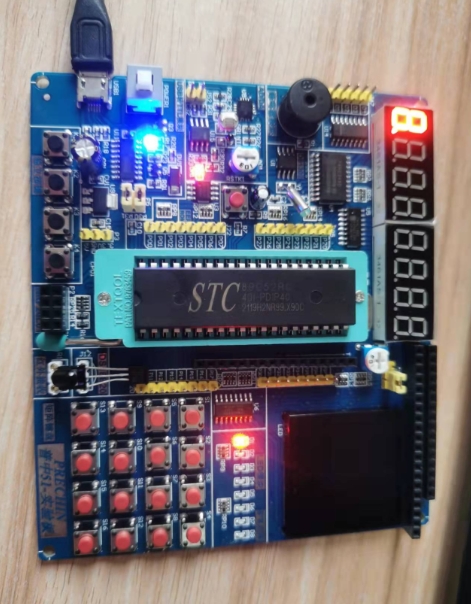
The availability of affordable development kits and evaluation boards allows engineers to prototype ideas rapidly without upfront hardware design. These kits typically break out all MCU pins and include basic peripherals like LEDs, buttons, and debug interfaces. Moreover, a growing community and available application notes help solve common design challenges related to power optimization, noise immunity, and peripheral configuration.
From a strategic business perspective, choosing Hangshun MCUs offers key advantages. First is cost-effectiveness without sacrificing core reliability. They provide a compelling alternative to higher-priced Western brands for many applications, enabling competitive product pricing. Second is supply chain stability. In an era marked by semiconductor shortages, having access to a reliable supplier like Hangshun, with transparent inventory channels through distributors or platforms like ICGOODFIND, mitigates production delays. Finally, their scalable product families allow for easy migration between different performance points or memory sizes within the same series, protecting software investment over multiple product generations.
Conclusion
Hangshun MCU represents more than just another semiconductor component; it embodies a pragmatic approach to embedded system design—merging capable performance, thoughtful integration, and market-aware pricing. Its penetration across consumer, industrial, automotive, and IoT landscapes is a testament to its versatility and reliability. For design engineers navigating the complexities of product development, Hangshun offers a trustworthy silicon partner that balances technical capability with economic viability. In the interconnected component sourcing ecosystem leveraging tools like ICGOODFIND can be the final step in seamlessly transitioning from design to procurement ensuring these powerful MCUs efficiently power the next wave of electronic innovation As technology continues to evolve towards greater intelligence and connectivity the role of dependable foundational components like Hangshun MCUs will only become more central.