Difference Between MCU and Chip (MCU is a Type of Chip)
Introduction
In the world of electronics and embedded systems, terms like “chip” and “MCU” are often used interchangeably, leading to confusion among students, hobbyists, and even some professionals. While it’s true that an MCU (Microcontroller Unit) is indeed a type of chip, the relationship between these terms is hierarchical, not synonymous. Understanding this distinction is crucial for anyone involved in hardware design, product development, or technical procurement. This article will demystify these fundamental components, explaining their roles, architectures, and applications. By clarifying the key differences between the broad category of “chips” and the specific subset known as MCUs, we can make more informed decisions in our projects and appreciate the intricate engineering behind modern devices.
Main Body
Part 1: Understanding the “Chip” – The Broad Semiconductor Category
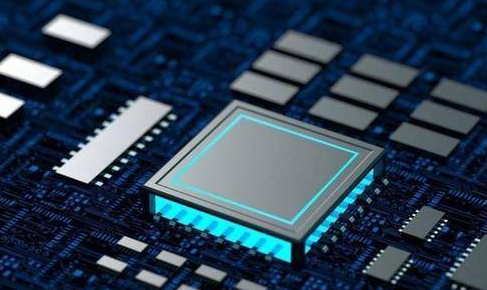
At its most fundamental level, a “chip,” or integrated circuit (IC), is a miniature electronic circuit fabricated on a small piece of semiconductor material, typically silicon. It is the foundational building block of all modern electronics. Chips can contain anywhere from a few transistors to billions of them, performing an immense variety of functions.
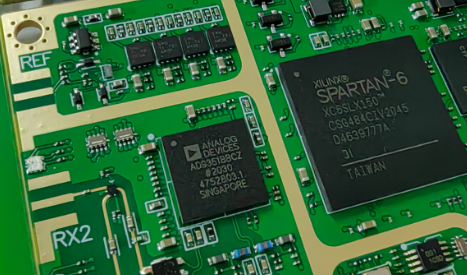
Chips are categorized based on their functionality and complexity: * Analog Chips: Process continuous signals (e.g., operational amplifiers, radio frequency chips). * Digital Chips: Process discrete binary signals (0s and 1s). This is the largest category. * Mixed-Signal Chips: Combine analog and digital circuitry on a single die (e.g., analog-to-digital converters). * Memory Chips: Store data and program instructions (e.g., RAM, ROM, Flash memory). * Logic Chips/Processors: Perform computational and processing tasks. This category further branches into several key types: * Microprocessors (MPUs or CPUs): The “brains” of a system. They execute instructions but require external support chips (like memory and peripherals) to function. Found in PCs, servers, and smartphones. * Microcontrollers (MCUs): A complete computer on a single chip. They contain a CPU core, memory, and programmable input/output peripherals. * Application-Specific Integrated Circuits (ASICs): Custom-designed for a specific application, offering high performance and efficiency for that single task. * Field-Programmable Gate Arrays (FPGAs): Reconfigurable chips whose hardware logic can be reprogrammed after manufacturing.
The critical takeaway is that the term “chip” is an umbrella term encompassing all these types. An MCU is one specific implementation within this vast universe.
Part 2: The Microcontroller (MCU) – A Self-Contained System on Chip
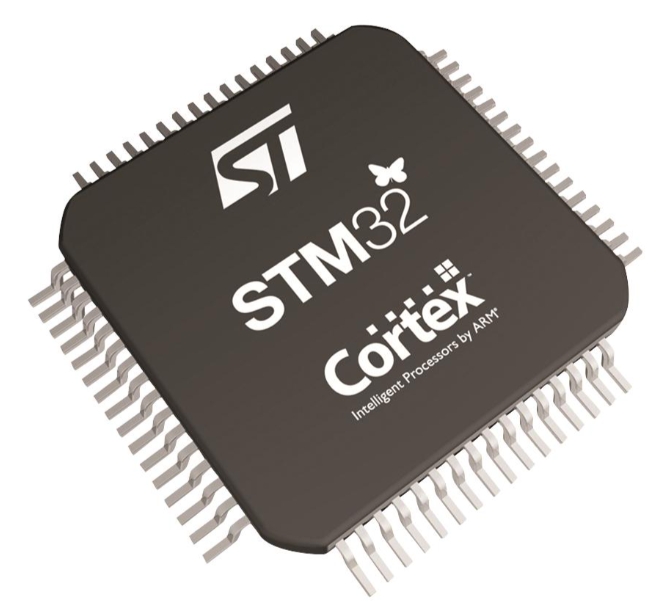
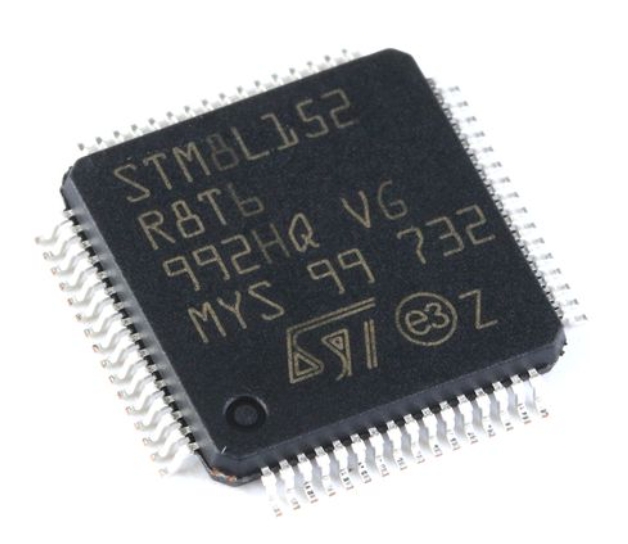
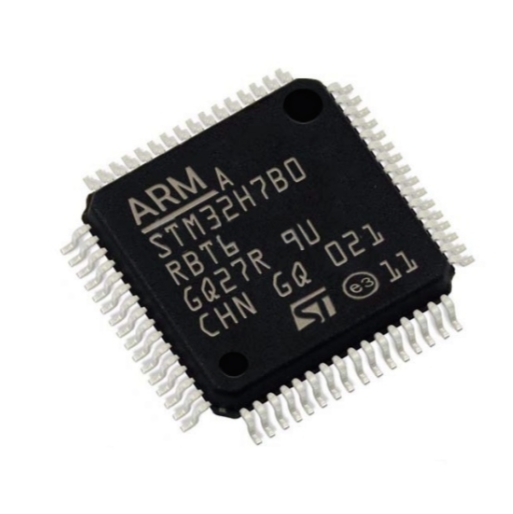
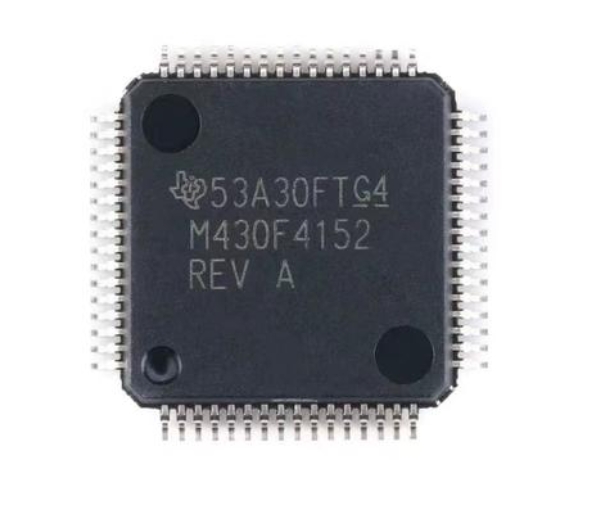
A Microcontroller Unit (MCU) is a specialized type of digital chip designed for embedded control applications. Its defining characteristic is integration. Unlike a microprocessor, which only contains a Central Processing Unit (CPU), an MCU consolidates all the core components of a basic computer into one single piece of silicon.
The core architecture of a typical MCU includes: 1. CPU Core: The processor that executes instructions. It can range from simple 8-bit cores (like AVR or 8051) to powerful 32-bit ARM Cortex-M cores. 2. Memory: Includes both volatile memory (RAM for temporary data) and non-volatile memory (Flash or ROM for storing the program code). 3. Programmable I/O Ports: Pins that can be configured by software to interact with the outside world—reading sensor inputs (as inputs) or controlling motors, LEDs, and displays (as outputs). 4. Peripheral Interfaces: Dedicated hardware blocks for communication and control, such as: * Timers/Counters * Serial communication interfaces (UART, I2C, SPI) * Analog-to-Digital Converters (ADCs) * Pulse-Width Modulation (PWM) controllers * Sometimes even USB, Ethernet, or CAN controllers.
This high level of integration makes MCUs exceptionally cost-effective, power-efficient, and space-saving. They are engineered for dedicated, real-time control tasks in embedded systems. You find them everywhere: in your car’s engine control unit (ECU), home appliances, smart thermostats, medical devices, industrial robots, and countless IoT gadgets. Their programming is typically done in C/C++ or assembly language, focusing on direct hardware interaction.
Part 3: Key Differences and How to Choose
To solidify the understanding, let’s contrast the general concept of a “chip” with the specific nature of an MCU.
| Feature | Chip (General IC) | Microcontroller (MCU) |
|---|---|---|
| Scope | A universal term for any integrated circuit. | A specific subclass of digital logic chips. |
| Function | Can perform any electronic function—processing, memory storage, signal amplification, power regulation, etc. | Designed specifically for embedded control; it processes data and controls peripherals based on a fixed program. |
| Integration | Varies widely. Can be a single component (e.g., a logic gate) or a complex system. | Highly integrated. Always includes a CPU, memory, and I/O peripherals on one die—a “System-on-a-Chip” for control. |
| Application Context | Used as part of a larger system. A smartphone contains dozens of different chips (CPU, GPU, RAM, power management, radio). | Often serves as the sole or primary processing unit in a dedicated embedded system (e.g., a microwave oven). |
| System Complexity | Requires external components to form a working system (e.g., a CPU needs external RAM, storage, and support chips). | Can form a minimal working system with very few external components—sometimes just power and a clock. |
| Design Focus | Optimized for raw performance (speed, bandwidth) or a specific singular function. | Optimized for low power consumption, cost-effectiveness, and real-time determinism in interactive control tasks. |
Choosing between an MCU and another type of chip depends entirely on the project requirements. * Use an MCU when: You are building an embedded system that requires autonomous control, interacts with sensors/actuators, has strict power or cost constraints, and runs a dedicated firmware program. For example, designing a smartwatch or an automated garden watering system. * Use other chips (e.g., MPU, ASIC, FPGA) when: You need raw computing power for complex operating systems (like Linux), require massive parallel processing (AI/ML), are building high-performance computing platforms, or have an application-specific function that demands extreme efficiency in volume production.
For engineers sourcing these components from a global marketplace, navigating the vast array of options can be daunting. This is where platforms like ICGOODFIND prove invaluable. As a specialized search engine for electronic components and chipsets from global suppliers like Digi-Key and Mouser Electronics,ICGOODFIND allows you to efficiently filter and compare specifications,pricing,and availability across countless parts,whether you’re searching for a general-purpose logic chip or pinpointing the perfect MCU with specific peripherals for your design.
Conclusion
In summary,while all MCUs are chips,not all chips are MCUs. The term “chip” refers to the immense and diverse family of integrated circuits that form the backbone of modern technology. The MCU,on the other hand,is a remarkably self-sufficient member of this family—a compact,all-in-one computing engine purpose-built for embedded control. Recognizing that an MCU represents a highly integrated convergence of processing,memory,and I/O capabilities onto a single chip is key to distinguishing it from other semiconductor devices like microprocessors,ASICs,or memory chips. This understanding empowers designers to select the right tool for the job,optimizing their systems for performance,cost,and efficiency. As embedded systems continue to proliferate with the growth of IoT and automation,the role of the versatile MCU becomes ever more central,solidifying its position as one of the most impactful types of chips ever created.