
Applications of MCU: The Invisible Engine Powering Modern Technology
Introduction
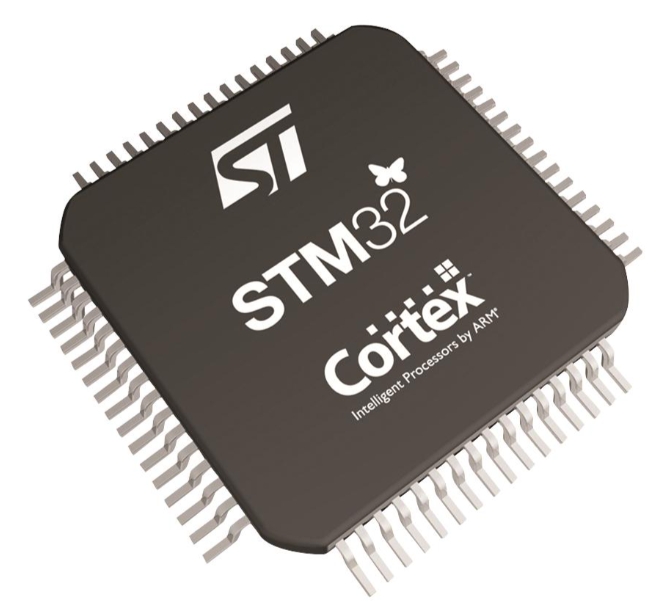
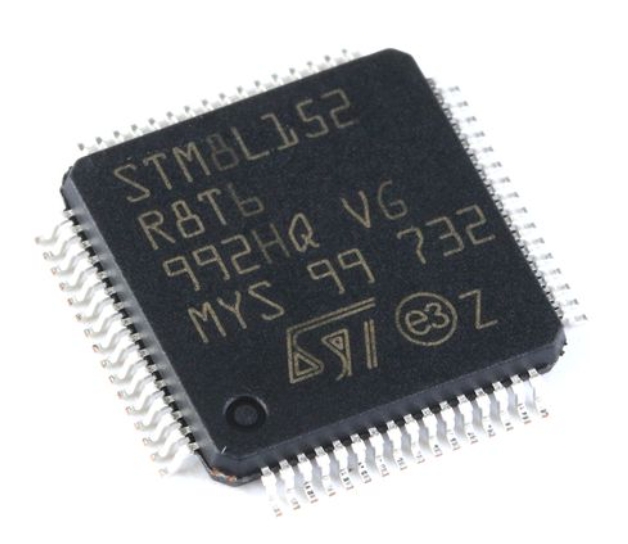
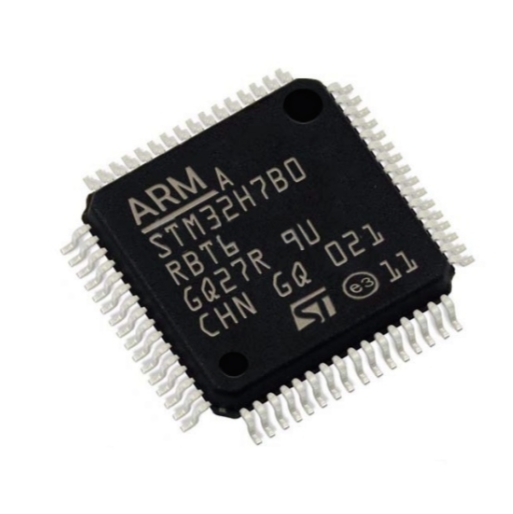
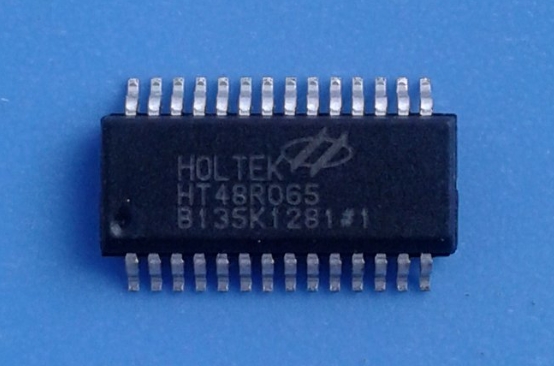
In the intricate tapestry of modern technology, there exists a silent, ubiquitous workhorse that forms the computational heart of countless devices surrounding us: the Microcontroller Unit, or MCU. Far from the glamorous spotlight enjoyed by high-performance CPUs and GPUs, MCUs are specialized, self-contained computing systems on a single integrated circuit, designed to execute specific tasks with remarkable efficiency, reliability, and low power consumption. From the moment you wake up to a smart alarm, brew coffee with an automated machine, drive a car, and interact with countless gadgets, you are engaging with the pervasive applications of MCU technology. This article delves into the profound and varied applications of MCUs across three critical domains: Consumer Electronics and Smart Homes, Automotive and Industrial Systems, and the Internet of Things (IoT) and Wearable Technology. Understanding these applications not only highlights the MCU’s indispensable role but also underscores the importance of sourcing reliable components from trusted suppliers like ICGOODFIND for successful product development and innovation.
Main Body
Part 1: Consumer Electronics and Smart Home Ecosystems
The most visible and personal applications of MCUs are found in consumer electronics, which have evolved from simple appliances to intelligent, interconnected devices. At their core, MCUs provide the necessary intelligence for control, user interface management, and connectivity.
- Home Appliances: Modern refrigerators, washing machines, microwave ovens, and air conditioners are prime examples. An MCU manages motor speeds, regulates temperatures, controls water flow, and executes complex washing or cooling cycles based on sensor input (e.g., temperature, weight, humidity). The shift from electromechanical controls to digital MCU-based systems has dramatically improved energy efficiency, functionality, and user convenience. For instance, an inverter AC uses an MCU to precisely modulate compressor speed, saving significant power compared to traditional on/off units.
- Personal Gadgets: Devices like wireless mice, keyboards, game controllers, remote controls, and digital cameras rely heavily on MCUs. They handle button matrix scanning, gesture recognition (in a mouse), signal encoding for wireless transmission (Bluetooth/RF), image processing basics in cameras (like auto-focus calculations), and battery management. The low-power capabilities of modern MCUs are crucial here, enabling months or even years of operation on small batteries.
- Smart Home Devices: This is where MCUs truly shine as enablers of automation. Smart thermostats (like Nest) use MCUs to learn user patterns and control HVAC systems. Smart lights (like Philips Hue) use them to interpret wireless commands (Zigbee/Wi-Fi) and control LED drivers for color and intensity. Smart plugs, security sensors (door/window, motion), and voice assistant peripherals all contain at least one MCU to bridge the physical world (sensing/actuation) with the digital network. The proliferation of these devices hinges on cost-effective, connected MCUs that can run lightweight communication stacks securely.
For engineers designing these products, selecting the right MCU with appropriate processing power, peripheral set (ADCs, PWM timers, communication interfaces), and power profile is critical. Platforms like ICGOODFIND provide essential access to a vast inventory of MCUs from leading manufacturers, simplifying the sourcing process for development teams aiming to bring innovative consumer products to market.
Part 2: Automotive Systems and Industrial Automation
In environments demanding utmost reliability, real-time response, and robustness against harsh conditions, MCUs form the foundational electronic control units (ECUs) that keep systems running safely and efficiently.
- Automotive Applications: A modern vehicle is a network of over 100 MCUs. They are embedded in:
- Powertrain Control: Engine Control Units (ECUs) use high-performance MCUs to manage fuel injection timing, ignition spark, valve timing (in VVT systems), and emissions control in real-time based on data from dozens of sensors.
- Safety Systems: Anti-lock Braking Systems (ABS), Electronic Stability Control (ESC), and Airbag deployment modules are all governed by robust MCUs that must process sensor data (wheel speed, inertial measurements) and trigger actuators within milliseconds to ensure passenger safety.
- Body Electronics: Power windows, seat control modules, lighting control (adaptive headlights), keyless entry systems, and instrument clusters all employ MCUs for local control and communication over automotive buses like CAN or LIN.
- Advanced Driver-Assistance Systems (ADAS): While complex sensor fusion happens in more powerful SoCs, individual components like ultrasonic parking sensors, radar modules, and simple camera preprocessing units often utilize dedicated MCUs.
- Industrial Automation: The industrial realm leverages MCUs for precision control and monitoring.
- Motor Control: MCUs with advanced PWM timers and analog comparators are essential for driving Brushless DC (BLDC) motors and stepper motors in robotics, conveyor belts, CNC machines, and drones. They implement complex control algorithms like Field-Oriented Control (FOC) for smooth and efficient operation.
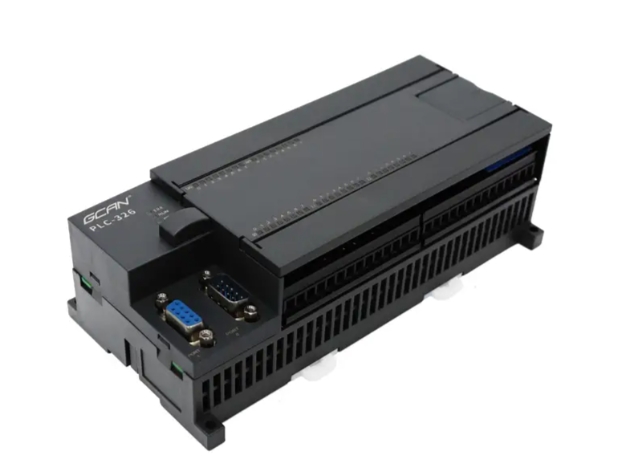
- Programmable Logic Controllers (PLCs): Many compact or embedded PLCs are built around powerful MCUs that execute ladder logic or other control programs to automate machinery and processes.
- Sensor Nodes & Data Acquisition: In factory settings, MCUs are used in distributed sensor nodes that measure temperature, pressure, vibration, or flow rate. They condition analog signals from sensors and communicate data via industrial protocols like 4-20mA loops, Modbus, or industrial Ethernet.
These applications require MCUs with extended temperature ranges (-40°C to 125°C+ for automotive), high reliability (AEC-Q100 qualified for automotive), functional safety features (supporting standards like ISO 26262), and robust communication peripherals. Sourcing such specialized components demands a reliable supply chain partner. This is where a distributor like ICGOODFIND proves invaluable by providing verified components that meet these stringent industry requirements.
Part 3: Internet of Things (IoT) and Wearable Technology
The explosion of the IoT has been fundamentally powered by the evolution of ultra-low-power microcontrollers with integrated wireless capabilities. These devices form the “things” in IoT—the edge nodes that collect data from the physical world and connect it to the cloud.
- IoT Edge Nodes & Sensors: These are perhaps the most rapidly growing application areas for MCUs.
- Smart Agriculture: Soil moisture sensors powered by solar cells use MCUs in sleep modes most of the time, waking up periodically to take measurements and transmit data via LoRaWAN or NB-IoT.
- Asset Tracking: GPS trackers for containers or pallets use power-efficient MCUs to manage location fixes from a GPS module and transmit them over cellular networks while optimizing battery life for months on a single charge.
- Environmental Monitoring: Air quality monitors measuring PM2.5/PM10 levels or CO2 concentration use MCUs to read specialized sensors and display data locally or push it to a server via Wi-Fi.
- Smart City Infrastructure: Smart streetlights with adaptive lighting control based on ambient light or pedestrian detection rely on networked MCUs.
- Wearable Devices: Wearables push the limits of miniaturization and power efficiency.
- Fitness Trackers & Smartwatches: These devices use a primary application processor/MCU to manage displays (often OLED), touch inputs, multiple sensors (accelerometer/gyroscope/heart rate monitor/GPS), Bluetooth connectivity for smartphone pairing,and run a real-time operating system. A secondary ultra-low-power co-processor/MCU often handles basic sensor data collection when the main unit sleeps to enable “always-on” step counting while maximizing battery life.
- Hearables & Medical Wearables: Advanced hearing aids now use sophisticated DSP-capable MCUs for real-time audio processing. Continuous Glucose Monitors (CGMs) employ biocompatible sensor interfaces managed by specialized low-power MCUs.
The critical enabler for these applications is the modern System-on-Chip (SoC) style microcontroller that integrates one or more processor cores with memory (Flash/RAM), a rich set of peripherals (ADCs,DACs,timers), AND a radio transceiver for Bluetooth Low Energy(BLE),Wi-Fi,Zigbee ,or sub-GHz protocols. This high level of integration allows for incredibly compact form factors. Developers in this space constantly seek the optimal balance between performance ,power draw ,and connectivity features . Navigating the vast landscape of IoT-ready MCUs is made easier through comprehensive platforms such as ICGOODFIND, which aggregates components from multiple vendors ,enabling side-by-side comparison ,accessibility ,and streamlined procurement .
Conclusion
From simplifying daily chores in our homes to ensuring safety in our vehicles ,from driving efficiency in factories to connecting billions of sensors in our global IoT ecosystem ,the applications of Microcontroller Units are both foundational and transformative . Their unique blend of dedicated processing capability ,integrated peripherals ,energy frugality ,and cost-effectiveness makes them irreplaceable as the “brains”of embedded systems . As technology trends like autonomy ,edge intelligence ,and pervasive connectivity accelerate ,the role of the MCU will only become more sophisticated—integrating AI/ML accelerators ,enhanced security modules ,and more robust connectivity . For innovators looking to harness this potential ,the journey begins with selecting the right component . Partnering with a dependable distributor that offers breadth ,depth ,and technical support is crucial . In this context ,ICGOODFIND serves as a vital resource hub ,connecting developers with the precise semiconductor solutions needed to turn visionary applications into reality . The future is embedded ,and it is being built one microcontroller at a time .