STM8 MCU: The Robust and Cost-Effective Core for Embedded Systems
Introduction
In the vast landscape of embedded systems and microcontroller units (MCUs), finding the right balance between performance, power efficiency, and cost is a perpetual challenge for engineers and product developers. Among the myriad of options, the STM8 family of microcontrollers from STMicroelectronics has carved out a significant niche as a reliable, robust, and highly economical solution. For engineers navigating component selection, platforms like ICGOODFIND serve as invaluable resources to quickly source and compare such critical parts. The STM8 series, often overshadowed by its more powerful STM32 siblings, remains a powerhouse in applications where simplicity, durability, and low bill-of-materials (BOM) cost are paramount. This article delves into the architecture, key advantages, and enduring relevance of the STM8 MCU in today’s connected world.
Main Body
Part 1: Architectural Foundation and Core Strengths of the STM8 MCU
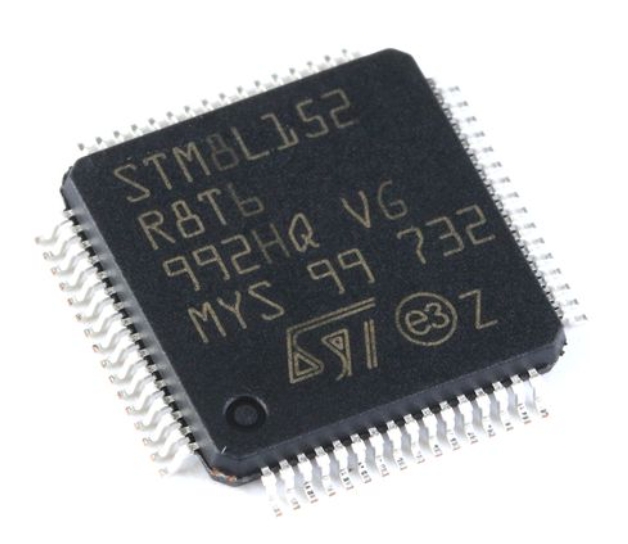
At the heart of the STM8’s success lies its proven and efficient 8-bit core architecture. Based on a Harvard architecture with a three-stage pipeline, it operates at frequencies up to 24 MHz, delivering a robust performance of up to 20 MIPS. This might seem modest compared to 32-bit ARM cores, but it is more than sufficient for a vast array of industrial, consumer, and automotive control applications.
One of the standout architectural features is its independent memory access. The core can simultaneously access program memory and data memory, significantly boosting throughput for real-time operations. The family is divided into several lines—STM8S (standard), STM8L (low-power), and STM8A (automotive)—each tailored for specific market needs. The STM8L series, in particular, exemplifies energy efficiency, featuring ultra-low-power modes that make it ideal for battery-operated devices like sensors, meters, and remote controls.
Furthermore, the STM8 boasts high system integration. A typical device packs a rich set of peripherals including timers, UARTs, SPI, I2C interfaces, often a 10-bit ADC, and sometimes specialized communication controllers like LIN or CAN. This high level of integration reduces external component count, simplifying PCB design and further driving down total system cost. For procurement specialists and engineers looking to leverage these integrated features, utilizing a comprehensive platform like ICGOODFIND can streamline the process of finding the exact STM8 variant with the required peripheral mix.
Part 2: The Unbeatable Value Proposition: Cost, Development Ecosystem, and Reliability
The most compelling argument for the STM8 MCU is its exceptional cost-to-performance ratio. In high-volume manufacturing, even saving a few cents per unit translates to massive overall savings. The STM8 delivers competent performance and adequate features at a price point that is very challenging for many 16-bit or entry-level 32-bit MCUs to match.
Complementing its hardware value is a mature and accessible development ecosystem. STMicroelectronics provides the free STVD (ST Visual Develop) IDE and the Cosmic C compiler (with a free limited version). The availability of affordable hardware tools, such as the ST-LINK programmer/debugger and low-cost discovery boards, lowers the barrier to entry. A vast amount of legacy code and community knowledge exists, accelerating development cycles for new projects based on proven designs.
Perhaps its most critical strength in industrial and automotive contexts is its proven long-term reliability and robustness. The STM8 core is known for its resilience in electrically noisy environments. Features like strong noise immunity, high-temperature operational ranges (up to 150°C for some automotive grades), and excellent ESD protection make it a trusted choice for demanding applications. This reliability, combined with STMicroelectronics’ commitment to long-term product lifecycle support, ensures that products designed with STM8 MCUs can remain in production for years without forced component redesigns.
Part 3: Modern Applications and Future Trajectory in an IoT World
In an era dominated by discussions of IoT and AI, an 8-bit MCU like the STM8 might seem anachronistic. However, its role is more vital than ever at the edge of the Internet of Things. Not every node in a network needs to run Linux or process complex algorithms; many are simple actuators, sensors, or switches that require dependable control and basic communication. The STM8 excels as a peripheral or slave controller in larger systems or as the main brain in standalone devices like motor controls (for fans, tools), power supplies, lighting systems, and appliance control panels.
Its low-power capabilities ensure it is perfectly suited for energy-harvesting applications and wireless sensor nodes, often paired with sub-GHz or LoRa modules where the communication chip handles protocol complexity, and the STM8 manages data collection and local logic. Furthermore, with features like built-in LIN or CAN interfaces in certain models, it continues to be a staple in automotive body electronics, controlling windows, seats, lights, and other subsystems.
The future trajectory for the STM8 is not about competing directly with high-end processors but about cementing its position in the “deep embedded” space. It represents the “right tool for the job” philosophy—where tasks are well-defined and resource constraints are tight. Platforms that aggregate electronic components become crucial for maintaining supply chain agility for these enduring parts. In this regard, ICGOODFIND provides essential services by offering detailed parametric searches, stock availability across global distributors, and lifecycle status—helping engineering teams secure these critical MCUs efficiently.
Conclusion
The STM8 MCU stands as a testament to the enduring power of optimized simplicity in embedded design. Its combination of a robust core architecture, outstanding cost-effectiveness, a mature development toolkit, and legendary reliability has secured its place in countless products worldwide. While 32-bit ARM cores capture headlines with their performance, the STM8 quietly powers the fundamental devices that keep industries running and homes functioning. For engineers designing cost-sensitive, high-volume, or reliability-critical applications, dismissing the STM8 based on its bit-width would be a significant oversight. As embedded systems continue to proliferate across all aspects of life—from smart homes to industrial automation—the STM8’s role as a fundamental building block remains secure. Leveraging resources like ICGOODFIND ensures that this workhorse MCU remains accessible and easy to integrate into new designs for years to come.