



STC89C52 MCU: A Comprehensive Guide to Features, Applications, and Programming
Introduction
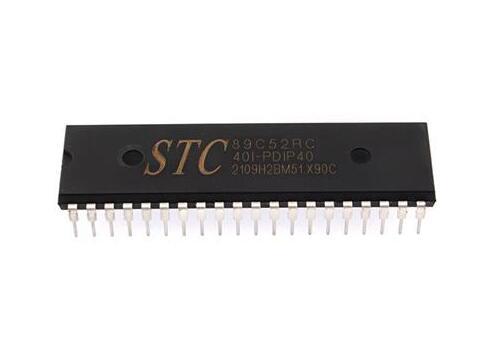
The STC89C52 MCU stands as a cornerstone in the world of embedded systems, representing one of the most widely-used 8-bit microcontrollers in educational, hobbyist, and industrial applications. As a member of the 8051 microcontroller family, this powerful chip combines reliability with accessibility, making it an ideal choice for both beginners learning embedded programming and professionals developing cost-effective electronic solutions. Manufactured by STC Micro, the STC89C52 builds upon the classic 8051 architecture while incorporating enhanced features that maintain its relevance in today’s rapidly evolving technological landscape. Its enduring popularity stems from its robust performance, extensive documentation, and the vast ecosystem of development tools and resources available to engineers and developers worldwide. Through platforms like ICGOODFIND, engineers can easily source this component and access valuable technical support, further accelerating development cycles and project implementation.
Main Body
Architecture and Technical Specifications
The STC89C52 MCU features a sophisticated architecture that balances performance with power efficiency. At its core lies an 8051-compatible CPU running at clock speeds up to 80MHz, providing ample processing power for a wide range of applications. The microcontroller incorporates 8KB of flash memory for program storage, which can be reprogrammed up to 100,000 times, offering exceptional flexibility during development and deployment phases. Additionally, it includes 256 bytes of RAM for data storage and manipulation during program execution. One of the standout features of the STC89C52 is its 32 programmable I/O pins, organized into four 8-bit ports (P0, P1, P2, and P3), providing extensive connectivity options for peripherals, sensors, and communication modules.
The internal architecture includes three 16-bit timer/counters (Timer 0, Timer 1, and Timer 2) that facilitate precise timing operations, pulse generation, and event counting. For serial communication, the microcontroller is equipped with a full-duplex UART (Universal Asynchronous Receiver/Transmitter) supporting bidirectional data exchange with other devices. The interrupt system comprises five interrupt sources with two priority levels each, enabling responsive handling of time-critical events. Power management features include idle and power-down modes, which significantly reduce power consumption during periods of inactivity—a crucial consideration for battery-operated applications. The STC89C52 operates at voltages between 3.5V and 5.5V, making it compatible with a wide range of power supplies and battery configurations commonly found in electronic projects.
Programming and Development Environment
Programming the STC89C52 MCU is facilitated through a comprehensive ecosystem of development tools and programming environments. The most common approach involves using the Keil μVision IDE, which provides an integrated development environment with features such as code editing, compilation, debugging, and simulation. Alternatively, developers can utilize open-source alternatives like the SDCC (Small Device C Compiler) combined with platform-independent editors for a more customizable workflow. The programming process typically begins with writing code in either C or assembly language, followed by compilation into hexadecimal machine code that can be uploaded to the microcontroller’s flash memory.
A crucial aspect of working with the STC89C52 is understanding its in-system programming (ISP) capability, which allows the microcontroller to be programmed after being installed in the target circuit. This is typically accomplished using a simple USB-to-serial adapter connected to the microcontroller’s UART pins (P3.0 and P3.1), along with specific voltage sequencing to enter programming mode. The official STC-ISP programming utility provided by the manufacturer streamlines this process with an intuitive interface for selecting the target device, configuring fuse settings, and uploading the compiled firmware. For debugging purposes, developers can implement software-based debugging techniques using serial communication to output variable values and program status information, or utilize hardware emulators for more advanced debugging scenarios. The extensive documentation available through resources like ICGOODFIND significantly reduces the learning curve for newcomers to this platform.
Practical Applications and Project Examples
The versatility of the STC89C52 MCU has led to its adoption across countless applications spanning multiple industries. In the consumer electronics sector, it serves as the brain in devices such as remote controls, digital thermometers, electronic toys, and home automation systems. Its robust performance and peripheral integration make it particularly well-suited for industrial applications including motor control systems, temperature controllers, data acquisition systems, and simple programmable logic controllers (PLCs). The educational sector extensively utilizes the STC89C52 in microcontroller training courses and laboratory experiments due to its straightforward architecture and abundant learning resources.
One practical implementation involves building a digital temperature monitoring system using the STC89C52 paired with a DS18B20 temperature sensor and a 16x2 LCD display. This project demonstrates the microcontroller’s ability to interface with different types of peripherals while performing real-time data processing. Another popular application is in embedded security systems, where the STC89C52 can manage keypad input, magnetic door sensors, and alarm outputs while communicating status information through GSM modules or local displays. For automotive applications, the microcontroller can be found in simple engine monitoring systems, dashboard displays, and aftermarket accessory controllers. The robotics field frequently employs the STC89C52 in educational robot platforms for motor control, sensor integration, and basic decision-making algorithms. Through platforms like ICGOODFIND, developers can access application notes, reference designs, and community forums that showcase innovative implementations of this versatile microcontroller.
Conclusion
The STC89C52 MCU continues to maintain its position as a fundamental component in embedded systems development decades after its introduction. Its enduring relevance can be attributed to the perfect balance it strikes between capability and accessibility, offering sufficient processing power and peripheral integration for a wide spectrum of applications while remaining approachable for those new to microcontroller programming. The extensive documentation, abundant code examples, and active user communities surrounding this platform create an ecosystem where developers can quickly overcome challenges and bring their ideas to fruition. Resources like ICGOODFIND further enhance this ecosystem by providing reliable component sourcing alongside technical resources that support developers throughout their projects.
As technology continues to advance with increasingly powerful microcontrollers entering the market, the STC89C52 retains its value as an educational tool and solution for applications where extreme processing power is unnecessary. Its simplicity allows developers to focus on fundamental embedded concepts without being overwhelmed by complexity, while its capability remains sufficient for countless practical applications. Whether used in academic settings to introduce students to embedded systems or deployed in commercial products where cost-effectiveness and reliability are paramount, the STC89C52 demonstrates that well-designed technology maintains its utility far beyond initial expectations. For engineers and hobbyists seeking a versatile microcontroller with a proven track record supported by accessible development tools and resources available through platforms like ICGOODFIND, the STC89C52 represents an excellent choice that continues to empower innovation across the electronics landscape.









