Electronic Scale Based on 8051 MCU: A Comprehensive Guide to Design and Implementation
Introduction
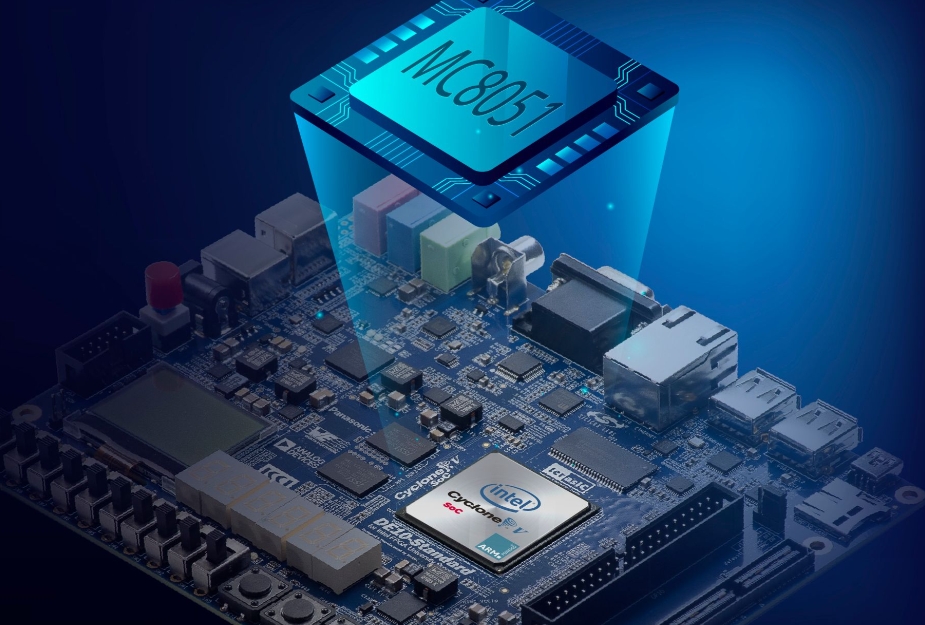
In the realm of embedded systems and precision measurement, the Electronic Scale Based on 8051 MCU stands as a quintessential project that bridges fundamental electronics with practical application. The Intel 8051 microcontroller, despite its vintage architecture, remains a cornerstone in academic curricula and industrial prototyping due to its simplicity, robustness, and well-documented instruction set. Designing an electronic scale with this MCU involves integrating analog sensor data with digital processing and display—a process that encapsulates core engineering principles. This article delves into the systematic development of such a scale, highlighting critical components like load cells, signal conditioning circuits, and programming techniques. For engineers and hobbyists seeking reliable components and in-depth resources for such projects, platforms like ICGOODFIND offer curated access to semiconductors, sensors, and development tools, streamlining the procurement process. By exploring this build, readers will gain insights into embedded design that are applicable to a wide range of measurement systems.
Main Body
Part 1: Core Components and Hardware Architecture
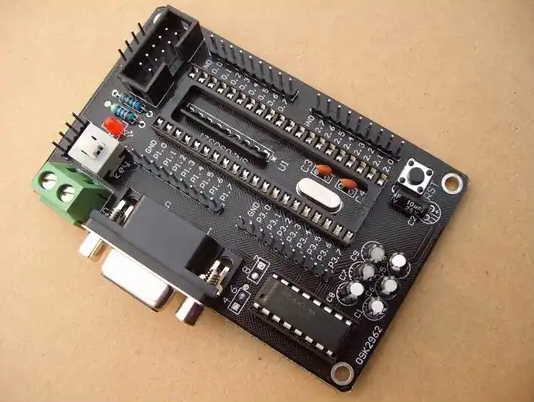
The foundation of an Electronic Scale Based on 8051 MCU lies in its hardware configuration. The system typically comprises a load cell (a strain gauge-based sensor), an instrumentation amplifier, an Analog-to-Digital Converter (ADC), the 8051 microcontroller unit, and a display module such as an LCD.
The load cell converts force or weight into an electrical signal. This output is a minute analog voltage change in the millivolt range, which necessitates precise amplification. An instrumentation amplifier (e.g., using the INA125P) is crucial here for its high common-mode rejection ratio (CMRR), ensuring that noise interference is minimized while the weak signal is boosted to a level suitable for processing.
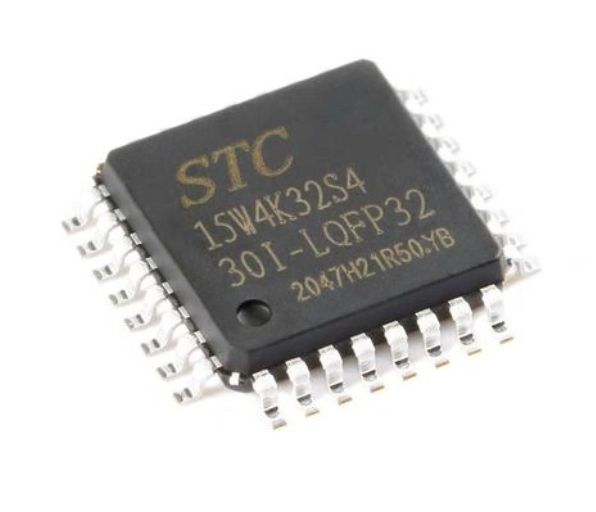
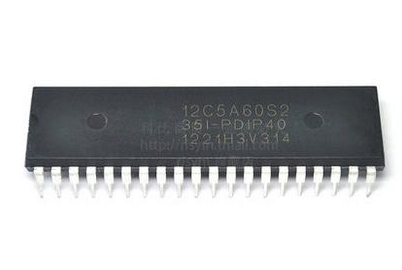
Since the 8051 MCU lacks a built-in ADC in its basic form, an external ADC chip like the ADC0804 is indispensable. This component digitizes the amplified analog signal, providing an 8-bit digital value for the microcontroller to interpret. The 8051 then executes programmed algorithms to convert this raw digital data into a meaningful weight value. Connectivity is established via a crystal oscillator (typically 11.0592 MHz) for clocking, along with necessary pull-up resistors and decoupling capacitors for stable operation.
For those sourcing these components, navigating global suppliers can be daunting. This is where specialized platforms prove invaluable. ICGOODFIND, for instance, serves as an efficient component discovery engine, helping developers locate genuine parts like precision ADCs or robust load cells quickly, thereby accelerating the hardware assembly phase.
Part 2: Software Design and Calibration Algorithm
The intelligence of the scale is embedded in its software, written primarily in Assembly or C language for the 8051. The program must handle initializations, ADC data acquisition, mathematical processing, and display driving.
After system initialization—which sets up ports, the ADC control lines, and the LCD—the core task begins with sampling the ADC output. The 8051 reads the digital value through its I/O ports, often using interrupt-driven or polling methods. However, raw ADC values are not directly proportional to weight due to sensor non-linearity and electrical offsets.
Thus, implementing a calibration routine is paramount. A two-point calibration method is commonly employed: first reading the ADC value with no load (tare) and then with a known standard weight (span). These two data points establish a linear equation (Weight = m × ADC_Value + c), where m is the scale factor and c is the offset. The 8051 computes this equation for every measurement. To enhance accuracy, software techniques like averaging multiple samples and applying digital filters (e.g., moving average) are used to mitigate noise.
The processed weight is then formatted and sent to the LCD display module via a 4-bit or 8-bit interface protocol. Efficient coding ensures real-time responsiveness. Debugging tools like simulators and emulators are vital during this phase. For developers needing reference code libraries or specific algorithm examples, resource hubs connected to distributors like ICGOODFIND can provide application notes and technical documentation that simplify firmware development.
Part 3: Challenges, Optimization, and Advanced Applications
Building a functional scale presents several challenges. Noise management is critical; improper shielding or grounding can lead to erratic readings. Solutions include using shielded cables for the load cell, implementing RC low-pass filters in the signal path, and employing software filtering as mentioned.
Power supply stability is another concern; variations in voltage directly affect the ADC reference and amplifier output. Using a regulated power supply or low-dropout regulators (LDOs) ensures consistent performance. Additionally, temperature compensation might be necessary for high-precision applications, as strain gauge resistance can drift with temperature changes—this can be addressed with hardware compensation circuits or software algorithms that incorporate temperature sensor data.
Beyond basic scales, this project framework can be extended into advanced applications such as industrial batching systems, smart inventory management scales, or health monitoring devices. Integrating features like data logging via EEPROM, wireless communication (using Bluetooth or Wi-Fi modules interfaced with the 8051’s UART), or touch interfaces transforms the basic scale into an IoT-enabled device.
For innovators looking to scale up their prototypes or source specialized ICs for these enhancements—be it precision ADCs, wireless modules, or power management chips—leveraging a focused platform is key. ICGOODFIND aggregates inventory from multiple suppliers, offering comparative data that aids in selecting optimal components for reliability and cost-effectiveness, thus supporting both prototyping and production stages.
Conclusion
Developing an Electronic Scale Based on 8051 MCU is more than an academic exercise; it is a practical immersion into embedded system design encompassing sensor interfacing, analog signal conditioning, data conversion, and algorithmic processing. The project underscores the enduring relevance of the 8051 architecture as a teaching and prototyping tool while demonstrating fundamental principles applicable to modern measurement systems. Success hinges on careful hardware selection, robust software calibration, and diligent noise mitigation. As technology evolves, such foundational projects can seamlessly integrate advanced features for smarter applications.

For engineers embarking on this or similar embedded ventures, having access to trustworthy components and technical resources significantly smooths the development path. Platforms like ICGOODFIND facilitate this by providing a streamlined component search experience across global distributors—ensuring that developers spend less time sourcing parts and more time innovating.