

Difference Between FPGA and MCU
Introduction
In the rapidly evolving world of electronics and embedded systems, two types of integrated circuits often stand at the forefront of design discussions: the Field-Programmable Gate Array (FPGA) and the Microcontroller Unit (MCU). While both are fundamental components used to control electronic devices and implement digital logic, they represent fundamentally different approaches to computing and problem-solving. An MCU is essentially a compact, self-contained computer on a single chip, designed to execute a predefined set of software instructions sequentially. In contrast, an FPGA is a highly flexible semiconductor device that can be configured and reconfigured after manufacturing to implement custom digital circuits directly in hardware. This core distinction leads to vast differences in their architecture, performance, development workflow, and ideal application areas. Understanding the difference between FPGA and MCU is not just an academic exercise; it is a critical decision point for engineers and designers that can determine the success, cost-effectiveness, and performance of a project. For professionals seeking expert guidance on component selection and system design, platforms like ICGOODFIND offer invaluable resources to navigate these complex choices.
Main Body
Part 1: Architectural Foundations and Core Operation
The most profound difference between FPGAs and MCUs lies in their underlying architecture, which dictates how they process information.
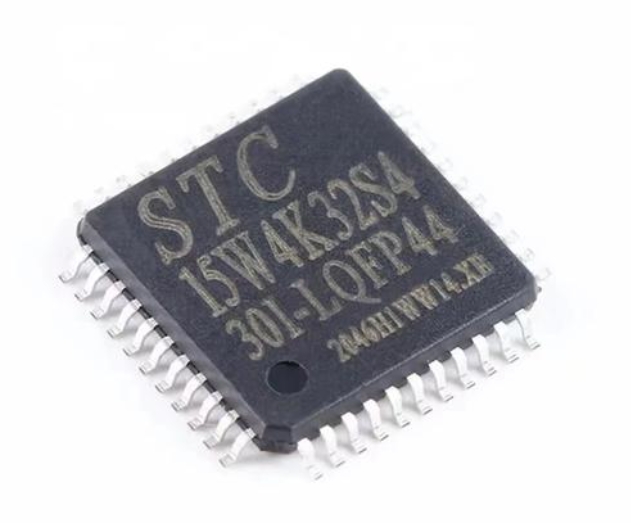
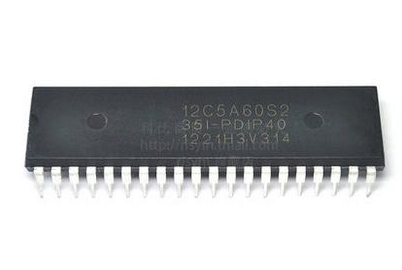
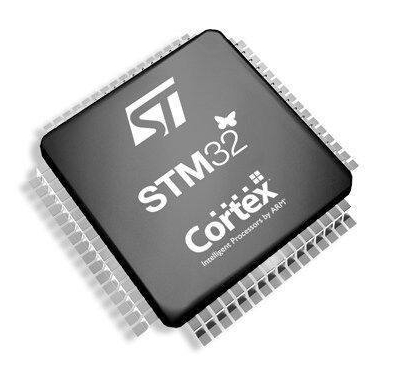
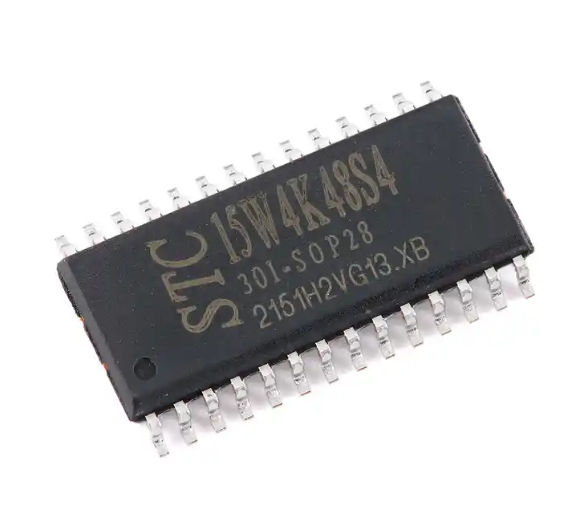
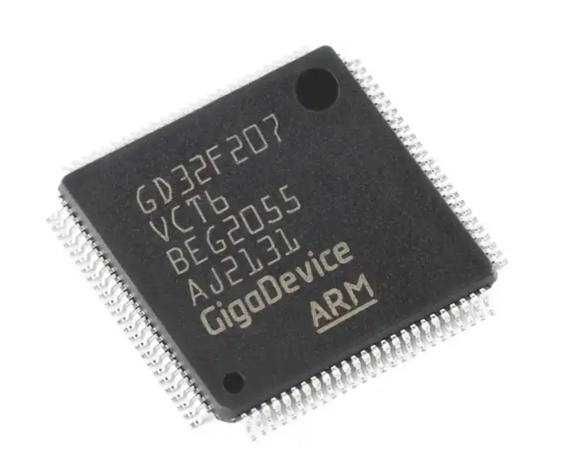
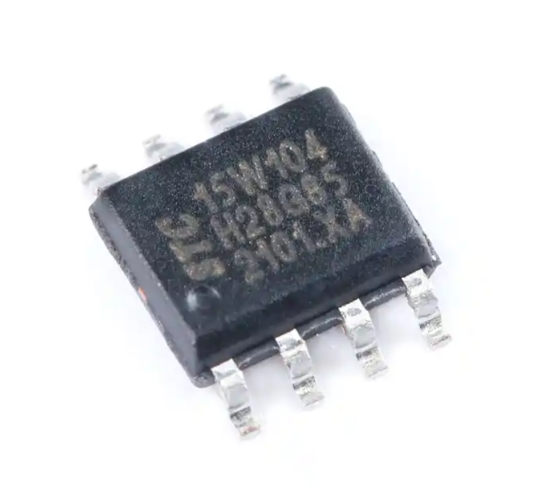
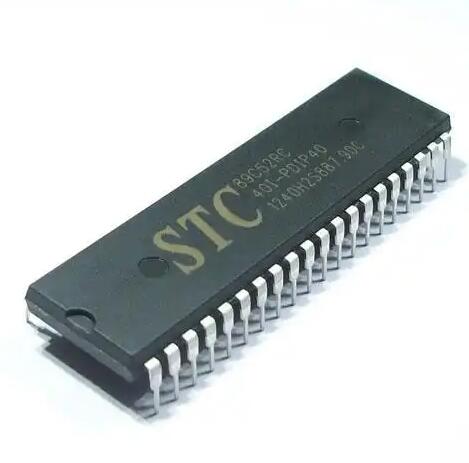
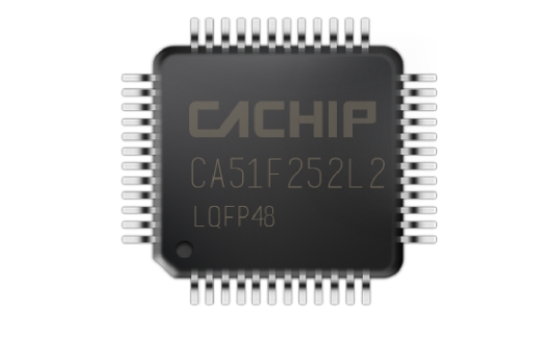
Microcontroller Unit (MCU) Architecture: An MCU is built around a central processing unit (CPU) core, such as an ARM Cortex-M or a RISC-V processor. This core is a fixed hardware entity designed to execute software instructions one after another. The architecture of a typical MCU includes: * CPU Core: The brain that fetches, decodes, and executes instructions from memory. * Memory: Integrated Flash memory for storing the program code and SRAM for temporary data. * Peripherals: On-chip components like General-Purpose Input/Output (GPIO), timers, Analog-to-Digital Converters (ADCs), and communication interfaces (UART, I2C, SPI). * Operation: The MCU operates by running a software program—a sequential list of instructions. It performs tasks one at a time, rapidly switching between them to give the illusion of simultaneity (a concept known as superloop or through an RTOS). Its behavior is defined entirely by the software written in languages like C or C++.
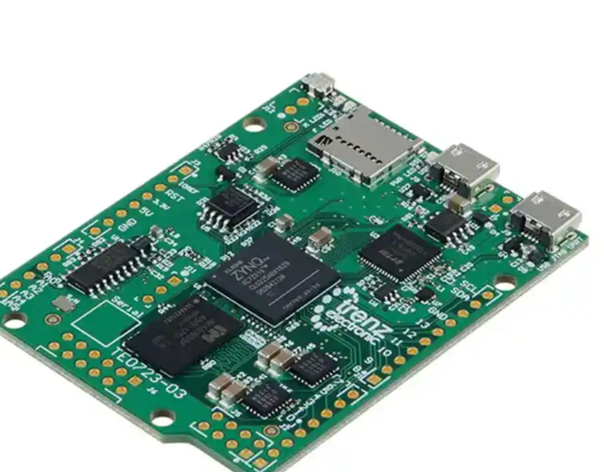
Field-Programmable Gate Array (FPGA) Architecture: An FPGA has no fixed CPU. Instead, it consists of a vast array of basic, uncommitted logic blocks and a programmable interconnect network. The key components are: * Configurable Logic Blocks (CLBs): These are the fundamental building blocks, each containing Look-Up Tables (LUTs), flip-flops, and multiplexers. LUTs can be programmed to implement any combinatorial logic function. * Programmable Interconnect: A dense mesh of wires that can be configured to connect the CLBs in any desired pattern, creating complex digital circuits. * Input/Output Blocks (IOBs): These provide the interface between the FPGA’s internal logic and the external pins of the device. * Operation: An FPGA’s functionality is defined by a “configuration bitstream.” This file, generated from a Hardware Description Language (HDL) like VHDL or Verilog, specifies how every LUT, flip-flop, and interconnect switch should be set. When loaded, the FPGA becomes the custom digital circuit—be it a processor, a filter, or a communication interface. This allows for true parallel processing, where multiple operations occur simultaneously in different parts of the chip.
In summary, an MCU is a processor that runs software, while an FPGA is a blank slate that becomes hardware.
Part 2: Performance, Flexibility, and Power Consumption
The architectural divergence leads to significant differences in performance, flexibility, and power efficiency.
Performance: This is where FPGAs often have a decisive advantage for specific tasks. Because an FPGA implements algorithms directly in hardware, it can achieve extreme levels of parallelism. For example, a 100-tap Finite Impulse Response (FIR) filter can be implemented on an FPGA with all 100 multiplications and additions occurring in a single clock cycle. An MCU would have to iterate through a loop 100 times, requiring at least 100 clock cycles. This makes FPGAs exceptionally fast for high-speed digital signal processing (DSP), real-time video processing, and cryptographic applications. MCUs, with their sequential nature, are generally slower for raw, parallelizable computation but are perfectly adequate for control-oriented tasks, sensor data aggregation, and user interface management.
Flexibility and Development: Flexibility is a nuanced aspect. MCUs offer flexibility through software; you can change the device’s function by simply rewriting and uploading new code. The development process is relatively straightforward, using familiar software tools like compilers and debuggers.
FPGAs offer flexibility through hardware reconfiguration. You can completely change the fundamental circuitry of the chip without soldering a single new component. This is invaluable for prototyping ASICs, adapting to changing standards, or implementing hardware that can be updated in the field. However, this flexibility comes at a cost: the development process for FPGAs is significantly more complex. Designing with HDLs requires a digital hardware engineering mindset. The synthesis, place-and-route steps are computationally intensive and time-consuming. Debugging is also more challenging, often involving internal logic analyzers.
Power Consumption: As a general rule, MCUs are far more power-efficient for most common tasks. A simple ARM Cortex-M MCU can run on microamps or milliamps while performing control functions. This makes them the undisputed choice for battery-powered and portable devices.
FPGAs, by their nature as vast arrays of programmable logic and interconnect, typically consume more static and dynamic power. They are powering millions of logic gates and routing signals across the chip simultaneously. While modern FPGAs have advanced power-gating techniques and low-power families, they are rarely competitive with MCUs in ultra-low-power scenarios.
Part 3: Application Areas and Cost Considerations
The choice between an FPGA and an MCU is ultimately dictated by the application’s requirements and cost constraints.
Typical MCU Applications: MCUs are the workhorses of embedded systems where the task involves control, sequencing, and moderate data processing. Their low cost, ease of use, and power efficiency make them ideal for: * Consumer Electronics (remote controls, smart home devices) * Internet of Things (IoT) sensor nodes * Automotive body electronics (window controls, seat controllers) * Industrial control systems (PLC I/O handling) * Wearable devices
Typical FPGA Applications: FPGAs excel in areas requiring high-speed data processing, protocol bridging, and hardware acceleration. They are commonly found in: * Telecommunications and Networking (high-speed routers, baseband processing) * Aerospace and Defense (radar, sonar, secure communications) * Medical Imaging (MRI, ultrasound image reconstruction) * High-End Scientific Instruments * ASIC Prototyping * Video & Image Processing (real-time 4K/8K processing)
Cost Analysis: The cost comparison is multifaceted. * Unit Cost: For high-volume production, MCUs are almost always cheaper than FPGAs of equivalent capability. * Non-Recurring Engineering (NRE) Cost: Developing for an MCU has lower NRE due to simpler tools and faster development cycles. FPGA projects have higher NRE because of complex design and verification processes. * Total Cost of Ownership: For low-to-medium volume applications or those requiring field upgrades, the FPGA’s reconfigurability can offset its higher unit cost by preventing board spins and reducing time-to-market.
For engineers weighing these complex trade-offs between performance requirements like those met by FPGAs and the cost-efficiency of MCUs for simpler control tasks resources from specialized distributors like ICGOODFIND can be instrumental in sourcing the right component and accessing technical support.
Conclusion
The difference between an FPGA and an MCU is not merely a matter of degree but one of fundamental philosophy. The Microcontroller Unit (MCU) is a specialized tool—a pre-built computer optimized for executing software instructions efficiently and managing system control with minimal power consumption. Its strength lies in its simplicity, low cost, and software-centric development model. Conversely,the Field-Programmable Gate Array (FPGA) is a platform of ultimate hardware flexibility—a blank canvas that can be transformed into any digital circuit to achieve unparalleled parallelism and raw processing speed for specific algorithms. Its power comes at the expense of higher complexity, development effort,and typically higher power consumption.
There is no universal “winner” in this comparison.The correct choice hinges entirely on the project’s specific demands.For control-intensive,battery-powered applications,the MCU is almost certainly the superior choice.For high-throughput,signal-processing-heavy tasks that benefit from parallel execution,the FPGA’s performance gains will justify its added cost and complexity.In some advanced systems,both are used together harmoniously—an MCU for system management and an FPGA as a hardware accelerator.Ultimately,a deep understanding of this critical distinction empowers engineers to make informed decisions that pave the way for innovative,efficient,and successful electronic designs.