

Difference Between MCU and FPGA: A Comprehensive Guide for Engineers
Introduction
In the rapidly evolving world of embedded systems and digital design, two fundamental components stand as pillars for countless electronic applications: the Microcontroller Unit (MCU) and the Field-Programmable Gate Array (FPGA). While both are integrated circuits that serve as the “brains” of modern devices, their underlying architectures, design philosophies, and optimal use cases are profoundly different. Choosing the wrong one can lead to inefficient designs, increased costs, and performance bottlenecks. This article delves deep into the technical distinctions between MCUs and FPGAs, providing engineers and decision-makers with a clear framework for selecting the right technology. Understanding this fundamental architectural dichotomy—fixed processor versus reconfigurable hardware—is crucial for innovation in fields ranging from consumer IoT to aerospace.
Main Body
Part 1: Core Architecture and Operational Principle
At their heart, MCUs and FPGAs are built on entirely different computing paradigms.
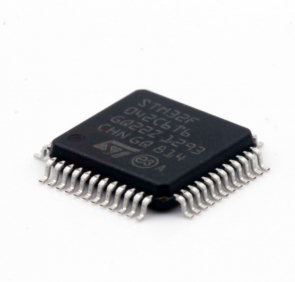
An MCU is a compact, self-contained computing system on a single chip. It integrates a processor core (often based on architectures like ARM, AVR, or PIC), memory (RAM and Flash/ROM), and programmable input/output peripherals (like timers, ADCs, and communication interfaces such as UART, SPI, I2C). The MCU executes software instructions sequentially or with limited parallelism, fetched from its embedded memory. Its functionality is defined by the software program written in languages like C or C++. The hardware structure is fixed; you cannot change the connections between the CPU, memory blocks, or peripherals. The key strength of an MCU lies in its deterministic execution of control-oriented tasks and its ease of programming using familiar software development tools.
In stark contrast, an FPGA is not a processor but a blank canvas of programmable logic. It consists of an array of configurable logic blocks (CLBs), interconnected by a programmable routing matrix, and surrounded by I/O blocks. Each CLB typically contains look-up tables (LUTs), flip-flops, and multiplexers. An FPGA has no fixed hardware structure; designers use Hardware Description Languages (HDLs) like VHDL or Verilog to define digital circuits at the register-transfer level (RTL). This configuration is then “synthesized” into a bitstream that sets the interconnections and functionality of the logic gates. The defining characteristic of an FPGA is its ability to implement true parallel processing; multiple independent circuits can operate simultaneously, as if you had custom-designed a dedicated chip for your specific application.
Part 2: Key Comparative Factors: Performance, Flexibility, and Development
The architectural divide leads to significant practical differences in performance, flexibility, and development workflow.
Performance and Speed: For sequential tasks and complex decision-making algorithms, a modern MCU with a fast core is highly efficient. However, for raw processing speed on parallelizable tasks (e.g., digital signal processing, image filtering, or real-time sensor data analysis), FPGAs are unparalleled. In an MCU, operations are processed one after another in the CPU pipeline. In an FPGA, operations can be executed in dedicated hardware circuits that run in parallel. This allows FPGAs to achieve massive throughput and deterministic, sub-microsecond latency that is independent of instruction cycles, making them ideal for high-speed protocol handling or motor control.
Flexibility and Reconfigurability: An MCU’s flexibility is in its software. You can update firmware to change functionality easily. However, its hardware capabilities are fixed by the manufacturer. An FPGA offers hardware-level flexibility. You can completely redefine its hardware logic—even during operation (partial reconfiguration). This makes FPGAs perfect for prototyping ASICs, adapting to changing standards, or implementing bespoke interfaces that don’t exist in standard MCUs. The trade-off is that this ultimate flexibility comes at the cost of higher static power consumption and more complex design verification.
Development Complexity and Tools: MCU development leverages mature software ecosystems: integrated development environments (IDEs), compilers, debuggers (often via JTAG/SWD), and extensive libraries. It is accessible to software engineers. FPGA development is electronic design automation (EDA). The workflow involves RTL design, simulation, synthesis, place-and-route, and timing analysis—a process more akin to chip design. The learning curve is steeper, requiring digital hardware engineering expertise. While High-Level Synthesis (HLS) tools are bridging this gap by allowing C/C++-like code to be targeted for FPGAs, the need for understanding concurrency, timing closure, and resource utilization remains critical.
Part 3: Application Domains and Selection Criteria
The choice between MCU and FPGA is rarely about which is “better,” but about which is optimal for the application’s requirements.
Typical MCU Applications: These are ubiquitous in scenarios requiring intelligent control, user interaction, moderate data processing, and connectivity. Examples include: * Home appliances and IoT sensor nodes. * Automotive body control modules (windows, lights). * Consumer electronics remote controls. * Battery-powered devices where low power consumption in sleep modes is paramount. * Systems where quick time-to-market and lower development cost are primary drivers.
Typical FPGA Applications: FPGAs excel in areas requiring high-speed data streaming, real-time signal processing, hardware acceleration, and interface bridging. * Telecommunications infrastructure (4G/5G baseband processing). * Aerospace & Defense (radar/sonar processing, secure communications). * High-end medical imaging (MRI reconstruction). * Automotive Advanced Driver-Assistance Systems (ADAS) for sensor fusion. * ASIC prototyping and emulation. * High-frequency trading systems.
When selecting between the two for your project at platforms like ICGOODFIND, consider these questions: 1. Is the task inherently parallel? If yes, lean towards FPGA. 2. What are the latency requirements? For hard real-time ( µs), FPGA is often necessary. 3. Will the hardware function need to change after deployment? FPGA offers field-upgradable hardware. 4. What are the power constraints? For always-on battery devices, a low-power MCU is usually best. 5. What is the team’s expertise? Software teams favor MCUs; hardware engineers handle FPGAs.
Conclusion
The difference between an MCU and an FPGA is foundational: the MCU is a software-driven processor optimized for sequential control tasks within a fixed architecture, while the FPGA is a hardware-configurable fabric that enables parallel execution of custom digital circuits. The MCU wins in ease of use, low power for control applications, and cost-effectiveness for volume production of standardized functions. The FPGA dominates in raw parallel processing speed, hardware flexibility, and time-to-market for custom high-performance logic.
In today’s complex systems like System-on-Chip (SoC) devices—which often integrate both processor cores (like an ARM Cortex) and FPGA-like programmable logic on a single die—the lines are blurring. However, understanding their core distinctions remains essential. By carefully evaluating your project’s performance needs, flexibility requirements, power budget, and development resources—and by sourcing reliable components from distributors like ICGOODFIND—you can make an informed decision that ensures efficiency, scalability, and success in your electronic design endeavors.