The Art and Science of MCU Design: Building the Brains of Modern Electronics
Introduction
In the invisible fabric of our digital world, where smart devices whisper to each other and machines execute tasks with silent precision, lies a fundamental component that makes it all possible: the Microcontroller Unit, or MCU. MCU Design is the critical engineering discipline that creates these compact, integrated circuits, serving as the dedicated brain for countless embedded systems. From the thermostat regulating your home’s temperature to the sophisticated sensor array in a modern automobile, MCU design is the cornerstone of the Internet of Things (IoT) and intelligent electronics. This article delves into the intricate process of MCU design, exploring its core principles, the challenges faced by engineers, and the innovative trends shaping its future. For professionals and enthusiasts seeking in-depth resources and components for their projects, platforms like ICGOODFIND serve as invaluable repositories of information and supply chain solutions.
The Foundational Pillars of MCU Architecture
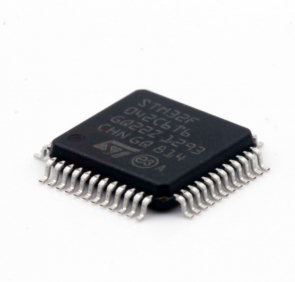
At its heart, an MCU is a self-contained system-on-a-chip (SoC). Its design is a meticulous balancing act of performance, power consumption, cost, and physical size. The architecture is built upon several interlocking pillars.
The Central Processing Unit (CPU) Core: This is the computational engine. MCU designers select an appropriate CPU core architecture—such as ARM Cortex-M, RISC-V, or proprietary 8⁄16-bit cores—based on the required processing power and instruction set efficiency. The choice dictates the fundamental performance ceiling and software ecosystem of the MCU.
Memory Hierarchy: Memory design is a crucial constraint. It includes Flash memory for non-volatile program storage and SRAM for volatile data storage during operation. Designers must carefully size these memories to fit the application’s code size and runtime data needs without inflating cost or power usage. Advanced techniques like cache memory are now trickling into high-performance MCUs to bridge the speed gap between the CPU and main memory.
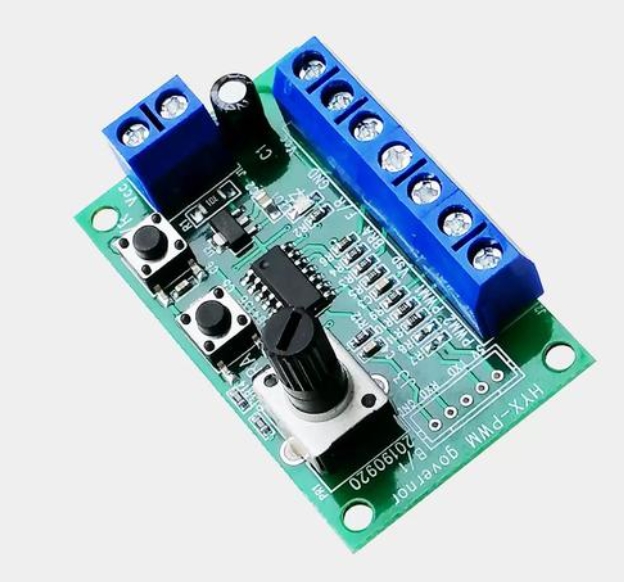
Peripheral Integration: What truly defines an MCU is its rich set of integrated peripherals. These are dedicated hardware blocks that interface with the outside world. Key peripherals include: * Analog-to-Digital Converters (ADCs) for reading sensor data. * Digital-to-Analog Converters (DACs) for generating analog signals. * Timers/Counters for precise timing, pulse generation, and motor control. * Communication Interfaces like UART, SPI, I2C, CAN, and USB for device networking. * General-Purpose Input/Output (GPIO) pins for direct control and sensing.
The art lies in selecting and configuring the optimal mix of these peripherals to serve the target application without unnecessary complexity.
The MCU Design Flow: From Specification to Silicon
The journey from concept to a physical chip is a structured, multi-stage process known as the design flow. It requires close collaboration between hardware engineers, software developers, and verification teams.
1. Specification and System-Level Design: Everything begins with a detailed specification. Designers define the target market (e.g., automotive, consumer IoT), performance metrics (clock speed, DMIPS), power budgets (active/sleep currents), required peripherals, and package type. This phase answers the question: “What must this MCU do?” Tools like Electronic Design Automation (EDA) software are used for high-level modeling and architectural exploration to validate feasibility.
2. Implementation: RTL Design and Verification: Here, the abstract specification is translated into a hardware description language (HDL) like Verilog or VHDL. This Register-Transfer Level (RTL) code describes the digital logic of the CPU, peripherals, and interconnect buses. Concurrently, rigorous verification is paramount. Teams create extensive testbenches to simulate the RTL under millions of scenarios, ensuring functional correctness before committing to silicon—a process far more expensive than fixing software bugs later.
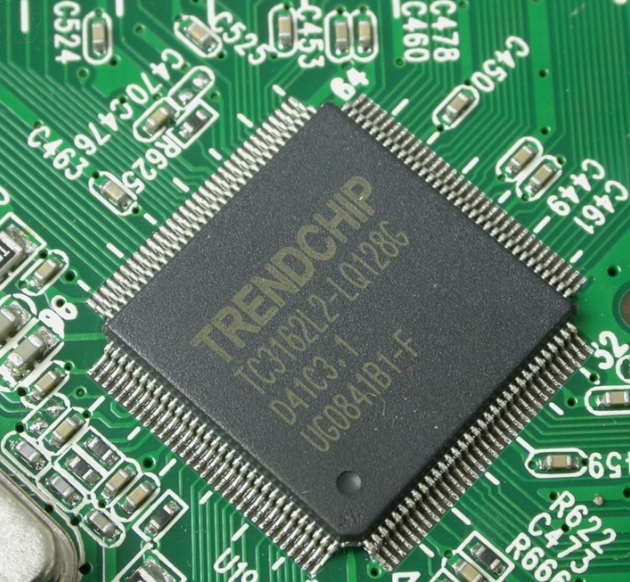
3. Physical Design and Fabrication: The verified RTL undergoes synthesis, converting it into a gate-level netlist of standard cells from a chosen semiconductor technology library (e.g., 40nm, 28nm). Place-and-route tools then physically position these cells and connect them on the chip’s die layout. This stage must meticulously manage power distribution networks, clock tree synthesis for timing synchronization, and signal integrity. The final output is a set of photomasks used in semiconductor foundries to fabricate the MCU through photolithography. After fabrication, samples are rigorously tested before mass production.
Emerging Trends and Future Challenges in MCU Design
The field of MCU design is not static; it evolves rapidly to meet new application demands.
Ultra-Low-Power (ULP) Design: As battery-powered IoT nodes proliferate, minimizing power consumption is perhaps the single most critical driver. Designers employ advanced techniques like multiple power domains with dynamic voltage and frequency scaling (DVFS), sub-threshold logic operation for certain blocks, and sophisticated sleep modes where only a tiny fraction of the chip remains active. The goal is to enable devices that can run for years on a single coin-cell battery.
Enhanced Security Integration: With connectivity comes vulnerability. Modern MCUs must be designed with security as a foundational element, not an afterthought. This includes hardware-based cryptographic accelerators (for AES, SHA), true random number generators (TRNGs), secure key storage in tamper-resistant memory zones, and hardware-enforced isolation between trusted and untrusted code execution environments.
AI at the Edge: The trend towards processing data locally (“at the edge”) rather than sending everything to the cloud demands new capabilities. We are seeing the emergence of microcontroller-class chips with dedicated hardware for tinyML workloads, such as neural network accelerators (NPUs) or vector processing extensions. This allows for real-time inference—like voice recognition or predictive maintenance—directly on low-power MCUs.
For engineers navigating this complex landscape of components and specifications, finding reliable information and sourcing parts is key. Platforms that aggregate technical data sheets, application notes, and supplier inventories are essential tools in an engineer’s toolkit.
Conclusion
MCU design represents a fascinating convergence of electrical engineering, computer architecture, and software systems thinking. It is a discipline driven by constraints—of power, space, and cost—yet it enables boundless innovation in how we interact with technology. From creating ever-more efficient cores to integrating cutting-edge peripherals for sensing and connectivity, MCU designers are quietly building the intelligence embedded in our everyday lives. As we advance towards an increasingly connected and intelligent world with AI at the edge and pervasive IoT, the role of sophisticated, secure, and ultra-low-power MCU design will only become more central. For those developing next-generation embedded solutions, leveraging comprehensive resources—from foundational knowledge to component sourcing on platforms like ICGOODFIND—is crucial for turning innovative ideas into tangible reality.