Unlocking the Power of MSP430 MCU: A Comprehensive Guide for Embedded Systems
Introduction
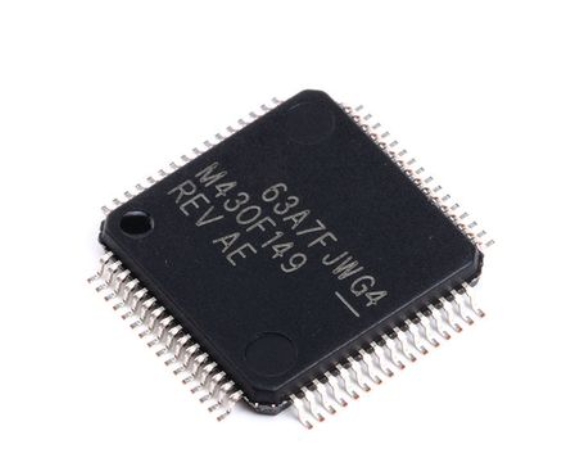
The world of embedded systems is constantly evolving, with microcontrollers (MCUs) standing at the forefront of this technological revolution. Among the myriad of MCUs available today, the MSP430 family from Texas Instruments has carved out a distinctive niche as an ultra-low-power workhorse that powers countless applications across industries. From wearable health monitors to industrial automation systems, the MSP430’s unique combination of performance and power efficiency has made it a go-to choice for developers worldwide. This 16-bit RISC-based microcontroller has stood the test of time, continually adapting to meet the demanding requirements of modern embedded applications while maintaining its core philosophy of energy efficiency.

As we delve into the capabilities and applications of the MSP430 MCU, it’s crucial to understand why this particular microcontroller family has maintained its relevance in an increasingly competitive market. The answer lies not just in its technical specifications, but in the comprehensive ecosystem that supports it—including development tools, software libraries, and a vibrant community of developers. For those seeking specialized components and support for their MSP430 projects, platforms like ICGOODFIND offer valuable resources and components that can significantly accelerate development cycles and enhance project outcomes.
The Architectural Brilliance of MSP430 MCU
Innovative Low-Power Architecture
The MSP430’s revolutionary low-power architecture represents one of its most significant advantages in the embedded space. At its core, the microcontroller employs a 16-bit RISC CPU that can operate at multiple power modes, allowing developers to fine-tune power consumption based on application requirements. The sophisticated clock system enables the CPU to wake from low-power modes in less than 1 microsecond, facilitating rapid response to events while maintaining minimal power consumption during idle periods. This capability is particularly valuable in battery-powered applications where every microamp counts toward extended operational life.
The power management framework includes several operational modes—from active mode consuming mere hundreds of microamps to standby modes drawing less than 1 microampere. The real genius lies in how these power modes can be dynamically managed through software, with the MCU spending most of its time in ultra-low-power states and briefly waking to handle processing tasks. This approach, combined with peripheral autonomy where certain peripherals can operate independently of the CPU, creates an ecosystem where power efficiency doesn’t come at the expense of functionality. The flexible clocking system allows different components to run at optimal speeds, further optimizing the power-performance balance that has become the hallmark of the MSP430 family.
Rich Peripheral Integration
Beyond its power efficiency, the MSP430 MCU stands out through its comprehensive peripheral integration, which reduces external component count and simplifies system design. The typical MSP430 device incorporates a wide array of analog and digital peripherals, including high-resolution analog-to-digital converters (ADCs), comparators, operational amplifiers, and multiple communication interfaces such as UART, I2C, and SPI. This level of integration means that many applications can be implemented with minimal external components, reducing both system cost and physical footprint.
The intelligent peripheral interconnect allows these components to communicate and trigger actions without CPU intervention, creating what’s known as “background processing.” For instance, an ADC conversion can be triggered by a timer, with the results automatically transferred to memory using the direct memory access (DMA) controller—all while the CPU remains in a low-power state. This architectural approach not only conserves power but also simplifies software development by reducing interrupt handling overhead. The inclusion of these sophisticated peripherals, combined with their autonomous operation capabilities, makes the MSP430 particularly well-suited for measurement applications, sensor interfaces, and data acquisition systems where efficient real-time processing is paramount.
Scalable Memory and Performance Options
The MSP430 product family demonstrates remarkable scalability across performance and memory requirements, offering devices with flash memory ranging from a few kilobytes to several hundred kilobytes, alongside corresponding variations in RAM size and CPU performance. This scalability ensures that developers can select a device that precisely matches their application requirements without paying for unnecessary resources or compromising on capability. The consistent architecture across the family further enables seamless migration between devices as project requirements evolve.
The unified memory addressing scheme provides a single, linear address space for both code and data, simplifying programming models and enabling efficient C compiler implementation. Different members of the MSP430 family offer varying levels of computational performance, with some devices featuring hardware multipliers that accelerate mathematical operations common in digital signal processing applications. This performance scalability, combined with consistent development tools and software compatibility across devices, significantly reduces development risk and enables code reuse—a crucial consideration for projects with evolving requirements or planned product generations.
Development Ecosystem and Tools
Comprehensive Software Support
The strength of any microcontroller platform extends beyond its silicon capabilities to encompass the comprehensive software ecosystem that supports it. For the MSP430, this includes a robust collection of development tools starting with Code Composer Studio (CCS), Texas Instruments’ full-featured integrated development environment (IDE). CCS provides advanced editing, compiling, debugging, and profiling capabilities specifically optimized for MSP430 devices. For developers preferring lighter-weight solutions, IAR Embedded Workbench and various GCC-based toolchains offer alternative development environments with strong MSP430 support.
Beyond basic development tools, Texas Instruments provides MSP430 Driver Library, a collection of APIs that abstract peripheral operations into simple function calls, significantly reducing development time and complexity. For those implementing wireless connectivity—a common requirement in modern embedded systems—TI-RTOS provides a real-time operating system with built-in power management frameworks specifically designed for MSP430 devices. The availability of these software resources, combined with extensive documentation and code examples, creates a development environment where engineers can focus on application-specific challenges rather than low-level hardware intricacies. When sourcing components for MSP430-based designs, platforms like ICGOODFIND can provide access to necessary supporting components and hard-to-find parts that complete the system design.
Hardware Development Tools
The hardware development ecosystem for MSP430 represents one of its strongest advantages, particularly for developers at all experience levels. The journey typically begins with low-cost evaluation modules like the MSP-EXP430FR5994 LaunchPad Development Kit, which provides a complete development platform with onboard debug probe, buttons, LEDs, and pin headers for expansion. These affordable entry points dramatically lower the barrier to experimentation and prototyping, enabling rapid validation of concepts before committing to custom hardware design.
For more advanced development phases, Texas Instruments offers application-specific evaluation modules that demonstrate particular use cases or highlight specific MSP430 capabilities. These include energy measurement kits, capacitive touch evaluation boards, and sub-1GHz wireless connectivity modules. The hardware ecosystem extends to debugging tools like the MSP-FET programmer/debugger, which provides full-speed in-system programming and debugging capabilities. This comprehensive hardware support structure ensures that developers can transition smoothly from initial concept through to production without encountering tooling gaps that often plague embedded projects using less-established platforms.
Community Resources and Knowledge Base
The longevity and popularity of the MSP430 have fostered a vibrant developer community that represents an invaluable resource for both newcomers and experienced developers. Official resources include the TI E2E support forums where Texas Instruments engineers provide direct technical support, alongside extensive documentation including data sheets, technical reference manuals, application notes, and user guides. These official resources are complemented by an abundance of community-generated content including tutorials, blog posts, video demonstrations, and open-source projects.
The depth of available information means that most development challenges have already been encountered and documented by previous developers—a significant advantage when working against project timelines. This collective knowledge base spans everything from basic “getting started” guides to advanced topics like optimizing interrupt service routines for minimum power consumption or implementing complex measurement algorithms. The presence of this established community not only accelerates problem-solving but also provides validation of design approaches and best practices that have been refined through real-world implementation across countless applications.
Application Domains and Real-World Implementations
Industrial Automation and Control
In industrial environments where reliability and longevity are paramount, the MSP430 has established itself as a preferred solution for monitoring, control, and interface applications. Its robust operational characteristics—including wide operating voltage ranges and industrial temperature ratings—make it suitable for harsh environments where consistent performance is non-negotiable. In factory automation systems, MSP430 devices frequently serve as sensor interfaces, motor controllers, human-machine interface (HMI) controllers, and data acquisition units.
The microcontroller’s analog capabilities make it particularly well-suited for direct sensor interfacing in industrial measurement applications. High-resolution sigma-delta ADCs can directly connect to temperature sensors, pressure transducers, and current sensing circuits without requiring external signal conditioning components. The integrated operational amplifiers further enhance this capability by providing gain stages for low-level signals directly on-chip. When implementing these industrial systems, developers often need specialized components that complement the MSP430’s capabilities—resources that can be efficiently sourced through platforms like ICGOODFIND, which understands the specific needs of embedded system developers working on industrial applications.
Medical and Healthcare Applications
The healthcare sector presents some of the most demanding requirements for embedded systems, particularly in portable medical devices where power efficiency directly impacts usability. The MSP430’s ultra-low-power characteristics have made it a cornerstone technology in applications ranging from wearable fitness monitors to clinical-grade medical devices. In portable medical equipment such as blood glucose meters, digital thermometers, pulse oximeters, and portable ECG monitors, the MSP430 provides the processing capability needed for signal analysis while enabling extended battery life between charges or replacements.
Beyond power efficiency, medical applications benefit from the MSP430’s measurement precision through its high-resolution analog peripherals and computational capabilities. The integrated peripherals can directly interface with biometric sensors while maintaining signal integrity through careful analog design. For safety-critical applications, certain MSP430 variants offer enhanced reliability features including memory protection units and windowed watchdog timers. The scalability of the MSP430 family further supports healthcare applications by allowing manufacturers to use a consistent architecture across product lines with varying feature sets—from basic consumer health monitors to sophisticated professional medical equipment.
Consumer Electronics and IoT Devices
The explosion of connected devices in consumer electronics and Internet of Things (IoT) applications has created perfect conditions for MSP430 adoption. In these domains, power constraints often dictate design choices, making the MSP430’s energy-efficient architecture particularly valuable. From smart watches and fitness trackers to home automation sensors and connected appliances, MSP430 devices provide the intelligence that makes these products useful while maximizing battery life—a crucial differentiator in competitive consumer markets.
For IoT edge devices specifically, certain MSP430 variants integrate sub-1GHz or Bluetooth Low Energy connectivity options alongside the main processor core. This wireless integration simplifies designs by combining application processing and communication functions in a single device while maintaining the family’s characteristic power efficiency. The microcontroller’s ability to operate for extended periods from small batteries or energy harvesting sources enables deployment scenarios where line power or frequent battery replacement isn’t practical—such as environmental sensors in remote locations or infrastructure monitoring systems. When developing these consumer and IoT products,
Conclusion
The enduring relevance of the MSP430 MCU in today’s rapidly evolving embedded landscape is a testament to its thoughtful architecture,
comprehensive development ecosystem,
and demonstrated effectiveness across countless applications.
From its revolutionary low-power capabilities that enable years of operation from small batteries to its rich peripheral integration that simplifies system design,
the MSP430 continues to offer compelling advantages for developers designing power-sensitive embedded systems.
As technology trends increasingly emphasize energy efficiency alongside connectivity and intelligence,
the fundamental attributes of the MSP430 position it well for continued adoption in emerging application domains.
The scalable nature of the product family ensures that as application requirements evolve,
developers can find an appropriate MSP430 variant without sacrificing software investment or familiar development workflows.
For those embarking on new embedded projects or refreshing existing designs,
the combination of mature tools,
extensive documentation,
and active community support makes the MSP430 platform a low-risk choice with proven capabilities.
When implementing MSP430-based designs,
having access to reliable component sources becomes crucial—a need effectively addressed by specialized platforms like ICGOODFIND that understand the specific requirements of embedded developers.
Whether you’re designing industrial control systems,
portable medical devices,
or connected consumer products,
the MSP430 MCU offers a balanced combination of performance,
power efficiency,
and development convenience that continues to make it a preferred choice nearly two decades after its introduction.