

Difference Between PIC MCU and 8051 MCU
Introduction
In the vast and intricate world of embedded systems, the choice of a microcontroller unit (MCU) is a foundational decision that can dictate the success of a project. Two names that have stood the test of time and remain pivotal in engineering discussions are the PIC MCU, developed by Microchip Technology, and the classic 8051 MCU, originally created by Intel. While both serve as the computational heart for countless devices, they stem from different architectural philosophies and eras of computing. The 8051 is an industry veteran, an 8-bit cornerstone that established many conventions we still use today. In contrast, PIC microcontrollers represent a more modern, diverse, and highly optimized family of chips. For engineers, hobbyists, and product developers, understanding the core architectural differences, performance capabilities, and ecosystem support between these two giants is not just academic—it’s a practical necessity for selecting the right component. This article delves deep into a comparative analysis, providing a clear roadmap to navigate this critical choice. For those seeking reliable components to bring their designs to life, platforms like ICGOODFIND offer a trusted source for procuring genuine PIC, 8051, and other essential electronic parts.
Main Body
Part 1: Architectural Foundations and Core Design Philosophy
The most fundamental difference between the PIC and the 8051 lies in their underlying processor architecture. This distinction influences everything from instruction execution to memory access and power consumption.
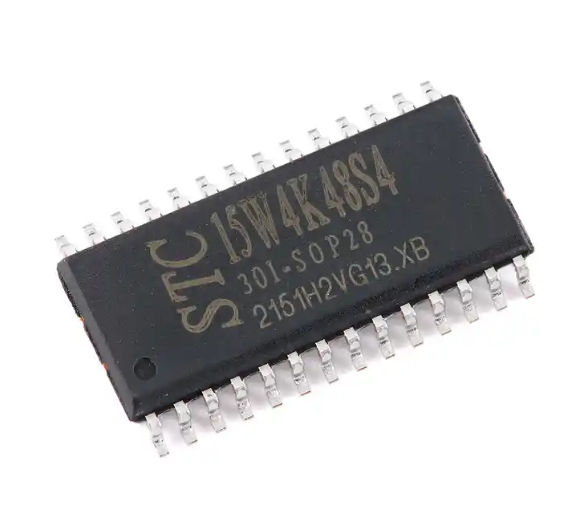
The 8051’s CISC Architecture: The 8051 is based on a Complex Instruction Set Computing (CISC) architecture. The hallmark of CISC is its rich set of instructions, many of which are powerful and can perform complex operations in a single line of code. For instance, a single instruction might handle moving a block of memory or performing a sophisticated arithmetic calculation. This was designed to make assembly programming more efficient and to reduce the number of instructions fetched from (historically slow) program memory. The 8051 uses a von Neumann architecture, where a single bus is used for both instructions and data. This means the program memory (ROM) and data memory (RAM) share the same address space, which can sometimes lead to bottlenecks as instruction fetches and data access compete for the same pathway.
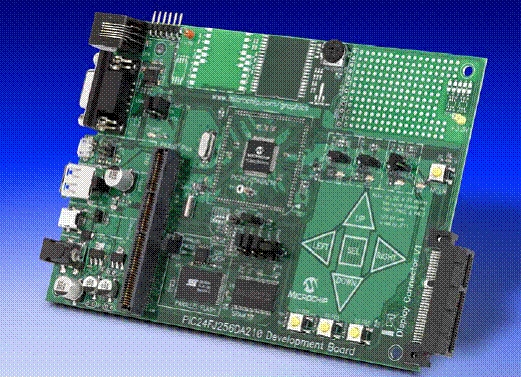
The PIC’s RISC Architecture: PIC microcontrollers, on the other hand, are built around a Reduced Instruction Set Computing (RISC) philosophy. The core principle of RISC is a small, highly optimized set of simple instructions. Each instruction is designed to execute in a single clock cycle (or very few), which leads to faster overall execution for many tasks. PICs predominantly use a Harvard architecture, which features separate buses and memory spaces for program instructions and data. This allows the CPU to fetch an instruction and access data simultaneously, significantly boosting throughput and performance. This separation is a key reason why PICs often achieve higher MIPS (Millions of Instructions Per Second) per MHz compared to traditional 8051 cores.
Summary of Architectural Impact: * Code Density: The 8051’s CISC design often results in denser code (fewer instructions for a complex task). * Execution Speed: The PIC’s RISC/Harvard combination typically allows for faster raw instruction execution. * Simplicity vs. Power: The RISC core is simpler and often more power-efficient, while the CISC core can reduce programming effort for specific complex operations.
Part 2: Performance, Peripheral Integration, and Power Consumption
Moving beyond core architecture, the practical differences in performance, available features, and power management are critical for real-world applications.
Performance Metrics: While a classic 8051 core might require 12 clock cycles to execute a single instruction, modern variants have improved this significantly. However, even enhanced 8051 cores often operate at lower efficiency compared to PIC MCUs. A typical PIC MCU can execute most instructions in just one or two clock cycles, giving it a substantial performance advantage for control-intensive applications. When comparing devices of similar price and bit-width, PICs generally offer higher computational throughput.
Peripheral Integration and Scalability: This is an area where PIC microcontrollers have a distinct advantage due to their more modern and diversified product line. * PIC MCUs: Microchip offers an immense family of PIC microcontrollers, ranging from tiny 6-pin devices to powerful 32-bit variants. They come with a vast array of integrated peripherals such as advanced Analog-to-Digital Converters (ADCs), multiple PWM modules, dedicated communication interfaces (UART, I2C, SPI), USB controllers, Ethernet MAC, and capacitive touch sensing hardware. This “microcontroller-as-a-system-on-chip” approach reduces external component count and simplifies design. * 8051 MCUs: While modern 8051-compatible chips from manufacturers like Silicon Labs or NXP have integrated many modern peripherals, the core architecture itself is less inherently scalable than PIC’s RISC foundation. The range of available peripherals in 8051 variants can be more limited compared to the extensive portfolio of PICs.
Power Consumption: Power efficiency is paramount in battery-operated devices. The RISC architecture of PIC microcontrollers is inherently leaner, contributing to lower active power consumption. Furthermore, Microchip has developed extremely low-power variants under its nanoWatt XLP technology banner, which are industry leaders in sleep current consumption (nano-Amps). While 8051 vendors have also made strides in low-power design, the PIC family is often the go-to choice for applications where ultra-low power is the primary design constraint.
Part 3: Development Ecosystem: Tools, Support, and Community
The best hardware is only as good as the tools available to program and debug it. The development ecosystem surrounding an MCU family can dramatically affect time-to-market and developer productivity.
Development Tools and IDEs: * PIC Ecosystem: Microchip provides a robust and integrated development environment with its MPLAB X IDE, which is free to use. It is supported by a range of compilers (including the free MPLAB XC compilers) and powerful hardware debuggers/programmers like the MPLAB ICD and PICKit series. The ecosystem is mature, well-documented, and tightly integrated. * 8051 Ecosystem: The development environment for the 8051 is more fragmented. While vendors like Keil (now part of ARM) offer excellent commercial IDEs and C compilers (like the µVision IDE), their full versions can be costly. There are open-source alternatives like SDCC (Small Device C Compiler), but they may lack the optimization and support of commercial tools. This fragmentation can pose a barrier for newcomers.
Community and Learning Curve: * 8051 Community: The 8051 has been a staple in university curricula for decades. Its simple CISC instruction set makes it relatively easy to learn at the assembly level. There is a colossal amount of legacy code, tutorials, and forums dedicated to it. * PIC Community: The learning curve for PIC assembly can be steeper due to its unique features like banking and paging for memory access. However, when programming in C—which is the standard for most modern development—this difference becomes less pronounced. The community around PIC microcontrollers is vast and active, with extensive resources available online.
For developers navigating these ecosystems to find the right components or tools for their next project, sourcing from a reputable distributor is crucial. A platform like ICGOODFIND simplifies this process by aggregating components from various manufacturers, ensuring you get authentic parts for both prototyping and production phases.
Conclusion
The choice between a PIC MCU and an 8051 MCU is not about declaring one universally superior to the other; rather, it’s about matching the microcontroller’s strengths to the specific demands of the application.
The venerable 8051 MCU, with its CISC heritage and von Neumann architecture, remains a valid choice for simpler control tasks, educational purposes where its architectural simplicity is beneficial, or in projects that leverage extensive legacy codebases. Its strength lies in its historical prevalence and straightforward programming model.
The PIC MCU, built on a RISC foundation and Harvard architecture, generally excels in performance-per-clock, power efficiency, and peripheral integration. Its highly diversified product family offers a solution for nearly every imaginable application, from ultra-low-power sensor nodes to complex communication systems. For new designs where performance, low power consumption, and rich on-chip features are priorities, PIC microcontrollers often present a more compelling and future-proof option.
Ultimately, by carefully evaluating the architectural implications, performance needs, power budgets, and available development tools for your project, you can make an informed decision between these two embedded workhorses.