Unlocking the Power of STM32 Series MCUs: A Comprehensive Guide for Modern Embedded Development
Introduction
In the rapidly evolving landscape of embedded systems and Internet of Things (IoT), the choice of microcontroller unit (MCU) can make or break a project’s success. Among the plethora of options available to engineers and developers, the STM32 Series MCUs from STMicroelectronics have emerged as a dominant and versatile force. Since their introduction, these ARM Cortex-M core-based microcontrollers have revolutionized prototyping and product development across industries—from consumer electronics and industrial automation to automotive and medical devices. This article delves deep into the world of STM32, exploring its architecture, ecosystem, and practical applications, while highlighting why it remains a top choice for professionals seeking performance, scalability, and robust support. For developers navigating this complex ecosystem, platforms like ICGOODFIND serve as invaluable resources for comparing components, sourcing reliable suppliers, and accessing technical data to streamline the selection process.
Main Body
Part 1: Architectural Excellence and Diverse Product Families
The STM32 portfolio is not a single product but a vast family of microcontrollers built around ARM Cortex-M processor cores. This strategic choice provides a foundation of energy efficiency and high performance. The series is meticulously segmented into several lines, each targeting specific application needs:
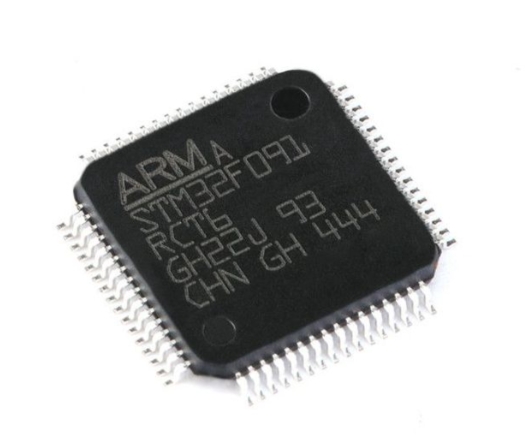
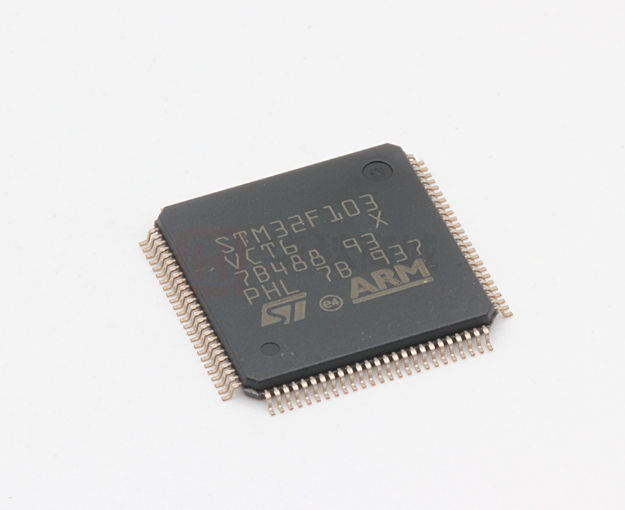
- STM32F Series: The foundational and most extensive family. It covers everything from cost-sensitive applications to high-performance needs. It includes everything from basic Cortex-M0 cores to powerful M7 cores.
- STM32L Series: Engineered explicitly for ultra-low-power operation, this family is indispensable for battery-powered and energy-harvesting devices like wearables, sensors, and remote monitors. Features like multiple low-power modes, dynamic voltage scaling, and advanced peripherals that can run in low-power states set it apart.
- STM32H Series: The high-performance line built for demanding computational tasks. Featuring Cortex-M7 and M4 cores with high clock speeds, enhanced DSP instructions, and large memory configurations, these MCUs are ideal for real-time control, digital signal processing, and advanced graphical user interfaces.
- STM32G Series: A balanced series offering a blend of performance, efficiency, and value. It often incorporates newer core versions and modern peripherals at a competitive price point.
- STM32WB & WL Series: These families integrate radio connectivity directly into the MCU silicon. The WB series features Bluetooth Low Energy (BLE) and IEEE 802.15.4 (for Zigbee/Thread), while the WL series focuses on sub-GHz LoRa, Sigfox, and other LPWAN protocols. This integration simplifies design, reduces PCB footprint, and lowers total system cost for connected devices.
This architectural diversity ensures that for virtually any project requirement—whether it’s minimizing microamps or crunching megaflops—there is an optimized STM32 variant available.
Part 2: The Unmatched Ecosystem: Tools, Software, and Community
A superior hardware architecture is only half the battle. The true strength of the STM32 series lies in its comprehensive and accessible ecosystem, which dramatically lowers the barrier to entry and accelerates development cycles.
- Software Development Tools: ST provides free software tools like STM32CubeIDE, an all-in-one development environment with code generation, compilation, and debugging. The STM32CubeMX tool is a game-changer; it allows developers to graphically configure pins, peripherals (like UART, I2C, SPI, ADC), clock trees, and middleware stacks (such as USB or file systems). It then generates initialization code in C, saving weeks of manual work.
- Hardware Abstraction & Middleware: The STM32Cube firmware ecosystem offers consistent hardware abstraction layers (HAL) and low-layer (LL) APIs across all product families. This portability protects software investment when migrating between different STM32 chips. Furthermore, ST provides certified middleware stacks for connectivity (USB, Ethernet), security, real-time operating systems (FreeRTOS integration), and touch sensing.
- Abundant Hardware Options: From low-cost discovery kits and feature-rich Nucleo boards (compatible with Arduino shields) to sophisticated evaluation boards, ST provides a hardware platform for every stage of development. This allows for rapid prototyping and proof-of-concept validation.
- Vibrant Community & Support: A massive global community of engineers contributes forums, tutorials (like those on platforms such as ICGOODFIND), open-source libraries, and project examples. This collective knowledge base is an invaluable asset for troubleshooting and learning.
This end-to-end support system transforms the STM32 from a mere component into a complete platform solution.
Part 3: Practical Applications and Future-Proofing Designs
The proof of any technology’s value is in its real-world application. STM32 MCUs are ubiquitous:
- Industrial: Programmable Logic Controllers (PLCs), motor drives, power inverters, and predictive maintenance sensors leverage their real-time capabilities and robustness.
- Consumer & IoT: Smart home devices, wearables, drones, and appliances benefit from the low-power features of the L-series or integrated connectivity in the WB/WL series.
- Medical: Portable diagnostic equipment, infusion pumps, and health monitors rely on their precision analog peripherals (high-resolution ADCs/DACs) and reliability.
- Automotive: While not safety-certified for all applications out-of-the-box, many are used in body control modules, telematics, and in-vehicle networking.
Choosing an STM32 also future-proofs a design. The pin-to-pin compatibility across many devices within a package footprint allows for easy scaling. A project can start with an entry-level M0 chip for prototyping and later upgrade to an M4 or M7 chip in the same package for final production without a board redesign—this scalability protects against evolving requirements and market changes. When selecting the exact part for such a scalable design or for any project phase—from initial comparison to final sourcing—utilizing comprehensive component databases like ICGOODFIND can significantly streamline decision-making by providing centralized access to specifications, availability, and supplier information.
Conclusion
The STM32 Series MCUs represent more than just silicon; they embody a holistic approach to embedded systems development. By combining a wide range of high-performance, power-efficient cores with an industry-leading ecosystem of software tools and hardware boards, STMicroelectronics has empowered a generation of innovators. Whether you are a student taking your first steps into embedded programming or a seasoned engineer architecting a complex industrial system, the STM32 platform offers a reliable path from concept to reality. Its commitment to compatibility across families ensures long-term viability for products in a fast-paced technological world. As embedded systems continue to grow in complexity and connectivity, platforms that facilitate informed component selection—such as ICGOODFIND—become crucial partners in navigating this landscape efficiently.