Difference Between Development Board and MCU: A Comprehensive Guide for Engineers and Hobbyists
Introduction
In the rapidly evolving world of electronics and embedded systems, two terms frequently surface in project discussions and product specifications: Microcontroller Unit (MCU) and Development Board. For beginners and even seasoned professionals, the distinction can sometimes be blurry. Are they interchangeable? Is one a subset of the other? Understanding the fundamental difference between these two core components is crucial for selecting the right hardware for prototyping, learning, and final product design. This article delves deep into the inherent nature, purposes, and applications of both, clarifying why you might choose one over the other at different stages of your project lifecycle. Whether you’re a student embarking on your first embedded project or a professional optimizing a production design, grasping this distinction is a foundational step.

Main Body
Part 1: The Microcontroller Unit (MCU) – The Core Silicon Brain
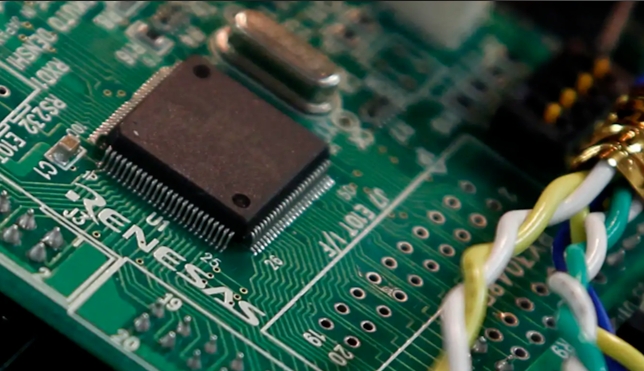
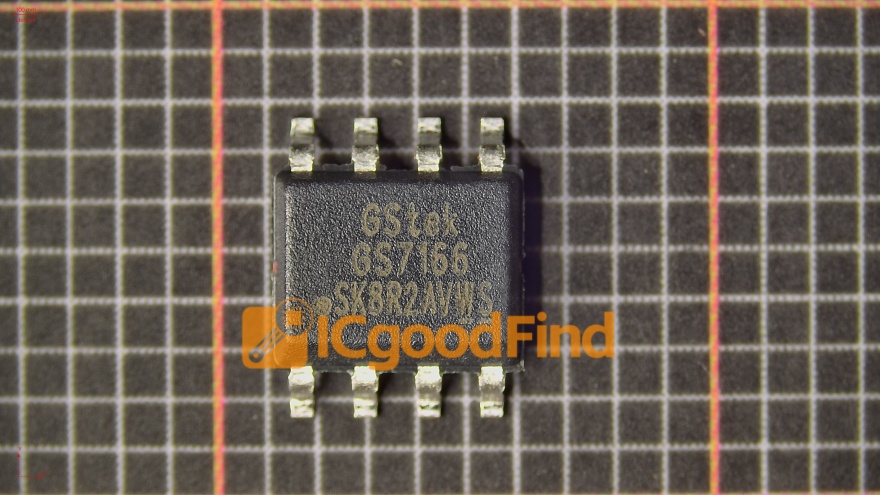
At its heart, a Microcontroller Unit (MCU) is a compact, self-contained computer system on a single integrated circuit (IC) or chip. It is the fundamental building block designed to execute specific control-oriented tasks.
Key Characteristics of an MCU: * Integrated Components: An MCU typically integrates a processor core (CPU), memory (both RAM and Flash/ROM), and programmable input/output peripherals. These peripherals can include timers, analog-to-digital converters (ADCs), serial communication interfaces (like UART, I2C, SPI), and pulse-width modulation (PWM) controllers. * Function: It is designed to run one dedicated application or firmware that is programmed into its non-volatile memory. Its job is to interact with the physical world by reading sensors, processing data, and controlling actuators. * Form Factor: It exists as a single chip, often in surface-mount packages like QFP or QFN. It cannot function in isolation; it requires a supporting circuit to operate. * Design Role: The MCU is the core component meant for final product integration. In mass production, engineers design a custom printed circuit board (PCB) that includes the MCU chip along with other necessary components like resistors, capacitors, crystal oscillators, and power regulators. This minimizes size, cost, and power consumption for the end product.
Think of an MCU as the engine of a car. It’s a powerful, essential component, but by itself, it’s not drivable. It needs to be mounted in a chassis with wheels, a steering wheel, and controls to become functional.
Part 2: The Development Board – The Prototyping and Learning Platform
A Development Board, on the other hand, is a ready-made printed circuit board that is built around an MCU (or sometimes an MPU – Microprocessor Unit). Its primary purpose is to provide a convenient and accessible platform for prototyping, learning, and testing code before final hardware design.
Key Characteristics of a Development Board: * Integrated Ecosystem: It incorporates the MCU chip and all its essential supporting circuitry onto one board. This includes the power supply circuit, clock source (oscillator), programming interface (e.g., USB-to-serial chip), status LEDs, buttons, and often additional features like sensors, display connectors, or wireless modules (Wi-Fi/Bluetooth). * Function: It serves as a general-purpose experimentation platform. Developers can quickly write code, upload it via USB, debug it in real-time, and connect various “shields” or “add-on boards” to test functionalities without soldering. * Form Factor: It is a complete, stand-alone board (e.g., Arduino Uno, STM32 Nucleo, ESP32 DevKit). It’s designed for ease of use with accessible pin headers. * Design Role: The development board is a tool for the development phase. It accelerates learning and proof-of-concept work. However, its generalized nature often makes it larger, more expensive, and less power-optimized than a custom design for volume production.
Following the car analogy, a development board is like a complete “kit car” or a driving simulator. It has the engine (MCU) already installed in a working chassis with all controls. You can get behind the wheel immediately to learn driving principles or test new routes (code), but it’s not necessarily optimized for mass production or specific performance criteria.
Part 3: Key Differences Summarized and Choosing the Right Tool
The table below crystallizes the core distinctions:
| Feature | Microcontroller Unit (MCU) | Development Board |
|---|---|---|
| Nature | A single integrated circuit (chip). | A complete printed circuit board system. |
| Purpose | Final product integration; executing dedicated control tasks. | Prototyping, education, and rapid software development. |
| Components | Core CPU, memory, basic peripherals on-chip. | MCU + power supply, clock, USB interface, LEDs, buttons, pin headers. |
| Ease of Use | Low; requires external circuit design and PCB fabrication. | High; plug-and-play out of the box. |
| Cost (Unit) | Very low (often \(1-\)10). | Higher (\(10-\)50+) due to added components. |
| Size & Optimization | Extremely compact; optimized for specific applications. | Larger; generalized for flexibility. |
| Primary User Stage | Production phase. | Design, learning, and prototyping phase. |
Choosing Between Them: * Start with a Development Board if: You are learning embedded programming, validating a concept quickly, or creating a one-off project where cost and size are not critical. Platforms like Arduino or STM32 Nucleo are perfect starting points. * Move to the Standalone MCU if: You are transitioning to custom PCB design for volume manufacturing, where minimizing the Bill of Materials (BOM) cost, reducing physical size, and optimizing power consumption are paramount.
For engineers seeking reliable sources to procure both development boards for prototyping and MCU chips for final design from trusted suppliers worldwide, platforms like ICGOODFIND can be an invaluable resource in navigating component selection and availability.
Conclusion
In summary, the difference between an MCU and a development board is fundamentally the difference between a core component and a complete system built to utilize that component. The MCU is the specialized, cost-effective silicon brain destined for embedded products, while the development board is the versatile, user-friendly platform that brings that brain to life during the design process. One is not a replacement for the other; rather, they represent sequential stages in the electronics development lifecycle. A clear understanding of this relationship empowers developers to make informed decisions, efficiently moving from an idea on a development board to an optimized, market-ready product centered on its microcontroller unit.