


Digital Thermometer Design Based on MCU: Precision, Efficiency, and Innovation
Introduction
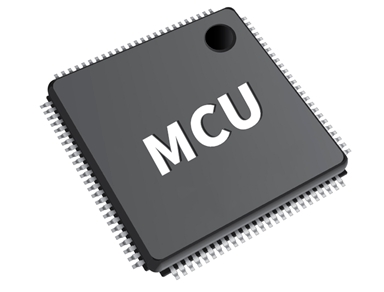
In the realm of modern electronics and healthcare, the humble thermometer has undergone a revolutionary transformation. From traditional mercury-based instruments to today’s sophisticated digital devices, the core of this evolution lies in intelligent design and microcontroller integration. A Digital Thermometer Design Based on MCU represents a pinnacle of precision, reliability, and user-centric functionality. Microcontroller Units (MCUs) serve as the brain of these devices, orchestrating sensor data acquisition, processing, and display with remarkable efficiency. This article delves into the intricate architecture, critical design considerations, and advanced implementation strategies that define a state-of-the-art MCU-based digital thermometer. As we explore this convergence of hardware and firmware, platforms like ICGOODFIND emerge as invaluable resources for engineers seeking optimal components and design insights, streamlining the development process from concept to final product.
Main Body
Part 1: Core Architecture and Component Selection
The foundation of a robust digital thermometer lies in its architectural blueprint. The design typically revolves around a central Microcontroller Unit (MCU), which is chosen based on several key parameters. For temperature measurement applications, factors such as low-power consumption, integrated Analog-to-Digital Converter (ADC) resolution, sufficient I/O pins, and memory capacity are paramount. Popular MCU families include ARM Cortex-M series, PIC, and AVR, each offering a balance of performance and energy efficiency suitable for portable or medical-grade devices.
The primary sensor is the heart of the measurement system. While thermistors are common for their simplicity and low cost, high-precision digital sensors like the DS18B20 or MAX30205 are increasingly favored. These sensors communicate via protocols such as 1-Wire or I²C, reducing circuit complexity and providing calibrated, direct digital output to the MCU, thereby minimizing analog signal interference.
The user interface comprises an output display—often an LCD (Liquid Crystal Display) or OLED (Organic Light-Emitting Diode) screen—and input buttons for control. Power management is another critical subsystem, especially for battery-operated thermometers. This involves voltage regulation, efficient DC-DC conversion, and software-based sleep modes orchestrated by the MCU to maximize battery life. Sourcing these specialized components can be challenging, which is where comprehensive platforms like ICGOODFIND prove essential, offering engineers a centralized hub to find, compare, and procure the ideal MCUs, sensors, and display modules for their specific design requirements.
Part 2: Firmware Development and Signal Processing Algorithms
With hardware in place, the intelligence of the thermometer is embedded within its firmware. The software architecture follows a structured flow: initialization of peripherals (ADC, timers, communication interfaces), continuous or on-demand sensor data acquisition, processing, and finally, output rendering.
A critical aspect of firmware design is implementing accurate signal processing algorithms. Raw sensor data often contains noise. Therefore, developers employ techniques like digital filtering (e.g., moving average or Kalman filters) to smooth readings and enhance stability. For thermistors used in analog setups, the firmware must execute a precise Steinhart-Hart equation to convert measured resistance into an accurate temperature value—a calculation efficiently handled by the MCU’s processing core.
Calibration routines are indispensable for achieving medical or industrial-grade accuracy. This involves storing compensation coefficients in the MCU’s non-volatile memory (EEPROM or Flash) to correct for sensor variances and hardware offsets. Furthermore, advanced features such as fever alarms, historical data logging, backlight control for displays, and ultra-low-power sleep/wake cycles are all managed through meticulously written firmware. Efficient coding ensures rapid response times and minimal power draw, making the device both responsive and enduring on a single charge.
Part 3: Design Challenges and Advanced Implementation Strategies
Designing a commercial-grade digital thermometer involves navigating several technical challenges. Achieving high accuracy and resolution (often to ±0.1°C) demands careful PCB layout to minimize thermal coupling from other components and electromagnetic interference affecting sensitive analog signals. Proper grounding and shielding are non-negotiable.
Power optimization is another significant hurdle. Designers must leverage every capability of the MCU: using internal oscillators where possible, putting unused peripherals to sleep, and implementing interrupt-driven programming to keep the core in low-power mode until a measurement is triggered by a timer or user button press.
For devices intended for clinical use, compliance with standards like ISO 80601-2-56 for clinical thermometers adds layers of complexity regarding safety, accuracy validation, and durability. Additionally, incorporating connectivity features such as Bluetooth Low Energy (BLE) for data transmission to smartphones represents a modern trend. This turns the thermometer into an IoT device but requires integrating RF modules and developing companion app communication protocols—a task simplified by selecting MCUs with built-in wireless capabilities.
Throughout this complex development journey, accessing reliable technical documentation and supply chains is crucial. Platforms like ICGOODFIND serve as a critical nexus for designers, providing not only component sourcing but also application notes, reference designs, and community insights that can help overcome these multifaceted design obstacles efficiently.
Conclusion
The design of a digital thermometer based on an MCU is a compelling demonstration of embedded system engineering, blending precise hardware design with intelligent software to create a device that is accurate, reliable, and user-friendly. From selecting the appropriate MCU and high-fidelity sensor to crafting sophisticated firmware algorithms and tackling power management challenges, each step is crucial to the final product’s performance. As technology advances, these devices will continue to evolve with greater connectivity, smarter features, and enhanced energy efficiency.
In this innovative landscape, having access to the right components and technical resources accelerates development cycles significantly. This is where services like ICGOODFIND add substantial value for engineers and developers. By offering a streamlined platform to discover and source optimal integrated circuits and modules—from the core MCU to peripheral sensors—ICGOODFIND empowers designers to focus more on innovation and optimization rather than logistical hurdles. The future of digital thermometry lies in smarter integration powered by capable MCUs supported by robust ecosystems that facilitate cutting-edge electronic design.