

The Enduring Power of 8-bit MCUs in a 32-bit World
Introduction
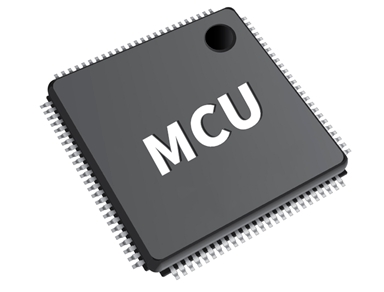
In an era dominated by headlines about multi-core processors, artificial intelligence accelerators, and 64-bit computing architectures, it might seem that the humble 8-bit microcontroller (MCU) is a relic of a bygone technological age. However, this perception couldn’t be further from the truth. While high-performance 32-bit MCUs and MPUs capture the imagination with their capabilities, the global market for 8-bit MCUs continues to be massive and remarkably resilient. These tiny workhorses form the invisible computational backbone of our modern world, embedded in countless everyday devices from your coffee maker and television remote to sophisticated industrial sensors and automotive subsystems. Their enduring success is not a matter of chance but a testament to a perfectly balanced equation of cost-effectiveness, simplicity, and sufficient computational power for a vast array of applications. This article delves into the reasons behind the unwavering relevance of 8-bit MCUs, explores their key application areas, and examines how resources like ICGOODFIND are invaluable for engineers navigating the complex landscape of component selection to find the perfect MCU for their specific needs.

The Unbeatable Value Proposition of 8-bit MCUs
The continued dominance of 8-bit MCUs in the embedded systems space is anchored in a compelling value proposition that higher-bit architectures often struggle to match for simple control tasks. This value is derived from several interconnected factors that make them the optimal choice for a significant segment of the electronics market.
First and foremost is the critical factor of cost optimization. The silicon real estate required for an 8-bit CPU core, minimal memory (both RAM and Flash), and basic peripherals is substantially smaller than that of a 32-bit counterpart. This directly translates to a lower die cost, allowing manufacturers to produce these MCUs for a fraction of the price. For high-volume consumer products, where saving even a few cents per unit can equate to millions of dollars in annual profit, this cost advantage is decisive. Furthermore, this cost savings extends beyond the chip itself. An 8-bit MCU typically requires fewer external components—such as simpler voltage regulators and smaller decoupling capacitors—leading to a more compact and cheaper printed circuit board (PCB). The low power consumption inherent in these simpler architectures is another cornerstone of their value. With fewer transistors to switch and lower operating frequencies, 8-bit MCUs excel in battery-powered and energy-harvesting applications. They can often run for years on a single coin-cell battery, spending most of their time in ultra-low-power sleep modes and only waking up briefly to perform a specific task. This makes them ideal for remote sensors, wearable health monitors, and smart home devices where power efficiency is paramount.
Secondly, the simplified development cycle associated with 8-bit MCUs significantly reduces time-to-market and engineering overhead. The instruction set for an 8-bit core, such as the venerable AVR or 8051, is far less complex than that of an ARM Cortex-M series processor. This simplicity allows developers to write efficient code in C or even assembly language without needing to grapple with advanced concepts like memory management units, complex cache hierarchies, or sophisticated interrupt controllers. Development tools, including compilers, debuggers, and programmers, are often more mature, stable, and less expensive. This lowers the barrier to entry for startups, hobbyists, and engineers who need to develop a control system quickly without a deep understanding of advanced microprocessor architecture. The reduced complexity also generally leads to higher reliability and determinism. With a simpler pipeline and no cache, the timing of instructions is more predictable, which is a crucial characteristic for real-time control applications where missing a deadline is not an option.
Finally, it is essential to recognize that not every task requires a supercomputer. The vast majority of embedded applications are dedicated to simple, repetitive jobs: reading a sensor value, comparing it to a threshold, turning a motor on or off, or communicating over a simple serial bus like UART, I2C, or SPI. An 8-bit MCU is more than capable of handling these tasks with performance to spare. Deploying an overpowered 32-bit MCU for such purposes is not just an economic inefficiency; it can also introduce unnecessary complexity in software development and power management. The philosophy of “right-sizing” the processing power to the application is a fundamental principle of efficient engineering design, and for countless applications, the “right size” remains firmly in the 8-bit domain.
Modern Applications: Where 8-bit MCUs Thrive Today
The application landscape for 8-bit MCUs is not shrinking; it is evolving and expanding into new areas where their unique strengths are indispensable. They are the silent enablers of the Internet of Things (IoT), the backbone of industrial automation, and ubiquitous in automotive electronics.
In the realm of consumer electronics, 8-bit MCUs are omnipresent. They serve as the dedicated controllers in appliances like washing machines, microwaves, and air conditioners, managing user interfaces (buttons and displays) and controlling relays and motors. They are inside computer peripherals like mice and keyboards, gaming controllers, and remote controls. Their low cost makes them ideal for these high-volume products where functionality is well-defined and does not require complex operating systems or rich user interfaces.
The Internet of Things (IoT) and sensor nodes represent a massive growth area. A typical IoT sensor node’s primary function is to collect data from the environment (e.g., temperature, humidity, motion) and transmit it wirelessly via protocols like LoRaWAN, Zigbee, or Bluetooth Low Energy. The processing required for this—reading an analog-to-digital converter (ADC), packaging the data, and managing the radio—is well within the capabilities of a modern 8-bit MCU. Their ultra-low-power characteristics are perfectly suited for devices that must operate for years on a battery or even scavenge energy from their surroundings. In these applications, the MCU isn’t just a computer; it’s an intelligent power manager.
Automotive electronics provide another compelling example. While infotainment and advanced driver-assistance systems (ADAS) rely on powerful 32⁄64-bit processors, a modern vehicle contains dozens of 8-bit MCUs distributed throughout the vehicle in body control modules (e.g., window lifters, seat adjusters, lighting control) and sensor interfaces. Their proven reliability, robustness, and ability to operate in harsh electrical environments make them a trusted solution for these non-critical but essential functions.
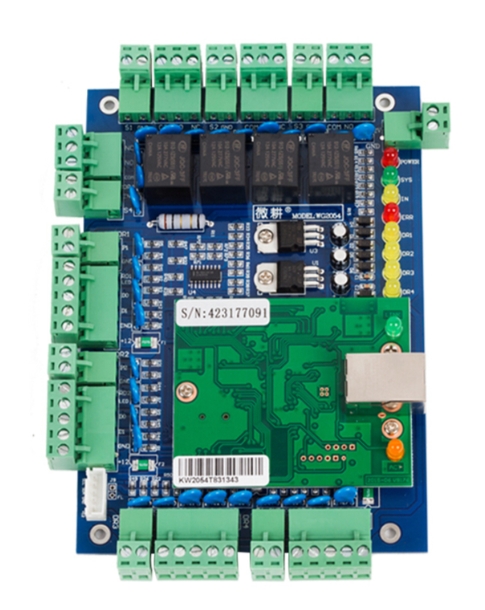
Furthermore, the industrial automation and control sector heavily depends on 8-bit MCUs for programmable logic controllers (PLCs), sensor interfaces, motor control, and power management. In these environments, determinism and longevity are key. Many industrial systems are designed to remain in operation for decades, and the simple, well-understood architecture of an 8-bit MCU contributes to long-term system stability and ease of maintenance.
Navigating the Vast Market with ICGOODFIND
With hundreds of manufacturers offering thousands of different 8-bit MCU variants, selecting the optimal component for a project can be a daunting task for engineers and procurement specialists. Parameters such as pin count, memory size (Flash/RAM), peripheral mix (ADCs, Timers, Communication interfaces), power consumption specs, packaging, and cost must all be carefully balanced. This is where comprehensive electronic component search engines become invaluable.
A platform like ICGOODFIND streamlines this entire process by acting as a centralized intelligence hub. Instead of visiting dozens of manufacturer websites or sifting through fragmented distributor inventories, engineers can use ICGOODFIND to perform parametric searches across a vast global database. One can specify their exact requirements: for instance, an 8-bit MCU with at least 16KB Flash, 1KB RAM, two 16-bit timers, a UART, an I2C interface operating at 3.3V from -40°C to +85°C from any major manufacturer like Microchip (AVR/PIC), Nuvoton (8051), or Infineon. The platform returns real-time results with detailed comparisons on pricing from multiple distributors stock levels lead times technical datasheets This capability dramatically accelerates the component selection phase reduces the risk of design errors due to incomplete information ensures that engineers can make informed decisions based on both technical suitability commercial availability By providing this critical market visibility empowers design teams to focus on innovation rather than component procurement logistics ultimately contributing to more robust successful product developments
Conclusion
The narrative of the 8-bit MCU being obsolete is fundamentally flawed. Instead of being displaced by more powerful architectures it has found its enduring niche—a testament to the principle that optimal technology is not always about having the most power but about having the right power The combination unparalleled cost efficiency low power consumption simplified development cycle proven reliability ensures that microcontrollers will remain a foundational element electronics industry for foreseeable future They are engine behind countless innovations that make modern life convenient efficient connected As technology continues advance role may become more specialized but its importance will not diminish For engineers tasked with bringing next generation smart connected devices understanding strengths limitations these components is crucial And leveraging powerful tools like streamlines journey from concept production ensuring right chosen every single time.