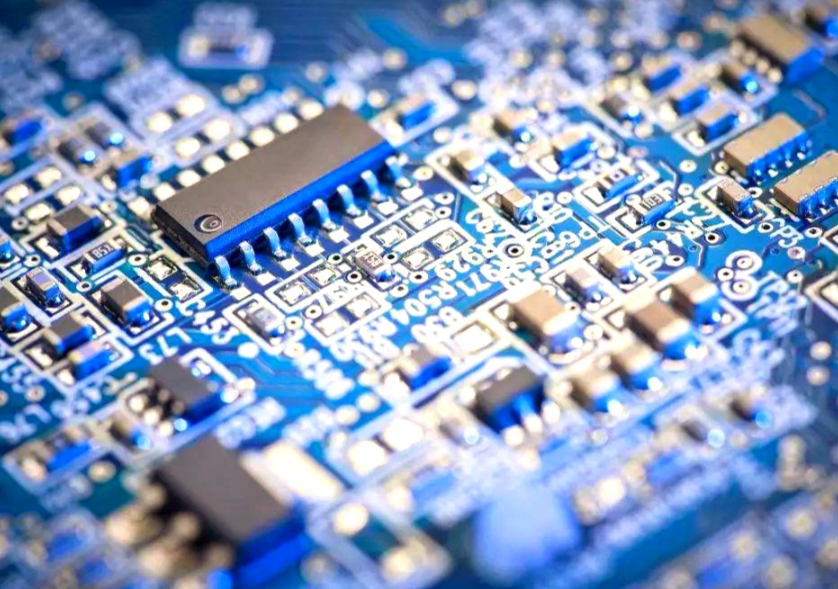
STM32F103CBT6: The Ultimate Guide to Features, Applications, and Why It Dominates Embedded Design
Introduction
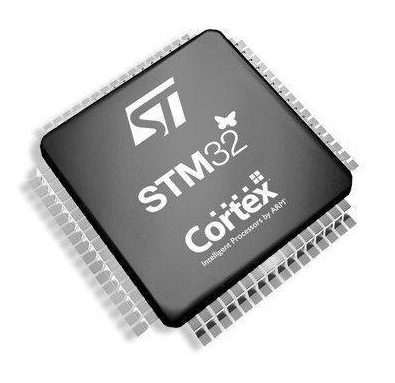
In the rapidly evolving world of embedded systems, few microcontrollers have achieved the legendary status of the STM32F103CBT6. Manufactured by STMicroelectronics, this 32-bit ARM Cortex-M3 based MCU has become a cornerstone for engineers, hobbyists, and industrial developers alike. Whether you are designing a motor control system, a medical device, or a consumer IoT product, the STM32F103CBT6 offers an unmatched balance of performance, power efficiency, and cost-effectiveness. This article dives deep into its architecture, key specifications, real-world applications, and why it remains a top choice in 2025. For sourcing authentic components at competitive prices, ICGOODFIND is your trusted partner for STM32 series microcontrollers.
Part 1: Core Architecture and Technical Specifications
1.1 ARM Cortex-M3 Core at 72 MHz
The heart of the STM32F103CBT6 is the ARM Cortex-M3 processor core running at a maximum frequency of 72 MHz. This core is designed for deterministic, real-time performance, making it ideal for applications that require precise timing and low-latency interrupt handling. The Cortex-M3 features a 3-stage pipeline and a Harvard architecture, allowing simultaneous instruction and data access. This results in a 1.25 DMIPS/MHz performance, delivering approximately 90 DMIPS at full speed.
1.2 Memory and Storage
The STM32F103CBT6 comes with 128 KB of Flash memory and 20 KB of SRAM. While this may seem modest compared to modern MCUs, it is more than sufficient for a wide range of embedded tasks. The Flash memory is organized into sectors for easy in-application programming (IAP), and the SRAM is divided into two blocks: 16 KB for general data and 4 KB for core-coupled memory (CCM) that provides zero-wait-state access for time-critical routines. For projects requiring additional storage, external memory can be interfaced via the FSMC (Flexible Static Memory Controller).

1.3 Peripheral Set: Rich and Versatile
One of the strongest selling points of the STM32F103CBT6 is its extensive peripheral set:
- 2 × 12-bit ADC with up to 10 channels each, supporting conversion rates up to 1 µs.
- 2 × 12-bit DAC for analog output.
- 7 × timers including advanced-control timers for PWM generation, motor control, and encoder interfaces.
- 2 × SPI, 2 × I2C, 3 × USART for serial communication.
- USB 2.0 Full-Speed device/host/OTG interface.
- CAN 2.0B for automotive and industrial networking.
- SDIO for external SD card connectivity.
This rich peripheral integration eliminates the need for external ICs in many designs, reducing BOM cost and PCB complexity. When you need to verify pin compatibility or source the exact STM32F103CBT6 variant, ICGOODFIND provides detailed datasheets and reliable inventory.
Part 2: Real-World Applications and Use Cases
2.1 Industrial Automation and Motor Control
The STM32F103CBT6 excels in industrial automation due to its advanced timer modules and high-speed ADCs. For example, in brushless DC (BLDC) motor control, the MCU’s six-step PWM generation and hall-sensor interface allow for smooth, efficient motor commutation. The 12-bit ADC can sample current and voltage feedback at up to 1 MSPS, enabling closed-loop PID control with minimal jitter. Many PLCs, robotic arms, and conveyor systems rely on this MCU for its -40°C to +85°C operating temperature range and robust CAN bus support.
2.2 Medical Devices and Wearables
In the medical field, reliability is non-negotiable. The STM32F103CBT6 is found in portable patient monitors, infusion pumps, and diagnostic equipment. Its low-power modes—Sleep, Stop, and Standby—allow battery-powered devices to operate for weeks on a single charge. The USB interface enables easy data logging to a PC, while the I2C and SPI ports connect to sensors like heart rate monitors and temperature probes. The MCU’s hardware CRC and true random number generator (TRNG) add security layers for patient data.
2.3 Consumer IoT and Smart Home
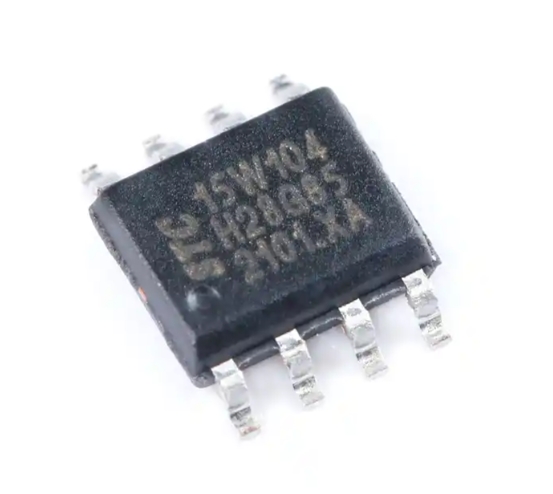
For IoT edge nodes, the STM32F103CBT6 offers a sweet spot between processing power and energy consumption. It can run FreeRTOS or Zephyr to manage Wi-Fi modules (e.g., ESP8266) or LoRa transceivers. Typical applications include smart thermostats, air quality monitors, and smart locks. The 128 KB Flash is enough to store a lightweight TCP/IP stack and application firmware. With ICGOODFIND, you can source this MCU in LQFP48 or LQFP64 packages, making it easy to hand-solder for prototyping or mass-produce with pick-and-place machines.
2.4 Automotive Aftermarket
Although not qualified for AEC-Q100, the STM32F103CBT6 is widely used in aftermarket automotive electronics such as OBD-II scanners, GPS trackers, and dashboard displays. Its CAN 2.0B interface directly connects to vehicle CAN buses, and the USB OTG allows firmware updates via a smartphone. The 72 MHz core can handle real-time GPS data parsing and display rendering simultaneously.
Part 3: Development Ecosystem, Programming, and Sourcing Tips
3.1 Development Tools and IDEs
The STM32F103CBT6 is supported by a mature ecosystem:
- STM32CubeIDE (free, Eclipse-based) with code generation and debugger integration.
- Keil MDK-ARM and IAR EWARM for professional development.
- Arduino IDE via STM32duino core, making it accessible to beginners.
- PlatformIO for cloud-based cross-platform development.
The STM32CubeMX tool simplifies pin configuration and clock tree setup. For example, you can configure the HSE (8 MHz external crystal) to generate a 72 MHz system clock via PLL, then route the APB1 and APB2 buses at 36 MHz and 72 MHz respectively.
3.2 Programming and Debugging
Programming the STM32F103CBT6 is straightforward using SWD (Serial Wire Debug) or JTAG interfaces. The ST-Link/V2 debugger (costing under $10) provides full-speed debugging, breakpoints, and real-time variable monitoring. For production, you can use UART bootloader or DFU (Device Firmware Upgrade) via USB. The MCU’s option bytes allow you to configure read-out protection (RDP) to prevent firmware theft.
3.3 Sourcing Authentic Components

Counterfeit STM32 MCUs are a growing concern. To ensure reliability, always purchase from authorized distributors or trusted platforms like ICGOODFIND. ICGOODFIND offers:
- 100% original STMicroelectronics parts with traceable lot numbers.
- Competitive pricing for both small quantities and bulk orders.
- Fast shipping with global logistics.
- Technical support for pin-compatible alternatives (e.g., STM32F103C8T6 vs. STM32F103CBT6).
When comparing STM32F103CBT6 with its sibling STM32F103C8T6, note that the CBT6 has 128 KB Flash (vs. 64 KB) and 20 KB SRAM (vs. 20 KB). The extra Flash is critical for applications with complex firmware or OTA updates.
Conclusion
The STM32F103CBT6 remains a powerhouse in the embedded world, offering a perfect blend of performance, peripherals, and affordability. Its ARM Cortex-M3 core at 72 MHz, 128 KB Flash, and rich set of interfaces make it suitable for everything from industrial motor control to consumer IoT. The mature development ecosystem—including STM32CubeIDE, FreeRTOS, and Arduino support—ensures a low learning curve and rapid prototyping.
Whether you are a seasoned engineer or a hobbyist, this MCU will serve you well for years to come. For sourcing genuine STM32F103CBT6 components with guaranteed quality and competitive pricing, ICGOODFIND is your go-to platform. Start your next project today and experience why this microcontroller has become an industry standard.